To clean painted wood surfaces, use a soft microfiber cloth or feather duster to gently remove dust, avoiding scratches or peeling paint. For stains, lightly dampen a cloth with a mix of mild dish soap and warm water, and wipe softly. For stubborn marks, a baking soda paste can help, but test first on a small area. Avoid harsh chemicals and abrasives, and always dry thoroughly. Keep these tips in mind to maintain your painted wood’s pristine condition.
Key Takeaways
- Use a soft microfiber cloth or feather duster for gentle dusting to prevent surface damage.
- Dampen a soft cloth with mild dish soap and warm water to clean stains carefully.
- Test cleaning solutions on small, inconspicuous areas before full application.
- Avoid harsh chemicals and abrasive tools to protect the paint finish.
- Dry surfaces thoroughly after cleaning to prevent streaks or water spots.
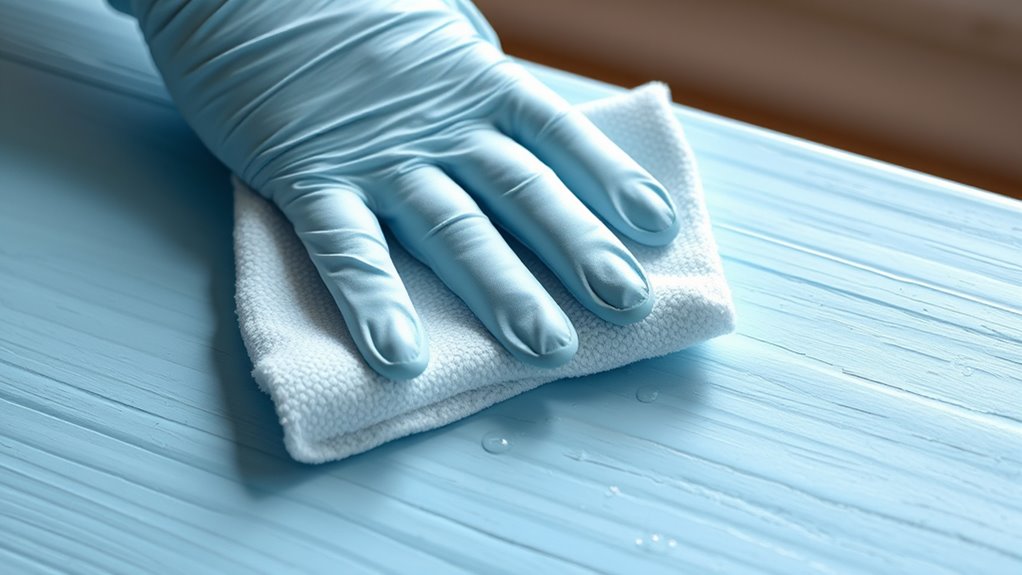
Cleaning painted wood surfaces requires careful attention to prevent damage and maintain their appearance. When you’re tackling dust removal, it’s important to use gentle methods that won’t scratch or peel the paint. Start by lightly dusting the surface with a soft microfiber cloth or a feather duster to pick up surface debris. If you use a vacuum with a brush attachment, make sure it’s set to a low suction setting to avoid pulling off paint or damaging delicate areas. Regular dust removal keeps the surface looking fresh and prevents dirt buildup that can dull the paint’s shine over time.
Use a soft microfiber cloth or feather duster for gentle dusting on painted wood surfaces.
For stain removal, the process demands a bit more care. First, identify the type of stain—whether it’s from water, food, or other substances. For most common stains, mix a small amount of mild dish soap with warm water. Dampen a soft cloth with the solution, then gently wipe the stained area. Avoid soaking the surface, as excess moisture can cause paint to bubble or peel. If a stain persists, you can try a mixture of baking soda and water to create a gentle abrasive paste, applying it carefully with a soft cloth and then rinsing with a clean, damp cloth. Always test any cleaning solution on a small, inconspicuous area first to confirm it won’t discolor or damage the paint.
When removing stubborn stains or marks, don’t be tempted to scrub aggressively. Instead, work softly and patiently, changing cloths or solutions as needed. For particularly tough stains, consider using a specialized cleaner designed for painted surfaces, but always follow the manufacturer’s instructions. After stain removal, wipe the area with a clean, damp cloth to remove any residue, then dry it with a soft towel to prevent streaks or water spots.
Throughout this process, avoid harsh chemicals like bleach or ammonia, which can damage the paint’s finish. Also, steer clear of abrasive tools such as steel wool or scrub brushes, as these can scratch or peel the paint. Using HEPA filtration air purifiers can help reduce airborne dust and allergens that settle on painted surfaces, making cleaning easier and more effective. With consistent dust removal and careful stain treatment, your painted wood surfaces will stay looking vibrant and well-maintained. Remember, the key is gentle, effective cleaning that preserves the integrity of the paint while keeping your wood surfaces spotless. Proper maintenance not only enhances their appearance but also extends their lifespan, ensuring you enjoy beautiful, durable painted wood for years to come.
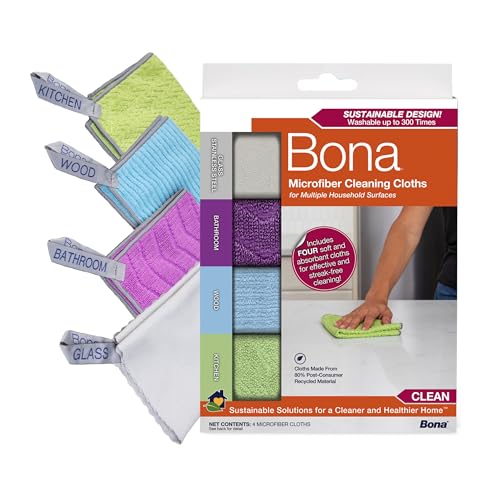
Bona® Microfiber Cleaning Cloths Multipack
Four unique microfiber cloths for all the surfaces around your home
As an affiliate, we earn on qualifying purchases.
As an affiliate, we earn on qualifying purchases.
Frequently Asked Questions
Can I Use Vinegar to Clean Painted Wood Surfaces?
You can use vinegar to clean painted wood surfaces, but you should be cautious about vinegar safety. Dilute it with water to avoid damaging the paint or finish. Vinegar is a natural cleaner and an alternative cleaning method, but it’s best to test a small area first. If you’re concerned, consider gentler options like a mild soap solution or specialized wood cleaners to protect your painted surfaces.
How Often Should Painted Wood Be Cleaned?
Think of your painted wood surfaces as delicate canvases that need gentle care. You should clean them every few months, depending on how much dust and dirt they gather. Keep a steady cleaning schedule, like clockwork, to prevent grime from settling in. Regular dusting and spot cleaning will keep your painted wood looking fresh and vibrant, ensuring your space remains inviting and well-maintained.
Is It Safe to Use a Steam Cleaner on Painted Wood?
Using a steam cleaner on painted wood isn’t recommended because it can damage the paint and compromise the wood’s protection. Steam cleaner safety is questionable for painted surfaces, as the high heat and moisture may cause peeling or warping. If you decide to try, use the lowest heat setting and keep the steamer moving to minimize risks. However, gentle cleaning methods are usually safer for maintaining painted wood’s integrity.
What Cleaning Products Are Best for Antique Painted Wood?
Think of your antique painted wood as a delicate treasure that needs gentle care. You should use gentle cleaning solutions specifically formulated for antique paint preservation. Avoid harsh chemicals or abrasive scrubbers, as they could damage the finish. Instead, opt for a soft cloth dampened with a mild soap solution or specialized cleaner designed for antiques. This way, you protect the paint’s integrity while keeping your piece beautiful for generations.
How Do I Remove Stubborn Stains From Painted Wood?
To remove stubborn stains from painted wood, start with gentle stain removal techniques like a mixture of mild soap and water, applying it with a soft cloth. For tougher stains, try a baking soda paste or a commercial cleaner designed for painted surfaces. After stain removal, use paint touch-up methods to restore any damaged areas, ensuring your painted wood looks fresh and well-maintained. Always test cleaning solutions in an inconspicuous spot first.

Method Daily Wood Cleaner, Almond, Cleans Shelves, Tables and Other Wooden Surfaces While Removing Dust & Grime, 28 oz Spray Bottles, (Pack of 1)
Each spray, in all its lovely non-toxic glory delivers a mighty cleaning punch
As an affiliate, we earn on qualifying purchases.
As an affiliate, we earn on qualifying purchases.
Conclusion
Now that you know how to clean painted wood surfaces properly, you’re practically a superhero for preserving their beauty. With just a gentle touch, you can banish dirt and grime faster than a lightning bolt zips across the sky. Your efforts will keep your wood looking brand new, shining brighter than a thousand suns. So go ahead, arm yourself with these tips, and transform your space into a stunning masterpiece that’ll dazzle everyone who sees it!

Real Milk Paint, Oxalic Acid Wood Bleach, Iron Remover, Wood Rings Stain Remover, 16 oz
OXALIC ACID – Use as an alternative to wood bleach to remove iron stains, wood stains, water marks,…
As an affiliate, we earn on qualifying purchases.
As an affiliate, we earn on qualifying purchases.
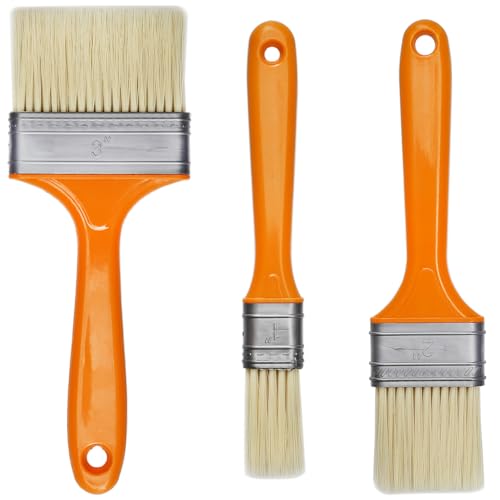
3 Pack Microfiber Duster Brush, Soft Bristles Detailing Brush Dusting Tools, Cleaning Brushes Duster for Auto Interior, Automotive Dashboard, Arts and Crafts, Digital Product, Keyboard
【High-density Bristles】: Made of high-density synthetic fibre, wear-resistant, tough, suitable for wet and dry use.
As an affiliate, we earn on qualifying purchases.
As an affiliate, we earn on qualifying purchases.