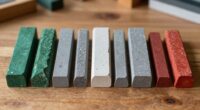
To care for your butcher block, regularly sharpen your knives and keep them clean, as dull blades damage the wood and harbor bacteria. Condition the surface with food-grade mineral oil or beeswax-based products to prevent cracking and warping. Clean with mild soap and warm water after each use, then dry thoroughly before applying any conditioner. Proper maintenance keeps your butcher block safe, attractive, and long-lasting—keep going to learn more helpful tips for maintenance and preservation.
Key Takeaways
- Regularly clean the butcher block with mild soap and warm water, then dry thoroughly.
- Keep knives sharp to prevent surface gouging and maintain the wood’s integrity.
- Apply food-grade mineral oil or butcher block conditioner regularly to prevent drying and cracking.
- Avoid soaking or using harsh chemicals that can strip natural oils and damage the wood.
- Recondition the surface when it appears dry, dull, or shows signs of wear to extend its lifespan.

Wondering how to keep your butcher block looking its best? The key lies in proper knife maintenance and regular wood conditioning. When you use your knives on the butcher block, dull blades can cause more damage to the wood surface, so sharp knives are vital. Sharp knives not only make your prep work easier and safer, but they also reduce the risk of gouging or scoring the wood. Regularly honing your knives and occasionally sharpening them ensures they stay in prime condition. This simple step helps preserve the integrity of your butcher block by preventing deep cuts and scratches that can harbor bacteria and compromise the surface’s durability.
Keeping knives sharp prevents damage and extends the life of your butcher block.
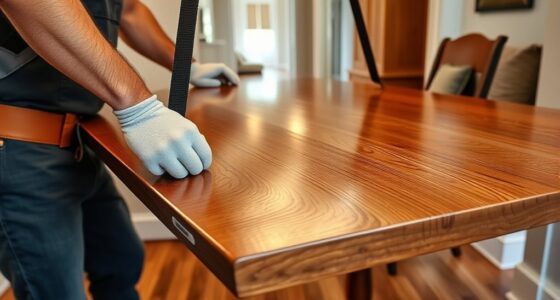
In addition to knife maintenance, wood conditioning plays a vital role in caring for your butcher block. Wood naturally loses moisture over time, especially with frequent use and cleaning, which can lead to drying, cracking, or warping. To prevent this, you should routinely apply food-grade mineral oil or a specialized butcher block conditioner. This creates a protective barrier that locks in moisture, keeping the wood hydrated and resilient. When conditioning, make sure to apply the oil evenly across the entire surface, paying special attention to the edges and corners, which are more prone to drying out. Allow the oil to soak in for a few hours or overnight, then wipe off any excess with a clean cloth. Regular wood conditioning not only extends the life of your butcher block but also keeps it looking vibrant and new.
You might also want to think about using beeswax-based products or mineral oil blends designed specifically for wooden surfaces. These products can provide additional protection against moisture and stains, making cleanup easier and preventing bacterial growth. Remember, the frequency of conditioning depends on your usage; if you notice the wood looking dry or dull, it’s time to recondition. Consistent care will ensure your butcher block remains a safe, attractive, and functional part of your kitchen for years to come.
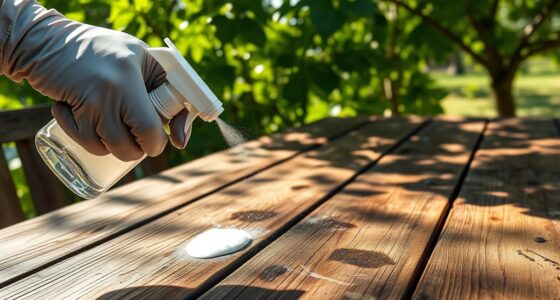
Finally, always clean your butcher block with mild soap and warm water after use. Avoid harsh chemicals or soaking the wood, as these can strip away natural oils and cause damage. After cleaning, dry the surface thoroughly before applying any wood conditioner. By maintaining sharp knives and regularly conditioning the wood, you’ll preserve both the appearance and longevity of your butcher block, making it a reliable and beautiful workspace in your kitchen. Additionally, understanding the importance of contrast ratio can help you choose the right lighting and finish to enhance the visual appeal of your workspace.

Findbuytool Carbide Inserts cutters (15x15x2.5mm-30°-R150-4R0.5) Insert for Woodworking Helical Cutter Head Tools, 10 Pcs (10)
{Product Contains}:10pcs Carbide Insert Knife 15x15x2.5mm-30°-R150-4R0.5 for Helical Cutterhead.
As an affiliate, we earn on qualifying purchases.
Frequently Asked Questions
How Often Should I Reseal My Butcher Block?
You should reseal your butcher block every 4 to 6 months, depending on your usage and sealing frequency. Incorporate this into your maintenance routine to keep the wood protected and looking its best. Regular resealing prevents moisture absorption and stains, ensuring durability. If you notice the surface absorbing water or showing signs of wear, it’s time to reseal again. Staying consistent with sealing helps maintain your butcher block’s quality and longevity.
Can I Use Vinegar to Clean the Butcher Block?
Yes, you can use vinegar for cleaning your butcher block. Vinegar cleaning acts as a natural disinfectant, effectively killing bacteria and germs without harsh chemicals. To keep your butcher block in top shape, spray a mixture of vinegar and water, then wipe with a clean cloth. Using natural disinfectants like vinegar helps maintain the wood’s integrity while ensuring it’s hygienic and fresh for your kitchen tasks.
What Are the Signs of Wood Deterioration?
You’ll notice wood deterioration if you see cracking or splitting, which indicates the wood is drying out or weakening. Mold growth is another sign, often appearing as dark spots or fuzzy patches, signaling moisture issues. If your butcher block shows these signs, it’s time to sand and reseal the surface or replace it to prevent further damage. Regular maintenance helps extend its lifespan and keeps it safe for use.
Is Mineral Oil Safe for Food Contact?
Yes, mineral oil is safe for food contact because it’s food-grade and approved for kitchen use. It helps maintain food safety by creating a barrier that prevents bacteria from penetrating the wood. Plus, mineral oil’s slow absorption reduces oil absorption, keeping your butcher block well-conditioned without becoming sticky or greasy. Just make sure to apply it properly and reapply regularly to keep your surface protected and safe.
How Do I Remove Stains From the Butcher Block?
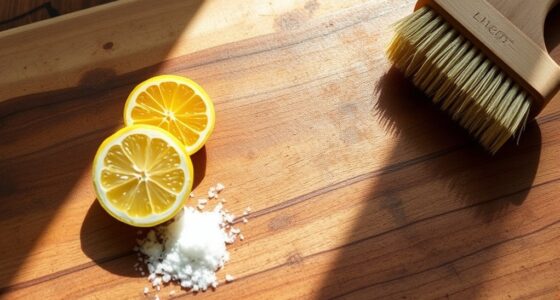
Stains stubbornly stick, but you can banish them with simple stain removal strategies. Start by sprinkling coarse salt or baking soda on the stain, then rub with a lemon half or vinegar to lift discoloration. Let sit, then scrub gently with a damp cloth. These cleaning techniques help brighten your butcher block and keep it looking pristine. Consistent care keeps stains at bay and preserves your surface’s beauty.
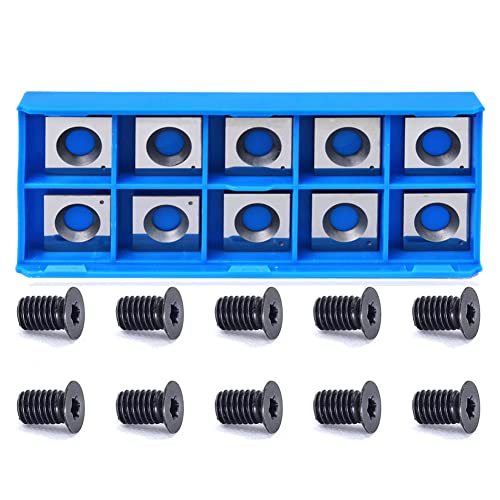
Indexable Carbide Insert Knife 14.3x14.3x2.0mm-50° 2-Edge Replacement Cutter for Cutech Tool Rikon Carbatec and Most Planer Jointer Helical Cutterheads, 10 Packs
Standard Cutter Size: 14.3mm square with straight corners 2mm thick,2 indexable cutting edges, 50 degree cutting bevel. Inserts...
As an affiliate, we earn on qualifying purchases.
Conclusion
So, now that you know how to pamper your butcher block, go ahead—treat it like royalty. After all, it’s the unsung hero of your kitchen, silently enduring every cut and spill. With just a little love and some oil, it’ll stay beautiful and functional, unlike that sad, neglected chopping board gathering dust. Remember, a well-cared-for butcher block is the secret to culinary greatness—because nothing screams “professional chef” like a shiny, happy cutting surface.
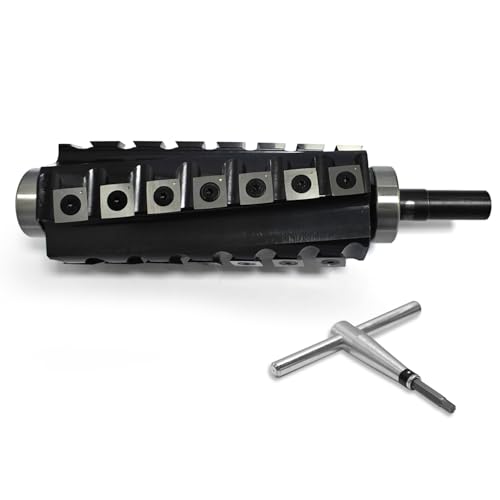
6 Inch Spiral Cutter Head for Jet 6” jj-6csdx Long Bed Jointer Woodworking Spiral Helical Cutterhead with 28 Pieces Reversible Carbide Inserts
Compatible Machinery: 6 inch spiral cutter head fits for 6” jet jj-6csdx jointers woodworking machines
As an affiliate, we earn on qualifying purchases.

FINDBUYTOOL Helical Cutterhead for Grizzly 8" Jointer - Fits G0500/G0543/G0586/G0857 Models, 36 Carbide Inserts, Low Noise, Superior Finish
🔹 Direct replacement for Grizzly G0500, G0543, G0586, G0855, G0857 & G1018 8" jointers (Note: Excludes 5/8" shaft...
As an affiliate, we earn on qualifying purchases.