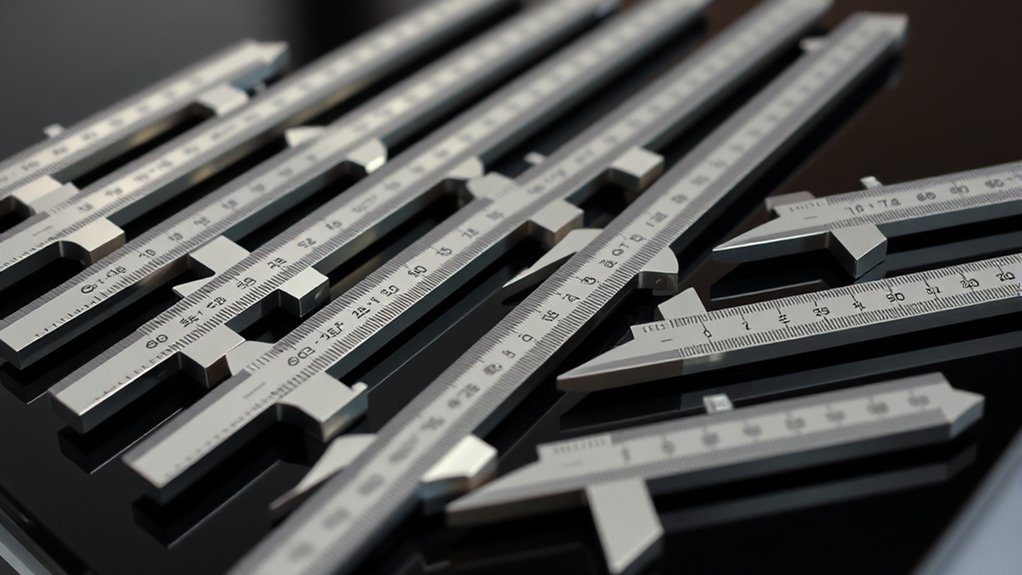

Choosing the right precision bevel gauge depends heavily on whether you prioritize digital convenience or mechanical simplicity. My top overall pick is the Preciva Digital T-Bevel Gauge, which combines an LCD display with dual bubbles to eliminate reading errors during complex angle transfers. For those who prefer traditional mechanics, the Johnson Level & Tool Professional Aluminum T-Bevel offers unmatched durability and a solid feel that digital tools often lack. The main tradeoff in this category is between the ease of reading digital numbers and the tactile reliability of analog scales. Continue reading to see how these options stack up against each other for specific workshop tasks.

Get business pricing on tools and workshop supplies
- Business-only prices and quantity discounts
- Tax-exempt purchasing
- Multiple users, one account, clear invoices
Complete the kit



Key Takeaways
- Digital models like the Preciva and Rainyb reduce parallax error, making them superior for overhead or low-light work compared to analog scales.
- Analog stainless steel gauges, such as the Taytools model, offer better resistance to moisture and dust than most digital electronics.
- The 10-inch aluminum handle on the Johnson Level & Tool model provides better leverage for locking angles than smaller 8-inch plastic or wooden alternatives.
- Digital gauges require battery management, which can be a workflow interruption for professionals who need tools ready instantly.
- Fixed-range analog gauges (15°-120°) are often stiffer and more stable for scribing lines than adjustable sliding bevels that may drift under pressure.
| Preciva Digital T-Bevel Gauge and Protractor with LCD Display and Dual Bubbles |  | Best Overall Digital Gauge | Brand: Preciva | Model: DG00135 | Measurement range: 0°–338° | VIEW ON AMAZON | See Our Full Breakdown |
| 8 Inch T Bevel Angle Finder with Wooden Handle and Stainless Steel Ruler |  | Best Value Manual Gauge | Material: Stainless steel and wood | Measurement range: 0–8 inches / 0–20 cm | Scale: Imperial and metric | VIEW ON AMAZON | See Our Full Breakdown |
| Bonsicoky 9-Inch T-Bevel Sliding Angle Gauge |  | Best for Longer Manual Reach | Brand: Bonsicoky | Model: JIAWONG2201060004 | Materials: Stainless steel blade, wooden handle, brass lock knob | VIEW ON AMAZON | See Our Full Breakdown |
| 10-Inch Woodworking Square Ruler and T-Bevel Gauge Set – 1/16″ Precision, Aluminum Handle Carpenter Square Layout Tool |  | Best Multi-Tool Layout Set | Length: 10 inches | Materials: Aluminum alloy and stainless steel | Measurement precision: 1/16 inch | VIEW ON AMAZON | See Our Full Breakdown |
| Rainyb Digital Angle Finder and T-Bevel Gauge, 0–360° |  | Best Full-Circle Digital Range | Manufacturer: Rainyb | Model: NJDC09 | Measuring range: 0–360° | VIEW ON AMAZON | See Our Full Breakdown |
| Johnson Level & Tool 1913-1000 Professional Aluminum T-Bevel |  | Best Traditional Mechanism | Blade Length: 10 inches | Blade Material: Stainless Steel | Handle Material: Aluminum | VIEW ON AMAZON | See Our Full Breakdown |
| Stainless Steel Bevel Gauge, 15°–120° |  | Best for Sharpening Setup | Material: Stainless Steel | Color: Brushed Silver | Angle Range: 15° to 120° | VIEW ON AMAZON | See Our Full Breakdown |
| Taytools Stainless Steel Bevel Setting Gauge, 0–50 Degrees |  | Best for High-Precision Setting | Material: Hardened Brushed Stainless Steel | Angle Range: 0–50 degrees off 90 | Increments: 1/4 degree | VIEW ON AMAZON | See Our Full Breakdown |
| General Tools Digital T-Bevel Gauge and Protractor |  | Best Digital Readout | Blade Length: 8 inches | Blade Material: Stainless Steel | Handle Material: Impact-resistant ABS | VIEW ON AMAZON | See Our Full Breakdown |
More Details on Our Top Picks
Preciva Digital T-Bevel Gauge and Protractor with LCD Display and Dual Bubbles
For buyers who want a bevel gauge that also gives a direct angle reading, the Preciva DG00135 is the most capable all-around pick here. Its stated ±0.3° accuracy and large LCD make it easier to read an angle than the manual scales on the 8 Inch T Bevel Angle Finder, while the locking blade still transfers that angle to a workpiece. Horizontal and vertical bubbles add alignment help when setting the tool against a surface. Zero and reverse-reading functions give it flexibility for different measuring orientations. The tradeoff is that it depends on electronics and shuts off after 5–6 minutes of inactivity. Its description also gives different maximum angles for measuring and copying, so I would verify the intended range before relying on it for unusual angles.
Pros:- Stated ±0.3° accuracy with a large LCD readout
- Locking T-bevel transfers a measured angle to a workpiece
- Horizontal and vertical bubbles aid alignment
- Zero and reverse-reading functions support different measuring orientations
Cons:- Automatic power-off after 5–6 minutes may interrupt longer measuring tasks
- Description gives differing maximum angles for measuring and angle copying
- Digital functions make it more dependent on electronics than a manual bevel gauge
Best for: Woodworkers who want a digital angle readout alongside a lockable bevel for transferring cuts and checking alignment
Not ideal for: Buyers who prefer a simple, battery-free gauge or need clearly specified copying limits for angles near the tool’s maximum range
- Brand:Preciva
- Model:DG00135
- Measurement range:0°–338°
- Stated accuracy:±0.3°
- Ruler length:230 mm (approximately 8 inches)
- Material:Stainless steel
- Readout and alignment:LCD display; horizontal and vertical bubbles
- Additional functions:Angle lock, reverse reading, zero function, auto power-off
Our verdict“Choose the Preciva if you want a feature-rich digital gauge with a lockable blade and alignment bubbles, and can accept its electronic controls and unclear copying limit.”
8 Inch T Bevel Angle Finder with Wooden Handle and Stainless Steel Ruler
I’d pick this model for straightforward angle copying without a digital display to manage. The stainless steel ruler, wooden handle, and center-knob locking mechanism cover the core job of a precision bevel gauge: set an angle, hold it, and transfer it to a board or other material. Its imperial and metric scales also suit shops where plans and measuring habits vary. Unlike the Preciva Digital T-Bevel, it does not provide a numerical angle readout or stated accuracy, so it is less suited to checking a specific angle by display. The 8-inch reach is practical for common layout work but limits how far it spans compared with the Bonsicoky 9-Inch gauge. The wooden handle may also need care over time.
Pros:- Stainless steel construction for the ruler
- Imperial and metric scales support mixed-unit work
- Adjustable blade locks with a center knob
- Suitable for transferring angles across wood, tile, and brick
Cons:- No digital display or stated angle accuracy
- 8-inch measurement reach may be limiting on larger work
- Wooden handle may require maintenance
Best for: Woodworkers and craft users who want a manually adjustable, lockable bevel with both inch and metric markings
Not ideal for: Buyers who need a digital angle value, stated measurement accuracy, or a blade longer than 8 inches
- Material:Stainless steel and wood
- Measurement range:0–8 inches / 0–20 cm
- Scale:Imperial and metric
- Locking mechanism:Protractor connecting buckle with center knob
- Design:Adjustable sliding T-bevel
- Intended applications:Carpentry, crafts, and marking materials including wood, tile, and brick
Our verdict“Choose this manual gauge for everyday angle transfer with dual-unit scales, but choose the Preciva if you need a digital reading or stated accuracy.”
Bonsicoky 9-Inch T-Bevel Sliding Angle Gauge
The Bonsicoky gives manual-gauge buyers a little more working length than the 8 Inch T Bevel Angle Finder, while keeping the familiar wooden handle and locking blade format. Its stainless steel blade and brass lock knob are designed for holding an angle during transfer, and inch and metric markings accommodate different shop references. The unfolded length is listed as 14.5 inches, though its maximum scale is 20 cm (7 inches); those figures describe different dimensions, so I wouldn’t treat the full body length as usable measuring reach. Compared with the digital Preciva, this is simpler and needs no displayed reading, but manual setup can introduce small errors and it offers no stated accuracy. It suits general woodworking better than work demanding a verified numeric angle.
Pros:- Stainless steel blade with a brass locking knob
- Blade locks to hold an angle for transfer
- Metric and inch markings
- Wooden handle is designed for comfortable handling
Cons:- Maximum scale is limited to 20 cm (7 inches) despite the longer unfolded body
- Manual measurement can introduce small dimensional inaccuracies
- No stated accuracy or digital angle readout
Best for: Woodworkers who want a manual sliding bevel with a longer overall body and dual-unit markings for angle transfer
Not ideal for: Users who need a clear, extended scale, a stated accuracy figure, or a digital angle measurement
- Brand:Bonsicoky
- Model:JIAWONG2201060004
- Materials:Stainless steel blade, wooden handle, brass lock knob
- Unfolded length:370 mm (14.5 inches)
- Folded length:265 mm (10.4 inches)
- Maximum scale:20 cm / 7 inches
- Markings:Metric and inches
- Package contents:One T-bevel sliding angle gauge
Our verdict“Choose the Bonsicoky for manual angle transfer with a longer overall body than the 8-inch model, but check its shorter stated scale against your work.”
10-Inch Woodworking Square Ruler and T-Bevel Gauge Set – 1/16″ Precision, Aluminum Handle Carpenter Square Layout Tool
This set is the pick for someone whose layout work needs a square and rafter references as well as a bevel gauge. The 10-inch size and 1/16-inch etched markings support repeatable measuring and marking, while the listed try-square and protractor functions add uses that a standalone gauge such as the Bonsicoky does not cover. Its aluminum alloy and stainless steel construction balances portability with durable materials. The tradeoff is that this is a layout set, not a dedicated digital angle finder: complex angles still require manual setup, and the product data does not state a degree-accuracy figure for the bevel function. Its 10-inch reach may also fall short for larger stock. I’d choose it for varied bench layout, not for buyers focused only on precise numerical angle readings.
Pros:- Combines square ruler, T-bevel, and protractor functions
- Etched 1/16-inch markings support layout work
- Aluminum alloy and stainless steel construction
- Compact design is suited to carrying between bench and job site
Cons:- 10-inch length may not suit larger projects
- Complex angle work requires manual handling
- No stated degree-accuracy figure for the bevel function
Best for: Carpenters and workshop users who want a compact square, ruler, and bevel tool for general layout and rafter work
Not ideal for: Buyers who need a dedicated digital angle gauge, a stated degree-accuracy tolerance, or a tool for long workpieces
- Length:10 inches
- Materials:Aluminum alloy and stainless steel
- Measurement precision:1/16 inch
- Functions:Rafter angle scales, protractor functions, and try squares
- Tool type:Woodworking square ruler and T-bevel gauge set
- Portability:Compact design for workshop or job-site transport
Our verdict“Choose this set if you need several manual layout tools in one compact package, but opt for the Preciva when direct digital angle readings matter more.”
Rainyb Digital Angle Finder and T-Bevel Gauge, 0–360°
The Rainyb stands apart for buyers who want a digital bevel gauge with a stated 0–360° range, including internal and external angles. Its LCD and locking stainless steel blade let it both report an angle and transfer it, while the bubble level helps with alignment. It also lists 0.05° resolution, but that is not the same as accuracy: the stated accuracy is ±0.5°, looser than the Preciva’s ±0.3°. That makes the Preciva the stronger choice when the stated accuracy is the priority; the Rainyb is appealing when full-circle coverage and a compact 7-inch blade matter more. It requires a CR2032 battery, and the short blade can constrain contact on larger pieces. I’d also distinguish its fine display increments from its actual accuracy when choosing it for close-tolerance work.
Pros:- Measures across a stated 0–360° range
- LCD displays readings with 0.05° resolution
- Locking stainless steel blade supports angle transfer
- Built-in bubble level aids alignment
Cons:- Stated ±0.5° accuracy is looser than the Preciva’s ±0.3°
- Requires a CR2032 battery
- 7-inch blade may limit reach on larger work
Best for: DIYers and woodworkers who want a compact digital gauge covering internal and external angles through a full circle
Not ideal for: Buyers who prioritize the tighter stated accuracy of the Preciva or need a longer blade for larger workpieces
- Manufacturer:Rainyb
- Model:NJDC09
- Measuring range:0–360°
- Stated accuracy:±0.5°
- Resolution:0.05°
- Blade length:150 mm / 7 inches
- Display and alignment:LCD and built-in bubble level
- Battery:One CR2032 3V lithium battery, included
- Operating conditions:0°C to 50°C; humidity ≤85%
Our verdict“Choose the Rainyb for a full-circle digital range and compact angle transfer, but favor the Preciva when tighter stated accuracy matters more.”
Johnson Level & Tool 1913-1000 Professional Aluminum T-Bevel
This tool stands out for its robust mechanical simplicity, appealing to woodworkers who distrust electronics. Unlike the General Tools Digital T-Bevel, which relies on batteries and screens, this model uses a solid aluminum handle and stainless steel blade to transfer angles directly. The locking lever is tight and reliable, preventing slippage during layout. However, it offers no numerical readout, meaning you must visually align it with a protractor or another reference. This makes it ideal for transferring a known angle from a drawing to a workpiece, but less useful for measuring an unknown angle. Compared to the Taytools Gauge, it lacks fine incremental markings, so precision depends entirely on your eye and steadiness. It is a workhorse tool, not a measurement device.
Pros:- Solid aluminum handle resists bending
- Stainless steel blade resists rust
- Secure locking mechanism holds angles firmly
Cons:- No numerical angle display
- Precision limited by user’s visual estimation
- Heavier than plastic-handled alternatives
Best for: Cabinetmakers and carpenters who prefer durable, battery-free tools and routinely transfer angles from plans rather than measuring them.
Not ideal for: Users who need to measure unknown angles numerically or require high-precision digital verification.
- Blade Length:10 inches
- Blade Material:Stainless Steel
- Handle Material:Aluminum
- Weight:0.32 ounces
- Dimensions:0.75 × 3.75 × 13.13 inches
- Measurement Units:Degrees
- Warranty:Limited Lifetime
Our verdict“Choose this if you want a durable, battery-free tool for transferring angles and don’t need a digital readout.”
Stainless Steel Bevel Gauge, 15°–120°
This compact gauge is designed for a niche but critical task: setting consistent sharpening angles. Unlike the Johnson Level T-Bevel, which is a general-purpose angle transfer tool, this round gauge features 12 fixed angle markings ranging from 15° to 120°. Its small size makes it easy to carry in a pocket or tool apron. However, it is not a sliding gauge; you cannot adjust it to arbitrary angles. If your project requires a 37.5° cut, this tool will fail you, whereas the Taytools Gauge offers finer adjustments. It is strictly a reference template for common angles, particularly useful for chisel and plane blade maintenance. The brushed stainless steel construction ensures it survives shop abuse, but its limited range restricts its utility for complex joinery.
Pros:- Compact and highly portable
- Clear markings for 12 common angles
- Durable stainless steel construction
Cons:- Cannot be adjusted to non-marked angles
- Limited range compared to sliding gauges
- Not suitable for long blade transfers
Best for: Sharpening enthusiasts and hand-tool users who need quick reference templates for common bevel angles.
Not ideal for: Woodworkers needing to measure or set non-standard angles or complex compound cuts.
- Material:Stainless Steel
- Color:Brushed Silver
- Angle Range:15° to 120°
- Marked Angles:12 specific settings
- Item Weight:2.39 ounces
- Dimensions:3.39 × 2.6 × 0.28 inches
- Package Quantity:1
Our verdict“Ideal for quick angle checks during sharpening, but insufficient as a primary layout tool.”
Taytools Stainless Steel Bevel Setting Gauge, 0–50 Degrees
This gauge is the choice for those who demand sub-degree accuracy. It features photoetched markings at 1/4-degree increments, allowing for far more precise setup than the Johnson Level T-Bevel, which relies on visual estimation. The hardened stainless steel plate includes a center-finding ruler and end graduations, making it a versatile layout aid beyond just angle setting. However, its range is limited to 0–50 degrees off 90 degrees. If you need to set an angle of 60° off vertical, this tool is useless, unlike the broader range of the Stainless Steel Bevel Gauge. It is not a standalone measuring tool; it is designed to calibrate a sliding bevel or mark a saw plate. This is a specialist tool for fine joinery and dovetailing, not a general-purpose protractor.
Pros:- 1/4-degree precision increments
- Photoetched markings resist wear
- Includes center-finder and ruler features
- Hardened steel construction
Cons:- Limited angle range (0–50°)
- Not a standalone measuring gauge
- Requires a separate sliding bevel for transfer
Best for: Fine woodworkers and machinists who need to set precise angles for saw blades, chisels, or sliding bevels.
Not ideal for: Users needing to measure or set angles greater than 50 degrees from vertical.
- Material:Hardened Brushed Stainless Steel
- Angle Range:0–50 degrees off 90
- Increments:1/4 degree
- Dimensions:12 × 3 inches
- Thickness:0.05 inches
- Ruler Markings:1/32 inch and mm
- Model:467238
Our verdict“The best option for setting precise blade angles, provided your work stays within its 50-degree limit.”
General Tools Digital T-Bevel Gauge and Protractor
This model solves the ambiguity of traditional bevels by providing a clear numerical LCD display. Unlike the Johnson Level T-Bevel, which forces you to estimate angles, this tool gives you a precise digital reading, reducing errors in complex projects. The hold function locks the reading, allowing you to step away from the workpiece to check the number. However, it is battery-dependent, which introduces a point of failure that mechanical tools lack. The ABS handle feels less premium than the aluminum on the Johnson model, and the 8-inch blade is shorter than the 10-inch blade on many competitors. While it lacks the dual bubble level found on the Preciva Digital T-Bevel, its simplicity and clear readout make it a strong contender for general carpentry where speed and clarity are paramount.
Pros:- Clear LCD digital readout
- Hold function locks readings
- Lightweight and portable
- Includes battery
Cons:- Requires battery replacement
- Plastic handle less durable than metal
- No integrated bubble level
Best for: Carpenters and DIYers who value quick, unambiguous angle measurements and don’t mind carrying a spare battery.
Not ideal for: Professionals who prioritize rugged, battery-free reliability over digital convenience.
- Blade Length:8 inches
- Blade Material:Stainless Steel
- Handle Material:Impact-resistant ABS
- Display:Large LCD
- Weight:6.7 ounces
- Power Source:CR2032 Battery
- Warranty:1 Year Parts
Our verdict“A user-friendly digital option for those who want exact numbers without the complexity of analog scales.”

How We Picked
I evaluated these nine gauges based on angle retention stability, readability, and build durability. The primary metric was how well each tool holds a specific angle after being set, as even slight drift renders a bevel gauge useless for precision layout work. I also considered the ease of transferring angles from a drawing or existing edge to a workpiece, favoring tools with clear markings or digital displays that minimize human interpretation error.
Beyond basic function, I looked at ergonomics and environmental resistance. A gauge used in a dusty shop needs to withstand debris without jamming, while one used for fine furniture might prioritize a smooth, non-marring handle. Products were ranked by balancing these practical factors, with digital options favored for their speed and analog options for their robustness.
Factors to Consider When Choosing Precision Bevel Gauges
Selecting a bevel gauge isn’t just about picking the most expensive option; it’s about matching the tool’s characteristics to your specific workflow and environment.Digital vs. Analog Accuracy
Digital gauges offer a clear advantage in readability, displaying exact degrees on an LCD screen. This eliminates the guesswork involved in reading small tick marks on an analog scale, especially when working with odd angles like 22.5° or 33°. However, digital models rely on electronics that can fail if exposed to excessive moisture or if the battery dies mid-project. Analog gauges, while requiring a sharper eye, are virtually indestructible in terms of functionality. If you work in a clean, indoor environment, digital is often faster. For job sites or rough carpentry, analog remains the more reliable choice.
Blade Material and Length
The blade is the critical interface between the tool and your workpiece. Stainless steel blades are preferred for their resistance to rust and their ability to be sharpened or filed flat if they become burred. Aluminum blades, while lighter, are softer and prone to denting, which can affect the accuracy of the edge you are transferring. Length matters too; a 10-inch blade provides a longer reference line, reducing the chance of error when scribing across wider boards. Shorter 6-inch or 8-inch blades are more portable but less versatile for large stock.
Locking Mechanism Stability
A bevel gauge is only as good as its ability to hold an angle. I found that thumbscrew locks on higher-end models engage more smoothly and hold tighter than the cheap plastic knobs found on budget options. Some digital models use friction locks that can slip if bumped, whereas mechanical clamps on analog tools provide positive mechanical resistance. When testing, I looked for any play or wobble in the head once locked. If the head moves even slightly under light pressure, the gauge will not transfer angles accurately over long distances.
Ergonomics and Handle Design
Comfort matters when you are making hundreds of layout marks. Wooden handles offer a warm, traditional feel that many woodworkers prefer, but they can absorb moisture and swell. Aluminum or plastic handles are easier to clean and more durable in damp conditions. The shape of the handle also affects control; a contoured grip allows for better leverage when setting angles against uneven surfaces. Poor ergonomics lead to hand fatigue, which can cause sloppy marks by the end of the day.
Range and Versatility
Most standard T-bevels cover 0° to 180°, which handles the majority of woodworking tasks. However, some specialized gauges, like the Taytools 0–50 Degree model, focus on a narrower range for extreme precision in specific applications like knife sharpening or joinery. Conversely, digital models often offer 0–360° measurement, allowing them to function as full protractors. Consider whether you need a general-purpose tool for cabinet work or a specialized instrument for fine detailing. Buying a generalist tool for a specialist task often results in compromised accuracy.
Frequently Asked Questions
How do I calibrate a digital bevel gauge?
Most digital bevel gauges feature a ‘zero’ button that recalibrates the current position to 0°. To calibrate accurately, place the gauge on a known flat surface or against a reliable square edge. Press the zero button while the tool is firmly seated to ensure the sensor reads the true horizontal or vertical reference. It is advisable to repeat this process whenever you change batteries or suspect drift, as electronic sensors can sometimes lose their baseline reference over time.
Can I use a bevel gauge to check if a saw blade is at 90 degrees?
While you can use a bevel gauge to set a saw to 90 degrees, it is not the most reliable method for verification. The pivot point and potential play in the head of the gauge can introduce small errors. A dedicated combination square or engineer’s square is better suited for verifying right angles. Use the bevel gauge for transferring odd angles from a template or existing corner, where its adjustable nature provides an advantage that a fixed square cannot match.
Why does my analog bevel gauge drift after locking?
Drift usually occurs because the locking mechanism is not engaging fully or because the threads are worn. If the thumbscrew feels loose or spins without tightening, the internal washer may be degraded. Additionally, if the blade is not perfectly clean, debris can prevent the locking surfaces from mating tightly. Cleaning the pivot area with a solvent and ensuring the screw is tightened firmly with a wrench (if accessible) often resolves this issue.
Are stainless steel blades better than aluminum?
Stainless steel is generally superior for precision work because it is harder and more resistant to deformation. Aluminum blades are lighter and cheaper but can bend or dent if dropped, which permanently alters the edge you use for scribing. Stainless steel also resists corrosion better, which is important if you work in humid environments. For a tool meant to last years and maintain a sharp, straight edge, stainless steel is the better investment.
What is the advantage of dual bubble levels on a digital gauge?
Dual bubble levels allow you to establish a true horizontal or vertical reference point before taking an angle measurement. This helps eliminate errors caused by the workpiece being tilted relative to the ground. By leveling the tool first, you ensure that the angle reading is relative to gravity, not just the surface you are touching. This feature is particularly useful for carpenters and contractors who need to ensure slopes are consistent across different sections of a structure.
Conclusion
If you want the best balance of accuracy and ease of use, the Preciva Digital T-Bevel Gauge is my top recommendation. Its LCD screen and dual bubbles make complex angle transfers straightforward, even for those new to the tool. For the traditionalist who values durability and tactile feedback, the Johnson Level & Tool Professional Aluminum T-Bevel is the superior choice. It is built to withstand job site abuse and holds angles securely without batteries. If you are on a tight budget but still need reliable performance, the Bonsicoky 9-Inch T-Bevel offers solid functionality without the premium price tag. For specialized fine work requiring extreme precision within a narrow range, the Taytools Stainless Steel Bevel Setting Gauge is the expert’s choice.
Halloween Picks
halloween
As an affiliate, we earn on qualifying purchases.