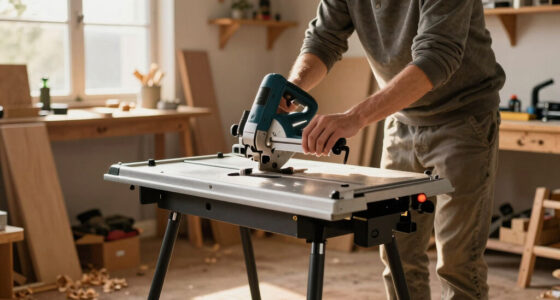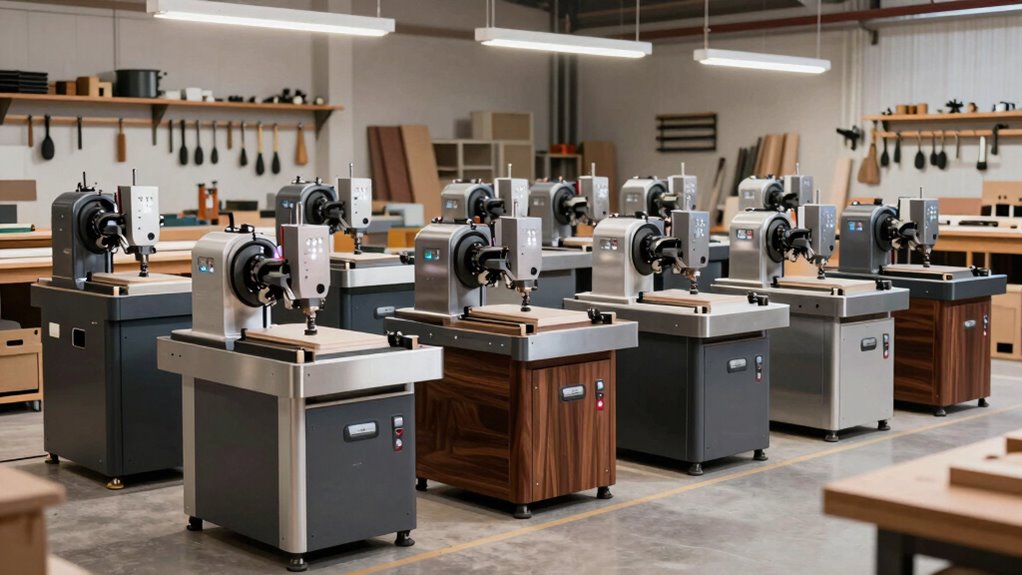

Choosing the right mortise and tenon machine depends heavily on your workshop size, project scope, and experience level. The Makita 7410L stands out for its impressive power and portability, making it ideal for demanding tasks where mobility is key. For those prioritizing precision and ease of use in a dedicated shop space, the Powermatic PM701 offers a stable, feature-rich solution. Meanwhile, the CXRCY Heavy Duty Mortising Machine provides a robust, versatile option for serious woodworkers needing high efficiency. Each of these models balances different tradeoffs like weight, size, and feature set, so I’ll help clarify which fits best for your needs.

Get business pricing on tools and workshop supplies
- Business-only prices and quantity discounts
- Tax-exempt purchasing
- Multiple users, one account, clear invoices
Complete the kit


Key Takeaways
- Powerful motors enhance cutting efficiency but can add weight and reduce portability.
- Benchtop models prioritize stability and precision, suitable for dedicated workshops.
- Versatility and accessory options expand project scope but may increase complexity and cost.
- Lighter, portable options sacrifice some capacity for ease of transport and small workspace compatibility.
- Choosing the right machine depends on balancing project demands with workspace and budget constraints.
| Makita 7410L 10.5 Amp Chain Mortiser |  | Best Overall Power and Portability | Motor Power: 10.5 AMP | RPM: 3,200 | Weight: 38.1 lbs | VIEW ON AMAZON | See Our Full Breakdown |
| Powermatic Benchtop Mortiser, 3/4″ Chisel, 5-1/2″ Stroke, 115/230V 1Ph (Model PM701) |  | Best for Precision and Stability in a Dedicated Workshop | Power: 115/230V 1Ph | Chisel Capacity: 3/4 inch | Stroke Length: 5-1/2 inches | VIEW ON AMAZON | See Our Full Breakdown |
| JET Benchtop Mortiser, 1/2″ Chisel, 4-3/4″ Stroke, 115V 1Ph |  | Best for Ergonomic Operation and Larger Stock | Chisel Size: 1/2 inch | Stroke Length: 4-3/4 inches | Voltage: 115V | VIEW ON AMAZON | See Our Full Breakdown |
| Benchtop Mortiser, 3400RPM 3/4HP Woodworking Mortising Machine |  | Best for Heavy-Duty, Versatile Woodworking | Chisel Sizes: 1/4, 3/8, 1/2, 5/8 inch | RPM: 3400 | Motor Power: 3/4 HP | VIEW ON AMAZON | See Our Full Breakdown |
| Mortising Machine, Tenon Tools Mortising Attachment for Drill Press |  | Best for Versatility and Conversion | Included accessories: locator, press block, side rod | Chisel sizes: 1/4, 3/8, 1/2, 5/8 inch | Collar diameter: 65mm with reducers | VIEW ON AMAZON | See Our Full Breakdown |
| mortise and tenon machine | Motor Power |
|---|---|
| Makita 7410L 10.5 Amp Chain Mo | 10.5 AMP |
| Powermatic Benchtop Mortiser | 3/4 HP |
| JET Benchtop Mortiser | 0.5 HP |
| Benchtop Mortiser | 3/4 HP |
| Mortising Machine | — |
More Details on Our Top Picks
Makita 7410L 10.5 Amp Chain Mortiser
The Makita 7410L excels in combining raw power with a portable design, making it suitable for heavy-duty tasks in varied locations. Its 10.5 AMP motor powers through thick wood with ease, providing clean, precise notches. Compared to benchtop models, it offers more mobility, which is advantageous for on-site work or flexible shop setups. However, its weight (38.1 lbs) can be tiring over extended use, and it’s primarily limited to wood materials. This makes it the best choice for those needing a robust, transportable machine but less ideal for delicate or small-scale projects.
Pros:- Powerful 10.5 AMP motor for demanding cuts
- Lightweight and portable at 38.1 lbs
- Adjustable vise for secure operation
- Accurate, clean cuts
Cons:- Heavy for prolonged handheld use
- Limited to wood-only applications
Best for: Woodworkers needing mobile power for thick material cutting.
Not ideal for: Small workshops or users focusing on lighter or non-wood materials.
- Motor Power:10.5 AMP
- RPM:3,200
- Weight:38.1 lbs
- Cutting Capacity:3-1/8″ to 12-1/8″ thick
- Max Notch Size:5-1/8″
Our verdict“A versatile, portable option perfect for heavy-duty woodworking on the go.”
Powermatic Benchtop Mortiser, 3/4″ Chisel, 5-1/2″ Stroke, 115/230V 1Ph (Model PM701)
The Powermatic PM701 is a well-appointed benchtop model that emphasizes stability, ease of setup, and consistent accuracy. Its large work table and integrated spacers make precise chiseling straightforward, suited for detailed projects where consistency matters most. The reversible handle adds ergonomic flexibility, but its 115V requirement and weight make it less portable, ideal for dedicated workshops. The limited 1/2-inch chuck capacity might restrict some larger bit options, but overall, this model offers a reliable, user-friendly experience for serious hobbyists and professionals alike.
Pros:- Easy setup with integrated spacers
- Large, stable work surface
- Reversible handle for ergonomic use
- Accessible chuck door with magnetic catch
Cons:- Limited to 1/2-inch chuck capacity
- Heavy and less portable
- Requires 115V power supply
Best for: Woodworkers seeking precision in a fixed workshop environment.
Not ideal for: Mobile users or those needing larger chisel capacity.
- Power:115/230V 1Ph
- Chisel Capacity:3/4 inch
- Stroke Length:5-1/2 inches
- Motor Power:3/4 HP
- Chuck Capacity:1/2 inch
- Head Stroke Capacity:5-1/2 inches
- Chisel Center to Fence:4-3/8 inches
Our verdict“A stable, precise benchtop mortiser designed for dedicated workshop use.”
JET Benchtop Mortiser, 1/2″ Chisel, 4-3/4″ Stroke, 115V 1Ph
The JET Benchtop Mortiser offers a balanced mix of power and comfort, featuring a reversible column for larger workpieces and a multi-position handle that adapts to user preference. Its 1/2 HP motor ensures smooth operation, and the quick-adjust depth stop speeds up setup. While its 115V power requirement and weight might limit portability, it’s a solid choice for those needing a versatile, ergonomic machine that can handle larger stock with ease. However, the smaller 1/2-inch chisel size might restrict some project types compared to larger models.
Pros:- Reversible column for larger stock
- Multi-position handle for comfort
- Powerful motor ensures smooth cuts
- Easy access to drill chuck
Cons:- Limited to 1/2 inch chisel size
- Heavy for portable use
- Requires 115V power
Best for: Woodworkers needing ergonomic comfort and larger stock capacity.
Not ideal for: Those requiring larger chisel sizes or portable solutions.
- Chisel Size:1/2 inch
- Stroke Length:4-3/4 inches
- Voltage:115V
- Motor Power:0.5 HP
- Chuck Size:Up to 3/8 inch
Our verdict“An ergonomic benchtop solution suitable for larger, detailed woodworking projects.”
Benchtop Mortiser, 3400RPM 3/4HP Woodworking Mortising Machine
The CXRCY Heavy Duty Mortising Machine is built from durable cast iron and powered by a 3/4 HP copper motor, making it suitable for high-volume or intricate projects requiring clean, precise cuts. Its wide range of chisel sizes (including 1/4, 3/8, 1/2, 5/8 inch) adds versatility, and the reversible column allows for larger stock handling. It features a long handle and gear transmission for labor-saving operation, plus a protective transparent shield for safety. While it’s heavier—over 47 lbs—and more complex to assemble, its durability and multi-project capacity make it ideal for serious woodworking shops.
Pros:- Heavy-duty cast iron construction
- Multiple chisel sizes included
- Reversible column for larger workpieces
- Labor-saving long handle
Cons:- Heavy weight limits portability
- More complex setup
- Higher price point
Best for: Professional or serious hobbyist woodworkers needing durability and versatility.
Not ideal for: Small workshops or casual hobbyists with limited space or budget.
- Chisel Sizes:1/4, 3/8, 1/2, 5/8 inch
- RPM:3400
- Motor Power:3/4 HP
- Weight:47.06 lbs
- Construction:Cast iron
Our verdict“A durable, versatile machine suited for demanding woodworking environments.”
Mortising Machine, Tenon Tools Mortising Attachment for Drill Press
The Tenon Tools Mortising Attachment transforms a standard drill press into a functional mortising machine, offering flexibility and portability. It includes various chisels and accessories, making it possible to adapt existing equipment for mortising tasks. However, it requires a drill press with sufficient vertical clearance—at least 15.7 inches—and precise setup, which might be a hurdle for less experienced users. This makes it an excellent budget-friendly, versatile solution for those who already own a drill press and want to expand its capabilities without investing in a dedicated machine.
Pros:- Transforms existing drill press into mortiser
- Includes multiple chisel sizes
- High-quality steel construction
- Portable and easy to store
Cons:- Requires specific drill press size and clearance
- Less suited for high-volume use
- Setup can be complex for beginners
Best for: Woodworkers with existing drill presses seeking multi-functionality.
Not ideal for: Users without compatible drill presses or needing high-volume production.
- Included accessories:locator, press block, side rod
- Chisel sizes:1/4, 3/8, 1/2, 5/8 inch
- Collar diameter:65mm with reducers
- Minimum vertical distance:15.7 inches
Our verdict“An economical, adaptable option for hobbyists or small shops with existing drill presses.”

How We Picked
Our selection process focused on machines that are versatile, durable, and suitable for a range of woodworking projects. I compared power output, ease of setup, versatility of chisel sizes, and overall build quality. I prioritized models that balance performance with user-friendly features, considering what different types of woodworkers—beginners to professionals—would need. Price was a factor, but durability and functionality carried more weight, ensuring each pick offers real value for its role.
Factors to Consider When Choosing Mortise And Tenon Machine
When selecting a mortise and tenon machine, it’s vital to consider your workshop setup, the scale of your projects, and your experience level. Power, size, and versatility determine how suitable each model is for different users. For those handling frequent, heavy-duty work, a portable but powerful model like the Makita offers mobility without sacrificing cutting capacity. Conversely, dedicated benchtop models from Powermatic or JET provide stability and precision, perfect for detailed or large-scale work. Budget and space constraints also influence whether a full machine or a conversion attachment makes more sense. Here’s what you need to keep in mind for each key factor.
Power and Capacity
Stronger motors, such as those in the Makita 7410L with 10.5 amps, enable cutting through thicker, tougher wood with ease. If your projects involve large beams or dense hardwoods, prioritize power. For lighter, hobbyist projects, a smaller motor may suffice, but be aware that it might limit your material options or increase time spent on each cut. Capacity, such as maximum notch size, also matters; larger capacities require more robust and sometimes heavier machines.
Size and Portability
If your workspace is limited or you need to move between sites, a portable model like the Makita or the mortising attachment for a drill press offers flexibility. However, portability often comes with tradeoffs in capacity, stability, and sometimes power. Fixed benchtop models such as Powermatic or JET excel in stability, ensuring precise cuts, but are less convenient to move. Think about your typical workflow and storage options before choosing.
Versatility and Accessories
Some machines come with multiple chisel sizes and adjustable features, allowing a broader range of projects. The CXRCY heavy-duty model, for example, accommodates various chisel sizes and larger stock thanks to its reversible column. Conversion attachments are a budget-friendly way to expand your existing drill press’s capabilities but require specific space and setup. Decide whether dedicated machinery or adaptable tools fit your project scope and budget better.
Ease of Use and Safety
Features like quick-adjust depth stops, ergonomic handles, and safety shields greatly enhance user experience. Machines like the JET model emphasize ergonomic operation, reducing fatigue during extended use. For beginners, straightforward setup and accessible controls are crucial, whereas experienced users might prioritize features that speed up workflow. Always consider safety features, especially when working with powerful motors and sharp chisels.
Budget and Long-Term Value
While high-end models like Powermatic and CXRCY come at a premium, they offer durability and versatility that can justify the expense in a professional setting. Budget options, such as the mortising attachment for drill presses, provide a good starting point but may lack the robustness or capacity for heavy use. Balance your initial investment with the expected workload to find the best value for your woodworking needs.
Frequently Asked Questions
Can I use a drill press as a mortising machine?
Yes, a drill press can be converted into a mortising machine using a dedicated attachment, like the Tenon Tools Mortising Set. This option is cost-effective and versatile, especially for hobbyists or small workshops. However, it requires sufficient vertical clearance, typically at least 15.7 inches, and proper setup to ensure safety and accuracy. While not as powerful or stable as dedicated mortisers, it offers a practical solution for occasional use and smaller projects.
What is the main advantage of a benchtop mortiser?
Benchtop mortisers, such as the Powermatic or JET models, emphasize stability and precision. Their fixed position on a sturdy work surface allows for accurate, repeatable cuts, making them ideal for detailed work or larger projects. They are generally less portable but excel in providing consistent results in a dedicated workshop environment. The added stability often translates into cleaner, more accurate mortises, especially when working with challenging hardwoods.
Are heavy-duty mortising machines worth the investment?
Heavy-duty mortising machines, like the CXRCY model, are designed for frequent, high-volume, or demanding projects. They are built from durable materials such as cast iron and offer a wide range of chisel sizes, reversible columns, and powerful motors. If you run a professional shop or tackle complex woodworking tasks regularly, these machines offer long-term reliability and versatility. However, their higher cost and weight may not be justified for casual hobbyists working on small projects.
What should I consider when choosing a portable mortising machine?
Portability is key for those who need mobility or work in multiple locations. Look for a model that balances power with weight—models like the Makita 7410L provide ample motor strength while remaining manageable to carry. Consider features like adjustable vises, ease of setup, and compatibility with different chisels. Keep in mind that portable models might sacrifice some capacity or stability compared to fixed benchtop options, so match your choice to your project complexity and workspace constraints.
How important are safety features on a mortise machine?
Safety features such as transparent shields, emergency stops, and safety guards are vital for protecting users from flying chips and accidental contact with moving parts. Machines like the CXRCY and JET models incorporate safety shields and quick-access controls, which are especially important when working with powerful motors and sharp chisels. Prioritizing safety not only protects you but also ensures a smoother, more confident woodworking experience, particularly during extended or intensive use.
Conclusion
For hobbyists or those with limited space, a portable model like the Makita 7410L offers power and flexibility. Serious woodworkers focusing on precision and durability should consider the Powermatic PM701 or the JET benchtop model, which excel in stability and fine detail work. Professionals or high-volume shops will find the CXRCY heavy-duty machine to be a worthy investment, providing long-term reliability and versatility. Finally, users with existing drill presses can explore converting their equipment with a mortising attachment for a budget-friendly, adaptable solution.
Fall Picks
fall essentials
As an affiliate, we earn on qualifying purchases.