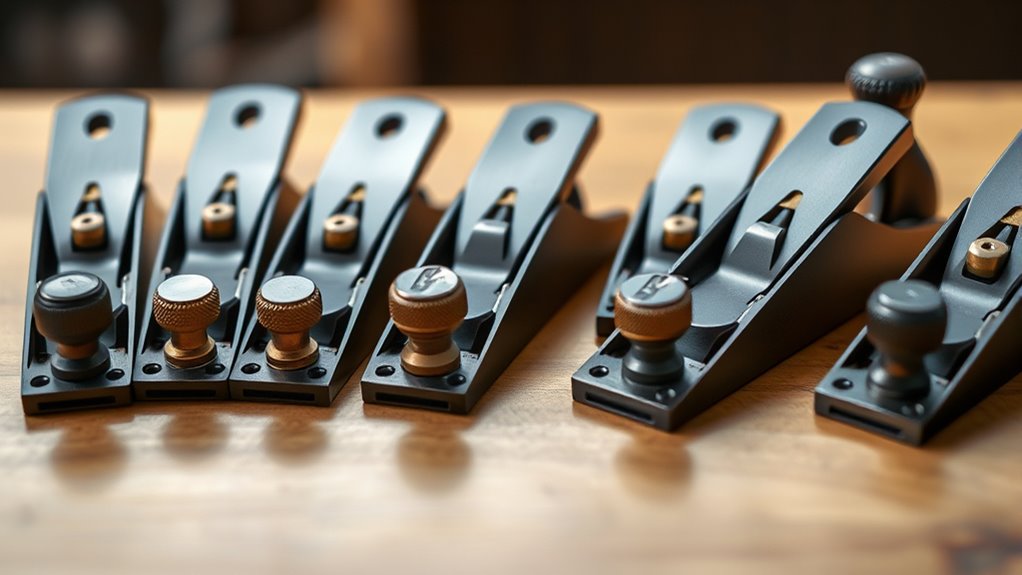

If you’re after the 15 best low-angle block planes for precision woodworking, I recommend considering models from brands like Jorgensen, Taytools, Woodriver, and Spear & Jackson. These tools feature adjustable mouths, high-quality blades, and durable construction, perfect for fine detailing and finishing work. Whether you need a compact mini or a full-sized plane, there’s something here to suit your needs. Keep exploring further to find the perfect fit for your projects.
Key Takeaways
- Look for models with adjustable mouths and blades for fine-tuning shaving thickness and achieving precise, smooth cuts.
- Prioritize planes with durable construction materials like cast iron or ductile iron for stability and longevity.
- Consider ergonomic features such as comfortable handles and low weight for better control during detailed woodworking.
- Choose planes with high-quality, easily replaceable blades made from high-carbon steel or HSS for sharpness retention.
- Review user feedback to identify tools that deliver minimal tearout, chatter, and excellent end grain control for precision work.

JORGENSEN NO.60-1/2 6-1/4" Wood Planer, Hand Planer for Woodworking, Low Angle Block Plane, Small Hand Plane for Trimming, Wood Planing, Craft - Professional Ductile Iron Body, Adjustable Mouth
Professional Level Blade: The blade is made of professional level O1 tool steel, improving cutting efficiency while minimizing...
As an affiliate, we earn on qualifying purchases.
Jorgensen No.60-1/2 Wood Planer, Mini Hand Plane for Woodworking
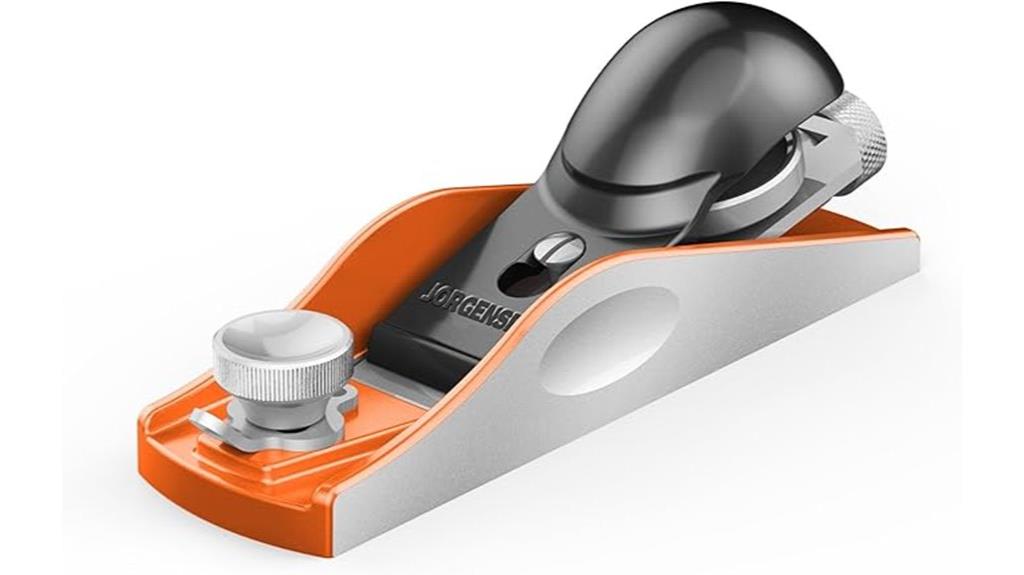
If you’re looking for a compact, budget-friendly hand planer that delivers precise results, the Jorgensen No.60-1/2 Wood Planer is an excellent choice. Weighing just 1.48 pounds, it’s easy to handle and perfect for detailed woodworking, trimming, and finishing tasks. Its durable ductile iron body and high-quality O1 steel blade ensure longevity and sharpness, while adjustable cutting depth offers control over surfaces. The flat, polished bottom guarantees smooth operation, whether you’re a professional or a hobbyist. Many users find it performs like more expensive models after minor tuning, making it a versatile, reliable tool for various woodworking projects.
Best For: DIY enthusiasts and hobbyist woodworkers seeking a compact, affordable hand planer for detailed trimming, finishing, and small woodworking projects.
Pros:
- Lightweight and portable at only 1.48 pounds for easy handling and precise control
- Durable construction with ductile iron body and high-quality O1 steel blade for longevity
- Adjustable cutting depth and smooth, flat bottom for accurate and clean planing results
Cons:
- May require initial tuning such as flattening the sole and sharpening the blade before optimal use
- Slight concavity or unevenness in the sole may need flattening with additional tools
- Manual operation without power sources limits use for large or heavy-duty planing tasks
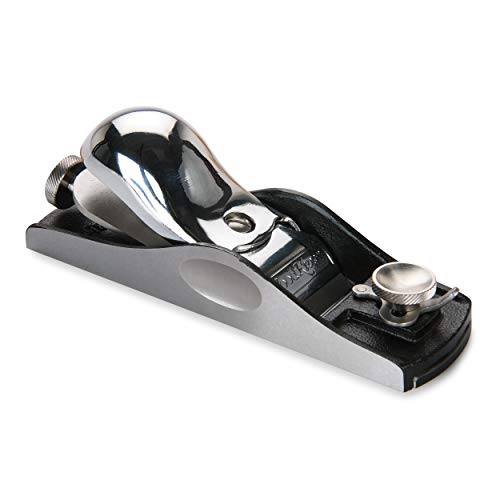
Woodriver Low Angle Block Plane With Adjustable Mouth
Based On A Classic Design
As an affiliate, we earn on qualifying purchases.
Woodriver Low Angle Block Plane With Adjustable Mouth
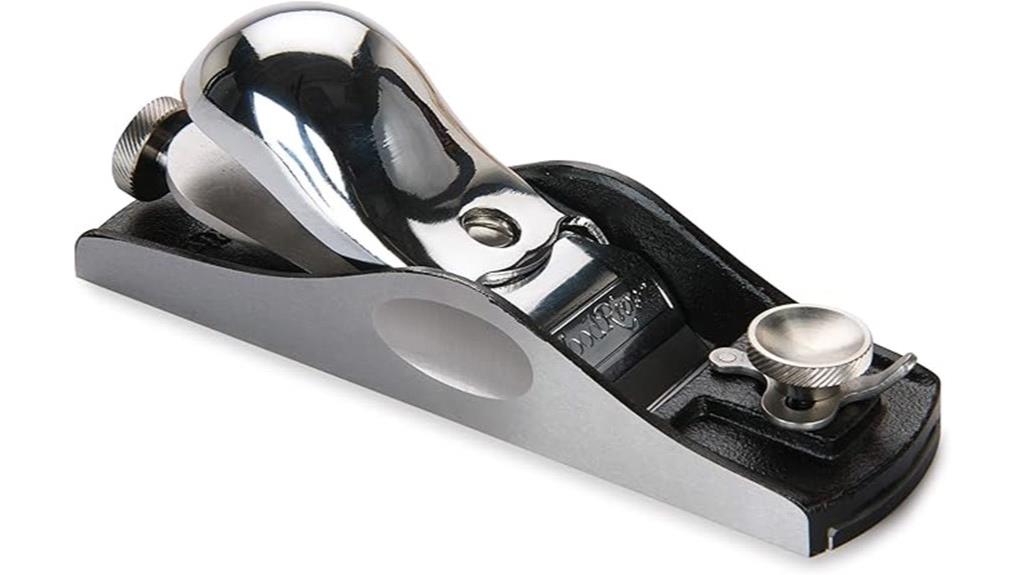
The Woodriver Low Angle Block Plane With Adjustable Mouth stands out as an excellent choice for woodworkers who demand precision and fine control. Its design draws from classic Stanley models, featuring a chrome knuckle cap for comfort and a 12-degree bed angle for smooth, accurate cuts. The adjustable mouth allows for fine-tuning from coarse to whisper-thin shavings, making it versatile for detailed work. Made from durable ductile iron and equipped with a hardened high carbon steel blade, it’s built for stability and long-term performance. Easy to adjust and sharpen, this plane offers excellent value for those seeking precision in finishing or fine-tuning projects.
Best For: woodworkers who require precise, fine-tuned smoothing and detailed finishing in their projects.
Pros:
- High-quality construction with durable ductile iron and hardened high carbon steel blade
- Easy adjustment of mouth and blade for versatile shaving control
- Comfortable ergonomic design with a chrome knuckle cap and stable weight for extended use
Cons:
- Higher price point may be a barrier for casual or beginner woodworkers
- Some users experience minor issues with the release lever needing tension adjustments
- Might be more tool than necessary for basic carpentry tasks
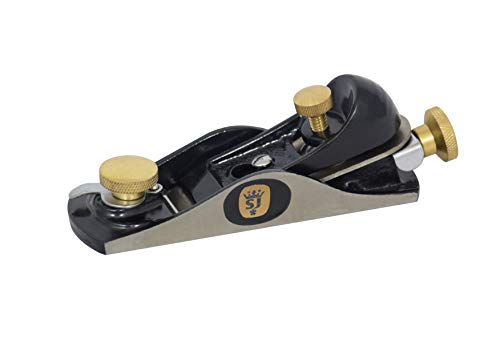
Spear & Jackson CBP95 9 1/2 Carpenters Block Plane
Ideal for end grain work and single handed operation
As an affiliate, we earn on qualifying purchases.
Spear & Jackson CBP95 9 1/2 Carpenters Block Plane

The Spear & Jackson CBP95 9 1/2 Carpenters Block Plane stands out for its cast iron body and precision-milled base, making it an excellent choice for woodworkers who need accurate, smooth cuts—especially on end grain. Its fully adjustable mouth ensures precise control, while the brass adjusting screw adds durability. The 1 5/8 inch low-angle cutter is perfect for fine, detailed work, and the tool is designed for single-handed operation, offering convenience and ease of use. Plus, a replacement blade is readily available, extending the tool’s lifespan and maintaining cutting performance over time.
Best For: woodworkers seeking precise, smooth cuts on end grain with a durable, easy-to-adjust tool suitable for one-handed operation.
Pros:
- Durable cast iron body provides stability and longevity
- Fully adjustable mouth for precise control
- Low-angle cutter ideal for fine, detailed work
Cons:
- Heavier than some plastic-bodied planes, may be tiring for extended use
- Requires maintenance to keep the precision milled base in optimal condition
- Replacement blades, while available, can be an additional ongoing cost

JORGENSEN No.101 Mini Wood Planer - Mini Hand Planer for Woodworking, Block Plane, Small Hand Plane for Trimming, Wood Planing, Craft, Professional Ductile Iron Body, Adjustable Cutting Depth
Professional Level Blade: The blade is made of professional level O1 tool steel, improving cutting efficiency while minimizing...
As an affiliate, we earn on qualifying purchases.
JORGensens 3.5 Mini Wood Planer

Designed for detailed woodworking tasks, the JORGENSEN 3.5 Mini Wood Planer stands out with its compact size and precise control. Its durable ductile iron body and stainless steel components guarantee long-lasting performance, while the 3.5-inch length and lightweight design make it highly portable. The adjustable cut depth allows for fine-tuned, accurate trimming, perfect for delicate projects. Equipped with a sharp O1 steel blade, it produces clean, smooth shavings on small or warped wood. Users praise its ease of use, solid build quality, and affordability, making it an excellent choice for both hobbyists and professionals seeking a reliable, precise tool for surface finishing and detailed work.
Best For: hobbyists and professionals seeking a compact, precise, and affordable wood planer for detailed surface finishing and trimming tasks.
Pros:
- Compact and lightweight, highly portable for on-the-go use
- Adjustable cut depth for precise control over trimming and finishing
- Durable construction with high-quality materials ensures long-lasting performance
Cons:
- May require occasional sole flattening for optimal smoothness
- Blade sharpening and adjustment might need basic woodworking skills
- Limited size may not be suitable for larger woodworking projects
Taytools Low Angle Block Plane with Stainless Steel Knuckle Cap and Adjustment Screws
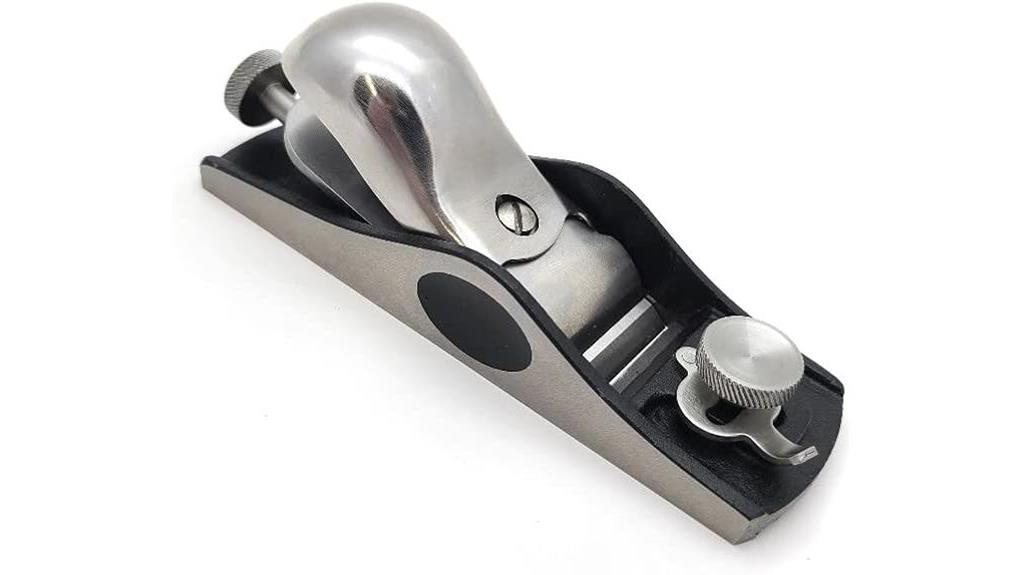
If you’re looking for a low-angle block plane that offers both durability and precise adjustments, the Taytools Low Angle Block Plane with Stainless Steel Knuckle Cap and Adjustment Screws stands out. Its vintage-inspired design, based on the classic Stanley #9-1/2, features a stress-relieved ductile cast iron body that’s nearly indestructible. The stainless steel knuckle cap ensures blade security, while the adjustable mouth allows for fine or coarse cuts. Weighing just under 2 pounds, it’s easy to handle and reduces chatter. With precise lapped sole surfaces and easy blade adjustments, this tool delivers reliable, accurate performance for smoothing, trimming, and end grain work.
Best For: DIY enthusiasts, professional woodworkers, and cabinet makers seeking a durable, precise low-angle block plane for smoothing, trimming, and end grain work.
Pros:
- Durable stress-relieved ductile cast iron body ensures long-lasting performance
- Precise lapped sole surfaces within 0.001″ for smooth operation
- Easy-to-adjust stainless steel knuckle cap and mouth for fine control
Cons:
- Slightly heavier weight may be less ideal for prolonged one-handed use
- Minimal factory lubrication requires cleaning and maintenance before use
- Limited to manual operation, not suitable for power tool integration
Bench Dog No. 60-1/2 Block Plane for Trimming and Fitting
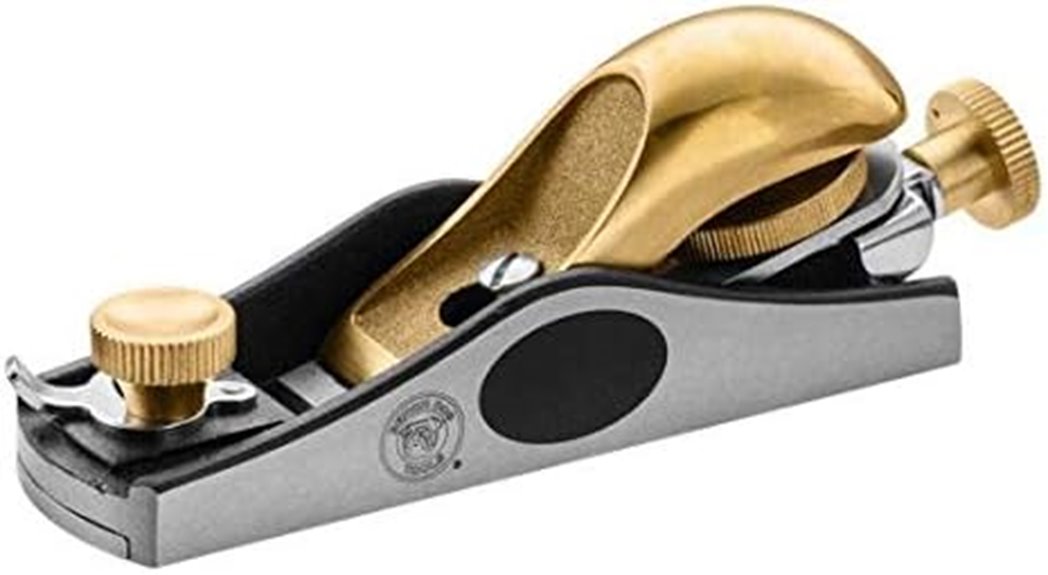
For woodworkers who need precise trimming and fitting, the Bench Dog No. 60-1/2 Block Plane stands out thanks to its fine control and adjustable mouth. Its low-angle design excels at trimming end grain and fitting joints, making detailed adjustments effortless. Crafted from durable castings and featuring a 1/8-inch steel blade, it minimizes chatter and tearout. The adjustable mouth and bedding angle give you quick, fine shaving control, perfect for tasks like adjusting miters or fitting doors. With a protective sock, storage case, and detailed inspection certificate, this plane combines precision and durability, making it a reliable choice for serious woodworkers.
Best For: woodworking professionals and hobbyists who require precise trimming and fitting of end grain and joints for detailed cabinetry and furniture projects.
Pros:
- Fine control with adjustable mouth and bedding angle for precise shavings
- Durable construction with high-quality castings and a steel blade minimizes chatter and tearout
- Complete package includes protective sock, storage case, and inspection certificate for added value
Cons:
- May be more expensive than basic block planes due to its high-quality features
- Requires some skill to fully utilize adjustable features for optimal results
- Designed primarily for trimming and fitting; less suitable for general planing tasks
Low Angle Block Plane for Woodworking
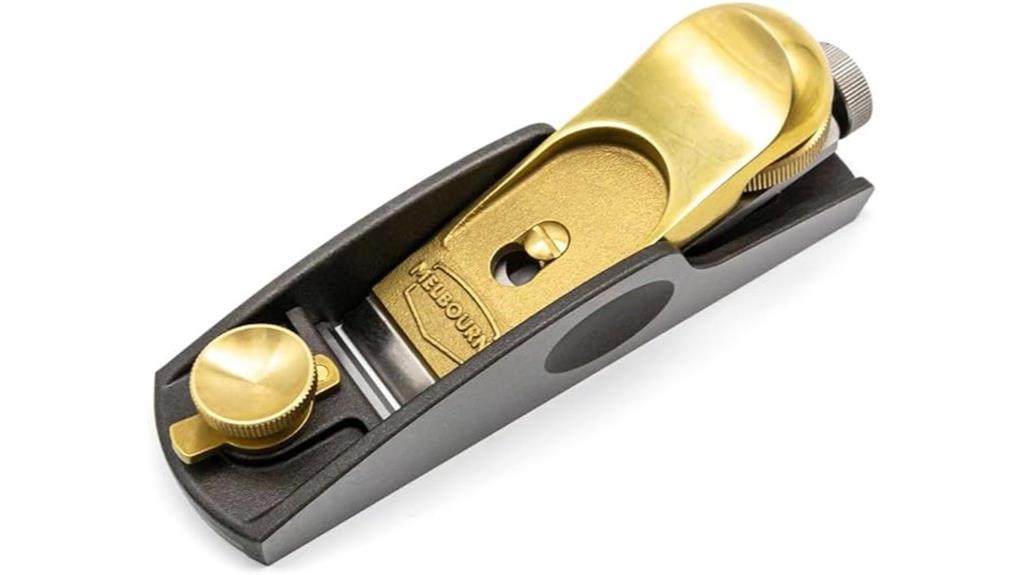
A low angle block plane is an essential tool for woodworkers seeking precision, especially when working with tricky or figured woods. Its high-speed steel blades resist wear and stay sharp longer, ensuring cleaner cuts over time. Adjusting the blade is straightforward, using the lateral and depth wheels to fine-tune the cut. The blade is securely fixed to the casting, providing excellent support for accurate, tearout-free work. It’s easy to assemble and maintain, making it a reliable choice for detailed woodworking tasks. Overall, this plane helps achieve smooth, precise surfaces, even on challenging materials.
Best For: skilled woodworkers and hobbyists who require precise, tearout-free finishes on difficult or figured woods.
Pros:
- High-speed steel blades provide excellent abrasion resistance and long-lasting sharpness
- Easy blade adjustment with lateral and depth wheels for fine-tuned cuts
- Secure blade fixation ensures maximum support and accuracy during use
Cons:
- May require some experience to achieve optimal blade alignment and adjustments
- Not ideal for heavy-duty or rough carpentry tasks
- Maintenance and sharpening might be needed over time to retain peak performance
Jorgensen No.60-1/2 Block Plane Blade
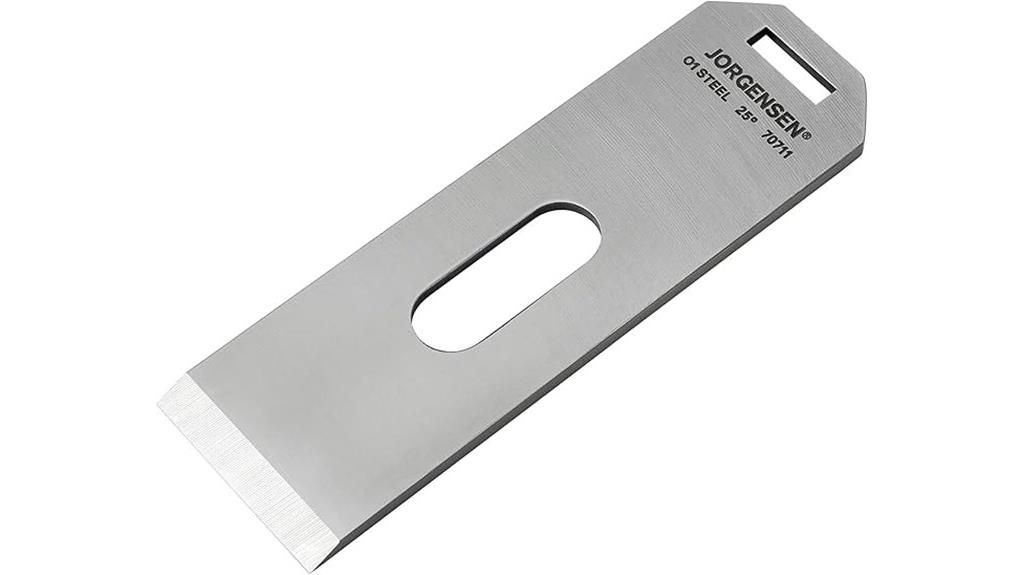
The Jorgensen No.60-1/2 Block Plane Blade stands out as an ideal choice for woodworkers seeking precise, clean cuts in detailed projects. Made of high-quality O1 steel, it’s finely sharpened for efficient cutting and long-lasting edge retention. Compatible specifically with the Jorgensen No.60-1/2 model, this replacement blade features a 3mm thickness and cutting width, perfect for fine woodworking. Its durability and ability to withstand repeated sharpening make it dependable for professional and hobbyist woodworkers alike. Easy to install and maintain, this blade ensures smooth, accurate planing, helping you achieve those perfect low-angle cuts with ease.
Best For: woodworking enthusiasts and professionals seeking precise, durable blades for detailed planing with the Jorgensen No.60-1/2 block plane.
Pros:
- Crafted from high-quality O1 steel for excellent edge retention and durability.
- Precisely sharpened and designed for compatibility with the Jorgensen No.60-1/2 model.
- Easy to install and maintain, enabling smooth and accurate planing.
Cons:
- Limited to use with the Jorgensen No.60-1/2 block plane, not universal.
- Manual operation may require regular sharpening for optimal performance.
- Price may vary across retailers, potentially affecting affordability.
Big Horn 19317 Contractor Grade Adjustable Block Plane
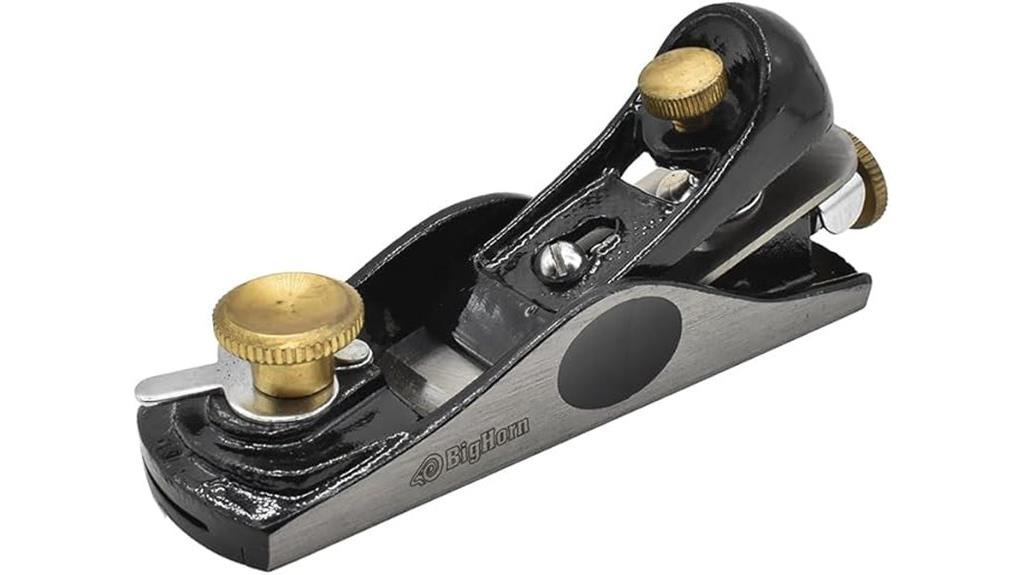
If you’re looking for an affordable, contractor-grade adjustable block plane that offers versatility in a budget-friendly package, the Big Horn 19317 stands out with its fully adjustable cutter blade and throat opening. This 6-1/4-inch tool features a cast iron body with a black finish, weighing about 1.77 pounds. The high-carbon steel blade sharpens easily and handles end grain and tough woods well. Its adjustable knob sets the angle, while the moveable front piece fine-tunes throat opening for different planning tasks. Although some users report machining inconsistencies and minor defects, it’s a solid choice for basic, light-duty work at a wallet-friendly price.
Best For: DIY enthusiasts or beginners seeking an affordable, adjustable block plane for light-duty woodworking projects.
Pros:
- Fully adjustable cutter blade and throat opening for versatile planning
- Lightweight cast iron construction with a comfortable grip
- Sharp high-carbon steel blade suitable for end grain and tough woods
Cons:
- Inconsistent machining and some reported defects affect performance
- Blades may arrive dull and require sharpening before use
- Limited durability and quality control issues with some components
Stanley 512060 60.1/4 Block Plane C/w Pouch
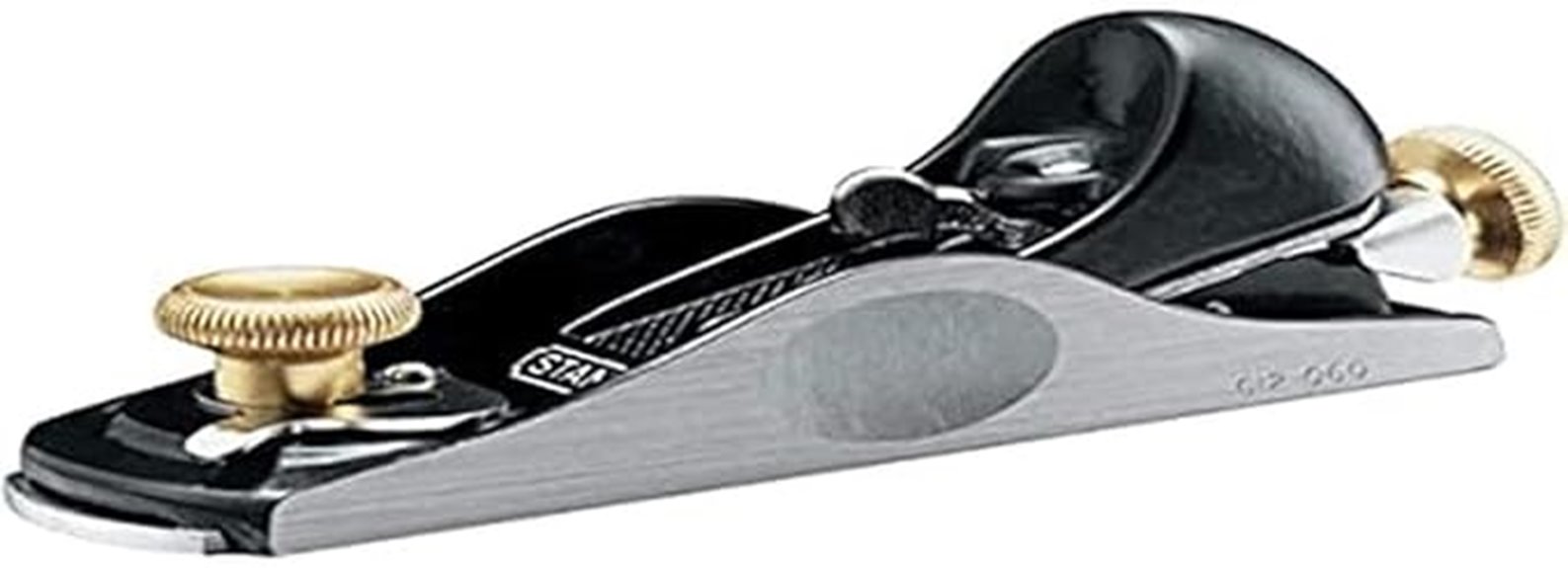
For woodworkers who value adjustability and portability, the Stanley 512060 60.1/4 Block Plane stands out with its fully adjustable design and included pouch for easy transport. Its low-angle cutter seat at 13.5° is ideal for end grain and laminates, and the body made from fine grey iron guarantees durability. Despite some manufacturing flaws like rough casting and uneven soles, proper tuning can markedly improve performance. The compact size—just six inches long—makes it convenient for detailed work. Priced affordably, it offers good value for hobbyists willing to spend time on setup and maintenance, especially when paired with upgraded blades.
Best For: hobbyist woodworkers and DIY enthusiasts seeking an affordable, adjustable, and portable block plane for detailed work on end grain and laminates.
Pros:
- Fully adjustable design for precise control and tuning
- Compact size (6 inches) for easy handling and portability
- Supplied with a pouch for convenient storage and transport
Cons:
- Manufacturing flaws such as rough castings and uneven soles requiring extensive tuning
- Inconsistent quality, with some units arriving with defects or misalignments
- Blade quality may be lower, often needing sharpening or upgrading for optimal performance
KAKURI Japanese Hand Plane for Woodworking

A standout choice for woodworking enthusiasts seeking precision and control, the KAKURI Japanese Hand Plane excels at detailed smoothing and edge chamfering. Its compact size makes it perfect for intricate tasks, and the ECO Japanese oak body offers durability and smooth operation. The razor-sharp high-carbon steel blade, combined with a two-blade chipbreaker system, ensures clean, splinter-free cuts while preventing wood splitting. Unlike Western planes, it’s pulled toward you for more consistent, controlled cuts with less effort. Easy to set up and use, this plane is ideal for both beginners and pros, delivering reliable performance on softwoods and fine finishing work.
Best For: woodworking enthusiasts and professionals seeking precise, detailed smoothing and edge chamfering on softwoods with a lightweight, easy-to-use hand plane.
Pros:
- Sharp Japanese high-carbon steel blade for clean, splinter-free cuts
- Compact and lightweight design ideal for detailed work and easy handling
- Durable ECO Japanese oak body with smooth operation and attractive grain patterns
Cons:
- Requires some initial adjustments for perfect blade alignment
- Learning curve for mastering pulling technique compared to Western planes
- May show unique grain patterns due to eco-friendly oak sourcing, which might affect aesthetic preferences
Low-Angle Jack Hand Plane HSS Blade
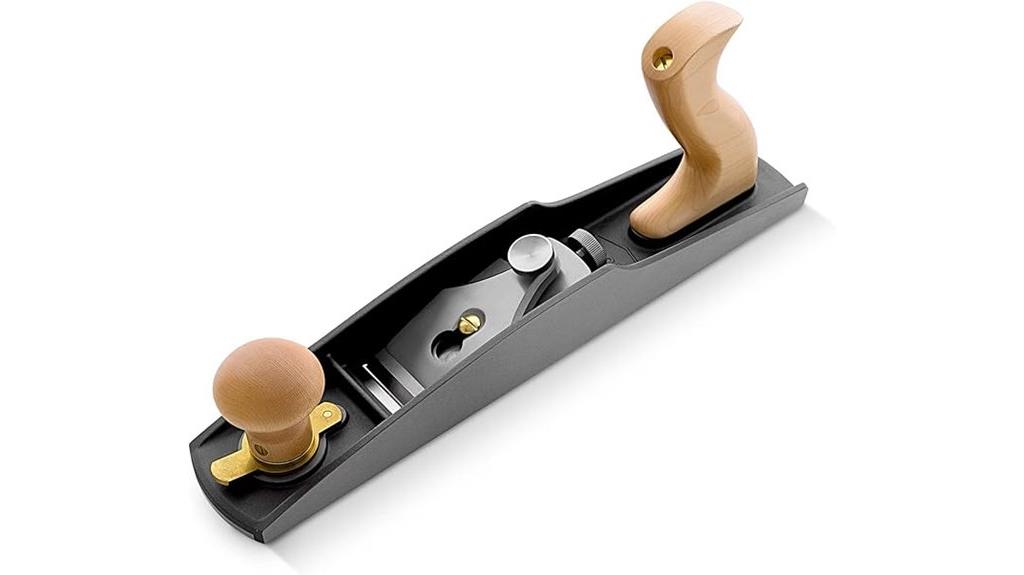
The Low-Angle Jack Hand Plane with an HSS blade stands out for woodworkers seeking durability and precision. Its long sole and low-angle bed provide excellent control for both coarse and fine work, while the minimalistic design makes disassembly and maintenance straightforward. The HSS blade, made from high-speed steel, stays sharp longer and resists wear, ensuring consistent performance. Its thicker blade reduces vibration, resulting in a smooth finish. Adjustments are simple thanks to knurled wheels for depth and lateral skew. Overall, this tool combines robust construction with precise control, making it ideal for versatile woodworking tasks.
Best For: woodworkers seeking a durable, precise, and easy-to-maintain hand plane for both coarse and fine woodworking tasks.
Pros:
- High-speed steel blade maintains sharpness longer and resists wear for consistent performance
- Long sole and low-angle bed offer excellent control and reduce tearout on difficult woods
- Minimalistic design allows for easy disassembly, maintenance, and quick setup
Cons:
- HSS blades may require longer sharpening intervals, which could be inconvenient for some users
- Heavier weight (5.85 pounds) might be tiring during extended use
- Limited color options, primarily silver, may not appeal to those seeking customizable aesthetics
JORGENSEN No.4 10 Wood Planer
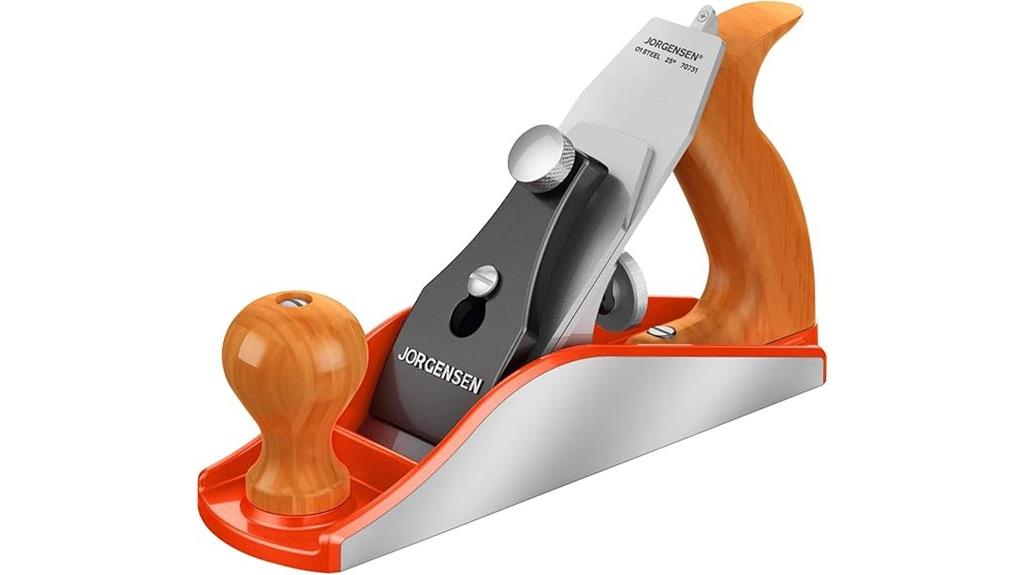
If you’re seeking a versatile hand planer that combines durability with precise control, the JORGENSEN No.4 10 Wood Planer stands out. Its ductile iron body guarantees ruggedness, while the beechwood handle provides ergonomic comfort. The 10-inch cutting width and polished sole allow for smooth, accurate operation across various woodworking tasks like smoothing, trimming, and surface shaping. The professional-grade O1 steel blade is sharp, adjustable, and can be sharpened repeatedly. Easy adjustments for cutting depth and mouth opening make it adaptable to different needs. Overall, it’s a reliable, high-quality tool that’s suitable for both amateurs and pros seeking precision and durability.
Best For: DIY enthusiasts and professional woodworkers seeking a durable, precise hand planer for smoothing, trimming, and shaping wood surfaces.
Pros:
- Rugged ductile iron body ensures long-lasting durability
- Sharp, adjustable O1 steel blade provides clean, precise cuts
- Ergonomic beechwood handle offers comfortable operation during extended use
Cons:
- Slightly heavy weight (~4.93 pounds) may cause fatigue over prolonged use
- Rapid oxidation and corrosion if not properly maintained require regular oiling
- Initial blade edges may need rounding and tuning for optimal performance
Groz 39790 BP/605 Block Plane with Adjustable Mouth
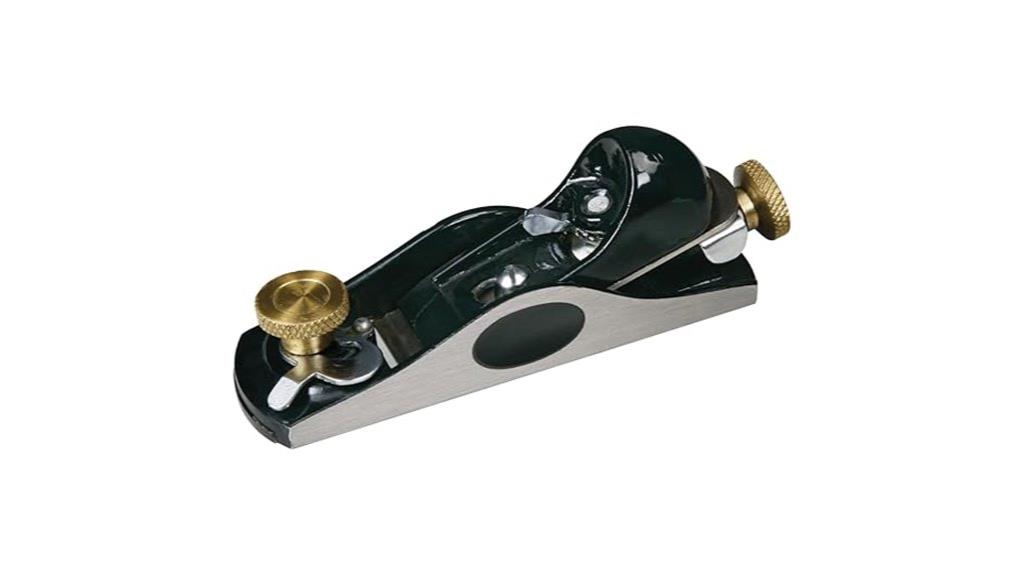
Looking for a low-angle block plane that offers exceptional control and precision? The Groz 39790 BP/605 is a versatile tool designed for detailed work on end grain, small chamfers, and delicate planing tasks. Its adjustable mouth allows you to switch between coarse and fine cuts, while the fully adjustable cutter depth provides customization for different jobs. The blade is set at a 13.5° angle, optimizing performance on end grain and synthetic materials like plastic laminate. With a flat sole maintained within 0.003 inches, it ensures smooth, accurate results. This plane is perfect for those seeking precision in woodworking and finishing tasks.
Best For: woodworkers and finish carpenters seeking precise, detailed planing and end grain work with adjustable control.
Pros:
- Adjustable mouth for coarse or fine cuts, enhancing versatility
- Fully adjustable cutter depth for customized performance
- Flat sole maintains smooth operation within 0.003 inches, ensuring accuracy
Cons:
- Limited size may not be suitable for large planing tasks
- Requires fine-tuning for optimal performance, which may be time-consuming for beginners
- Designed primarily for precision work, less ideal for heavy material removal
6.3 Mini Wood Block Plane for Woodworking

For detailed woodworking tasks, the Socpuro 6.3 Mini Wood Block Plane stands out thanks to its adjustable blade depth and mouth width, allowing me to customize cuts precisely. Its compact size and lightweight design (weighing just 1.75 pounds) make it easy to handle during trimming, smoothing, and deburring. The 1.6-inch wide steel blade stays sharp, ensuring clean, accurate cuts. Made from durable ductile cast iron with stainless steel components, it’s built to last through tough jobs. This versatile mini plane is perfect for precise, delicate work, whether I’m a professional or a DIY enthusiast seeking professional-quality results.
Best For: DIY enthusiasts and professional woodworkers seeking precise, detailed finishing tools for trimming, smoothing, and deburring small wood pieces.
Pros:
- Compact and lightweight design for easy handling and extended use
- Adjustable blade depth and mouth width for versatile, precise cuts
- Durable construction with high-quality materials ensures longevity and resilience
Cons:
- Limited to small-scale, detailed woodworking tasks due to its size
- Slightly higher price point compared to basic hand planes
- Requires manual adjustments for optimal performance, which may take time for beginners
Factors to Consider When Choosing Low‑Angle Block Planes

When choosing a low-angle block plane, I focus on factors like blade material quality and adjustability range to guarantee smooth cuts. Durability of the body and ease of tuning are also key for long-term reliability and convenience. Ultimately, controlling the mouth opening helps me achieve precise, clean finishes every time.
Blade Material Quality
Choosing a low-angle block plane with a high-quality blade can make all the difference in achieving precise and clean cuts. Quality blade materials like high-carbon steel or tool steel not only hold their edge longer but also resist wear during extensive use. M2 High Speed Steel blades are especially notable for their abrasion resistance and ability to maintain a sharp edge over time. Japanese mono-steel blades are prized for their exceptional sharpness and durability, perfect for fine woodworking. Proper heat treatment and hardness ratings, such as HRC 60-64, markedly boost a blade’s performance and lifespan. Re-sharpenable blades made from quality steel enable multiple uses without sacrificing edge quality, ensuring consistent results and making your tool investment worthwhile.
Adjustability Range
The adjustability range of a low-angle block plane directly impacts how well it can handle different woodworking tasks. A wider range means you can fine-tune the mouth opening and cutting depth more precisely, accommodating everything from delicate shavings to heavier cuts. Quick, accurate adjustments are essential, so look for models with reliable mechanisms like knurled knobs or screws. Manufacturers often specify the maximum and minimum adjustment limits in millimeters or degrees, giving you an idea of the tool’s flexibility. A broader adjustability range enhances performance across various wood types and grain directions, making your tool more versatile. Whether you’re doing detailed work or rough shaping, choosing a plane with a good adjustment range ensures better control and results.
Body Durability
Durability is a key factor that determines how well a low-angle block plane can handle frequent use and challenging conditions. I look for planes made from sturdy materials like cast or ductile iron, which resist wear and deformation over time. The flatness and stability of the body are essential for precise cuts and to prevent chatter, especially during demanding tasks. Corrosion resistance is also important; coatings or stainless steel parts protect against rust, extending the tool’s lifespan. Construction quality and machining accuracy directly affect how smoothly I can adjust the plane and how reliably it performs. A well-made body with reinforced or stress-relieved castings reduces warping risks, ensuring consistent results even after long-term use. Durability truly influences the plane’s precision and longevity.
Ease of Tuning
A low-angle block plane that’s easy to tune saves time and frustration, making your woodworking more efficient. Look for models with user-friendly adjustment mechanisms like thumb wheels or accessible screws—these simplify setting the blade depth and mouth opening. Smooth, well-machined components are essential; they allow fine-tuning without excessive force or side play, ensuring consistent performance. Quick and accurate adjustments mean less downtime and better control over your cuts. Additionally, a design that makes blade replacement and sharpening straightforward helps maintain *ideal* tuning over the plane’s lifespan. When tuning is hassle-free, you can focus more on your work and less on constant adjustments, leading to cleaner, more precise results with less effort. Ease of tuning truly enhances your overall woodworking experience.
Mouth Opening Control
Controlling the mouth opening is essential because it directly influences the quality of your cuts and the finish you achieve. An adjustable mouth lets me fine-tune the size of the opening, which affects shaving thickness and surface smoothness. I can easily tweak the mouth to match different wood types and grain directions, reducing tearout and chatter. A narrower opening is perfect for detailed work and fine finishing, while a wider one handles rough shaping and material removal. The adjustment mechanism, usually a screw or lever, makes it quick and precise to set the mouth exactly where I need it. Proper control over the mouth opening enhances the plane’s versatility, allowing me to switch seamlessly between coarse stock removal and delicate smoothing tasks for consistent, professional results.
Size and Weight
When choosing a low-angle block plane, considering its size and weight is essential for ensuring comfortable handling and precise control. Smaller planes, weighing between 8 ounces and 2 pounds, are easier to maneuver and reduce fatigue during long sessions. They’re perfect for detailed work or working in tight spaces, especially for one-handed operation. Larger models, over 2 pounds, offer more stability and help minimize chatter when planing dense or tough woods. The overall size, including length and width, affects how easily you can control the plane for delicate tasks or smoothing large surfaces. It’s important to find a balance—select a weight and size that feels comfortable, giving you enough stability without sacrificing maneuverability or causing fatigue.
Compatibility With Blades
Ensuring your low-angle block plane is compatible with standard blades is essential for easy replacements and customization. Look for a plane that supports blade widths around 1-1/2 to 2 inches, making it simple to find compatible blades. Check if it can hold common materials like high-carbon steel, A2, or O1 tool steel, which affect sharpening and durability. The adjustment mechanism should securely grip blades of various thicknesses and edge profiles without slipping during use. Additionally, verify if the plane accommodates blades with different bevel angles, such as 12° or 25°, to suit different tasks. Ultimately, consider how easy it is to swap blades—preferably without intricate disassembly or extra tools—so you can maintain efficiency during your woodworking projects.
Price and Value
Choosing the right low-angle block plane depends heavily on price and value. Prices can range from about $17 for basic Japanese models to over $130 for premium American-made tools. While budget options may require tuning—like flattening the sole or sharpening the blade—they can still deliver good performance with some effort. Investing in a higher-priced plane usually means better build quality, more precise adjustments, and longer-lasting blades, which justifies the cost over time, especially for frequent use. A more expensive tool can reduce the need for replacements and upgrades, offering better long-term value. Comparing features, materials, and reviews helps determine if a lower-cost plane provides sufficient performance and durability relative to its price. Ultimately, balancing initial cost against expected longevity and performance is key.
Frequently Asked Questions
How Does Blade Angle Affect Cutting Precision?
Blade angle directly impacts cutting precision by influencing the plane’s ability to shave thin, smooth shavings. A lower angle, around 12-20 degrees, reduces tear-out and provides cleaner cuts on softer woods. Conversely, a higher angle offers better control and reduces tear-out on harder woods. I find that choosing the right blade angle helps me achieve smoother finishes and more accurate results, depending on the material I’m working with.
Which Materials Are Best Suited for Low-Angle Block Planes?
Think of a low-angle block plane like a precision scalpel—it’s perfect for soft, delicate materials. I’ve found they excel with woods like pine, cedar, and basswood because their softer fibers cut cleanly with less tearing. Hardwoods like oak or maple are trickier, requiring sharper blades or different tools. For fine, detailed work, sticking to softer woods guarantees cleaner cuts and better control.
How Often Should the Plane’s Blade Be Sharpened?
I typically sharpen my plane blade whenever I notice it’s not cutting as smoothly or leaving rough edges. For most projects, that’s about every few hours of use, but it can vary based on the wood’s hardness and the blade’s condition. I always keep a honing guide handy and check the edge regularly. Staying attentive guarantees my cuts remain precise and effortless, making woodworking more enjoyable.
What Maintenance Is Required for Optimal Performance?
To keep my low-angle block plane performing at its best, I regularly clean the blades and check for any rust or buildup. I make sure to sharpen the blade before it dulls, using a fine stone for a clean edge. I also oil the moving parts lightly to prevent rust and ensure smooth operation. Proper storage in a dry place helps maintain its precision for all my woodworking projects.
Are There Safety Features Specific to Low-Angle Block Planes?
Think of safety features on low-angle block planes as your loyal guard dogs, always alert and ready. Many models come with blade guards or lock mechanisms that prevent accidental slips, keeping your fingers safe as you carve through wood. Some also have ergonomic handles for a secure grip, reducing slips. Always check for these features before you start slicing into your project—safety first, then precision!
Conclusion
Choosing the right low-angle block plane is like finding the perfect brush for a masterpiece—you want precision and control. With options like Jorgensen, Woodriver, and Spear & Jackson, you’re well-equipped to tackle your woodworking projects with confidence. Remember, the right tool turns rough cuts into smooth finishes, making your craftsmanship shine. So, pick your ideal plane and let your creativity carve out beautiful results!