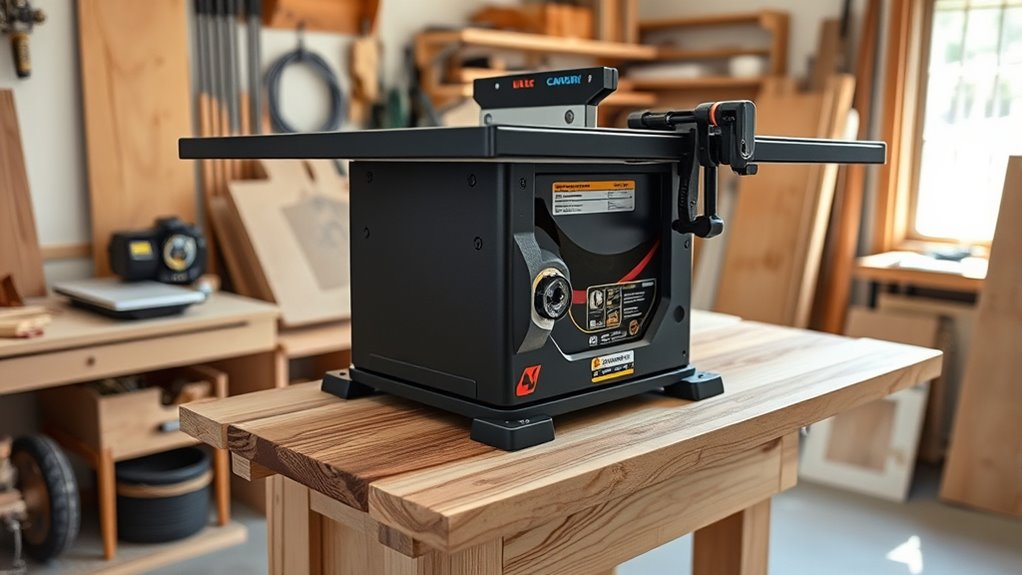
For a small workshop, the DEWALT DWE7485 is my best overall compact table saw pick: its 8-1/4-inch blade and portable jobsite format prioritize a smaller footprint. The SKIL TS6307-00 adds a folding stand for buyers who need a ready-to-move setup, while the Skil SPT99T-01 offers worm-drive power in a compact saw. The main tradeoff is between saving storage space and gaining the larger cutting capacity and support of a 10-inch saw. I also compare stand design, portability and the listed features that shape each saw’s fit. Read on for the full breakdown and help matching a saw to your workspace.

Get business pricing on tools and workshop supplies
- Business-only prices and quantity discounts
- Tax-exempt purchasing
- Multiple users, one account, clear invoices
Complete the kit


Key Takeaways
- The DEWALT DWE7485 is the clearest small-shop pick in this lineup because its 8-1/4-inch blade and portable jobsite format favor a compact setup.
- The SKIL TS6307-00 pairs a 10-inch blade with a folding stand, making it a useful option when storage and moving the saw both matter.
- The DEWALT DWE7491RS offers a 10-inch blade, 32.5-inch rip capacity and rolling stand; its added cutting reach comes with a larger setup to store and move.
- The Skil SPT99T-01 is the lineup’s worm-drive option, suited to buyers who prioritize that drive style over a folding or rolling stand.
- The MarvTool and generic dust-collection saw list 10-inch blades, while the latter also specifies a 98% dust collection system; buyers should compare listed features and verify support details before choosing either.
| MarvTool 15Amp Portable Table Saw 10 inch, 4600RPM Compact Benchtop Saw with 36T Blade |  | Best Lightweight Pick | Motor: 15 amp | Power source: Corded electric, 120 volts | Blade: 10 inches, 36 teeth | VIEW ON AMAZON | See Our Full Breakdown |
| DEWALT 15 Amp 8-1/4 in. Compact Portable Jobsite Table Saw (DWE7485) |  | Best for Fence Accuracy | Motor: 15 amp, 1800 watts | Power source: 120 volts, corded | Blade size: 8-1/4 inches (from product name) | VIEW ON AMAZON | See Our Full Breakdown |
| Portable Table Saw with 98% Dust Collection System, 120V/15A, 5000RPM, 17.91″x23.62″ Control Console, 0-45° Bevel and 90° Crosscut for Woodworking |  | Best for Dust-Conscious Small Shops | Motor: 15 amp | Power source: 120V, corded | Blade: 8.5 inches, 60 teeth | VIEW ON AMAZON | See Our Full Breakdown |
| SKIL 15 Amp 10-Inch Jobsite Table Saw with Folding Stand (TS6307-00) |  | Best Compact Setup with Stand | Motor: 15 amp, 1800 watts | Power source: 120 volts, corded | Blade: 10 inches, 24 teeth | VIEW ON AMAZON | See Our Full Breakdown |
| DEWALT Table Saw for Jobsite, Compact, 8-1/4-Inch with Stand, Mobile/Rolling |  | Best for Rolling Jobsite Mobility | Power source: Corded electric (listed); voltage listed as 20 volts | Wattage: 1800 watts | Blade size: 8-1/4 inches (from product name; supplied spec says 4 inches) | VIEW ON AMAZON | See Our Full Breakdown |
| DEWALT DWE7491RS 10″ Table Saw with Folding Rolling Stand |  | Best for Small Shops That Need Full Sheet Capacity | Motor: 15 Amp | Blade size: 10 inches | Speed: 4800 RPM | VIEW ON AMAZON | See Our Full Breakdown |
| Skil 8-1/4″ Portable Worm Drive Table Saw SPT99T-01 |  | Best Compact Worm Drive | Power source: Corded electric | Voltage: 120 volts | Speed: 5300 RPM | VIEW ON AMAZON | See Our Full Breakdown |
| compact table saw | Power source | Motor | Weight | Rip capacity |
|---|---|---|---|---|
| MarvTool 15Amp Portable Table | Corded electric, 120 volts | 15 amp | 28.3 pounds | — |
| DEWALT 15 Amp 8-1/4 in. Compac | 120 volts, corded | 15 amp, 1800 watts | 54 pounds | 24.5 inches |
| Portable Table Saw with 98% Du | 120V, corded | 15 amp | — | — |
| SKIL 15 Amp 10-Inch Jobsite Ta | 120 volts, corded | 15 amp, 1800 watts | 51.2 pounds | 25.5 inches |
| DEWALT Table Saw for Jobsite | Corded electric (listed); voltage listed as 20 volts | — | 33 pounds | 24.5 inches |
| DEWALT DWE7491RS 10" Table Saw | — | 15 Amp | — | 32.5 inches |
| Skil 8-1/4" Portable Worm Driv | Corded electric | — | 51.2 pounds | 25 inches |
More Details on Our Top Picks
MarvTool 15Amp Portable Table Saw 10 inch, 4600RPM Compact Benchtop Saw with 36T Blade
At 28.3 pounds, the MarvTool is the easiest saw here to carry between a small shop and a job site. Its 10-inch blade and stated 3.4-inch maximum cut at 90° give it more depth capacity than the 8-1/4-inch DEWALT DWE7485, while its compact benchtop format avoids the added stand of the SKIL TS6307-00. That balance suits occasional moves and projects that need deeper cuts without a full-size setup. The tradeoff is a corded power requirement and less specified rip capacity than the DEWALT models, so sheet goods may be harder to manage. Its listed dimensions are also substantial for a benchtop saw, despite the low weight; buyers should check their storage space before choosing it.
Pros:- Light 28.3-pound weight makes it easier to move than the other saws listed.
- 10-inch blade and 3.4-inch stated cut depth at 90° handle thicker stock than the 8-1/4-inch DEWALT DWE7485.
- Blade angle adjusts from 0° to 45° for bevel and miter work.
- Includes a transparent blade guard and dust port for a vacuum connection.
Cons:- Corded power limits use to locations with an outlet.
- No rip capacity is provided, making it harder to judge for wide sheet goods.
- Listed dimensions may take up more storage space than its weight suggests.
Best for: DIY woodworkers who need a lightweight saw they can carry and want a 10-inch blade for deeper cuts.
Not ideal for: Buyers who regularly cut large sheet goods or need a clearly specified wide rip capacity.
- Motor:15 amp
- Power source:Corded electric, 120 volts
- Blade:10 inches, 36 teeth
- No-load speed:4600 RPM
- Cut depth at 90°:3.4 inches
- Cut depth at 45°:2.1 inches
- Bevel range:0–45°
- Weight:28.3 pounds
Our verdict“Choose the MarvTool if low carry weight and 10-inch cut depth matter more than a specified wide rip capacity.”
DEWALT 15 Amp 8-1/4 in. Compact Portable Jobsite Table Saw (DWE7485)
The DWE7485 earns its place for buyers who value quick, repeatable fence adjustments in a small jobsite footprint. Its rack-and-pinion fence and stated 24.5-inch rip capacity make it better suited to controlled sheet-goods work than the MarvTool, which lists no rip capacity. At 54 pounds, however, it is far less convenient to carry than that 28.3-pound benchtop saw. The 8-1/4-inch blade keeps the design compact, but gives up cut depth compared with the 10-inch SKIL TS6307-00. On-board accessory storage helps keep setup parts together, while the corded design still requires an outlet. The listed blade length of 4 inches conflicts with the model’s 8-1/4-inch product name, so I have not used that inconsistent figure as a specification.
Pros:- Rack-and-pinion fence supports quick, repeatable adjustments.
- 24.5-inch stated rip capacity accommodates 4×8 sheet goods.
- On-board storage keeps the guard, wrenches, miter gauge, and push stick with the saw.
Cons:- At 54 pounds, it is heavier to carry than the MarvTool or the other listed DEWALT compact saw.
- The 8-1/4-inch blade offers less cut depth than the 10-inch SKIL TS6307-00.
- Corded operation requires access to a power outlet.
Best for: Cabinet installers and DIYers who make repeated, measured rip cuts and want fence adjustments to stay straightforward.
Not ideal for: Buyers who need to carry a saw frequently or cut thicker stock suited to a 10-inch blade.
- Motor:15 amp, 1800 watts
- Power source:120 volts, corded
- Blade size:8-1/4 inches (from product name)
- No-load speed:5800 RPM
- Rip capacity:24.5 inches
- Weight:54 pounds
- Dimensions:22.75 × 22.75 × 13 inches
- Model:DWE7485
Our verdict“Pick the DWE7485 for repeatable fence setups and sheet-goods ripping if you can manage its 54-pound weight.”
Portable Table Saw with 98% Dust Collection System, 120V/15A, 5000RPM, 17.91″x23.62″ Control Console, 0-45° Bevel and 90° Crosscut for Woodworking
This saw is the most workspace-focused option in the group: its stated 17.91 × 23.62-inch control console gives buyers a defined footprint, and the maker claims a 98% dust collection system. That dust claim may appeal to people working indoors, though the supplied details do not explain how it was measured or what extraction setup it assumes. Its 8.5-inch, 60-tooth blade and 5000 RPM speed suit smaller woodworking cuts, but its 2.36-inch maximum depth at 90° falls short of the MarvTool’s stated 3.4 inches and the 10-inch SKIL’s greater capacity. The shallow 1.57-inch bevel cut also narrows its use with thicker stock. Choose it for dust-focused work and compact dimensions, not deep cuts.
Pros:- Stated control console dimensions help buyers plan a compact workspace.
- Maker claims a 98% dust collection system.
- 60-tooth blade and 5000 RPM speed are suited to finer woodworking cuts.
- Includes a blade guard, push stick, and safety switch.
Cons:- Maximum cut depth is 2.36 inches at 90° and 1.57 inches at 45°.
- The dust collection percentage is not explained in the supplied product details.
- Corded 120V operation requires an outlet.
Best for: Small-shop hobbyists who prioritize a compact stated console size and dust extraction for indoor woodworking.
Not ideal for: Woodworkers who routinely cut thick boards or need deeper bevel cuts.
- Motor:15 amp
- Power source:120V, corded
- Blade:8.5 inches, 60 teeth
- No-load speed:5000 RPM
- Cut depth at 90°:2.36 inches
- Cut depth at 45°:1.57 inches
- Bevel range:0–45°
- Control console:17.91 × 23.62 inches
Our verdict“Consider this saw for small indoor projects where dust handling matters more than cut depth.”
SKIL 15 Amp 10-Inch Jobsite Table Saw with Folding Stand (TS6307-00)
The SKIL pairs a 10-inch blade with an integrated folding stand, so it suits buyers who need a stable working height but want the saw to fold away between jobs. Its 25.5-inch rip capacity is slightly wider than the 24.5 inches listed for the DEWALT DWE7485, while its 10-inch blade offers more depth potential than that smaller-blade model. The cost of that capability is bulk: at 51.2 pounds, it is not as easy to lift and carry as the MarvTool. Rack-and-pinion fence rails help with setup, and a dust port elbow directs debris, but the supplied specs list a 4×4-inch maximum cut at 90° without giving cut depth. This is a practical small-shop station, not a featherweight portable saw.
Pros:- Folding stand provides a ready working height and folds for storage.
- 10-inch blade offers more capacity potential than the 8-1/4-inch DEWALT DWE7485.
- 25.5-inch rip capacity is slightly wider than the DWE7485’s stated 24.5 inches.
- Rack-and-pinion fence rails and dust port elbow support jobsite setup.
Cons:- At 51.2 pounds, it is heavier to move than the MarvTool.
- The stand and saw need more storage room than a bare benchtop model.
- Supplied specs do not state cut depth, despite listing a 4×4-inch maximum cutting size.
Best for: DIYers who want a folding stand for occasional transport and a 10-inch blade for varied stock.
Not ideal for: People who frequently lift a saw alone or have very limited storage for a stand-equipped model.
- Motor:15 amp, 1800 watts
- Power source:120 volts, corded
- Blade:10 inches, 24 teeth
- Rip capacity:25.5 inches
- Maximum cutting size:4×4 inches at 90°
- Bevel capacity:0–45°
- Weight:51.2 pounds
- Dimensions:28.74 × 27.17 × 16.93 inches
Our verdict“Choose the SKIL if you want a folding stand and 10-inch blade in one jobsite setup and can handle its weight.”
DEWALT Table Saw for Jobsite, Compact, 8-1/4-Inch with Stand, Mobile/Rolling
This DEWALT is the mobility pick for buyers who move a saw around a job site but do not want to carry a heavier standalone unit. At a stated 33 pounds, it is lighter than the DWE7485, and the rolling stand can simplify moving it once assembled. Its 24.5-inch rip capacity matches the DWE7485’s stated capacity, giving both models a similar sheet-goods reach; this version puts more emphasis on moving the whole setup. The 8-1/4-inch blade is smaller than the SKIL TS6307-00’s 10-inch blade, so it is a less suitable choice for deeper cuts. The supplied specs list 20 volts and a 4-inch blade, which conflict with the product name and require checking before purchase. Dust collection and included accessories are also unspecified.
Pros:- Stated 33-pound weight is lower than the DWE7485’s 54 pounds.
- Rolling stand supports moving the assembled saw around a job site.
- 24.5-inch rip capacity is suited to ripping 4×8 sheet goods.
- Rack-and-pinion rails support fast fence adjustments.
Cons:- The listed 20-volt power and 4-inch blade conflict with the 8-1/4-inch product name.
- An 8-1/4-inch blade offers less cut depth than the 10-inch SKIL TS6307-00.
- The supplied details do not specify dust collection or included accessories.
Best for: Contractors who move a compact saw between jobsite work areas and want a rolling stand for transport.
Not ideal for: Buyers who need confirmed blade and power specifications, deeper cuts, or clearly documented dust collection.
- Power source:Corded electric (listed); voltage listed as 20 volts
- Wattage:1800 watts
- Blade size:8-1/4 inches (from product name; supplied spec says 4 inches)
- Rip capacity:24.5 inches
- Cutting angle:90° listed
- Weight:33 pounds
- Dimensions:20 × 9 × 34 inches
- Stand:Rolling/mobile stand
Our verdict“Choose this DEWALT for rolling jobsite mobility if you confirm the conflicting power and blade details first.”
DEWALT DWE7491RS 10″ Table Saw with Folding Rolling Stand
The DWE7491RS is the strongest fit here for a small shop that still needs to rip wide panels: its 32.5-inch capacity handles sheet goods that exceed the reach of the Skil SPT99T-01. The rack-and-pinion fence makes width changes quicker and more repeatable, while the folding rolling stand helps move the saw between storage and setup without giving up a stable base. Its 10-inch blade and 3.125-inch cut depth also offer more vertical capacity than the Skil’s 8-1/4-inch format. The tradeoff is footprint: the table measures 21.875 by 26.375 inches, and the stand needs room to open, so this is less suited to a cramped bench than a bare compact saw. Its 2.5-inch dust port may also constrain extraction setups.
Pros:- 32.5-inch rip capacity accommodates wide panels
- Rack-and-pinion fence supports quick, controlled adjustments
- Folding rolling stand combines mobility with a stable working base
- Onboard storage keeps the fence, guard, push stick, and other accessories together
Cons:- Rolling stand requires more storage and setup space than a benchtop saw
- 2.5-inch dust port may limit vacuum and extractor compatibility
Best for: Small-shop woodworkers who regularly break down wide sheet goods and need a saw that can roll into storage between projects
Not ideal for: Apartment or bench-only users with very limited floor space, or buyers who need a dust port suited to heavy extraction
- Motor:15 Amp
- Blade size:10 inches
- Speed:4800 RPM
- Rip capacity:32.5 inches
- Cut depth at 90°:3.125 inches
- Cut depth at 45°:2.25 inches
- Table dimensions:21.875 x 26.375 inches
- Dust port:2.5 inches
- Included stand:Folding rolling stand
Our verdict“Choose the DWE7491RS if your small shop needs wide-sheet capacity and a mobile stand, and skip it if floor space is your main constraint.”
Skil 8-1/4″ Portable Worm Drive Table Saw SPT99T-01
The SPT99T-01 suits buyers who want worm-drive gearing in a portable saw and can work within a smaller blade and cut capacity. Its 25-inch rip capacity is enough for many jobsite cuts, but it falls short of the DEWALT DWE7491RS’s 32.5 inches when handling wider panels. The 8-1/4-inch blade and 2-5/8-inch depth of cut make the Skil a more compact cutting option, though they limit the thickness it can handle compared with the DEWALT’s 10-inch setup. A rack-and-pinion fence helps keep adjustments controlled, and the all-metal construction is aimed at jobsite durability. At 51.2 pounds, however, portable does not mean effortless to carry; it also needs a corded 120-volt outlet.
Pros:- Worm-drive gearing provides high torque
- 25-inch rip capacity covers many common jobsite cuts
- Rack-and-pinion fence supports accurate adjustments
- All-metal construction is suited to demanding work areas
Cons:- 8-1/4-inch blade limits cut depth compared with 10-inch saws such as the DEWALT DWE7491RS
- At 51.2 pounds, it may be cumbersome for frequent hand carrying
- Corded power requires access to a 120-volt outlet
Best for: Jobsite carpenters who value worm-drive gearing and need a smaller saw for routine framing and trim cuts
Not ideal for: Users who frequently rip wide sheet goods, need deeper cuts, or must carry a saw long distances by hand
- Power source:Corded electric
- Voltage:120 volts
- Speed:5300 RPM
- Wattage:1800 watts
- Blade size:8-1/4 inches
- Rip capacity:25 inches
- Cut depth:2-5/8 inches
- Dimensions:25.75 x 25.2 x 14.88 inches
- Weight:51.2 pounds
Our verdict“Pick the SPT99T-01 for a compact worm-drive jobsite saw when its 25-inch rip capacity and shallower cut depth fit your work.”
How We Picked
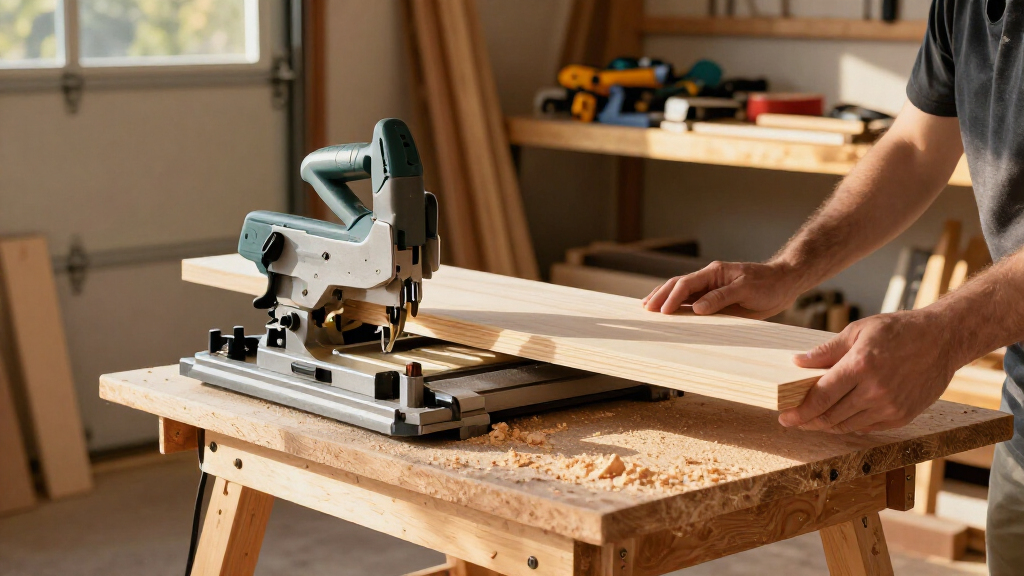
I compared the seven saws through the compact-saw brief: how much cutting capability each offers relative to the space and mobility its format implies. The key factors were blade size, stated motor and speed details, rip capacity where supplied, stand type, portability cues and specific features such as the listed dust collection system. A larger blade or wider rip capacity can expand the work a saw handles, but it may be less convenient in a small shop.
My ranking gives priority to clear fit for constrained spaces, then weighs useful capacity and setup features against the extra footprint they can bring. The DWE7485 leads for a compact-focused buyer; the SKIL TS6307-00 and rolling-stand DEWALT serve buyers who accept more setup bulk for support and mobility. Models with less complete listing details, including the MarvTool and generic dust-collection saw, rank lower because buyers have less information to compare. Product descriptions alone do not establish cut accuracy, durability, warranty coverage or real-world dust capture, so I treat those as details to confirm before purchase.
Factors to Consider When Choosing Compact Table Saw
Choosing a compact table saw is a space-planning decision as much as a cutting decision. Before comparing blade sizes or motor figures, map out where the saw will sit, how material will be supported and where it will go after the job. These broader checks can prevent a portable saw from becoming a permanent obstacle.
Measure the Whole Working Setup
Measure more than the saw’s footprint: include room to feed stock, stand beside the work and support long boards at the infeed and outfeed. A compact machine still needs a safe work zone, and a tight corner can make a smaller saw awkward to use. Check whether a folding or rolling stand can pass through doors and fit in your storage spot when folded. Commonly overlooked are extension cords, dust extraction connections and the space needed to adjust the fence. If your shop cannot provide a clear material path, prioritize a setup you can move into an open area rather than choosing by tabletop dimensions alone.
Match Blade Size to the Cuts You Actually Make
An 8-1/4-inch blade can help keep a saw’s format compact, while a 10-inch blade generally offers more depth of cut. That difference matters when sizing stock, but blade diameter by itself does not tell you whether a saw is right for a particular cut. Check the manufacturer’s stated cutting depth at 90 and 45 degrees and compare it with your material. Buyers sometimes choose the largest blade available even though most of their work is trim, shelving or sheet breakdown. If you rarely need the extra depth, a smaller-blade model may better match a space-limited shop.
Treat Rip Capacity as a Workflow Choice
Rip capacity indicates how wide a board or panel a saw can cut alongside its fence, so it can shape which projects are practical. For repeated wide sheet cuts, pair the stated capacity with a plan for supporting the panel before, during and after the cut. A large capacity can be less useful than stable material support if you work alone in a cramped space. For small parts or narrow stock, fence adjustment and repeatable setups may matter more than maximum width. Compare capacity with the panels you regularly handle instead of treating the biggest number as an automatic advantage.
Choose a Stand for How You Store and Move the Saw
A folding stand can make setup and storage easier, while a rolling stand can reduce lifting when moving a heavier assembly across a job site. Neither design removes the need to check folded dimensions, wheel clearance and the stability of the working position. If the saw will stay on a bench, a stand may take up space without helping your workflow. If you carry equipment up stairs or load it into a vehicle, weight and lifting points can matter more than wheels. Decide how often you will relocate the saw and where it will live between jobs before paying for a stand style.
Plan Dust Collection and Safe Material Handling
Dust control depends on the saw’s ports, your extractor and how well the setup captures debris during the cuts you make. A stated collection percentage is a product claim to check against the maker’s test conditions; it does not tell you how clean your own workspace will stay. Confirm port size and extractor compatibility, and allow room for a hose that will not interfere with the work. For safer cuts, plan for push sticks, a riving knife, blade guard and support for long or wide stock. A compact saw still needs proper clearance and handling accessories, so include them in the space plan.
Compare Support Details Before Buying
Listings often emphasize motor power, speed and blade size, but those figures do not establish fence accuracy, durability or ease of repair. Look for a clear manual, replacement blade and part availability, warranty terms and a way to contact the maker. Less complete product information creates more work for the buyer, especially when the saw will be used regularly. Pay more attention to verified service support if downtime would disrupt paid work. For occasional DIY use, a simpler feature set may be acceptable when the setup, safety equipment and fit are clear.
Frequently Asked Questions
Is an 8-1/4-inch compact saw enough for a small workshop?
It can be enough if your regular cuts fit the saw’s stated depth and you value a smaller, portable format. Compare the manufacturer’s cutting depth at both 90 and 45 degrees with the materials you plan to use. The DWE7485 is the lineup’s compact-focused option, while the 10-inch models may suit work that needs more depth. Blade size alone does not determine rip width or workpiece support. Check those specifications and your typical stock before choosing.
Should I choose a folding stand or a rolling stand?
Choose by your route and storage pattern. A folding stand may suit a workshop where the saw is set up for a session and stored afterward; a rolling stand can help when the saw moves across a job site. Check the folded dimensions, total assembly weight and whether the stand fits through doors or into your vehicle. A stand that is hard to store or maneuver can erase the benefit of a portable saw. The saw’s work position also needs a stable surface and clear space around it.
Does a 10-inch blade make a compact saw a better buy?
Not automatically: a 10-inch blade offers potential for greater cutting depth, but it may come with a larger overall setup. Confirm the actual cut depth in the manufacturer’s specifications and compare it with your material. If most of your work uses thinner stock, the added capacity may not change your results. In this roundup, the SKIL TS6307-00 and DEWALT DWE7491RS pair 10-inch blades with different stand and capacity features. Choose based on the cuts and storage space you need, not blade diameter alone.
Can I rely on a listed dust collection percentage when choosing a saw?
Treat a percentage as a claim that needs context, not a guarantee for your shop. Ask how it was measured, what extractor was connected and whether the test reflects the cuts you make. The generic portable saw in this roundup lists a 98% dust collection system, but that figure alone does not establish your likely results. Check the dust port size, extractor compatibility and space for hose routing. Even a well-connected saw may leave dust that calls for cleanup and protective equipment.
What should a first-time buyer check before choosing a compact table saw?
Start with the cuts you expect to make, the material sizes involved and a safe place to support each workpiece. Then confirm the saw’s cutting depth, rip capacity, fence and stand details in the manufacturer’s documentation. Check that the guard and riving knife are included or available, and plan for push sticks and outfeed support. A compact footprint does not make long stock easy to control in a crowded room. For a beginner, clear setup instructions and accessible replacement parts can be as useful as a higher speed figure.
Conclusion
For the best overall fit in a small shop, I’d start with the DEWALT DWE7485, whose 8-1/4-inch format favors portability and a smaller setup. The SKIL TS6307-00 is my value pick for buyers who want a 10-inch saw with a folding stand, while the DEWALT DWE7491RS is the premium choice here for buyers who need its stated 32.5-inch rip capacity and rolling stand. Beginners may prefer the SKIL TS6307-00 if its folding setup suits their storage plan, though they should check the manual and safety accessories before buying. For worm-drive buyers, the Skil SPT99T-01 has the distinct drive style in this group; the MarvTool and dust-collection model suit shoppers comparing specific listed features, provided they confirm support and specification details. Match the saw to your stock, workspace and moving routine, then verify the manufacturer’s full specifications before deciding.