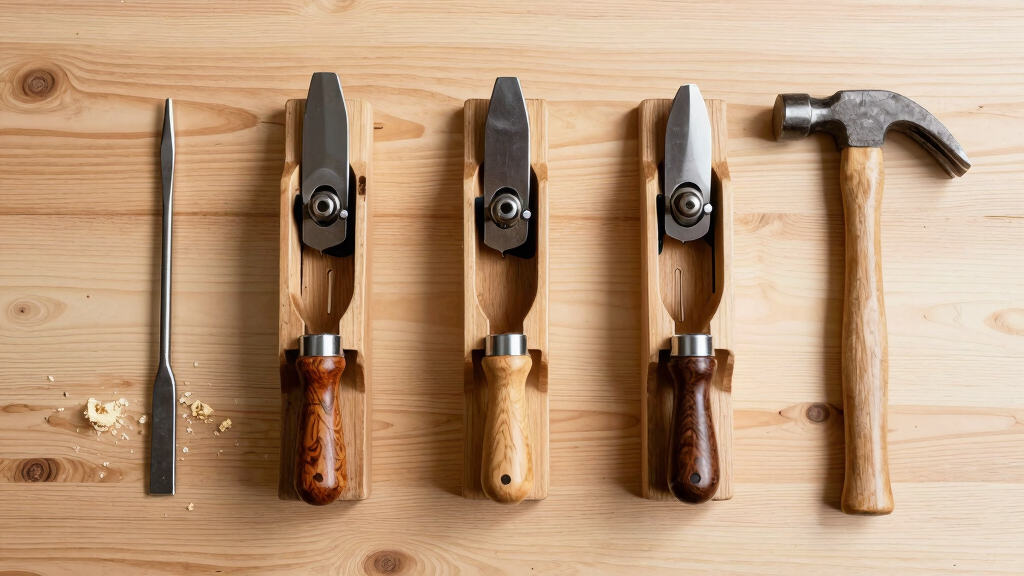
Among the eight woodworking hand planes in this roundup, I rank the Jorgensen No.4 10-Inch Wood Plane as the best overall because its full-size format and ductile iron body suit controlled smoothing and general bench work. The Amazon Basics No.4 with wooden handles is my value pick for buyers who want bench-plane capability at a lower entry price, while the Jorgensen No.60-1/2 stands out as the premium choice for compact trimming and end-grain work. The main choice is between a broad bench plane, a portable block plane, and the pull-cut technique of a Japanese wooden plane. Buyers also need to balance purchase price against setup effort, adjustment control, and long-term durability. Continue reading for the full breakdown and a buyer-specific recommendation.
Complete the kit


Key Takeaways
- The amazon.com/dp/B0BVZK331X?tag=woodnbits-20&ascsubtag=dc-288151″ target=”_blank” rel=”nofollow sponsored noopener”>Jorgensen No.4 ranks first because its full-size smoothing format and ductile iron construction make it the most versatile option for regular bench work.
- The two Amazon Basics No.4 planes fill different roles: the wooden-handle model is the stronger value proposition, while the steel-blade listing is the more approachable beginner bench-plane choice.
- Jorgensen’s block planes separate by job: the No.101 favors portability, the No.102 favors detail trimming, and the No.60-1/2 offers the strongest premium case for low-angle control.
- The KAKURI 42mm is the lineup’s specialist, rewarding buyers who prefer a light Japanese pull plane while asking for a different setup and working technique.
- The generic 2-inch smoothing plane suits occasional DIY, but buyers expecting repeatable adjustments and frequent use have clearer long-term choices higher in the ranking.
| Amazon Basics No.4 Adjustable Precision Smoothing Bench Hand Plane |  | Best Value Bench Plane | Plane Pattern: No. 4 smoothing bench plane | Blade Width: 2 inches | Body Material: Cast iron | VIEW LATEST PRICE | See Our Full Breakdown |
| Jorgensen No.101 Mini Wood Planer |  | Best Mini Plane | Plane Pattern: No. 101 mini block plane | Blade Material: O1 tool steel | Body Material: Ductile iron | VIEW LATEST PRICE | See Our Full Breakdown |
| Amazon Basics Woodworking Hand Planer – No.4 Adjustable Bench Plane |  | Best for Fine Smoothing | Plane Pattern: No. 4 bench plane | Blade Width: 2 inches | Blade Material: Steel | VIEW LATEST PRICE | See Our Full Breakdown |
| KAKURI Japanese Hand Plane 42mm |  | Best Japanese Pull Plane | Plane Style: Japanese wooden hand plane | Blade Material: Japanese high-carbon steel | Body Material: ECO oak | VIEW LATEST PRICE | See Our Full Breakdown |
| Jorgensen No.102 Wood Planer |  | Best Low-Angle Detail Plane | Plane Style: Low-angle block plane | Model: No. 102 | Model Number: 70708 | VIEW LATEST PRICE | See Our Full Breakdown |
| Jorgensen No.4 10-Inch Wood Plane |  | Best Smoothing Plane | Plane size: No.4 | Listed length: 10 in | Blade material: O1 tool steel | VIEW LATEST PRICE | See Our Full Breakdown |
| Jorgensen No.60-1/2 6-1/4-Inch Low-Angle Block Plane |  | Best for End Grain | Plane size: No.60-1/2 | Listed length: 6-1/4 in | Plane type: Low-angle block plane | VIEW LATEST PRICE | See Our Full Breakdown |
| Hand Planer with 2-Inch Adjustable Blade |  | Best Budget Bench Plane | Body length: 9 in | Blade width: 2 in | Blade material: Manganese steel | VIEW LATEST PRICE | See Our Full Breakdown |
| woodworking hand plane | Body Material | Blade Material | Blade Width |
|---|---|---|---|
| Amazon Basics No.4 Adjustable | Cast iron | Steel alloy | 2 inches |
| Jorgensen No.101 Mini Wood Pla | Ductile iron | O1 tool steel | — |
| Amazon Basics Woodworking Hand | Cast iron | Steel | 2 inches |
| KAKURI Japanese Hand Plane 42m | ECO oak | Japanese high-carbon steel | 42 mm (1.65 inches) |
| Jorgensen No.102 Wood Planer | Ductile iron | O1 tool steel | — |
| Jorgensen No.4 10-Inch Wood Pl | Ductile iron | O1 tool steel | — |
| Jorgensen No.60-1/2 6-1/4-Inch | Ductile iron | O1 tool steel | — |
| Hand Planer with 2-Inch Adjust | Carbon steel | Manganese steel | 2 in |
More Details on Our Top Picks
Amazon Basics No.4 Adjustable Precision Smoothing Bench Hand Plane
I rank the Amazon Basics No.4 Adjustable Precision Smoothing Bench Hand Plane as the value pick because its cast-iron body and two-inch blade provide the mass and coverage needed for flattening boards without a premium price position. Compared with the Amazon Basics Woodworking Hand Planer B07V3QLZ5Y, this model emphasizes gear-based blade adjustment rather than an adjustable mouth, making it better for buyers focused on straightforward smoothing rather than controlling difficult grain. The wooden front and rear grips support two-handed bench work, while the steel-alloy cutter can take broad, controlled shavings once tuned. My main reservation is setup: the weight can tire smaller hands, and blade alignment demands patience. It also lacks the compact agility of the Jorgensen No.101 Mini Wood Planer.
Pros:- Cast-iron body adds stability during long smoothing passes
- Two-inch blade covers more surface than the compact block planes
- Adjustment gear supports controlled changes to shaving depth
- Wooden front and rear handles provide a secure two-handed grip
Cons:- Heavy construction can become tiring during extended sessions
- Blade alignment and depth setup require some learned technique
- No adjustable mouth for managing tear-out in difficult grain
Best for: Budget-conscious furniture makers who need a full-size bench plane for flattening and smoothing medium or large boards
Not ideal for: Carvers and craft makers working on tight curves or tiny components, since the full cast-iron body is heavy and relatively bulky
- Plane Pattern:No. 4 smoothing bench plane
- Blade Width:2 inches
- Body Material:Cast iron
- Blade Material:Steel alloy
- Handle Material:Impact-resistant wood
- Blade Adjustment:Adjustable gear
- Intended Work:Woodworking and carpentry smoothing
Our verdict“This is my value choice for buyers who want full-size smoothing capacity and can spend time learning proper setup.”
Jorgensen No.101 Mini Wood Planer
The Jorgensen No.101 Mini Wood Planer earns its place through portability rather than board-flattening power. Its O1 tool-steel blade and ductile-iron body suit trimming corners, cleaning small edges, and removing light surface defects where a No. 4 bench plane feels clumsy. Compared with the Jorgensen No.102 Wood Planer, the No.101 is the more clearly compact choice for crafts and confined work; the No.102 makes more sense when low-angle cutting is the priority. I also find the adjustable cutting depth more approachable than the hammer-set blade on the KAKURI Japanese Hand Plane. The compromise is limited capacity: its short sole cannot reliably flatten long stock, and its small gripping area offers less leverage. The exposed, sharp cutter also calls for careful storage and adjustment.
Pros:- Mini format reaches confined areas that full-size bench planes cannot
- O1 tool-steel blade can take precise shavings on small workpieces
- Ductile-iron body offers greater durability than lightweight hobby planes
- Adjustable cutting depth supports both light cleanup and more assertive trimming
Cons:- Short sole is unsuitable for flattening long or wide stock
- Small body provides less leverage on demanding cuts
- Sharp exposed blade requires cautious adjustment and storage
Best for: Model makers, DIY crafters, and woodworkers who need a pocket-size plane for edge cleanup, deburring, and small-part fitting
Not ideal for: Cabinetmakers flattening long boards or tabletops, because the short sole cannot reference broad surfaces accurately
- Plane Pattern:No. 101 mini block plane
- Blade Material:O1 tool steel
- Body Material:Ductile iron
- Lever Cap Material:Zinc alloy
- Other Hardware:Stainless steel
- Cutting Depth:Adjustable
- Primary Uses:Trimming, polishing, deburring, and crafts
- Form Factor:Portable mini hand plane
Our verdict“I recommend the No.101 for precise small-part cleanup, but not as a buyer’s only plane for general furniture work.”
Amazon Basics Woodworking Hand Planer – No.4 Adjustable Bench Plane
I place the Amazon Basics No.4 Adjustable Bench Plane ahead of its B07V81CNJN sibling for fine smoothing because the adjustable mouth gives buyers another way to control shaving support near the cutting edge. A tighter opening can reduce tear-out on figured or reversing grain, while a wider setting clears heavier shavings. That flexibility makes this model more adaptable than the Jorgensen No.101 Mini Wood Planer when preparing full-size panels, and its front and rear handles provide the leverage required for longer strokes. Yet the same cast-iron mass that steadies a cut also raises fatigue during lengthy jobs. My other caution is the tuning process: mouth position, blade depth, and lateral alignment interact, so beginners may face a slower start than with the compact Jorgensen planes.
Pros:- Adjustable mouth helps control tear-out and shaving clearance
- Two-inch steel blade suits broad smoothing passes
- Cast-iron body remains stable against flat stock
- Front and rear handles provide leverage for controlled bench work
Cons:- Weight can cause fatigue during repeated or overhead work
- Multiple adjustments create a steeper setup process for beginners
- Full-size footprint is awkward on narrow crafts and confined details
Best for: Furniture builders smoothing panels and boards who want adjustable mouth control for changing grain and shaving thickness
Not ideal for: Buyers seeking a light, immediately approachable detail plane, since this model is heavy and requires several manual adjustments
- Plane Pattern:No. 4 bench plane
- Blade Width:2 inches
- Blade Material:Steel
- Body Material:Cast iron
- Mouth:Adjustable
- Handle Layout:Front and rear handles
- Primary Functions:Wood-surface smoothing and trimming
Our verdict“This is my choice for buyers who want finer control over full-size smoothing and accept a more involved setup routine.”
KAKURI Japanese Hand Plane 42mm
The KAKURI Japanese Hand Plane 42mm fills a role none of the metal-bodied picks can match: it offers a traditional pull-cut design in a compact ECO oak body. Its Japanese high-carbon steel blade and 36 mm cutting width favor controlled finishing, edge chamfering, and smaller components rather than rapid stock removal. Compared with the Amazon Basics No.4 Adjustable Bench Plane, the KAKURI is lighter and easier to guide on detail work, but its short wooden sole is less useful for flattening long boards. It also differs sharply from the screw-adjusted Jorgensen No.101 Mini Wood Planer because blade depth is set with careful hammer taps. I see that setup as the defining tradeoff: buyers gain direct, simple construction, yet they must learn a less familiar adjustment method and maintain the wooden body.
Pros:- Japanese high-carbon steel blade supports fine finishing cuts
- Compact oak body is easy to guide on edges and small parts
- Pull-cut format can provide close control during delicate work
- English instructions make the traditional setup more accessible
Cons:- Blade depth and alignment require careful hammer adjustment
- Short sole and narrow cutting width limit large-surface flattening
- Wooden body may require seasonal fitting or maintenance as humidity changes
Best for: Woodworkers who want a compact Japanese pull plane for fine finishing, chamfers, and small joinery components
Not ideal for: Buyers who want screw-based adjustments or need a long reference sole for flattening large furniture panels
- Plane Style:Japanese wooden hand plane
- Blade Material:Japanese high-carbon steel
- Body Material:ECO oak
- Overall Size:5.9 x 2.1 x 1.6 inches
- Blade Width:42 mm (1.65 inches)
- Cutting Width:36 mm (1.42 inches)
- Blade Setup:Hammer-adjusted
- Country of Manufacture:Japan
- Included Documentation:English instruction manual
Our verdict“I favor the KAKURI for buyers drawn to precise Japanese pull-planing who are willing to learn hammer-based blade setup.”
Jorgensen No.102 Wood Planer
I rank the Jorgensen No.102 Wood Planer as the low-angle detail pick because that cutter geometry is better suited to end grain, edge fitting, and controlled trimming than a conventional No. 4 bench plane. Its O1 tool-steel blade, ductile-iron body, and adjustable cutting depth give it a sturdier working platform than many small hobby planers. Compared with the Jorgensen No.101 Mini Wood Planer, the No.102 should be the stronger match for buyers whose work centers on low-angle cuts; the No.101 remains the more portable choice for tiny crafts. It also offers easier mechanical adjustment than the hammer-set KAKURI Japanese Hand Plane. My reservations concern scale and leverage: this is still a small plane, so it cannot flatten long boards, and demanding cuts may feel slower than with a two-handled bench model.
Pros:- Low-angle configuration is well suited to end-grain trimming
- O1 tool-steel blade supports precise detail cuts
- Ductile-iron body provides a rigid base for controlled passes
- Adjustable cutting depth adapts to fine polishing and deeper trimming
Cons:- Small sole cannot flatten long boards accurately
- Limited gripping leverage makes heavy stock removal inefficient
- Sharp cutter requires careful handling during adjustment
Best for: Joinery-focused woodworkers trimming end grain, fitting doors or drawers, and refining small edges with a low-angle cutter
Not ideal for: Furniture makers seeking one plane for flattening long, wide boards, since the compact sole lacks the needed reference length
- Plane Style:Low-angle block plane
- Model:No. 102
- Model Number:70708
- Blade Material:O1 tool steel
- Body Material:Ductile iron
- Lever Cap Material:Zinc alloy
- Cutting Depth:Adjustable
- Primary Uses:Detail trimming, polishing, and deburring
- UPC:044295707084
Our verdict“I recommend the No.102 for end grain and joinery fitting, while buyers planning broad surface work should choose a No. 4 bench plane.”
Jorgensen No.4 10-Inch Wood Plane
I rank the Jorgensen No.4 highest among these three for full-surface smoothing because its 10-inch ductile iron body provides more registration than a compact block plane. Compared with the Jorgensen No.60-1/2, it is better suited to flattening panels, refining joined boards, and removing broader machine marks; the smaller plane is easier on edges and end grain. Its O1 tool steel blade can take a keen edge, while adjustable cutting depth lets the buyer move from controlled stock removal to fine finishing passes. The tradeoff is weight: this is less nimble than either compact option and can become tiring during long sessions. O1 steel also calls for sharpening and rust care. I see it as the strongest choice for buyers who value bench-plane stability over portability.
Pros:- Long body registers well across broad wood surfaces
- O1 tool steel blade supports sharp, controlled finishing cuts
- Ductile iron construction is suited to regular workshop use
- Adjustable cutting depth covers coarse preparation and fine smoothing
Cons:- Heavier and less maneuverable than the Jorgensen No.60-1/2
- O1 steel needs periodic sharpening and protection from moisture
- Longer sole is awkward for tight corners and very small workpieces
Best for: Furniture makers and serious hobbyists who need a stable bench plane for smoothing boards, panels, and glued assemblies
Not ideal for: Craft workers focused on one-handed trimming or frequent job-site carry, since the longer ductile iron body adds weight and bulk
- Plane size:No.4
- Listed length:10 in
- Blade material:O1 tool steel
- Body material:Ductile iron
- Handle material:Beech wood
- Depth adjustment:Adjustable
- Model number:70730
- UPC:044295707305
- Included component:Blade
Our verdict“Choose this plane for stable, full-size smoothing work; choose a block plane instead if compact control matters more.”
Jorgensen No.60-1/2 6-1/4-Inch Low-Angle Block Plane
The Jorgensen No.60-1/2 earns its place through control rather than surface coverage. Its low-angle block-plane format is a better match for end grain, chamfers, and localized trimming than the longer Jorgensen No.4, which favors broad smoothing passes. At 6-1/4 inches, it is also easier to carry and guide around small parts. Both cutting depth and mouth width are adjustable, giving careful users more control over chip thickness and tear-out than the basic 2-inch Hand Planer. That flexibility brings a learning curve: setting the mouth and blade by hand takes patience, and the short sole cannot bridge high and low spots as effectively as a bench plane. I would choose it for precise fitting work, while reserving the No.4 for flattening. Its O1 steel blade will also need routine honing and moisture protection.
Pros:- Low-angle format is well suited to end grain and controlled trimming
- Adjustable mouth helps manage fine shavings and tear-out
- Compact body offers better control on small parts than a No.4 plane
- Ductile iron construction provides a rigid cutting platform
Cons:- Short sole is poorly suited to flattening long or uneven stock
- Depth and mouth setup may frustrate buyers seeking quick adjustments
- O1 blade requires honing and rust prevention
Best for: Cabinetmakers, trim carpenters, and model builders who frequently pare end grain, fit joints, or refine small edges
Not ideal for: Woodworkers trying to flatten long boards or smooth wide panels, because the short sole follows surface irregularities rather than bridging them
- Plane size:No.60-1/2
- Listed length:6-1/4 in
- Plane type:Low-angle block plane
- Blade material:O1 tool steel
- Body material:Ductile iron
- Lever cap material:Zinc alloy
- Adjustments:Cutting depth and mouth width
- Listed uses:Trimming, polishing, deburring, and cutting
Our verdict“Pick this model for precise end-grain and fitting work, not as a replacement for a full-size smoothing plane.”
Hand Planer with 2-Inch Adjustable Blade
I place the 2-Inch Adjustable Hand Planer in the budget role because it covers basic smoothing without the more specialized setup of the Jorgensen No.60-1/2. Its 9-inch carbon steel body offers more surface support than that compact block plane, while the 2-inch manganese steel blade gives DIY buyers useful cutting width for shelves, small panels, and general edge cleanup. An epoxy coating adds corrosion resistance, and adjustable cutting depth supports both corrective and lighter finishing passes. The compromise is refinement: its basic design lacks the Jorgensen block plane’s adjustable mouth and does not match the Jorgensen No.4’s ductile iron body or O1 blade. The fixed 2-inch width also limits flexibility on narrow detail work. I would treat this as an accessible general-purpose option, not a precision-focused plane for demanding joinery.
Pros:- Nine-inch body provides useful support for general smoothing
- Two-inch manganese steel blade covers common DIY workpieces efficiently
- Adjustable depth allows heavier cuts and lighter finishing passes
- Epoxy-coated carbon steel body offers added rust resistance
Cons:- Basic adjustment system offers less control than the Jorgensen No.60-1/2
- Carbon steel body is less robust than the Jorgensen No.4 ductile iron casting
- Two-inch blade is too broad for some confined detail work
Best for: Budget-conscious DIY woodworkers smoothing shelves, small panels, and medium-size project parts
Not ideal for: Fine-furniture builders who need an adjustable mouth, a premium blade system, or compact control for detailed joinery
- Body length:9 in
- Blade width:2 in
- Blade material:Manganese steel
- Body material:Carbon steel
- Body coating:Epoxy
- Depth adjustment:Adjustable
- Handle design:Ergonomic
- Primary application:Smoothing wood
Our verdict“This is the practical choice for affordable general smoothing, provided fine adjustment and specialized end-grain performance are not priorities.”
How We Picked
I ranked these woodworking hand planes by matching their designs to real shop tasks rather than treating every plane as interchangeable. My highest-weight criteria were cutting role, adjustment control, body rigidity, blade format, handling, and the range of work each model can cover. I also looked at likely setup demands, since an inexpensive plane loses much of its appeal when flattening, sharpening, or adjustment becomes a recurring obstacle.
The ranking favors products that can serve more buyers across smoothing, fitting, trimming, and end-grain work. That logic puts the Jorgensen No.4 first, followed by options with narrower but clearly useful strengths. I assigned each model a distinct role: the Amazon Basics wooden-handle plane for value, its steel-blade counterpart for beginners, the Jorgensen No.101 for compact portability, the KAKURI for Japanese pull-planing, the Jorgensen No.102 for detail trimming, the No.60-1/2 for premium block-plane work, and the generic 2-inch model for occasional DIY. Lower-ranked products are not automatically poor choices; they simply cover fewer jobs, demand more compromise, or offer less compelling construction than the models above them.
| woodworking hand plane | Body Material | Blade Material |
|---|---|---|
| Amazon Basics No.4 Adjustable | Cast iron | Steel alloy |
| Jorgensen No.101 Mini Wood Pla | Ductile iron | O1 tool steel |
| Amazon Basics Woodworking Hand | Cast iron | Steel |
| KAKURI Japanese Hand Plane 42m | ECO oak | Japanese high-carbon steel |
| Jorgensen No.102 Wood Planer | Ductile iron | O1 tool steel |
| Jorgensen No.4 10-Inch Wood Pl | Ductile iron | O1 tool steel |
| Jorgensen No.60-1/2 6-1/4-Inch | Ductile iron | O1 tool steel |
| Hand Planer with 2-Inch Adjust | Carbon steel | Manganese steel |
Factors to Consider When Choosing Woodworking Hand Planes
I would choose a hand plane by starting with the work it must perform, then deciding how much setup, sharpening, and adjustment I am willing to manage. Plane size, cutting geometry, body construction, and grip style change the experience more than small differences in advertised accessories.
Choose the Plane Type Before the Brand
A No.4 bench plane is the most useful starting point for smoothing boards, leveling light irregularities, and preparing surfaces after milling. A block plane is shorter and easier to guide with one hand, making it better for chamfers, fitted parts, and quick trimming than broad face work. Japanese wooden planes cut on the pull stroke, which can feel controlled and natural once the blade and body are set correctly. They are not direct substitutes for metal bench planes because their adjustment method, grip, and maintenance routine differ. Buying a mini plane as the only shop plane is a common mistake; its portability cannot make up for the short sole when flattening a wider surface. I would begin with a No.4 for furniture-scale bench work, then add a block plane when smaller fitting jobs become frequent.
Match Cutting Geometry to the Grain
Low-angle block planes are especially useful on end grain because their cutting geometry can reduce effort and leave a cleaner surface when the iron is sharp. Face grain is less demanding, so a conventional bench plane remains the more flexible choice for routine smoothing. Difficult grain changes the equation: a fine shaving, a tight mouth, and a sharp cutting edge matter more than aggressive depth. Buyers sometimes blame the plane body when tear-out actually comes from a dull iron or an overly thick shaving. I would favor the Jorgensen No.60-1/2 or No.102 for frequent end-grain and fitting work, while reserving the full-size No.4 models for larger surfaces.
Budget for Setup and Sharpening
Nearly every new hand plane benefits from checking the blade, cap, sole, and adjustment before serious work begins. A low purchase price can shift work onto the buyer through blade flattening, sole correction, or less refined controls. That trade can still make sense for a hobbyist who enjoys tuning tools and already owns sharpening equipment. A buyer seeking immediate, repeatable adjustments may save time by paying more for stronger construction and better control surfaces. Sharpening stones, a honing guide, and a reliable way to check flatness can cost as much as an entry plane, so I would treat them as part of the buying decision. Premium construction does not remove sharpening from the routine; it mainly reduces avoidable frustration elsewhere.
Pay Attention to Sole Length and Body Rigidity
A longer sole rides across high spots and helps a bench plane create a flatter surface, while a short sole follows local contours more closely. That is why mini and block planes excel at localized cuts but struggle to replace a No.4 on broad stock. Metal bodies add mass and rigidity, which can steady the cut, though they also make extended one-handed work more tiring. Wooden-bodied planes such as the KAKURI feel lighter and behave differently as humidity changes. Ductile iron is appealing for a working bench plane because it offers a stronger durability case than an unspecified budget casting. I would pay for body quality when the plane will see weekly use, but accept a simpler build for occasional edge easing or DIY repairs.
Choose the Adjustment and Grip Style You Will Maintain
Metal bench planes typically provide mechanical depth and lateral controls, giving beginners visible feedback when centering the blade and changing shaving thickness. Small block planes reduce bulk, yet their compact controls may feel cramped for buyers with larger hands. A Japanese plane relies more on careful tapping and body preparation, so it suits buyers who enjoy direct tool setup rather than dial-based adjustment. Wooden front and rear handles can make sustained two-handed smoothing more comfortable than holding a compact body. I would also check whether replacement irons and compatible parts are easy to identify, since an obscure bargain plane may become disposable after damage or heavy wear. The right control system is the one a buyer will sharpen, reset, and use regularly rather than leave on a shelf.
Frequently Asked Questions
Should My First Woodworking Hand Plane Be a No.4 or a Block Plane?
I would choose a No.4 bench plane first when the goal is furniture making, surface smoothing, or flattening modest boards. Its longer sole and two-handed grip cover more core bench tasks than a short block plane. A block plane makes more sense as the first purchase for installation work, model making, chamfers, or trimming small parts. It is easier to carry but less capable of correcting broad surfaces. For a developing workshop, the most useful pairing is a No.4 followed by a low-angle block plane.
Is the Jorgensen No.60-1/2 Worth Paying More for Than the No.101 or No.102?
The Jorgensen No.60-1/2 makes the strongest case for buyers who frequently plane end grain, fit components, or want a larger premium block-plane format. The No.101 is the better choice when pocketable size and quick light cuts matter more than broad support. The No.102 sits between those needs and is my more focused pick for detail trimming. Paying more is easier to justify when the tool will be adjusted and used often. For occasional chamfers, the smaller models offer a more sensible balance of cost and capability.
Are the Amazon Basics No.4 Planes Good Choices for Beginners?
Both Amazon Basics models give a beginner access to the familiar No.4 bench-plane format without moving directly to the premium end of the lineup. I favor the wooden-handle version for value, while the other 2-inch steel-blade listing is a straightforward entry point for learning blade depth and lateral adjustment. Buyers should still expect to inspect and sharpen the iron before judging cut quality. A budget plane can teach useful setup skills, but it may demand more correction than the Jorgensen No.4. Someone who dislikes tool tuning may find the higher initial price easier to live with.
When Does the KAKURI Japanese Hand Plane Make More Sense Than a Western Bench Plane?
The KAKURI 42mm makes sense for a buyer who wants a lightweight pull plane and is willing to learn blade setting through careful tapping. Its oak body and narrower format create a different working feel from the heavier metal No.4 planes. It can be appealing for controlled smoothing, smaller work, and buyers building a Japanese-style tool set. It is less suitable for anyone who wants familiar mechanical adjusters or a ready substitute for a broad bench plane. I would choose it for technique and handling preference, not simply because it is compact.
How Much Setup Should I Expect From an Affordable Hand Plane?
I would expect to sharpen the blade, check its seating, center the cutting edge, and begin with a very fine shaving. Some affordable planes may also need attention to the sole, mouth, or mating surfaces before they cut consistently. That work is reasonable for a hobby buyer who owns sharpening tools and enjoys tuning equipment. It becomes poor value when the setup costs more time than the plane will save. The generic 2-inch model fits occasional DIY, while the Amazon Basics choices offer a clearer path for buyers prepared to learn bench-plane setup.
Conclusion
For most woodworkers, my best overall recommendation is the Jorgensen No.4 10-Inch Wood Plane because it offers the broadest usefulness for controlled smoothing and regular bench work. The Amazon Basics No.4 with wooden handles is my best value choice, while the other Amazon Basics No.4 is the more approachable beginner bench plane. Buyers seeking a premium compact tool should choose the Jorgensen No.60-1/2; the No.102 is better for detail trimming, and the No.101 earns the compact role. I would pick the KAKURI 42mm for a Japanese pull-plane experience and the generic 2-inch model only for light, occasional DIY. The final choice comes down to scale: a No.4 for broad surfaces, a block plane for fitting and end grain, or the KAKURI for buyers committed to its distinct technique.