
The best DIY woodworking tools depend on the work you plan to do, but I rank the TEENO 1.25 HP Compact Wood Router first for its range of uses across common home projects. For accurate layout and repeatable cuts, the Saker T-Square stands out, while the VEVOR Pocket Hole Jig Kit is a practical pick for accessible joinery. The main tradeoff is whether to buy versatile power tools or build a lower-cost kit of hand tools and measuring aids. This roundup also compares overlapping contour gauges, corner clamps, saws, and woodworking books so you can avoid buying duplicate tools. Read on for the full breakdown and a guide to choosing tools that fit your projects, space, and skill level.

Get tools and workshop supplies delivered free — and shop member deals
- Fast, free delivery on millions of items
- Access to Prime Big Deal Days deals on October 6–7
- Prime Video, Amazon Music and more included
Complete the kit


Key Takeaways
- The TEENO compact router ranks first because it adds capabilities—such as edge shaping and routing grooves—that several measuring and clamping tools cannot provide on their own.
- The Saker T-Square is the clearest layout pick for straight reference lines; a multi-angle square is more useful when projects call for varied angles and hole marking.
- Several contour gauges overlap. The paired 10-inch and 5-inch Saker set offers more size flexibility than choosing multiple single-size gauges, while a separate scribe tool adds a different marking function.
- The two Japanese pull saws serve similar jobs. Choose between them based on tooth configuration, grip, and cut type rather than assuming two double-edge saws belong in every starter kit.
- Books and tools solve different beginner problems. The project book is geared toward guided builds, while the skills reference is better for learning techniques and tool use beyond a single project.
| HURRICANE 4-Piece Wood Chisel Set with CR-V Steel Blades |  | Best for Hand-Cut Joinery | Set size: 4 chisels | Blade sizes: 1/4 in, 1/2 in, 3/4 in, and 1 in | Blade material: Chromium-vanadium steel | VIEW LATEST PRICE | See Our Full Breakdown |
| Saker Contour Gauge – Adjustable Locking Tool for Duplicating Irregular Shapes (10″ + 5″) | 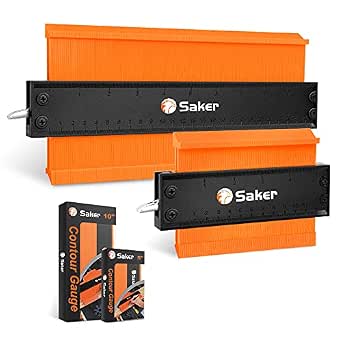 | Best for Multiple Profile Sizes | Gauge lengths: 5 in and 10 in | Material: ABS plastic | Lock: Included | VIEW LATEST PRICE | See Our Full Breakdown |
| WETOLS 90-Degree Corner Clamp Set, 4-Piece |  | Best for Small-Scale Assembly | Quantity: 4 clamps | Material: Polyamide | Board thickness range: 3/16–3/4 in | VIEW LATEST PRICE | See Our Full Breakdown |
| Frocopo 6-Inch Double-Edge Japanese Pull Saw | 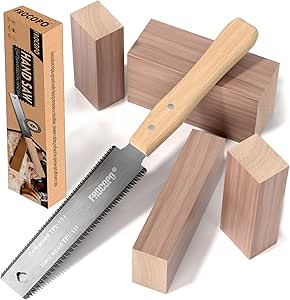 | Best Compact Hand Saw | Blade length: 6 in | Blade material: SK5 steel | Teeth: 11 TPI and 17 TPI | VIEW LATEST PRICE | See Our Full Breakdown |
| JOREST Contour Gauge with Lock, 10-Inch |  | Best for Measured Profile Transfers | Length: 10 in | Scale: Inches and centimeters | Blade thickness: 0.05 in | VIEW LATEST PRICE | See Our Full Breakdown |
| Saker 10-Inch Contour Gauge with Adjustable Lock |  | Best for Compact Profile Copying | Length: 10 inches | Material: ABS plastic | Weight: 13.7 ounces | VIEW LATEST PRICE | See Our Full Breakdown |
| Yuntop Contour Scribe Tool with Adjustable Lock and 2 Pencils |  | Best for Ready-to-Mark Scribing | Materials: Metal and ABS plastic | Included: 1 contour scribe tool and 2 pencils | Line size: 1.0–1.9 mm | VIEW LATEST PRICE | See Our Full Breakdown |
| 4-Pack 5.5-Inch 90-Degree Aluminum Corner Clamps for Woodworking |  | Best for Multi-Corner Assembly | Quantity: 4 clamps | Material: Aluminum alloy | Angle: 90 degrees | VIEW LATEST PRICE | See Our Full Breakdown |
| VEVOR 34-Piece Adjustable Pocket Hole Jig Kit |  | Best for Complete Pocket-Hole Setups | Pieces: 34 | Materials: Aluminum alloy and stainless steel | Adjustable drilling depth: 1/2–1 1/2 inches (12.7–38.1 mm) | VIEW LATEST PRICE | See Our Full Breakdown |
| Saker Woodworking Scriber Marking Line Ruler Aluminum Alloy T-Square | 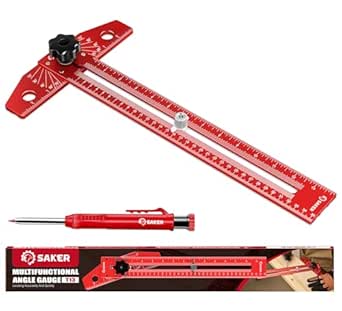 | Best for Detailed Layout and Angles | Material: Aluminum alloy | Graduation range: 0–48 cm (0–18 inches) | Item dimensions: 18.89 × 7.87 inches | VIEW LATEST PRICE | See Our Full Breakdown |
| Mini 3D Multi-Angle Measuring Square Ruler WT102A High Precision Hole Scribing Woodworking Tool with 0‑90° Aluminum Alloy Carpenter Square and 6 Pencil Refills |  | Best Compact Marking Tool | Brand: ARTYMASTER | Material: Aluminum | Graduation range: 3.8 inches | VIEW LATEST PRICE | See Our Full Breakdown |
| Woodworking Projects for Beginners: Step-by-Step DIY Creations |  | Best for First-Time Woodworkers | Skill level: Beginner | Requirements: Basic tools and workspace | Instruction format: Step-by-step project instructions | VIEW LATEST PRICE | See Our Full Breakdown |
| RUITOOL 6-Inch Japanese Ryoba Pull Saw, Double-Edge |  | Best Hand Saw for Fine DIY Cuts | Blade length: 6 inches | Blade material: SK5 high-carbon steel | Teeth: 17 TPI on one side; 14 TPI on the other | VIEW LATEST PRICE | See Our Full Breakdown |
| TEENO 1.25 HP Compact Wood Router, 6-Speed |  | Best Starter Router Kit | Motor power: 1.25 HP (800 W) | Amperage: 6.5 A | Speed settings: 6 | VIEW LATEST PRICE | See Our Full Breakdown |
| The Complete Book of Woodworking: A Step-by-Step Guide to Essential Skills, Techniques, and Tools |  | Best Reference for Project Variety | Format: Book | Projects and plans: 40+ | Photos: 1,200+ | VIEW LATEST PRICE | See Our Full Breakdown |
More Details on Our Top Picks
HURRICANE 4-Piece Wood Chisel Set with CR-V Steel Blades
I’d choose this set when a woodworking project calls for controlled paring, trimming, or basic mortising rather than powered cutting. Its four common blade widths cover a useful range of everyday tasks, while the 25-degree beveled edges suit finish work and fitting joints. The drop-forged, heat-treated CR-V blades are designed to handle both softwood and hardwood, and the impact-resistant PVC handles can take mallet strikes. Compared with the Frocopo pull saw, this set is for removing and refining material with more control in corners and joints, not making longer cuts. The tradeoff is a narrow size selection: buyers tackling varied joinery may want additional chisels, and the supplied case is not described in enough detail to judge how well it organizes or protects the set.
Pros:- Four useful blade widths cover common trimming and paring jobs.
- Heat-treated CR-V steel is designed for durability and edge retention.
- PVC handles are intended to withstand mallet strikes.
- Blade guards help protect cutting edges in storage.
Cons:- Only four blade sizes are included, limiting coverage for specialized joinery.
- The case type and its storage features are not specified.
Best for: DIY woodworkers who need a small, practical set for paring, fitting joints, and occasional mallet-driven cuts.
Not ideal for: Woodworkers who regularly cut a wide range of mortise sizes or need a clearly specified storage system.
- Set size:4 chisels
- Blade sizes:1/4 in, 1/2 in, 3/4 in, and 1 in
- Blade material:Chromium-vanadium steel
- Blade edge:25° bevel
- Handle material:PVC
- Included components:Case and blade guards
Our verdict“Choose this set for hands-on trimming and basic joinery; pick a broader chisel selection if your projects require more sizes.”
Saker Contour Gauge – Adjustable Locking Tool for Duplicating Irregular Shapes (10″ + 5″)
The Saker set earns its place for projects where straight measurements cannot capture the shape that needs cutting. Having both 5-inch and 10-inch gauges gives me more flexibility than a single-size tool: the smaller gauge can handle tight, compact profiles, while the longer one can trace broader edges. Its adjustable tension and locking feature help keep the copied outline steady while transferring it to wood. Compared with the 10-inch JOREST Contour Gauge, this Saker option offers a second, shorter gauge and adjustable tightness; the JOREST adds dual measurement scales and thin tracing blades instead. The tradeoff is that even the larger Saker gauge may fall short for oversized profiles, and its ABS construction is light and portable rather than a metal-bodied choice for buyers seeking a more rigid tool.
Pros:- Two gauge lengths handle a wider range of profile sizes than a single-length tool.
- Adjustable tension helps set the teeth to the shape being copied.
- Locking feature holds the copied profile during transfer.
- Lightweight, rust-proof ABS construction suits portable project kits.
Cons:- The 10-inch maximum length may not span larger profiles.
- ABS construction may feel less rigid than a metal-bodied alternative.
Best for: DIYers fitting wood around pipes, ducts, trim, or other irregular shapes who want both a compact gauge and a longer one.
Not ideal for: Woodworkers tracing profiles longer than 10 inches or those who prefer a more rigid metal gauge.
- Gauge lengths:5 in and 10 in
- Material:ABS plastic
- Lock:Included
- Tension:Adjustable
- Package dimensions:11.1 × 5.31 × 1.97 in
- Item weight:1.64 lb
Our verdict“Pick the Saker pair when profile size varies between projects; choose a longer tool if you routinely copy oversized outlines.”
WETOLS 90-Degree Corner Clamp Set, 4-Piece
When I’m assembling a small frame or box, keeping corners aligned while fastening can be harder than making the cuts. These four spring-tension clamps address that problem with one-handed positioning and support for both 90-degree corners and T-joints. The set fits stock from 3/16 to 3/4 inch thick, making it a practical match for many thin boards and light DIY assemblies. Compared with the 4-pack of 5.5-inch aluminum corner clamps in this roundup, the WETOLS set is explicitly limited to thinner stock, so it is less suited to heavier framing. Its polyamide bodies keep the clamps light, but the narrow thickness range is the main constraint: buyers working with thicker lumber will need a different clamping approach or a more capable clamp set.
Pros:- Four clamps provide multiple holding points for an assembly.
- Spring tension supports one-handed positioning.
- Works with both 90-degree corners and T-joints.
- Fits boards from 3/16 to 3/4 inch thick.
Cons:- Maximum board thickness is limited to 3/4 inch.
- Light polyamide clamps are better suited to small assemblies than heavy-duty work.
Best for: DIYers assembling thin-stock boxes, small frames, or T-joints who want four clamps that can be positioned with one hand.
Not ideal for: Woodworkers joining boards thicker than 3/4 inch or clamping heavy, large assemblies.
- Quantity:4 clamps
- Material:Polyamide
- Board thickness range:3/16–3/4 in
- Uses:90-degree corners and T-joints
- Operation:One-handed, spring tension
- Dimensions:3.3 × 2.8 × 1.5 in
- Weight:13.44 oz
Our verdict“Choose these clamps for small, thin-stock assemblies; move to a larger clamp style for thicker or heavier projects.”
Frocopo 6-Inch Double-Edge Japanese Pull Saw
This compact pull saw is a strong fit for DIYers who want a hand-powered tool for controlled cuts without adding a larger saw to the kit. Its double-edge blade gives me a coarse 11 TPI side for faster cutting and a finer 17 TPI side for cleaner, more controlled work. The flexible 6-inch SK5 steel blade is also suited to flush cuts, while its low weight makes it easy to handle for small projects. Compared with the RUITOOL 6-inch Japanese Ryoba pull saw listed elsewhere in the roundup, the Frocopo also offers two tooth pitches, but the supplied details do not establish a clear advantage in blade design or durability between them. The tradeoffs are its wood-only use and the lack of a mentioned blade cover, which may matter for storage and transport.
Pros:- Two tooth pitches offer a choice between faster and finer cuts.
- Flexible blade is suited to flush-cutting tasks.
- Lightweight design is easy to handle and pack.
- Lifetime warranty is included.
Cons:- Designed for wood cutting, limiting its use with other materials.
- No protective blade cover is mentioned.
Best for: DIY woodworkers making small cuts, flush cuts, and finish cuts who want a lightweight, compact hand saw.
Not ideal for: Buyers who need one saw for multiple materials or want a clearly specified blade cover for tool storage.
- Blade length:6 in
- Blade material:SK5 steel
- Teeth:11 TPI and 17 TPI
- Handle material:Wood
- Weight:2.82 oz
- Power source:Hand powered
- Warranty:Lifetime
Our verdict“Choose the Frocopo for compact woodworking cuts and flush trimming; skip it if you need a cross-material saw or covered storage.”
JOREST Contour Gauge with Lock, 10-Inch
The JOREST is a straightforward option for copying edges and irregular outlines when a project calls for one dependable gauge length. Its 10-inch profile span covers many trim, flooring, and woodworking fits, while the inch-and-centimeter scales make it easier to work from either measurement system. The 0.05-inch-thick blades are intended to trace shapes precisely, and the lock helps hold the copied profile while I transfer it to the material. Compared with the Saker 5- and 10-inch set, the JOREST gives up the smaller gauge and adjustable tension in favor of dual scales and factory-set blade tension that needs no manual adjustment. Its main limitation is the same practical step required by contour gauges generally: it copies the outline, but the user still has to mark, cut, and refine the material.
Pros:- Inch and centimeter scales support different measuring preferences.
- Thin blades are designed for precise outline tracing.
- Lock helps retain the copied profile during transfer.
- Factory-set blade tension avoids manual adjustment.
Cons:- A single 10-inch length may not suit very small or oversized profiles.
- The user must still transfer the outline and cut the material manually.
Best for: DIYers fitting flooring, trim, or wood around irregular edges who want a 10-inch gauge with both inch and metric scales.
Not ideal for: Buyers who need multiple gauge lengths, adjustable blade tension, or a tool that cuts the copied shape for them.
- Length:10 in
- Scale:Inches and centimeters
- Blade thickness:0.05 in
- Material:ABS plastic
- Lock:Included
- Blade tension:Factory-set; no manual adjustment
Our verdict“Choose the JOREST for straightforward, measured profile transfers; choose the Saker set if you want two gauge lengths and adjustable tension.”
Saker 10-Inch Contour Gauge with Adjustable Lock
I’d choose this 10-inch contour gauge when a DIY project calls for transferring a pipe edge, trim profile, or other irregular shape without setting up a more elaborate measuring method. Its adjustable tension and locking feature help keep the copied outline steady while you mark the workpiece, while the ABS body keeps the tool light to carry between tasks. Compared with the Saker Contour Gauge that includes both 10-inch and 5-inch gauges, this is the simpler single-size choice; it gives up the smaller gauge’s flexibility but keeps the kit straightforward. Its main limitation is reach: larger profiles may exceed its width, and the prongs or lock may need adjustment if they feel sticky or loose. I’d pick it for occasional, portable layout work, not oversized profiles.
Pros:- Copies irregular edges for transferring outlines to workpieces
- Adjustable tension and a lock help hold the copied profile
- Lightweight ABS construction is easy to carry
- Useful for woodworking, flooring, trim, and auto body projects
Cons:- The 10-inch length limits the size of profiles it can capture
- Prong tension or the lock may need adjustment if movement feels sticky or loose
Best for: DIY woodworkers and flooring installers who need a lightweight gauge for copying profiles no wider than 10 inches.
Not ideal for: Builders copying broad or long profiles, or anyone who wants multiple gauge sizes in one set.
- Length:10 inches
- Material:ABS plastic
- Weight:13.7 ounces
- Measurement system:Inch
- Locking feature:Adjustable tension with profile lock
- Color:Orange
- Pieces:1
Our verdict“Choose this Saker when portability and straightforward 10-inch profile copying matter more than coverage for larger shapes.”
Yuntop Contour Scribe Tool with Adjustable Lock and 2 Pencils
The Yuntop pairs a lockable contour scribe with two included pencils, making it a practical pick for buyers who want to trace a profile and mark it without sourcing a separate marking tool. Its roller and pointer are intended to follow different shapes, while the movable pencil clip supports tracing onto the workpiece. Compared with the Saker 10-Inch Contour Gauge, the Yuntop emphasizes direct scribing and included pencils rather than a stated gauge length and ABS-only construction. That can suit tile and trim work as well as woodworking, but the supplied details give no dimensions, so I can’t recommend it for a particular maximum profile size. The smooth grip and ambidextrous design broaden its use, though buyers seeking a clearly specified gauge width may prefer the Saker.
Pros:- Adjustable lock helps hold a traced profile in place
- Roller and pointer support tracing different shapes
- Two pencils are included for marking
- Ambidextrous design suits either hand
Cons:- Product dimensions are not provided, making capacity hard to judge
- The listed specifications do not state a maximum profile width
Best for: DIY woodworkers and tile installers who want a lockable profile-tracing tool with pencils included for marking.
Not ideal for: Buyers who need a confirmed maximum tracing width or a clearly stated tool size before purchasing.
- Materials:Metal and ABS plastic
- Included:1 contour scribe tool and 2 pencils
- Line size:1.0–1.9 mm
- Additional features:Adjustable and lockable
- Tracing components:Roller and pointer
- Grip type:Smooth
- Hand orientation:Ambidextrous
Our verdict“Pick the Yuntop for a ready-to-mark scribing setup, but choose the Saker if a stated 10-inch gauge length matters more.”
4-Pack 5.5-Inch 90-Degree Aluminum Corner Clamps for Woodworking
For assembling a cabinet carcass, drawer, or frame, this set’s main advantage is having four 90-degree clamps available at once. That makes it easier to hold several corners in alignment during gluing than relying on one or two clamps, and the stated 3.5-inch clamping capacity accommodates relatively thick boards. Compared with the WETOLS 90-Degree Corner Clamp Set in this roundup, this option is distinguished by its stated 5.5-inch size, board capacity, and anodized aluminum construction; the available information does not establish a performance advantage over the WETOLS set. The L-shaped screw adjusts each clamp, but its plastic nut is a potential weak point compared with an all-metal adjustment system. These clamps help position corners, yet they don’t replace a check of the assembly’s squareness as glue-up proceeds.
Pros:- Four clamps support multi-corner assembly and glue-ups
- Accommodates boards up to 3.5 inches thick
- Anodized aluminum alloy construction
- Chamfered edges help reduce the chance of scratches to hands or workpieces
Cons:- Plastic adjustment nuts may be less durable than all-metal hardware
- The 90-degree design is limited to square-corner positioning
Best for: DIY furniture builders assembling frames, drawers, or cabinet boxes who need to hold several corners square at once.
Not ideal for: Woodworkers who prefer all-metal adjustment hardware or need clamps sized for boards thicker than 3.5 inches.
- Quantity:4 clamps
- Material:Aluminum alloy
- Angle:90 degrees
- Clamp size:5.5 inches (140 mm)
- Maximum clamping thickness:3.5 inches (90 mm)
- Adjustment:L-shaped metal screw and plastic nut
- Finish:Red anodized
- Warranty:1 year
Our verdict“Choose this four-clamp set for keeping several standard right-angle joints positioned during a DIY assembly.”
VEVOR 34-Piece Adjustable Pocket Hole Jig Kit
I’d rank this VEVOR kit for woodworkers who want the jig, clamp, bits, fasteners, and storage together rather than assembling a pocket-hole setup piece by piece. Its adjustable 1/2-to-1 1/2-inch drilling depth and two fixtures offer more setup options than a basic single-guide jig, while the metal body and stainless extension rod are suited to repeated workshop use. Compared with the 4-Pack 90-Degree Corner Clamps, this kit supports a different part of assembly: it creates pocket-hole joints rather than holding corners square. The tradeoff is a heavier, more involved kit at 8.4 pounds, which is less appealing for occasional repairs or a compact tool bag. The product details also list voltage and wattage for a hand-powered tool, so I would verify any unclear specifications before relying on them.
Pros:- Adjustable drilling depth covers 1/2 to 1 1/2 inches
- Includes two fixtures, step drills, stop rings, bits, screws, and plugs
- CNC-machined aluminum alloy body and stainless steel extension rod
- Can be used with the guide block attached or detached
Cons:- At 8.4 pounds, the kit is heavy for portable or occasional use
- The listed voltage and wattage details are confusing for a hand-powered tool
- The range of components may be more setup than a beginner needs for a small project
Best for: DIY furniture builders who expect to make repeated pocket-hole joints and want drilling, clamping, fastening accessories, and storage in one kit.
Not ideal for: Occasional DIYers seeking a light, simple jig, or buyers who need unambiguous electrical specifications.
- Pieces:34
- Materials:Aluminum alloy and stainless steel
- Adjustable drilling depth:1/2–1 1/2 inches (12.7–38.1 mm)
- Clamp:11-inch C-clamp
- Power source:Hand-powered
- Weight:8.4 pounds
- Dimensions:11.4 × 2.36 × 3.94 inches
- Included components:2 fixtures, 2 step drills, 2 wrenches, 2 stop rings, 2 square drive bits, pocket screws and plugs, C-clamp, toolbox
Our verdict“Choose the VEVOR kit if pocket-hole joinery is a regular part of your projects and you want the core accessories in one package.”
Saker Woodworking Scriber Marking Line Ruler Aluminum Alloy T-Square
This Saker T-square suits projects where repeatable layout and angle marking matter more than capturing an irregular profile. Its aluminum alloy body combines a straightedge with an adjustable protractor, and laser-engraved scales are intended to remain readable through regular shop handling. The included mechanical pencil and refills mean the basic marking setup is ready to go. Compared with the Saker 10-Inch Contour Gauge, this ruler is for measuring and drawing straight or angled lines, not copying the shape of an edge. Its 18-inch maximum length also gives it less reach than a longer shop rule, and the 449-gram weight may feel cumbersome for extended handheld marking. The screw-nut angle adjustment is useful for layout, though frequent movement could loosen it and call for occasional checking.
Pros:- Adjustable protractor supports marking different angles
- Aluminum alloy construction resists wear and deformation
- Laser-engraved scales are designed to remain legible
- Includes a mechanical pencil with eight refills
Cons:- The 18-inch graduation range may be short for larger panels
- The angle-adjustment nut could loosen with frequent use
- At 449 grams, it may feel heavy during extended handheld work
Best for: DIY woodworkers and furniture makers who need a durable square and adjustable angle scale for layout on pieces up to 18 inches.
Not ideal for: Builders laying out long panels or buyers who want a very light ruler for extended one-handed use.
- Material:Aluminum alloy
- Graduation range:0–48 cm (0–18 inches)
- Item dimensions:18.89 × 7.87 inches
- Weight:449 g
- Color:Red
- Included marking tool:Mechanical carpenter pencil with 8 refills
- Angle adjustment:Adjustable protractor with screw-nut mechanism
- Scale marking:Laser-engraved
Our verdict“Pick this Saker for durable straight and angled layout on small-to-medium projects, but choose a longer rule for large panels.”
Mini 3D Multi-Angle Measuring Square Ruler WT102A High Precision Hole Scribing Woodworking Tool with 0‑90° Aluminum Alloy Carpenter Square and 6 Pencil Refills
The WT102A earns its place for small, precise layout jobs where carrying a full-size square feels excessive. Its 3.8-inch aluminum body combines an imperial scale, triangle ruler, and rafter-square functions, while the built-in pencil and refills let you move from measuring to marking without reaching for another tool. Compared with the Saker Woodworking Scriber Marking Line Ruler, this mini square adds an integrated pencil but covers a much shorter span, so it suits small parts and quick checks better than laying out long boards. The laser-etched scales and compact form are useful in a crowded tool bag; the tradeoff is real: measurement is limited to 3.8 inches, and angle marking covers only 0–90°. I would choose it as a handy companion, not as my only layout square.
Pros:- Combines measuring, square checking, and marking in one compact tool.
- Laser-etched scales on aluminum alloy support clear, durable markings.
- Includes an integrated pencil, sharpener, six refills, and Allen wrench.
- Small footprint is easy to carry and store.
Cons:- The 3.8-inch graduation range is too short for many board and panel layouts.
- Angle marking is limited to 0–90°, reducing flexibility for unusual angles.
Best for: DIYers who often mark small parts, check short edges, or want a compact layout tool with its own pencil and refills.
Not ideal for: Woodworkers laying out full-size panels or needing broad angle coverage; the short scale and 0–90° range restrict those jobs.
- Brand:ARTYMASTER
- Material:Aluminum
- Graduation range:3.8 inches
- Dimensions:3.8 × 3.3 inches
- Angle range:0–90°
- Style:3.8-inch square with pencil
- Included marking supplies:Built-in pencil, sharpener, and six refills
- Part number:WT102A
Our verdict“Choose the WT102A for portable, small-scale layout work, but pair it with a longer square for full-size projects.”
Woodworking Projects for Beginners: Step-by-Step DIY Creations
This guide is aimed at readers who need a clear starting point more than another specialized tool. Its step-by-step project approach and requirement for only basic tools make it a more approachable first purchase than the RUITOOL 6-Inch Japanese Ryoba Pull Saw, which is a useful cutting tool but assumes the reader already knows what to make and how to approach a cut. The book’s focus on beginners and small workspaces may help new builders turn basic equipment into finished projects. There is a limit to what the supplied information can support: no project titles, materials, or tool lists are specified, so I can’t judge the range or complexity of the plans. Buyers who want detailed, documented breadth may prefer the The Complete Book of Woodworking, which lists more than 40 projects and plans.
Pros:- Designed for readers with no prior woodworking experience.
- Step-by-step instructions provide a project-focused learning format.
- Requires only basic tools and a small workspace.
- Offers a learning alternative to buying another single-purpose tool.
Cons:- The provided product details do not identify specific projects or materials.
- The available information does not establish the guide’s project range or depth.
Best for: New DIY woodworkers with basic tools who want project-led instruction and are working in a modest home workspace.
Not ideal for: Experienced builders seeking advanced techniques, or buyers who need confirmed project lists, materials, and tool requirements before choosing a guide.
- Skill level:Beginner
- Requirements:Basic tools and workspace
- Instruction format:Step-by-step project instructions
- Intended user:First-time builders
- Workspace suitability:Small workspace
- Product type:Woodworking project guide
Our verdict“Choose this guide if you are new to woodworking and want to learn through basic projects, but verify its project details if you need a specific plan.”
RUITOOL 6-Inch Japanese Ryoba Pull Saw, Double-Edge
This compact ryoba suits careful hand cutting better than a powered tool when control, a slim kerf, and easy storage matter. Its double-sided 17- and 14-TPI teeth give you separate edges for rip and cross cuts, so one saw can handle more than one common cut direction. Compared with the Frocopo 6-Inch Double-Edge Japanese Pull Saw in this roundup, the supplied details make the RUITOOL’s blade material, tooth counts, weight, and handle explicit, which helps buyers match it to small woodworking tasks. The flexible, 6-inch SK5 blade and light beechwood handle favor detailed work, while three-edge-ground teeth are designed for smooth cutting. That compact blade is also the main compromise: it is less suited to long or deep cuts, and the saw is intended for wood rather than other materials.
Pros:- Double-sided teeth provide 17 TPI for one edge and 14 TPI for the other.
- Designed to support rip, cross, flush, and finish cuts.
- Lightweight, flexible blade is suited to controlled hand cutting.
- Beechwood handle and three-edge-ground teeth support a comfortable, smooth-cutting setup.
Cons:- The 6-inch blade can limit reach and capacity on larger workpieces.
- Designed for woodworking, not for cutting other materials.
- Hand-powered cutting takes more time than using a powered saw on repeated cuts.
Best for: DIYers making small furniture, trim, or joinery cuts who want a lightweight hand saw with separate rip and cross-cut edges.
Not ideal for: Builders who routinely cut large stock, need powered speed, or want one saw for materials beyond wood.
- Blade length:6 inches
- Blade material:SK5 high-carbon steel
- Teeth:17 TPI on one side; 14 TPI on the other
- Handle material:Beechwood
- Hardness:HRC 60–63
- Power source:Hand powered
- Weight:0.11 kg
- Dimensions:12.2 × 1.77 × 0.59 inches
- Warranty:Lifetime
Our verdict“Pick the RUITOOL for controlled, fine wood cuts on smaller projects, not for high-volume or large-stock sawing.”
TEENO 1.25 HP Compact Wood Router, 6-Speed
The TEENO is the lineup’s powered choice for shaping edges, cutting grooves, and adding repeatable profiles—jobs a hand tool such as the RUITOOL 6-Inch Japanese Ryoba Pull Saw cannot perform. Its six speed settings from 15,000 to 32,000 RPM let a DIYer adjust the cutter speed for different tasks, while the clear base and depth scale help make the cut easier to see and control. The included bits, guides, dust hood, and case also make this a more ready-to-start package than buying a bare router. The tradeoffs are its corded power, which limits where it can be used, and its ABS construction. At 2.25 kg, it is also less appealing for long overhead or highly mobile work than a small hand tool.
Pros:- Six speed settings provide flexibility across routing tasks.
- Clear base and depth scale help with visibility and controlled cut depth.
- Includes 15 carbide bits, edge and circle guides, dust hood, and carrying case.
- Two collet sizes support 1/4-inch and 6 mm bits.
Cons:- Corded operation restricts mobility and requires access to an outlet.
- At 2.25 kg, it may feel burdensome during extended or overhead use.
- ABS body material may not suit buyers seeking a more metal-heavy tool construction.
Best for: Home woodworkers who want a corded palm router kit for edge profiles, grooves, and guided circle or edge work.
Not ideal for: DIYers who need cordless portability, work far from an outlet, or mostly make simple cuts that do not call for routing.
- Motor power:1.25 HP (800 W)
- Amperage:6.5 A
- Speed settings:6
- Speed range:15,000–32,000 RPM
- Power source:Corded electric
- Weight:2.25 kg
- Collet sizes:1/4 inch and 6 mm
- Included bits:15 carbide bits
- Model number:TEENO-3709-SLTSK
Our verdict“Choose the TEENO if you want a bundled corded router for varied home-shop tasks and can work around its cord and weight.”
The Complete Book of Woodworking: A Step-by-Step Guide to Essential Skills, Techniques, and Tools
Where Woodworking Projects for Beginners: Step-by-Step DIY Creations is presented as a starting guide for first-time builders, this book’s listed scope makes it a stronger pick for readers who want a broader reference: it includes more than 40 projects and plans alongside coverage of skills, techniques, tools, and carpentry basics. Its 1,200-plus photos offer visual support for readers who want to follow a process as well as read about it. That breadth can help a DIYer move between learning fundamentals and choosing a project, rather than relying on a single saw or measuring tool to build skills. The tradeoff is that the provided details do not identify individual projects or confirm the book’s intended difficulty level. A buyer who wants a narrowly focused beginner project sequence may prefer the other guide.
Pros:- Lists more than 40 woodworking projects and plans.
- Includes over 1,200 photos for visual guidance.
- Covers essential skills, techniques, tools, and carpentry basics.
- Offers a wider stated project range than the beginner-focused project guide in this roundup.
Cons:- The supplied details do not name the projects or list their material requirements.
- The intended skill level and difficulty progression are not specified.
Best for: DIY woodworkers who want a broad print reference with project plans, visual instruction, and coverage of core woodworking skills.
Not ideal for: Readers seeking a confirmed beginner-only sequence or a specific project with listed materials and difficulty; those details are not provided here.
- Format:Book
- Projects and plans:40+
- Photos:1,200+
- Coverage:Skills, techniques, tools, and carpentry basics
- Instruction style:Step-by-step guide
- ASIN:0980068878
Our verdict“Choose this book if you want one broad woodworking reference with many plans and photos, but check its contents if you need a specific beginner project path.”

How We Picked
I ranked these products by how directly they help a DIY woodworker complete common tasks: measuring and marking, cutting, holding parts square, making joinery, shaping edges, and learning foundational skills. I also weighed usability for a home workshop, likely versatility across projects, construction and adjustment features, and the maintenance or setup demands a buyer should expect. A tool earned a stronger position when it addressed a distinct need; near-duplicates were judged on whether their size or function gave buyers a meaningful reason to choose them.
The ranking favors practical coverage over the number of pieces in a kit. The compact router leads because it can support several types of woodworking operation, while the T-square and pocket-hole kit rank as focused solutions for layout and joinery. Hand tools, clamps, gauges, and books remain useful, but they have narrower roles or overlap with other picks. Since this lineup includes tools and learning resources rather than comparable products of one type, I rank each by its usefulness within a DIY toolkit—not by treating unlike products as interchangeable.
Factors to Consider When Choosing Best DIY Woodworking Tools
I would build a DIY tool collection around the work it needs to do, not around a long checklist. The products here span several jobs, and buying more than one tool for the same job can leave a beginner short of essentials elsewhere.
Start With the Projects You Actually Plan to Build
List a few likely projects before choosing tools: a shelf, a small cabinet, or a simple table calls for different capabilities. Straight cuts and reliable layout matter in nearly every build, while a router or pocket-hole jig becomes more useful when your plans include shaped edges or repeated assembly. A common mistake is buying specialized accessories before deciding how parts will be cut and joined. If your projects are still uncertain, favor tools that serve multiple tasks and add specialty tools as a real need appears. I would also check whether plans call for particular bits, blades, fasteners, or stock dimensions that are not included with the tool.
Treat Measuring and Marking as a System
Accurate layout depends on how tools work together, not on owning the largest collection of rulers. A square establishes references, a marking tool transfers lines, and a gauge can copy an irregular profile; none of these replaces careful checking from a consistent edge. Before buying several measuring aids, decide which measurements you repeat most and whether the tool can be read clearly on your usual stock. Adjustable locks may help hold a contour, but any gauge still needs a careful transfer and a test fit. Beginners often mark from different edges on the same piece, creating small errors that compound during assembly.
Match the Saw to Cut Control and Stock
For hand sawing, think about the cut you need and the wood you expect to use, rather than choosing by the word “Japanese” alone. A pull saw cuts on the pull stroke, which can give some users good control, but technique and blade condition still shape the result. Double-edge blades can offer two tooth patterns in one tool, yet they do not remove the need to select the appropriate edge for the cut. Check blade length, tooth arrangement, replacement availability, and how comfortably you can guide the saw. For long or repeated cuts, also consider whether a hand saw fits your time and accuracy needs better than a powered option.
Plan for Safe, Stable Workholding
Clamps and corner clamps help keep parts aligned, but their usefulness depends on the size and shape of the pieces you assemble. Small right-angle clamps can steady compact frames and boxes; they may not have the reach or capacity for larger panels. Count how many parts must be held at once, and check whether the clamp design leaves room for screws, glue, or other tools. Do not rely on clamps to correct inaccurate cuts or to force poorly fitting joints into place. A stable work surface and safe hand placement matter just as much as adding another clamp to the kit.
Pay for Power Only When It Expands Your Work
A powered router can add edge profiles, grooves, and other operations, but it also brings setup, bit selection, dust, and safe handling into the workshop. Consider whether your plans call for routing often enough to justify learning those tasks, and check that the tool accepts the bits and accessories you intend to use. A compact form can suit smaller work areas, though it does not make every routing job appropriate or remove the need for a secure workpiece. If you mainly need straight cuts and simple assembly, a router may be less useful than improving your layout and clamping setup first. Spend more for power when it gives you a capability your projects will repeatedly use, not simply because a tool has a motor.
Choose Learning Resources for How You Learn
Project books and reference books support different kinds of learning. A step-by-step project guide can help you practice by building, while a broad skills book may suit readers who want explanations of techniques and tool use across multiple jobs. Check that the instructions match your experience, available tools, and preferred units or methods before treating a book as a complete plan. A common beginner trap is buying a project guide that assumes tools or skills you do not yet have. Pair written plans with careful measurement, safe-work guidance, and a realistic assessment of what you can cut and assemble in your workspace.
Frequently Asked Questions
Should I buy a router or a pocket-hole jig first?
I would choose based on the joints and details your first projects require. A pocket-hole jig is focused on joining boards with drilled pocket holes, while a router supports edge shaping and groove work as well as other operations when paired with suitable bits. If your plans mainly call for straightforward frame or cabinet assembly, the jig may address a more immediate need. If you expect to make decorative edges or routed features, the router can broaden what you build, but it has a steeper setup and safety learning curve. Neither tool replaces accurate measuring, fitting, and secure workholding.
Do I need more than one contour gauge from this roundup?
Most beginners can start with one gauge that suits the size of the profiles they need to copy. A longer gauge covers broader contours, while a shorter one can be easier to handle around compact details; the paired Saker set is the most direct way in this lineup to cover both sizes. Multiple single-size gauges may make sense if different people share a workshop or projects regularly demand distinct lengths. Check how securely the locking feature holds the pins and how easily the profile transfers to your material. A contour gauge copies a shape; it does not tell you whether the resulting cut will fit, so leave room for test fitting.
Which pull saw is the better choice: the Frocopo or the RUITOOL?
Both are six-inch, double-edge Japanese-style pull saws, so their broad role overlaps more than their names suggest. I would compare the tooth configuration for the cuts you make, handle comfort, blade replacement options, and how the tool feels in your grip before choosing. The listing details provided here do not establish a clear performance advantage for either saw, so a buyer should avoid assuming one is automatically superior. If you are starting with hand tools, one suitable saw is usually more useful than buying both at once. Put the difference toward sharpening or replacement planning and practice on scrap stock.
Are the corner clamps interchangeable with the 4-piece WETOLS set and the aluminum 4-pack?
They share a right-angle holding purpose, but clamp shape, opening capacity, adjustment, and material can affect which pieces they suit. The WETOLS set is described as a four-piece 90-degree corner clamp set, while the other option is a four-pack of 5.5-inch aluminum clamps. Check the maximum thickness each can hold and whether the clamp interferes with the fastener or glue access your joint needs. For small box or frame assemblies, multiple clamps can help keep corners aligned; larger work may call for a different workholding setup. I would choose one set only after matching its dimensions to your stock.
Which book is a better starting point if I have little woodworking experience?
The project-focused book is the more natural starting point if you learn best by following a build from beginning to end. The broader woodworking guide may be a better fit if you want a reference for essential skills, techniques, and tools that can apply across projects. Before buying either, check the contents and sample pages for the level of instruction, safety coverage, and tools assumed. A plan that depends on equipment you do not own can create extra expense or frustration. If possible, choose the book whose first projects match your available workspace and the tools you already have.
Conclusion
For the widest range of home-shop tasks, I recommend the TEENO compact router as best overall, provided you are ready to learn safe routing and have projects that call for it. The Saker T-Square is my best value pick for buyers who want a focused layout tool, while the VEVOR pocket-hole jig suits DIYers who want a dedicated route into pocket-hole joinery. For beginners, I would start with the step-by-step project book and a small, task-matched set of measuring and hand tools rather than buying every overlapping gauge and clamp. The broader skills guide is the stronger fit for readers seeking a reference beyond individual builds. For specific needs, choose one contour gauge sized to your work, one pull saw suited to your cuts, or a corner-clamp set matched to your stock; skip duplicate versions unless your projects call for them.
Halloween Picks
halloween
As an affiliate, we earn on qualifying purchases.