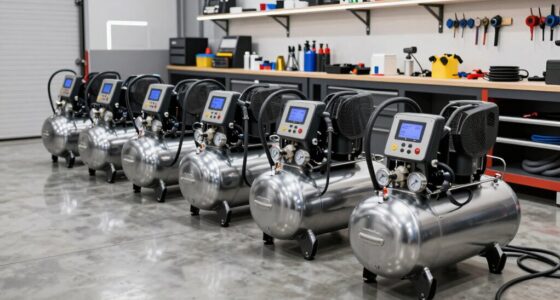
Woodworking dust extractor vacuums vary most in filtration, airflow, capacity, and how well they connect to power tools. I name the Bosch VAC090AH my best overall pick for its HEPA filtration and automatic filter cleaning, while the Festool CT MIDI I stands out for Bluetooth tool activation and the WEN DC1300 for high-volume, stationary dust collection. The main tradeoff is between a mobile extractor for capturing dust at the tool and a larger collector built to handle broader workshop airflow. Filtration, hose fit, noise, and filter maintenance can matter as much as headline capacity. Read on for the full breakdown and help matching each option to your shop.

Get business pricing on tools and workshop supplies
- Business-only prices and quantity discounts
- Tax-exempt purchasing
- Multiple users, one account, clear invoices
Complete the kit



Key Takeaways
- The lineup splits into two jobs: portable extractors such as the Bosch, Festool, and DEWALT models suit tool-side collection, while the WEN DC1300 is built for higher-volume collection at stationary woodworking machines.
- Automatic filter cleaning changes the maintenance equation: it appears on the DEWALT DWV010 and Bosch VAC090AH, making those models more appealing for sustained fine-dust work than extractors that rely on manual filter care.
- Capacity alone does not predict workshop fit: the 5.8-gallon Fein Turbo I favors a smaller mobile setup, while the 11-gallon Makita and 10-gallon YOWMOFT offer more onboard capacity at the cost of a larger footprint.
- Tool activation is a distinct convenience feature: the Festool CT MIDI I adds Bluetooth and automatic tool start, which can simplify tool-side collection compared with models that require separate switching.
- Wet/dry capability and fine-dust collection are not interchangeable claims: buyers should check the filtration and intended use alongside wet pickup, especially when the main concern is fine woodworking dust.
| DEWALT DWV010 8-Gallon HEPA Dust Extractor with Automatic Filter Cleaning |  | Best for Continuous Jobsite Extraction | Capacity: 8 gallons | Filter: HEPA | Motor: 15 A | VIEW LATEST PRICE | See Our Full Breakdown |
| Festool CLEANTEC CT 26 EI HEPA Dust Extractor |  | Best Premium Tool-System Extractor | Capacity: 26 liters | Filter: HEPA | Maximum suction: 96 in. | VIEW LATEST PRICE | See Our Full Breakdown |
| Festool CT 15 HEPA Mobile Dust Extractor |  | Best Compact Extractor for Small Shops | Capacity: 15 liters (3.96 gallons) | Filter: HEPA | Power source: Corded electric | VIEW LATEST PRICE | See Our Full Breakdown |
| ECOMAX 8-Gallon Wet/Dry Dust Extractor with HEPA Filter |  | Best for Wet/Dry Shop Cleanup | Capacity: 8 gallons | Motor power: 6.5 HP | Filter: HEPA | VIEW LATEST PRICE | See Our Full Breakdown |
| YOWMOFT 10-Gallon HEPA Dust Extractor with Trolley, 150 CFM |  | Best for Larger Dust Loads | Capacity: 10 gallons | Filter: HEPA; captures 99.97% of particulates 0.3 microns and larger | Motor: 10 A | VIEW LATEST PRICE | See Our Full Breakdown |
| Festool CT MIDI I HEPA Dust Extractor with Bluetooth and Automatic Tool Start |  | Best Compact Connected Extractor | Model: 578512 | Filter: HEPA | Power source: Corded electric | VIEW LATEST PRICE | See Our Full Breakdown |
| Makita VC4210L 11-Gallon Wet/Dry HEPA Dust Extractor |  | Best for High-Volume Workshop Cleanup | Capacity: 11 gallons | Motor: 12 amp | Airflow: 148 CFM | VIEW LATEST PRICE | See Our Full Breakdown |
| Fein Turbo I Wet/Dry Dust Extractor, 5.8-Gallon |  | Best for Strong Suction in a Smaller Footprint | Capacity: 5.8 gallons | Motor power: 1100 watts | Airflow: 151 CFM | VIEW LATEST PRICE | See Our Full Breakdown |
| PEMEDOR 9-Gallon Wet/Dry Dust Extractor, 1400W |  | Best for Coarse Debris and Wet/Dry Cleanup | Model: WD-1400 | Capacity: 9 gallons | Motor power: 1400 W | VIEW LATEST PRICE | See Our Full Breakdown |
| WEN DC1300 1,300 CFM 14-Amp 5-Micron Woodworking Dust Collector with 50-Gallon Bag and Mobile Base |  | Best for Fixed Machines and Centralized Shop Collection | Airflow: 1,300 CFM | Motor: 14 amps | Impeller: 10-inch steel; up to 3,450 RPM | VIEW LATEST PRICE | See Our Full Breakdown |
| ECOMAX 8-Gallon HEPA Shop Vac and Dust Extractor, 6.5 HP |  | Best for Flexible Shop Cleanup | Capacity: 8 gallons | Motor power: 6.5 HP | Filter: HEPA | VIEW LATEST PRICE | See Our Full Breakdown |
| Bosch VAC090AH 9-Gallon Dust Extractor with Automatic Filter Cleaning |  | Best for Sustained Fine-Dust Extraction | Capacity: 9 gallons | Filtration: HEPA; 99.97% capture at 0.3 microns and larger | Filter cleaning: Automatic cycle every 15 seconds | VIEW LATEST PRICE | See Our Full Breakdown |
| woodworking dust extractor vacuum | Capacity | Filter | Weight | Hose |
|---|---|---|---|---|
| DEWALT DWV010 8-Gallon HEPA Du | 8 gallons | HEPA | 22 lb | 15 ft anti-static hose; 1.25 in diameter |
| Festool CLEANTEC CT 26 EI HEPA | 26 liters | HEPA | 17.19 kg | Anti-static smooth suction hose, 27/32 in. × 3.5 m |
| Festool CT 15 HEPA Mobile Dust | 15 liters (3.96 gallons) | HEPA | — | 27/32 in. × 3.5 m |
| ECOMAX 8-Gallon Wet/Dry Dust E | 8 gallons | HEPA | — | 10 ft anti-static hose |
| YOWMOFT 10-Gallon HEPA Dust Ex | 10 gallons | HEPA; captures 99.97% of particulates 0.3 microns and larger | 39.6 lb | — |
| Festool CT MIDI I HEPA Dust Ex | — | HEPA | — | — |
| Makita VC4210L 11-Gallon Wet/D | 11 gallons | — | 35 lbs | 13-foot anti-static hose |
| Fein Turbo I Wet/Dry Dust Extr | 5.8 gallons | HEPA | 25 pounds | — |
| PEMEDOR 9-Gallon Wet/Dry Dust | 9 gallons | — | 35.5 lbs | 8.2 ft anti-static hose |
| WEN DC1300 1,300 CFM 14-Amp 5- | — | — | — | — |
| ECOMAX 8-Gallon HEPA Shop Vac | 8 gallons | HEPA | — | — |
| Bosch VAC090AH 9-Gallon Dust E | 9 gallons | — | 28 pounds | — |
More Details on Our Top Picks
DEWALT DWV010 8-Gallon HEPA Dust Extractor with Automatic Filter Cleaning
The DWV010’s standout advantage is automatic filter cleaning: it pulses every 30 seconds, helping maintain airflow during extended sanding or cutting sessions without frequent manual filter attention. Its 155 CFM airflow, 15-foot anti-static hose, and four-wheel base make it a practical match for moving between corded tools around a workshop. Compared with the YOWMOFT CVMA40-T, it has a shorter cleaning interval on paper for YOWMOFT, but DEWALT provides higher listed airflow and a longer hose; YOWMOFT offers more capacity and tool-triggered start/stop. The tradeoff is that the DWV010 is corded and its 8-gallon tank can constrain longer cleanup runs. Buyers needing EPA RRP compliance should also note that the required DWV9330 filters are not the included HEPA filter.
Pros:- Automatic filter-cleaning pulses every 30 seconds to support sustained extraction.
- Listed 155 CFM airflow and a 15-foot anti-static hose suit tool-side dust collection.
- Universal swivel hose connector helps keep the hose from twisting during movement.
- Four wheels and casters make the 22-pound unit easier to reposition.
Cons:- Corded operation ties the extractor to an available outlet.
- The 8-gallon capacity is smaller than the YOWMOFT’s 10-gallon tank.
- EPA RRP compliance requires DWV9330 filters rather than relying on the included filter.
Best for: Woodworkers using corded tools in a fixed or semi-mobile shop who want automatic filter cleaning and a long anti-static hose.
Not ideal for: Cordless or RRP-focused users who need freedom from outlets or need the specified DWV9330 filter for EPA RRP compliance.
- Capacity:8 gallons
- Filter:HEPA
- Motor:15 A
- Airflow:155 CFM
- Filter cleaning:Automatic pulses every 30 seconds
- Hose:15 ft anti-static hose; 1.25 in diameter
- Power:Corded, 120 V
- Weight:22 lb
Our verdict“Choose the DEWALT for frequent corded-tool work where automatic filter cleaning, hose reach, and mobility matter more than tank capacity.”
Festool CLEANTEC CT 26 EI HEPA Dust Extractor
The CT 26 EI is the most tool-system-focused option in this group. Its automatic start works with compatible corded power tools, while Bluetooth connectivity can link it to battery packs or an optional remote. That mix makes it a better fit for Festool users who want coordinated dust collection than the simpler Festool CT 15, which has a smaller 15-liter container and one listed power level. The CT 26’s 26-liter capacity also means fewer interruptions to empty it during substantial shop sessions. Five suction levels give more control across different tasks, though the feature set depends on compatible equipment and the remote is not included. Its 17.19 kg weight and two-wheel format are less convenient to carry or reposition than the DEWALT DWV010’s four-wheel setup.
Pros:- 26-liter capacity offers more collection room than the Festool CT 15.
- Five suction levels let users adjust extraction for different tools and tasks.
- Automatic start with compatible corded tools reduces separate switching.
- Bluetooth connectivity and T-LOC Systainer attachment support a coordinated Festool setup.
Cons:- Bluetooth remote control is optional rather than included.
- Automatic tool-triggered operation is designed for compatible corded tools.
- At 17.19 kg with two wheels, it is less convenient to carry and maneuver than lighter or four-wheel alternatives.
Best for: Festool-equipped woodworkers who want a larger HEPA extractor with tool-triggered operation and adjustable suction.
Not ideal for: Buyers seeking an inexpensive, bare-bones extractor, or users who need included Bluetooth remote control or cordless tool triggering without compatible accessories.
- Capacity:26 liters
- Filter:HEPA
- Maximum suction:96 in.
- Suction levels:5
- Weight:17.19 kg
- Power source:AC/DC
- Hose:Anti-static smooth suction hose, 27/32 in. × 3.5 m
- Included components:Main filter, SELFCLEAN filter bag, smooth suction hose
Our verdict“Pick the CT 26 EI if you want a larger, adjustable extractor built around compatible Festool tools and accessories.”
Festool CT 15 HEPA Mobile Dust Extractor
The CT 15 keeps the footprint and setup straightforward for woodworkers who need HEPA extraction without a larger canister. Its 15-liter container is smaller than the CT 26 EI’s 26 liters, but the included crevice nozzle and upholstery brush add value for benches, tool cases, and general shop cleanup beyond machine extraction. Touch controls and automatic tool start make day-to-day operation simple, while the compact chassis and steel axles suit frequent movement around a smaller workspace. Compared with the DEWALT DWV010, the CT 15 offers a smaller container and only one listed power level, while DEWALT lists 155 CFM airflow and automatic filter cleaning every 30 seconds. The Festool’s appeal is its compact, accessory-ready format—not a broad range of suction adjustment.
Pros:- Compact chassis and steel axles support mobile use in a crowded shop.
- HEPA filtration suits fine-dust collection when paired with compatible tools.
- Crevice nozzle and upholstery brush are included and stored in the unit.
- Automatic tool start and touch controls simplify operation.
Cons:- The 15-liter container holds less than the Festool CT 26 EI’s 26-liter capacity.
- One listed speed and power level provide less adjustment than the CT 26 EI’s five suction levels.
- Corded operation limits use away from power outlets.
Best for: Small-shop woodworkers who want a compact HEPA extractor for tool hookup plus detail cleanup around benches and equipment.
Not ideal for: High-volume users who need a larger collection container, multiple suction settings, or documented automatic filter-cleaning intervals.
- Capacity:15 liters (3.96 gallons)
- Filter:HEPA
- Power source:Corded electric
- Speeds:1
- Power levels:1
- Hose:27/32 in. × 3.5 m
- Included tools:Crevice nozzle and upholstery brush
- Additional features:Automatic tool start, AutoClean system, touch operation
Our verdict“Choose the CT 15 when compact storage and included cleanup tools matter more than larger capacity or adjustable suction.”
ECOMAX 8-Gallon Wet/Dry Dust Extractor with HEPA Filter
The ECOMAX stands apart by combining tool-triggered dust extraction with wet/dry cleanup. Its stainless steel tank has a drain port, so it can handle liquid cleanup without making the extractor a dust-only machine. A semi-automatic filter-cleaning system and dust-full indicator add useful prompts during workshop use, while the included wands, nozzles, universal adapter, and filter bags make it ready for varied cleanup jobs. Compared with the YOWMOFT CVMA40-T, it also offers wet/dry use and tool activation, but YOWMOFT lists a larger 10-gallon tank, automatic filter cleaning every 20 seconds, and two power levels. ECOMAX’s 8-gallon tank may mean more frequent emptying during larger jobs, and its corded design still requires outlet access.
Pros:- Switches between standard vacuuming and dust-extractor modes.
- Power-tool activation starts the vacuum when a connected tool runs.
- Stainless steel tank includes a drain port for liquid emptying.
- HEPA filter, semi-automatic cleaning, and dust-full indicator support dust-focused use.
Cons:- The 8-gallon tank may need frequent emptying during larger woodworking jobs.
- Corded power requires an outlet near the work area.
- The supplied information does not specify airflow or suction performance for comparison with the DEWALT DWV010.
Best for: Woodworkers who want one corded machine for dust extraction, general shop vacuuming, and occasional liquid cleanup.
Not ideal for: Users prioritizing a larger debris capacity or a documented automatic filter-cleaning cycle for extended fine-dust collection.
- Capacity:8 gallons
- Motor power:6.5 HP
- Filter:HEPA
- Tank material:Stainless steel
- Hose:10 ft anti-static hose
- Power:Corded electric, 120 V
- Included accessories:Two extension wands, floor and utility nozzles, universal adapter, crevice nozzle, round brush
- Additional features:Wet/dry modes, power-tool activation, semi-automatic filter cleaning, dust-full indicator
Our verdict“Choose the ECOMAX if wet/dry versatility and included accessories matter more than maximum capacity or detailed airflow figures.”
YOWMOFT 10-Gallon HEPA Dust Extractor with Trolley, 150 CFM
The 10-gallon capacity gives the YOWMOFT an advantage for woodworkers who would rather empty less often during longer cleanup sessions. It pairs that roomier container with 150 CFM airflow, tool-activated start and stop, and automatic HEPA filter cleaning every 20 seconds. A dust-full indicator and automatic shut-off provide extra help managing collection. Compared with the DEWALT DWV010, YOWMOFT holds two more gallons and offers tool-triggered operation, while DEWALT lists slightly higher airflow and a 15-foot hose. Its 39.6-pound weight makes moving it less appealing than lighter options, and the remote control for power and suction adjustments is sold separately. For workshops that need wet/dry use and capacity more than portability, it is the stronger fit.
Pros:- 10-gallon capacity exceeds the 8-gallon DEWALT DWV010 and ECOMAX tanks.
- Automatic HEPA filter cleaning every 20 seconds is designed to help maintain suction.
- Tool-activated start and stop reduce the need to switch the extractor separately.
- 150 CFM airflow, dust indicator, and automatic shut-off support workshop cleanup.
Cons:- At 39.6 pounds, it is heavier than the DEWALT DWV010’s listed 22 pounds.
- Remote power and suction control requires a separately sold remote.
- Corded operation requires access to an outlet.
Best for: Woodworkers handling larger dust loads who want a wet/dry extractor with tool-triggered operation and a larger collection tank.
Not ideal for: Users who frequently carry their extractor between floors or need remote control included in the package.
- Capacity:10 gallons
- Filter:HEPA; captures 99.97% of particulates 0.3 microns and larger
- Motor:10 A
- Airflow:150 CFM
- Filter cleaning:Automatic every 20 seconds
- Maximum suction:96 in. H2O static water lift
- Power levels:2
- Weight:39.6 lb
- Remote control:Power and suction control; remote sold separately
Our verdict“Choose the YOWMOFT for longer wet/dry cleanup runs where its larger tank matters more than lower weight or included remote control.”
Festool CT MIDI I HEPA Dust Extractor with Bluetooth and Automatic Tool Start
The Festool CT MIDI I suits a small woodworking shop where a mobile extractor needs to keep pace with handheld tools without taking up much floor space. Its Bluetooth remote start and stop lets a user control extraction without reaching for the unit, while touch controls and tool-free filter changes make routine adjustments straightforward. Compared with the larger Makita VC4210L, this is the more compact, convenience-focused choice, but it gives up the Makita’s stated airflow, water-lift figures, and automatic filter cleaning. Manual filter cleaning means more hands-on upkeep during dusty work, and the single speed offers no adjustment for quieter or lighter tasks. The included smooth hose and SELFCLEAN filter bag make it a practical match for mobile tool work, but its cord still limits where it can go.
Pros:- Compact wheeled chassis is suited to tight workshop layouts.
- Bluetooth supports remote starting and stopping.
- Filter changes require no tools, and manual filter cleaning is available.
- Includes a SELFCLEAN filter bag and smooth suction hose.
Cons:- Corded operation restricts movement away from outlets.
- Single speed and power level limit control over extraction.
- Manual filter cleaning requires more user attention than the Makita VC4210L’s automatic system.
Best for: Woodworkers using handheld power tools in a compact shop who want Bluetooth control and easy filter changes.
Not ideal for: Shops running long, heavy-duty dust collection sessions that need automatic filter cleaning, multiple speed settings, or broad coverage across fixed machines.
- Model:578512
- Filter:HEPA
- Power source:Corded electric
- Controls:Touch controls
- Connectivity:Integrated Bluetooth
- Speeds:1
- Wheels:4
- Included hose:Smooth suction hose, 27/32 x 3.5 m AS/CTR
Our verdict“Choose the CT MIDI I for compact, connected extraction with handheld tools, but pick the Makita VC4210L for automatic filter cleaning and stated high-airflow performance.”
Makita VC4210L 11-Gallon Wet/Dry HEPA Dust Extractor
For woodworking shops that generate sustained dust or need wet-and-dry cleanup, the Makita VC4210L brings together an 11-gallon tank, stated 148 CFM airflow, and automatic filter cleaning. That capacity and maintenance system make it a better fit for longer sessions than the smaller-tank Fein Turbo I, which is lighter but holds 5.8 gallons. A tool-activated outlet starts extraction with a connected tool and runs for a 10-second shutoff delay; the anti-static hose also suits workshop use. Makita lists HEPA capture at 99.97% for particles 0.3 microns and larger, plus a 60 dB(A) noise level. The tradeoffs are its 35-pound weight and corded format. Product information also lists differing voltage and amperage figures, so buyers should verify electrical requirements before purchase.
Pros:- 11-gallon capacity supports longer cleanup sessions before emptying.
- Automatic filter cleaning helps reduce manual filter maintenance.
- Tool-activated outlet includes a 10-second shutoff delay.
- HEPA filtration and a 13-foot anti-static hose suit workshop dust collection.
Cons:- At 35 pounds, it is cumbersome to carry.
- Corded operation limits reach to areas near an outlet.
- Listed voltage and amperage details differ from the 12-amp motor description.
Best for: Woodworkers handling frequent, dusty tool work who want a large wet/dry capacity, automatic filter cleaning, and a tool-triggered outlet.
Not ideal for: People who need a lightweight extractor to carry between floors or who cannot confirm that the listed electrical specifications match their workshop supply.
- Capacity:11 gallons
- Motor:12 amp
- Airflow:148 CFM
- Water lift:92 inches
- Filtration:Two-stage; HEPA captures 99.97% of particles 0.3 microns and larger
- Noise level:60 dB(A)
- Weight:35 lbs
- Hose:13-foot anti-static hose
- Tool outlet:Tool-activated with 10-second shutoff delay
Our verdict“Pick the Makita for substantial wet-and-dry workshop cleanup and automatic filter care, provided its electrical specifications suit your setup.”
Fein Turbo I Wet/Dry Dust Extractor, 5.8-Gallon
The Fein Turbo I pairs a relatively light 25-pound body with stated 151 CFM airflow and 98 inches of water lift, making it a compelling canister for portable tool hookups and wet/dry cleanup. Its tool-activated outlet, 13-foot hose, and 19.7-foot power cord give it useful reach around a workbench. Compared with the Makita VC4210L, Fein is easier to move and lists slightly higher airflow and water lift, while Makita offers nearly twice the tank capacity and automatic filter cleaning. Fein’s 5.8-gallon container may need more frequent emptying during heavy shop work, and its 66 dB noise figure is higher than Makita’s listed 60 dB(A). The anti-static function is included, though the product information says extra accessories may be needed for anti-static protection.
Pros:- Stated 151 CFM airflow and 98 inches of water lift support demanding tool extraction.
- Tool-activated outlet starts extraction with connected equipment.
- 13-foot hose and 19.7-foot cord provide useful working reach.
- At 25 pounds, it is lighter than the Makita VC4210L.
Cons:- The 5.8-gallon capacity is smaller than the Makita VC4210L’s 11-gallon tank.
- Listed operating noise is 66 dB, above the Makita’s stated 60 dB(A).
- Anti-static protection may require optional accessories.
Best for: Woodworkers who move an extractor between tools and value strong stated suction, an auto-start outlet, and long hose-and-cord reach.
Not ideal for: Shops with high-volume dust output that prioritize a larger tank or automatic filter cleaning over a lighter, more portable canister.
- Capacity:5.8 gallons
- Motor power:1100 watts
- Airflow:151 CFM
- Water lift:98 inches
- Filter:HEPA
- Noise level:66 dB
- Hose length:13 feet
- Power cord length:19.7 feet
- Weight:25 pounds
Our verdict“Choose the Fein Turbo I for a lighter extractor with strong stated suction and useful reach, but choose the Makita for longer runs between emptying and automatic filter cleaning.”
PEMEDOR 9-Gallon Wet/Dry Dust Extractor, 1400W
The PEMEDOR WD-1400 is aimed at workshops where cleanup includes wood chips, shavings, sawdust, and occasional non-corrosive liquid spills. Its dual cyclone separator directs larger debris into the tank before it reaches the HEPA filter, which can reduce how often the filter needs attention compared with a basic shop vacuum. The 9-gallon tank also sits between the smaller Fein Turbo I and the larger Makita VC4210L in capacity. PEMEDOR lists a 1400W motor and up to 19 kPa suction, but it does not provide airflow or water-lift figures for direct comparison with those extractors. At 35.5 pounds, it is not a light portable pick, and the listed package includes only the vacuum body, leaving hose and accessory details unclear despite the stated anti-static hose specification.
Pros:- Dual cyclone separation diverts larger debris before it reaches the HEPA filter.
- 9-gallon tank supports both wet and dry cleanup.
- Designed for wood chips, shavings, coarse sawdust, and common non-corrosive spills.
- An anti-static hose is specified.
Cons:- At 35.5 pounds, it is heavy to carry between work areas.
- No airflow or water-lift figure is provided for comparison with the Fein Turbo I or Makita VC4210L.
- Included components list only the vacuum body, leaving supplied accessories unclear.
Best for: Woodworkers who need one tank for coarse shop debris, sawdust, and occasional non-corrosive liquid cleanup, and who value pre-separation.
Not ideal for: Buyers who need clearly documented airflow, a complete accessory package, or a lighter unit for frequent carrying.
- Model:WD-1400
- Capacity:9 gallons
- Motor power:1400 W
- Maximum suction:19 kPa
- Filtration:HEPA filter
- Separation:Dual cyclone pre-separator
- Hose:8.2 ft anti-static hose
- Weight:35.5 lbs
- Dimensions:20.8 x 15 x 25.4 in (L x W x H)
Our verdict“Choose the PEMEDOR if cyclone pre-separation and wet/dry handling suit your cleanup mix, but favor the Fein or Makita when published airflow figures and defined tool-extraction features matter more.”
WEN DC1300 1,300 CFM 14-Amp 5-Micron Woodworking Dust Collector with 50-Gallon Bag and Mobile Base
The WEN DC1300 serves a different job from the portable extractors here: it is designed to collect high volumes of air from woodworking machines through two 4-inch inlets, not to act as a HEPA-filtered vacuum for fine dust or wet cleanup. Its listed 1,300 CFM and 50-gallon bag make it better suited to a workshop with connected stationary tools than the Festool CT MIDI I, which focuses on mobile extraction at handheld tools. The large bag reduces interruptions for emptying, and four swivel casters help reposition the unit. The tradeoff is its 5-micron collection specification, which does not match the HEPA filtration on the Makita, Fein, or Festool extractors. It is indoor-only, corded, and has one speed, so it is a focused shop collector rather than a flexible all-purpose vacuum.
Pros:- Listed 1,300 CFM airflow targets high-volume collection from stationary machines.
- Two 4-inch inlets support connections to multiple tools.
- 50-gallon bag reduces the frequency of collection-bag emptying.
- Mobile base with four swivel casters eases repositioning around the shop.
Cons:- Its 5-micron specification is not HEPA filtration for fine-dust extraction.
- Designed for indoor woodworking use rather than wet/dry cleanup.
- One speed and power level provide no airflow adjustment.
Best for: Woodworkers with stationary machines and compatible 4-inch ports who need high-volume air movement and a large collection bag.
Not ideal for: Buyers seeking HEPA-rated fine-dust extraction at handheld tools or wet/dry cleanup; this collector is specified for indoor woodworking dust collection.
- Airflow:1,300 CFM
- Motor:14 amps
- Impeller:10-inch steel; up to 3,450 RPM
- Inlets:Two 4-inch inlets
- Collection bag capacity:50 gallons
- Dust collection specification:5 microns
- Mobility:Mobile base with four swivel casters
- Speeds:1
- Warranty:Two years
Our verdict“Choose the WEN DC1300 for stationary machines and high-volume chip collection, but choose a HEPA extractor such as the Makita VC4210L for portable fine-dust and wet/dry cleanup.”
ECOMAX 8-Gallon HEPA Shop Vac and Dust Extractor, 6.5 HP
The ECOMAX 8-Gallon combines tool-triggered dust extraction with ordinary wet/dry vacuuming, making it a practical fit for a workshop that handles both sawdust and general cleanup. Its power tool activation starts suction when a connected tool runs, while the semi-automatic filter cleaning and dust-full indicator give users prompts for maintaining airflow. Compared with the Bosch VAC090AH, it has a smaller tank and does not list the same automatic 15-second filter-cleaning cycle or particle-capture specification; Bosch is the more clearly specified choice for sustained fine-dust work. ECOMAX counters with an 8-gallon polymer tank, drain port, and anti-static hose, plus a broad accessory set for varied cleanup tasks. The tradeoff is more frequent emptying on larger jobs, and its cord limits placement to an outlet.
Pros:- Power tool activation starts extraction when a connected tool turns on.
- Semi-automatic filter cleaning and a dust-full indicator support routine maintenance.
- Anti-static hose and built-in drain port suit workshop dust and liquid cleanup.
- Included adapters, nozzles, wands, and disposable bags offer several cleanup setups.
Cons:- The 8-gallon capacity may require frequent emptying during larger jobs.
- Corded operation requires an outlet and restricts where the extractor can be used.
- Filter cleaning is semi-automatic rather than the Bosch VAC090AH’s scheduled automatic cycle.
Best for: Woodworkers who want one tool-triggered vacuum for power-tool dust collection, routine shop cleanup, and occasional liquid pickup.
Not ideal for: Shops running long, high-volume dust-producing sessions that would benefit from a larger tank or a documented automatic filter-cleaning cycle.
- Capacity:8 gallons
- Motor power:6.5 HP
- Filter:HEPA
- Power:Corded electric, 120 V, 15 A
- Hose length:10 feet
- Noise level:75 dB
- Tank material:Polymer
- Dimensions:15.7 × 15.2 × 22 inches
Our verdict“Choose the ECOMAX if you want a versatile, tool-triggered shop vacuum with wet cleanup capability, but pick the Bosch for a larger tank and specified automatic filter cleaning.”
Bosch VAC090AH 9-Gallon Dust Extractor with Automatic Filter Cleaning
The Bosch VAC090AH is the stronger fit for buyers who prioritize consistent fine-dust extraction while using power tools. Its HEPA filter is specified to capture 99.97% of particles 0.3 microns and larger, and an automatic cleaning cycle runs every 15 seconds to help maintain suction. That scheduled cycle is a step beyond the ECOMAX’s semi-automatic cleaning, although the frequent cleaning may be less appealing to someone who prefers a quieter, less interrupted workflow. Bosch also adds power tool activation and an adjustable suction dial, giving users more control across different tools and tasks. The 9-gallon capacity exceeds ECOMAX’s 8 gallons, but the unit weighs 28 pounds and still needs a power outlet. Its 60 dB noise rating is lower than ECOMAX’s listed 75 dB, a useful distinction for indoor shop work.
Pros:- HEPA filtration is specified at 99.97% capture for particles 0.3 microns and larger.
- Automatic filter cleaning runs every 15 seconds to help maintain suction.
- Power tool activation and an adjustable suction dial support varied tool setups.
- Fleece dust bag helps contain dry debris and protect the filter.
Cons:- At 28 pounds, it is a substantial load for frequent carrying between work areas.
- The automatic cleaning cycle runs frequently and may interrupt a quieter workflow.
- Corded power limits use to locations with an available outlet.
Best for: Woodworkers using connected power tools for extended fine-dust tasks who want specified HEPA filtration, automatic filter cleaning, and adjustable suction.
Not ideal for: Buyers seeking a lighter carry-around unit, cordless operation, or a filter-cleaning system that does not cycle frequently during use.
- Capacity:9 gallons
- Filtration:HEPA; 99.97% capture at 0.3 microns and larger
- Filter cleaning:Automatic cycle every 15 seconds
- Maximum airflow:150 CFM
- Maximum static water lift:97 inches
- Power:Corded electric, 120 V
- Weight:28 pounds
- Noise level:60 dB
- Dimensions:20.5 × 14.5 × 22.6 inches
Our verdict“Choose the Bosch for specified HEPA performance and scheduled filter cleaning during tool-connected work, provided its weight and cord suit your shop.”
How We Picked
I compared these woodworking dust extractor vacuums on the factors that affect day-to-day dust control: stated airflow or capacity, filtration claims, filter-cleaning systems, tool connection and activation, mobility, and whether each design targets portable or stationary collection. I also weighed practical ownership questions, including wet/dry flexibility, how much space the unit takes, and how much maintenance its dust-handling setup may require. A larger tank or higher CFM figure earns attention only when it fits the kind of machine and dust load the buyer needs to manage.
The ranking favors versatility for common woodworking tasks, credible fine-dust features, and useful workflow design over a single standout specification. That puts the Bosch VAC090AH first for its combination of HEPA filtration and automatic filter cleaning, while the Festool CT MIDI I earns a specialized place for connected tool use and the WEN DC1300 serves a different, stationary-collector role. Models with less information about airflow or filter maintenance are harder to rank as all-around choices, so their best fit depends more on the buyer’s exact setup.
| woodworking dust extractor vacuum | Filter |
|---|---|
| DEWALT DWV010 8-Gallon HEPA Du | HEPA |
| Festool CLEANTEC CT 26 EI HEPA | HEPA |
| Festool CT 15 HEPA Mobile Dust | HEPA |
| ECOMAX 8-Gallon Wet/Dry Dust E | HEPA |
| YOWMOFT 10-Gallon HEPA Dust Ex | HEPA; captures 99.97% of particulates 0.3 microns and larger |
| Festool CT MIDI I HEPA Dust Ex | HEPA |
| Makita VC4210L 11-Gallon Wet/D | — |
| Fein Turbo I Wet/Dry Dust Extr | HEPA |
| PEMEDOR 9-Gallon Wet/Dry Dust | — |
| WEN DC1300 1,300 CFM 14-Amp 5- | — |
| ECOMAX 8-Gallon HEPA Shop Vac | HEPA |
| Bosch VAC090AH 9-Gallon Dust E | — |
Factors to Consider When Choosing Woodworking Dust Extractor Vacuums
Before choosing among these models, decide what dust source you need to control and how the extractor will fit into your work routine. A compact tool-side vacuum and a large collector can both help with dust, but they serve different machines and capture points. These checks can prevent a common mismatch: buying around a tank size or power label without confirming the collection method suits your tools.
Match the Collector to the Machine
Portable extractors are designed to connect near a tool, which makes them useful for sanders, track saws, and other machines with extraction ports. A stationary collector is a different approach: it typically serves machines that produce larger volumes of chips and dust through ducting or a dedicated hood. Do not assume that a vacuum’s strong suction at a hose end will make it a good substitute for a high-volume collector on a table saw or planer. Check the tool maker’s collection requirements, port size, and expected airflow before choosing. If your workshop uses both handheld tools and fixed machines, you may need separate collection setups rather than one machine doing every job.
Read Filtration Claims Alongside Filter Maintenance
Fine dust can pass through weak filtration or escape during emptying, so look beyond the word HEPA and check what the manufacturer says about the complete system, including bags and seals. Filter cleaning matters because clogged filters can reduce airflow during a long session. Automatic cleaning can reduce interruptions, but it adds a mechanism and does not remove the need to inspect filters and empty the container. A washable or reusable filter may suit some tasks, while bag-based collection can make disposal cleaner and reduce exposure to dust. Match the filtration system to the material and dust level you expect to handle, and follow the maker’s directions for hazardous materials.
Check Airflow, Hose Fit, and Tool Activation
Airflow figures are useful only when compared on a consistent basis and matched to the tool’s extraction needs. A hose that is too narrow, too long, or poorly adapted can restrict collection even when the extractor has a strong stated CFM. Inspect the included fittings and confirm that the hose will connect securely to your tools; adapters may add cost and can loosen during use. Automatic tool start can make a mobile setup easier to operate, while Bluetooth or other connected controls may work best within a compatible tool ecosystem. If your tools vary by brand, prioritize adaptable fittings and straightforward switching over a feature you cannot use across your shop.
Balance Capacity Against Footprint and Emptying
A larger tank means fewer stops to empty, but it also takes more room and can be harder to maneuver when full. Capacity labels do not tell the whole story: fine dust collected in a bag, chips collected from a machine, and wet material all use space differently. For a small shop or frequent tool changes, a compact extractor may be easier to keep close to the work. A larger model can make sense for long runs or a fixed layout, provided there is room to park it and access its container. Consider how often you want to empty the unit and whether you can handle its weight when loaded.
Treat Wet/Dry Use as a Separate Requirement
Wet/dry capability is useful for spills and mixed cleanup, but it does not automatically make a unit a stronger woodworking extractor. Switching from dry dust to liquid may require changing filters, removing bags, or cleaning the container, depending on the model. Leaving fine dust in a machine after wet pickup can also create a messy maintenance task. If woodworking is the main use, prioritize dust capture and filtration first, then decide whether occasional liquid pickup justifies the extra flexibility. Buyers who regularly handle both should check the exact conversion steps in the manual before purchase.
Buy for Your Shop’s Future Layout, Not Just Today’s Tool
Hose length, cord reach, wheels, and the location of outlets determine how easily an extractor follows your work. A mobile model is helpful when tools move around, while a permanent collector can suit a dedicated machine station with planned ducting. Think about whether you will add tools, share the extractor between machines, or reorganize the shop; a connector system that works with several tools can save repeated adapter changes. Noise and storage also affect whether a unit stays convenient enough to use for short jobs. Paying more makes sense when a feature solves a recurring workflow problem, not simply because the spec sheet looks stronger.
Frequently Asked Questions
Can a portable dust extractor replace a woodworking dust collector?
Usually, no: portable extractors and stationary dust collectors are designed around different collection needs. A tool-side extractor can work well at a sander or saw with an effective extraction port, while larger stationary machines may need greater airflow and a suitable hood or duct. The WEN DC1300’s stated 1,300 CFM points toward a different use case from the portable HEPA extractors in this lineup. Check the machine maker’s airflow guidance and collection-port design before using a vacuum as a substitute. In a mixed shop, using both types may give better results than asking one unit to cover every machine.
Is HEPA filtration enough to make any extractor suitable for fine woodworking dust?
HEPA labeling is a useful filter specification, but the whole collection system matters. Dust can escape through a poor seal, an incompatible bag, a loose hose connection, or during emptying even when the filter itself is rated for fine particles. Confirm the manufacturer’s filtration details and recommended accessories for the exact model. Also keep filters clean and inspect seals, since reduced airflow or a damaged gasket can undermine collection. For dust with health hazards beyond ordinary wood dust, follow workplace guidance and the manufacturer’s restrictions rather than relying on a label alone.
Should I prioritize automatic filter cleaning or a larger dust container?
Choose based on the interruption you most want to avoid. Automatic filter cleaning, found on the DEWALT DWV010 and Bosch VAC090AH, can help preserve airflow during demanding sessions, while greater capacity reduces how often you stop to empty the unit. A large container will not prevent filter loading, and filter cleaning will not give you more room for collected material. If you sand for long periods, filter maintenance may matter more; if you collect a high volume of chips, capacity may take priority. Think about the material you make and how often your current workflow already pauses for cleanup.
Do I need Bluetooth or automatic tool start for woodworking?
These features are conveniences, not a substitute for good extraction or a compatible hose connection. Automatic tool start can make the extractor switch on with a connected tool, reducing extra steps during repeated cuts or sanding. The Festool CT MIDI I is the lineup’s clear fit for buyers interested in Bluetooth and automatic tool activation. If your tools come from several brands, check how the control method works with each one before making it a deciding factor. For a simple setup with one tool, a manual switch may be enough.
When is a wet/dry extractor a poor choice for woodworking?
A wet/dry model may be a poor fit when its filtration, airflow, or tool connection is not suited to the fine dust your woodworking creates. Wet pickup can also complicate maintenance if the machine needs a filter or bag change before returning to dry dust collection. Consider whether you will genuinely use the liquid-cleanup function, rather than letting it outweigh dust-control details. For a shop focused on sanding and power-tool extraction, filtration and reliable tool-side collection should lead the decision. If wet cleanup is frequent, review the model’s changeover instructions and filter requirements before buying.
Conclusion
For an all-around choice, I recommend the Bosch VAC090AH for its HEPA filtration and automatic filter cleaning. Buyers seeking a premium connected workflow should look at the Festool CT MIDI I, while the WEN DC1300 is the specific pick for a stationary, higher-volume collection setup. The lineup does not establish a clear best-value model from specifications alone, so compare the ECOMAX 8-Gallon models and other lower-feature options against your needed filtration, airflow, and accessories before choosing. For beginners, I favor a mobile extractor with a straightforward tool connection and manageable capacity; the Festool CT 15 is a compact option to assess if that is your priority. If you want automatic filter cleaning, compare the Bosch and DEWALT; if workshop mobility or wet/dry flexibility matters more, consider the Fein or Makita. Match the machine to your dust source and routine before deciding.