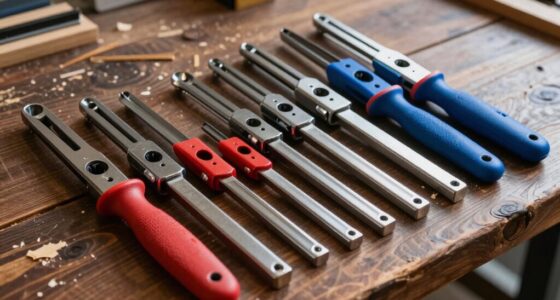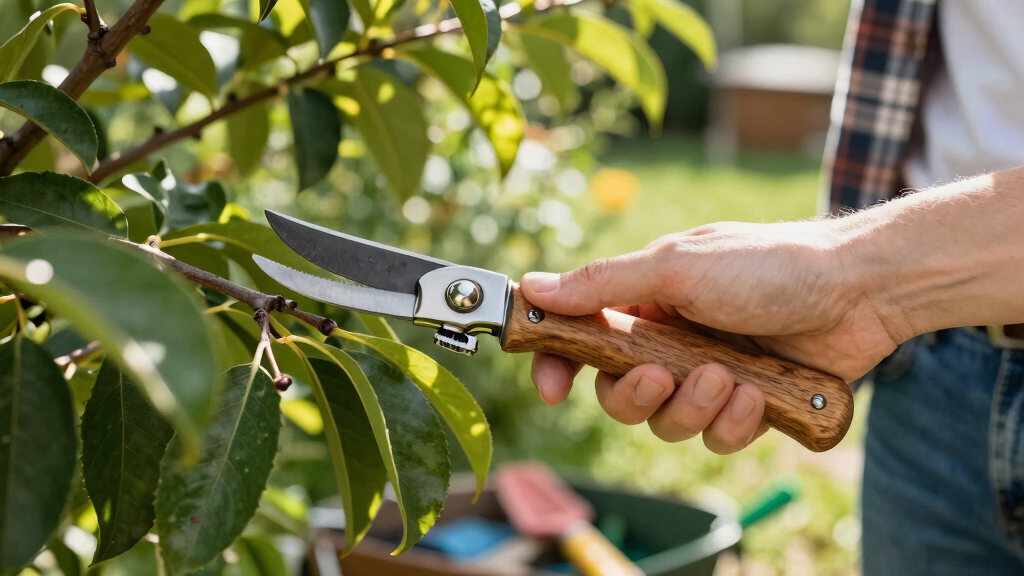
The FELCO Grafting and Pruning Knife is my best overall pick because it gives buyers the clearest mix of precision, durability, and pruning-specific control. The DUE BUOI 202AP stands out as the premium choice for grafting work, while the Opinel No. 8 Pruning Folding Knife makes the most sense for buyers who want a lighter, more affordable folding option. The main tradeoff in this category is between fine cutting control and broader garden utility: true pruning knives are better for clean plant cuts, while hori hori knives and shears handle rougher tasks better. Left-handed users should pay close attention to blade orientation, since the DUE BUOI 202AP LEFTY is the rare pick built around that need. Keep reading for the full breakdown of which pruning knife fits each buyer type.

Get business pricing on tools and workshop supplies
- Business-only prices and quantity discounts
- Tax-exempt purchasing
- Multiple users, one account, clear invoices
Key Takeaways
- FELCO ranks first because it is the most balanced pruning-specific option, with less compromise than the heavier hori hori knives or the more specialized grafting blades.
- DUE BUOI separates itself on blade quality, especially for grafting and nursery work, but its carbon steel blade asks more from the owner than stainless alternatives.
- Opinel is the value pick because it gives casual gardeners a real folding pruning knife without the higher price or maintenance demands of the premium carbon steel models.
- Hori hori knives are useful but less precise; the PERWIN and Gonicc models suit digging, dividing, and cutting roots better than delicate pruning cuts.
- The shears are included as practical alternatives, but the DECERK and Kimura picks make more sense for repetitive clipping than for buyers specifically seeking a knife.




More Details on Our Top Picks
FELCO Grafting and Pruning Knife, Modern, Red, High Carbon Steel
I rank the FELCO Grafting and Pruning Knife highest because it stays focused on the job promised by this roundup: clean pruning and grafting cuts. Compared with the PERWIN Hori Hori, it is less of a digging-and-camping tool and more of a purpose-built knife for plant work. The high carbon steel blade gives it a sharper, more traditional pruning feel than the lower-maintenance stainless Opinel No. 8, though that also means buyers need to treat it with more care around moisture. The red handle is useful in grass or mulch, and the included sheath adds storage value. My reservation is the sparse detail around handle comfort and blade lock design, which matters for long sessions.
Pros:- High carbon steel blade is well suited to sharp, controlled pruning cuts
- Red handle is easier to spot in beds, grass, or a tool bucket
- Purpose-built for pruning and grafting rather than general garden chores
- Includes a sheath for safer storage
Cons:- High carbon steel needs more drying and care than stainless steel
- Handle comfort details are limited for longer pruning sessions
- No clear locking-mechanism information in the supplied data
Best for: Gardeners who want a dedicated pruning and grafting knife for precise cuts on woody stems, fruit trees, and ornamental plants.
Not ideal for: Buyers who want a low-maintenance stainless blade or a multi-use digging tool, since this is more specialized than the Opinel No. 8 or PERWIN Hori Hori.
- Brand:FELCO
- Model Name:Modern
- Model Number:FELCO 8
- Blade Material:High carbon steel
- Handle Color:Red
- Included Components:Knife and sheath
- Item Weight:0.04 kilograms
- Item Length:3.94 inches
Bottom line: This is my top pick for buyers who want a focused pruning knife and are willing to care for a carbon steel blade.
DUE BUOI 202AP Professional Agriculture Pruning Grafting Knife with Böhler K720 Carbon Steel Blade
The DUE BUOI 202AP earns its place as my professional-leaning choice because its Böhler K720 carbon steel blade and 59/60 HRC hardness point toward edge retention and cut penetration. Against the FELCO, it feels more spec-driven and vineyard-oriented, while the Opinel No. 8 is easier to live with for casual users thanks to stainless steel and broader everyday use. This model makes the most sense for right-handed pruning and grafting where accuracy matters more than pocket convenience. The oval technopolymer handle should give structure without adding much bulk, but it may not suit every hand shape. I would skip it for light home harvesting, where the Fiskars is friendlier and less specialized.
Pros:- Böhler K720 carbon steel is aimed at long-lasting sharpness
- 59/60 HRC hardness supports controlled cuts in grafting work
- Compact 5.5 cm blade favors precision over bulk
- Oval technopolymer handle is shaped for right-handed use
Cons:- Right-handed design leaves left-handed buyers better served by the separate lefty version
- Carbon steel needs more care than stainless options like the Opinel
- Less useful as an everyday garden knife than broader tools in the lineup
Best for: Right-handed growers, orchard workers, and vineyard users who prioritize precise grafting and pruning cuts over casual versatility.
Not ideal for: Occasional home gardeners who mainly cut herbs, flowers, or soft stems, since the Fiskars Harvesting Knife is easier to justify for lighter work.
- Blade Length:5.5 cm / 2.17 inches
- Blade Width:1.5 cm / 0.59 inches
- Total Size:17 cm / 6.70 inches
- Blade Material:Böhler K720 carbon steel
- Hardness:HRC 59/60
- Handle Material:Black technopolymer
- Handle Shape:Oval
- Recommended Uses:Budding, grafting, pruning
Bottom line: This is the pick I would choose for skilled right-handed grafting work, not casual all-purpose garden cutting.
Opinel No. 8 Pruning Folding Knife – Stainless Steel for Pruning, Grafting, Harvesting, Gardening, and Everyday Use
The Opinel No. 8 Pruning Folding Knife is my pick for buyers who want a pruning knife that can also ride along for everyday garden tasks. Its 12C27 stainless steel blade asks less upkeep than the carbon steel FELCO or DUE BUOI, which is a real advantage for damp harvest mornings and quick cleanup. The curved Yatagan blade gives it more plant-cutting intent than a standard pocket knife, while the beech handle keeps the feel traditional and light. Compared with the Fiskars, it is more compact and cleaner for grafting-style cuts, but it lacks the serrated bite for thick stalks. I would not choose it for heavy woody pruning where a larger fixed blade or shears make more sense.
Pros:- 12C27 stainless steel resists corrosion and cleans up easily
- Curved Yatagan blade suits light pruning and harvesting cuts
- Beech wood handle gives a simple, traditional grip
- Folding format is easier to carry than fixed garden knives
Cons:- Small size limits leverage on heavier pruning cuts
- Wood handle may need more care than synthetic handles
- Less aggressive on thick stems than serrated harvesting knives
Best for: Gardeners who want a compact folding pruning knife for light pruning, grafting, harvesting, and occasional everyday cutting.
Not ideal for: Users cutting thick stalks or tougher woody growth often, since the Fiskars or a dedicated pruning tool gives more grip and cutting leverage.
- Blade Material:12C27 stainless steel
- Handle Material:Beech wood
- Blade Shape:Yatagan
- Knife Style:Folding pruning knife
- Recommended Uses:Pruning, grafting, harvesting, gardening, everyday use
- Model Number:NO.8LC/SP
- Manufacture Year:2017
- Warranty:Limited
Bottom line: This is my choice for gardeners who want a tidy folding knife with low upkeep and light-duty pruning range.
PERWIN Hori Hori Garden Knife with Sheath, 7″ Stainless Steel Blade, Full-Tang Wood Handle
The PERWIN Hori Hori Garden Knife belongs in this roundup because some buyers want one tool for pruning-adjacent garden work: cutting roots, dividing plants, transplanting, and measuring soil depth. Compared with the FELCO and DUE BUOI, it is far less refined for fine grafting cuts, but its 7-inch stainless steel blade, serrated edge, depth marks, and sheath make it much more useful outside narrow pruning tasks. The full-tang wood handle adds strength for digging motions that would be a poor match for the Opinel No. 8. My tradeoff is precision: this is a rugged garden knife first and a pruning knife second. It also needs handle care if stored in damp sheds.
Pros:- 7-inch stainless steel blade handles cutting and digging tasks
- Serrated and straight edges add range in the garden
- Full-tang wood handle supports firmer leverage than folding knives
- Depth measurement marks and sheath add field usefulness
Cons:- Too broad and large for fine grafting work
- Wood handle may dry out or need care over time
- Sheath belt fit may not work well for every setup
Best for: Gardeners who want one sturdy fixed blade for transplanting, root cutting, light pruning, and soil-depth checks.
Not ideal for: Grafters and fruit-tree pruners who need small, precise blade control, since the DUE BUOI 202AP is much better suited to that work.
- Blade Length:7 inches
- Full Length:12.1 inches
- Blade Material:Stainless steel
- Handle Material:Wood
- Tang:Full tang
- Blade Type:Curved with serrated and cutting edges
- Included Storage:Protective sheath
- Additional Features:Depth measurement, bottle opener, hanging hole
Bottom line: This is the best fit when pruning is only one part of a broader day of digging, dividing, and cutting.
Fiskars Harvesting Knife, Gardening Gift for Women, Serrated Edge Hand Tool with Sheath
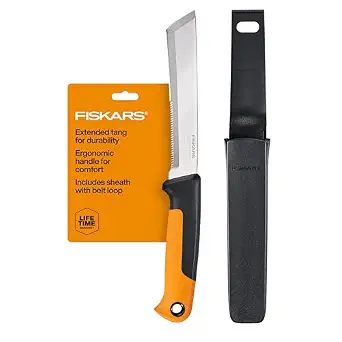
The Fiskars Harvesting Knife is the one I would separate from the pure grafting knives because it favors stalk cutting and harvest work over delicate blade control. Its stainless steel blade has both flat and serrated sections, so it can bite into fibrous stems better than the Opinel No. 8 and with less fuss than a carbon steel blade like the FELCO. The ergonomic handle, extended tang, hard plastic sheath, and lifetime warranty make it feel more practical for frequent garden carry than many basic knives. The tradeoff is focus: it is not the neatest choice for grafting cuts, and the serrations may take more effort to sharpen cleanly. For vegetable beds, though, it fills a clear gap.
Pros:- Serrated and flat blade sections cover both sawing and clean slicing cuts
- Stainless steel blade is easier to maintain than carbon steel
- Ergonomic handle and extended tang support repeated garden use
- Hard plastic sheath with belt loop improves storage and carry
Cons:- Less precise than dedicated grafting knives
- Serrated edge can be more awkward to sharpen
- More harvest-specific than the Opinel for everyday carry
Best for: Vegetable gardeners and flower growers who often cut thick stalks, stems, and harvest-ready plants.
Not ideal for: Buyers doing precise budding or grafting, since the FELCO and DUE BUOI offer cleaner blade profiles for controlled cuts.
- Blade Material:Stainless steel
- Blade Type:Serrated and flat tip
- Handle:Ergonomic
- Tang:Extended tang
- Sheath:Hard plastic with belt loop
- Recommended Use:Harvesting thick stalks and stems
- Warranty:Lifetime
Bottom line: This is my pick for gardeners who cut thick stems more often than they make grafting or budding cuts.
DECERK 8.5″ Professional Pruning Shears – Japanese Steel Titanium Blade, Arthritis Friendly Garden Scissors & Plant Clippers
I rank the DECERK 8.5-inch Professional Pruning Shears as the comfort-first pick because the lever cutting mechanism changes the job: it is made to reduce squeeze effort on branches up to 1 inch thick. Compared with the Kimura 8-inch Pro Pruning Scissors, DECERK is more focused on power assistance than long-term warranty value. It also makes more sense than the B0DYNT9GZ5 folding pruning knife for thicker, repetitive cuts, since a folding knife asks for more wrist control. The tradeoff is precision. These are shears, not a compact grafting blade, so they are less suited to fine budding cuts or pocket carry. I also wish the weight were listed, because arthritis-friendly design depends partly on balance during longer sessions.
Pros:- Lever cutting mechanism reduces hand strain on thicker branches
- Japanese SK5 steel blade with titanium coating supports durability and corrosion resistance
- Ergonomic handles with non-slip rubber grips suit longer pruning sessions
- Safety lock makes storage safer between cuts
Cons:- Bulkier than folding pruning knives and less precise for grafting
- Weight is not listed, which makes comfort harder to judge before buying
- Blade still needs care to limit rust and maintain cutting performance
Best for: Gardeners with arthritis, grip weakness, or frequent shrub-pruning work who need easier branch cutting.
Not ideal for: Fruit-tree grafters or pocket-tool buyers who need a slim knife blade for detailed cuts.
- Tool Type:Professional pruning shears
- Blade Length:8.5 inches
- Cutting Capacity:Up to 1 inch diameter branches
- Blade Material:Japanese SK5 steel
- Blade Coating:Titanium coating
- Handle Material:Anodized aluminum with non-slip rubber grips
- Cutting Mechanism:Lever cutting mechanism
- Lock Type:Safety lock
- Weight:Not specified
Bottom line: Buy this if pruning effort matters more than pocket portability or grafting precision.
Pruning Knife – Double Blades Grafting Gardening Knife, Folding Pocket Garden Tool
The B0DYNT9GZ5 Double Blades Grafting Gardening Knife earns its place as the simple, low-commitment folding pick. Its main appeal is the double-blade layout, which gives it more task flexibility than the rosewood-handled B0D964RRRX folding knife, especially for buyers who want one pocket tool for light pruning and grafting. Against the DECERK shears, though, it is far less convincing for thick stems; this is a control tool, not a force tool. The stainless steel build should suit damp garden use better than carbon steel knives that demand more care, but the sparse specs hold it back. I do not get blade length, blade shape detail, or a listed lock, so I would treat this as a light-duty portable option rather than a primary pruning knife for serious orchard work.
Pros:- Double-blade design gives more flexibility than a single-blade pocket knife
- Foldable construction makes it easy to carry with garden gear
- Stainless steel material is practical for routine outdoor use
- Comfortable non-slip handle supports controlled light cuts
Cons:- Blade size is not listed, making precision and leverage hard to compare
- No safety lock is stated, which matters for a folding garden tool
- Not designed for larger branches like dedicated pruning shears
Best for: Casual gardeners who want an inexpensive folding knife for light pruning, grafting practice, and outdoor carry.
Not ideal for: Buyers who need verified blade dimensions, a stated locking mechanism, or confident thick-branch performance.
- Tool Type:Folding pruning and grafting knife
- Blade Type:Double blades
- Blade Material:Stainless steel
- Handle Style:Comfortable non-slip handle
- Foldable:Yes
- Applications:Pruning, grafting, outdoor gardening
- Portability:Pocket-style folding design
- Safety Lock:Not stated
- Blade Size:Not listed
Bottom line: Pick this for affordable portability, but skip it if pruning performance needs to be predictable and heavy-duty.
Kimura 8″ Pro Pruning Scissors, Japanese SK5 Steel, Ergonomic Vinyl Handles
I place the Kimura 8-inch Pro Pruning Scissors above basic shears when long-term ownership matters. The Japanese SK5 high-carbon steel, PTFE coating, 59 HRC rating, and lifetime warranty give buyers more reassurance than the DECERK model, which does not list weight or warranty details. Compared with the Gonicc Hori Hori Garden Knife, Kimura is also the cleaner choice for trimming, shaping, and deadheading because the scissor format is faster for repeated plant cuts. It is less versatile, though. It will not dig weeds, saw through roots, or serve as a sheath-carried garden knife like the Gonicc. The quick-release locking strap is practical, but the premium positioning means this pick makes the most sense when clean pruning and comfort matter more than getting a multi-use tool.
Pros:- Japanese SK5 high-carbon steel blade is built for clean, lasting cuts
- PTFE coating adds rust resistance and smoother cutting action
- Ergonomic vinyl-coated handles suit users with hand discomfort
- Lifetime warranty adds buyer confidence
Cons:- Premium price may be harder to justify for occasional gardeners
- Less versatile than a hori hori knife for digging and weeding
- May still need sharpening after frequent use
Best for: Gardeners who prune often and want durable shears with a strong warranty and comfortable handles.
Not ideal for: Buyers who want one garden blade for digging, cutting roots, harvesting, and sheath carry.
- Tool Type:Professional pruning scissors
- Blade Length:8 inches
- Blade Material:Japanese SK5 high-carbon steel
- Blade Coating:PTFE
- Hardness:HRC 59
- Handle Material:Aluminum with vinyl coating
- Locking Mechanism:Quick-release locking strap
- Warranty:Lifetime
Bottom line: Choose Kimura when pruning quality and warranty support matter more than broad garden-tool versatility.
Gonicc Professional Hori Hori Garden Knife with Leather Sheath
The Gonicc Professional Hori Hori Garden Knife is the most versatile pick in this batch, and I would rank it highest for gardeners who want one blade for more than pruning. Its straight and serrated 440 stainless steel blade can weed, dig, cut, cultivate, and make rough pruning cuts, which separates it from the Kimura shears and DECERK shears that are more specialized for plant stems. Compared with the PERWIN Hori Hori in the wider lineup, Gonicc’s included sharpening stone and leather sheath make the package feel more complete. The drawback is bulk. A full-tang hardwood handle and handguard add confidence, but they also make it less nimble than a folding pruning knife such as B0D964RRRX. For fine grafting, this hori hori format is too broad.
Pros:- Straight and serrated edges handle more garden jobs than standard pruning shears
- 440 stainless steel blade is durable and rust resistant
- Leather sheath and sharpening stone add practical field value
- Protective handguard improves confidence during harder cuts
Cons:- Heavier handle may tire users who prefer compact pruning knives
- Too broad for delicate grafting and budding cuts
- Still needs maintenance to limit rust over time
Best for: Gardeners who want one sturdy knife for weeding, digging, cultivating, and occasional pruning.
Not ideal for: Grafters and detail pruners who need a slim curved blade for precise plant cuts.
- Tool Type:Hori hori garden knife
- Blade Material:High-polished 440 stainless steel
- Blade Edges:Straight and serrated
- Handle:Full tang hardwood
- Handle Length:5 inches
- Included Accessories:Sharpening stone and leather sheath
- Measurement Feature:Depth scale
- Safety Feature:Protective handguard
- Storage Feature:Hang hole
Bottom line: Buy the Gonicc if pruning is only one part of the job and you want a rugged all-purpose garden knife.
Folding Garden Pruning Knife, Stainless Steel Grafting & Budding Pocket Knife, Multi-Function Gardening Tool
The B0D964RRRX Folding Garden Pruning Knife is the pocketable choice for buyers who care about grafting and small plant cuts more than branch capacity. Its curved stainless steel blade and rosewood handle make it better aligned with fruit trees, roses, and budding work than the Gonicc Hori Hori, which is wider and built for tougher ground-level chores. Compared with the B0DYNT9GZ5 double-blade knife, this model has a clearer identity: one curved blade for controlled cuts rather than broader but less defined utility. The tradeoff is missing spec detail. Blade length and folded size are not listed, and frequent use may call for sharpening. I would not choose it over DECERK shears for thick stems, but as a compact grafting tool, it fits a sharper niche.
Pros:- Curved blade suits controlled pruning, grafting, and budding cuts
- Foldable design is easy to carry and store
- Rosewood handle gives a more traditional grip feel than plain utility handles
- Stainless steel construction supports everyday garden use
Cons:- Blade length and full size are not listed
- Less capable on thick branches than pruning shears
- May need sharpening with frequent grafting or pruning work
Best for: Fruit-tree, rose, and ornamental-plant growers who want a compact folding knife for grafting and budding.
Not ideal for: Gardeners pruning thick shrubs or buyers who need exact blade dimensions before purchase.
- Tool Type:Folding pruning, grafting, and budding knife
- Blade Material:Stainless steel
- Blade Type:Curved
- Handle Material:Rosewood
- Foldable:Yes
- Folded Size:Compact for portability
- Applications:Gardening, grafting, pruning, budding, outdoor activities
- Plant Uses:Fruit trees, roses, and other plants
- Blade Length:Not listed
Bottom line: Choose this if compact grafting control matters more than cutting power or fully disclosed sizing.
DUE BUOI 202AP LEFTY Professional Agriculture Pruning Grafting Knife with Böhler K720 Carbon Steel Blade
DUE BUOI 202AP LEFTY earns its place as my left-handed grafting pick because it solves a real fit problem rather than just adding another sharp blade to the list. Compared with the standard DUE BUOI 202AP, this version is shaped for left-handed control, which matters during budding, grafting, and clean angled cuts where wrist position affects accuracy. The Böhler K720 carbon steel and HRC 59/60 hardness give it a more serious cutting profile than broader garden tools like the PERWIN Hori Hori Garden Knife, but that focus also narrows its appeal. It is better for orchard, vineyard, and rose work than for general digging, harvesting, or casual pocket carry. Buyers also need to be comfortable caring for carbon steel, since performance depends on cleaning, drying, and proper storage.
Pros:- Left-handed design improves control for precision grafting cuts
- Böhler K720 carbon steel blade is built for long cutting life
- HRC 59/60 hardness supports clean penetration into woody stems
- Compact 5.5 cm blade suits budding, trimming, and air layering
Cons:- Carbon steel needs careful cleaning and drying to prevent corrosion
- Too specialized for gardeners who mainly need a general-purpose knife
- Professional blade demands more careful handling than beginner tools
Best for: Left-handed orchard, vineyard, and rose growers who need a purpose-built knife for budding, grafting, trimming, and air layering.
Not ideal for: Casual gardeners who want one low-maintenance tool for harvesting, digging, and general yard tasks.
- Blade Length:5.5 cm (2.17 in)
- Blade Width:1.5 cm (0.59 in)
- Total Size:17 cm (6.70 in)
- Blade Material:Böhler K720 carbon steel
- Blade Hardness:HRC 59/60
- Handle:Oval black technopolymer
- Hand Orientation:Left-handed
- Intended Use:Grafting, pruning, budding, trimming, and air layering
Bottom line: Choose this if you are left-handed and want a precise grafting knife rather than a multipurpose garden blade.
How We Picked
I ranked these options by asking which tools best answer the search for best pruning knives, not which garden tools have the longest feature lists. True pruning and grafting knives earned priority when they offered controlled blade shape, clean cutting geometry, pocket-friendly carry, and materials suited to plant work. I placed broader tools lower when they were useful in the garden but less focused on knife-style pruning, which is why the FELCO, DUE BUOI, and Opinel models sit ahead of the hori hori knives and garden scissors.
I also weighed maintenance burden, hand fit, blade steel, safety, and value. Carbon steel models scored higher for sharpness and cutting feel, but only when the added care felt justified by performance. Stainless folding knives gained points for buyers who want less upkeep, while left-handed design, sheath quality, and ergonomic handles helped separate close picks. The final order favors tools that make choosing easier: precision first, utility second, specialty fit where it matters.
Factors to Consider When Choosing Best Pruning Knives
Choosing among the best pruning knives is mostly about matching the blade style to the way plants are actually cut. I would not shop this category by blade length alone, because a longer knife can be worse for grafting, budding, and tight pruning work. The right pick should match your hand, your plants, and how much blade care you are willing to do.
Blade Shape Matters More Than Size
A pruning knife should give you controlled contact with the plant, not just a sharp edge. Curved or grafting-oriented blades make it easier to pull through stems and shape cuts with accuracy, which is why the FELCO and DUE BUOI options sit high in my ranking. Straight utility-style blades can still work, but they often feel less natural when making angled pruning cuts or preparing grafting material. Hori hori blades are wider and stronger, which helps with soil work and root cutting, but that same width makes them less graceful for delicate plant tissue. A common buying mistake is choosing the largest blade because it looks more capable. For pruning, smaller and sharper often beats bigger and tougher.
Carbon Steel Vs Stainless Steel
Carbon steel usually appeals to buyers who want a very keen edge and do not mind drying, oiling, and sharpening the blade. That is why the DUE BUOI models feel more specialist than the Opinel stainless option. Stainless steel is the easier daily choice for damp garden conditions, especially for buyers who may leave a tool in a potting bench or pocket. The tradeoff is that stainless blades may not feel as fine on grafting cuts, depending on grind and edge quality. If pruning is occasional, I would lean toward low-maintenance stainless. If grafting accuracy matters, a well-made carbon steel blade is worth the extra care.
Folding Knife, Fixed Blade, Or Shears
A folding pruning knife is easiest to carry and store, making it a strong fit for light pruning, harvesting, and quick garden walks. Fixed blades and hori hori knives feel more secure for heavy tasks, but they need a sheath and are less pocket-friendly. Shears, like the DECERK and Kimura picks, are faster for repeated snips, yet they do not replace a knife for grafting, scoring, or shaping plant material. I would choose shears when the job is repetitive clipping and a knife when the cut needs more hand-guided control. Safety also changes by format: folding knives need a reliable lock or secure closing action, while fixed blades need a sheath that stays put. The best choice is the one that fits the actual motion you will repeat most.
Right-Handed And Left-Handed Fit
Pruning knives are more hand-specific than many buyers expect. A blade bevel, handle shape, or grafting orientation can favor one hand, which matters when cuts need to be flat, smooth, and predictable. That is why the DUE BUOI 202AP LEFTY has a real role in this roundup rather than feeling like a duplicate. Left-handed buyers can use many general garden knives, but grafting knives are where the mismatch becomes more obvious. If you are left-handed and plan to graft, I would not treat handedness as a small detail. For casual pruning, handle comfort may matter more than bevel orientation.
When Paying More Makes Sense
A premium pruning knife is worth the extra cost when it gives you better edge control, better steel, and a handle that supports precise cuts. That is the case with the DUE BUOI models for grafting-focused buyers, but not every gardener needs that level of specialization. For occasional pruning, the Opinel or a simple folding garden knife may deliver better value because it costs less and asks less from the owner. Paying more for a hori hori knife makes sense only if digging, dividing, and root work are part of the same job list. I would not pay premium prices just for a longer blade or a decorative handle. Spend more when the upgrade changes how cleanly or comfortably you can cut.
Frequently Asked Questions
What Is The Best Overall Pruning Knife In This Roundup?
My best overall pick is the FELCO Grafting and Pruning Knife. It has the strongest balance of pruning-focused shape, manageable size, and dependable build quality. Compared with the DUE BUOI, it feels less specialized and easier to recommend to a wider range of gardeners. Compared with the Opinel, it has a more serious pruning identity rather than feeling like a general-purpose folding knife. Buyers who want one main pruning knife should start there.
Should I Choose A Pruning Knife Or Pruning Shears?
I would choose a pruning knife for grafting, budding, harvesting, and controlled cuts where the hand guides the blade closely. I would choose shears for repeated clipping, deadheading, and trimming lots of small stems quickly. The DECERK and Kimura options are practical, but they are not direct replacements for the FELCO, DUE BUOI, or Opinel knives. A knife rewards accuracy; shears reward speed. Many gardeners eventually benefit from both, but the first purchase should match the task you do most often.
Are Hori Hori Knives Good For Pruning?
Hori hori knives can cut plant material, roots, twine, and tough garden debris, but they are not the most precise pruning knives here. The PERWIN and Gonicc models make sense for buyers who want one rugged tool for digging and cutting around beds. For clean grafting cuts or careful pruning, their wider blades feel less refined than the FELCO or DUE BUOI options. I would treat a hori hori as a garden utility knife first and a pruning knife second. It is the right pick when versatility matters more than fine blade control.
Is Carbon Steel Better Than Stainless Steel For Pruning Knives?
Carbon steel can take a sharper-feeling edge and is often favored for grafting and fine pruning work. The tradeoff is maintenance: it can discolor or rust if left wet or dirty. Stainless steel, like the Opinel option, is easier to live with in damp garden settings and better for casual users. I would pick carbon steel for careful plant work and stainless for lower-maintenance carry. The better choice depends on whether sharpness or upkeep matters more to you.
Which Pruning Knife Is Best For Left-Handed Gardeners?
The DUE BUOI 202AP LEFTY is the standout pick for left-handed buyers because it is built for that hand orientation rather than adapted after the fact. That matters most for grafting, where bevel direction and cutting angle can affect the flatness of the cut. A left-handed gardener can still use general folding knives or hori hori tools, but those do not solve the same precision issue. Compared with the standard DUE BUOI 202AP, the LEFTY version is the better match if your dominant hand is the left. For casual harvesting, handedness matters less; for grafting, it matters a lot.
Conclusion
If I were choosing one tool for most buyers, I would pick the FELCO Grafting and Pruning Knife as the best overall because it stays closest to what a pruning knife should do. For value, the Opinel No. 8 Pruning Folding Knife is the smarter buy for casual gardeners who want a capable folding blade without premium upkeep. For premium grafting work, the DUE BUOI 202AP is the sharper specialist, while the DUE BUOI 202AP LEFTY is the clear choice for left-handed grafting. Beginners should lean toward the Opinel or FELCO, depending on budget, because both are easier to justify than the more task-specific options. For heavy garden cleanup, the PERWIN Hori Hori or Gonicc Hori Hori makes more sense, while repetitive clipping is better handled by the DECERK or Kimura shears.
Halloween Picks
halloween
As an affiliate, we earn on qualifying purchases.