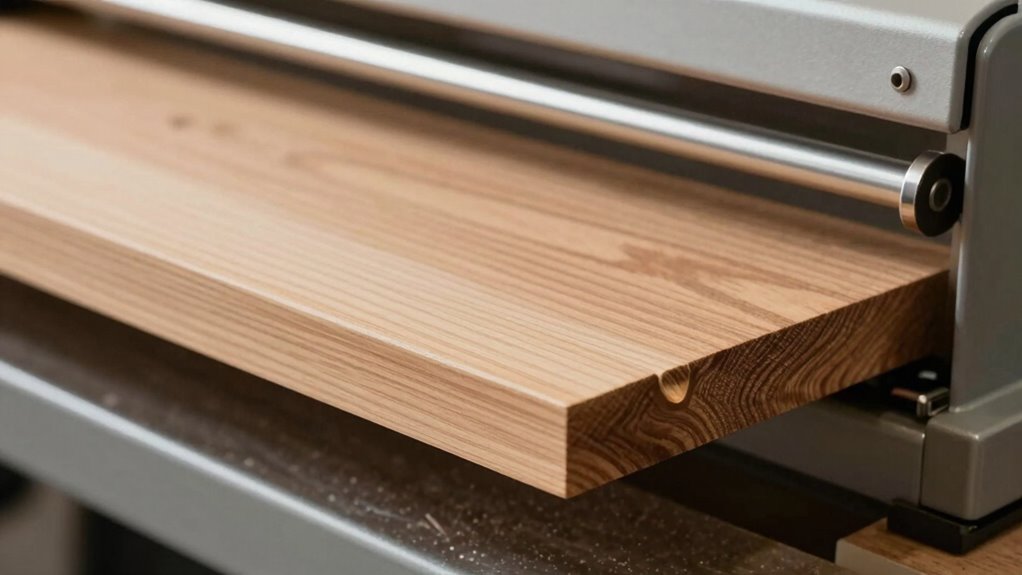
Snipe in your thickness planer often happens due to uneven pressure from dust buildup, misaligned rollers, or improper feeding techniques. Ensuring your dust collection system is clean and functioning well helps prevent debris that affects cut quality. Regularly calibrate your machine and support the board properly to maintain even pressure. Small adjustments to your setup and technique make a big difference—keep going to discover more tips for getting smooth, precise cuts every time.
Key Takeaways
- Improper dust collection can cause uneven pressure and debris buildup, leading to snipe during planing.
- Misaligned or poorly calibrated feed rollers and cutter head increase the likelihood of snipe.
- Inadequate support and inconsistent feeding techniques can result in uneven cuts and snipe.
- Regularly cleaning dust systems and maintaining calibration reduces debris interference and snipe.
- Starting and ending cuts on the same side of the board with proper support minimizes snipe occurrence.
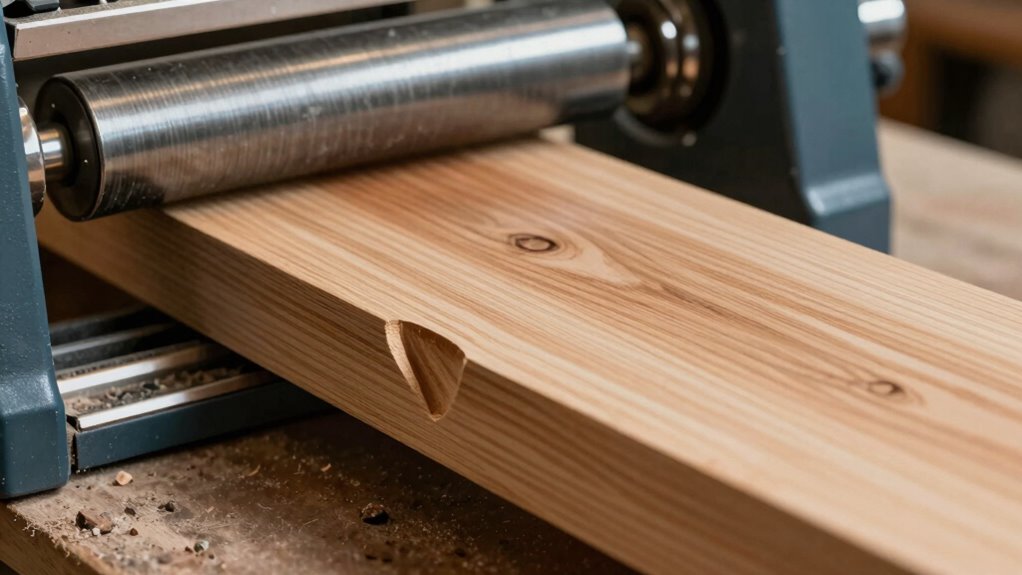
If you’ve ever used a thickness planer, you’ve likely encountered snipe—a noticeable dip or indentation that occurs at the beginning or end of a board. It can be frustrating, especially when you’re aiming for perfectly smooth, uniform pieces. Understanding what causes snipe is vital for fixing it effectively, and two major factors come into play: dust collection and machine calibration. Both can greatly influence the quality of your cut, and addressing them can reduce or eliminate snipe altogether.
First, dust collection isn’t just about keeping your workspace clean; it also impacts the planer’s performance. When dust and wood chips aren’t properly evacuated, they can interfere with the machine’s cutting action, leading to uneven pressure and inconsistent cuts. Make sure your dust collection system is functioning efficiently. Use a vacuum or dust port that fits snugly and has sufficient airflow to keep the cutting area clear. A clogged or inadequate dust collection system can cause the planer to work harder, which increases the likelihood of snipe. Regularly check and clean your dust collection setup to guarantee it’s not hindering the machine’s operation. Proper dust management can significantly improve the overall quality of your planing.
Proper dust collection keeps your planer running smoothly and reduces snipe.
Next, machine calibration plays a vital role. Proper calibration ensures that the planer’s feed rollers and cutter head are aligned correctly, providing a smooth, even cut across the entire board. If your machine isn’t calibrated, the rollers might grip the wood unevenly or the cutter head might not be positioned accurately, resulting in snipe. Take time to follow your manufacturer’s calibration procedures regularly—this might involve adjusting the height of the cutter head or aligning the feed rollers. When the machine is properly calibrated, it distributes pressure evenly and cuts consistently, greatly reducing the risk of snipe.
Additionally, consider how you feed your wood into the planer. Always start and finish the cut with the same side, and avoid stopping the machine mid-cut, which can throw off calibration and increase snipe. Also, support the board’s ends to prevent them from sagging or shifting during the process. These small adjustments complement good dust collection and calibration, promoting cleaner, more precise results.
Frequently Asked Questions
Can Snipe Damage My Project Over Time?
Yes, snipe can damage your project over time by creating uneven thickness and rough edges. As you run wood through the planer, it can cause the wood grain to lift or tear if the machine isn’t properly calibrated. To prevent long-term damage, regularly check and adjust your planer’s calibration, and support the wood properly during planing. This keeps your project smooth and minimizes the risk of snipe-related flaws.
Is Snipe More Common With Certain Wood Types?
Think of snipe as a sneaky shadow that’s more likely to follow certain wood types. You’ll find it more common with softwoods or woods with high moisture content, as they tend to move and bend more during planing. These variations make snipe more pronounced, so pay attention to your wood’s type and moisture level. Properly drying and selecting stable wood can help minimize snipe’s unwelcome visits.
How Does Humidity Affect Snipe Formation?
Humidity impact considerably influences snipe formation in your planer. When moisture effects increase moisture in the wood, it can cause uneven feeding and tension, making snipe more likely. Conversely, low humidity can cause the wood to contract, creating gaps and uneven surfaces. To minimize snipe, guarantee consistent humidity levels and dry your wood properly before planing. Managing humidity helps you achieve smoother, more uniform results.
Can Using Thicker Stock Reduce Snipe?
Think of thicker stock as a sturdy ship riding calmer waters, helping reduce snipe. When your board thickness increases, the material’s density supports smoother feeding and less bending at the ends. This stability minimizes snipe formation, letting your project glide through the planer with grace. So, yes—using thicker stock can act as a buffer, making snipe less likely and your woodworking journey more predictable and precise.
Are There Specific Brands Less Prone to Snipe?
Some brands are less prone to snipe because of better design and build quality. Based on user reviews and brand reputation, machines from well-known manufacturers like DeWalt, Makita, and Jet tend to perform better in avoiding snipe. You’ll find that these brands consistently receive positive feedback for reliability and smooth operation. Investing in a reputable brand can markedly reduce snipe issues and improve your overall woodworking experience.
Conclusion
In short, sniping in your thickness planer is a pesky problem you can prevent with proper planning and patience. By checking your machine’s settings, supporting your workpiece, and practicing precision, you’ll steadily reduce snipe and improve your projects. Remember, consistent care and cautious calibration create cleaner cuts and confident craftsmanship. So, stay steady, stay vigilant, and enjoy the satisfying smoothness of perfectly planed wood—snipe-free and simply superb!