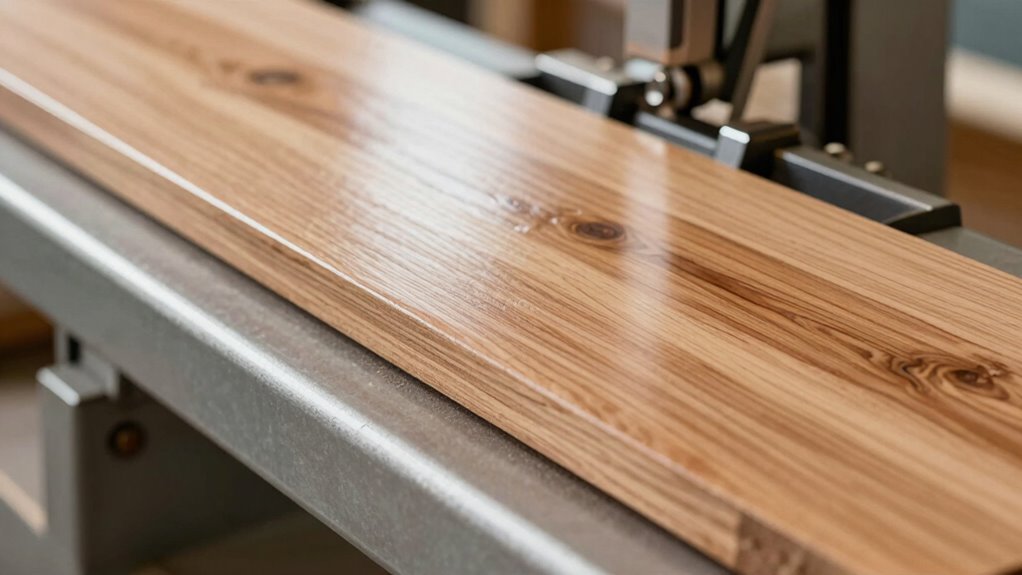

To guarantee smooth, accurate results, your jointer should be at least as wide as the widest board you plan to work on. This allows you to joint the entire face or edge in a single pass, reducing errors and improving finish quality. Smaller jointers may require sectioning or additional tools, which can complicate your workflow. If you want to learn more about selecting the right jointer width for your projects, keep exploring the essential guidelines.
Key Takeaways
- The jointer should be at least as wide as the board you intend to work on.
- Larger jointers can handle wider boards in a single pass, ensuring better accuracy.
- For boards wider than the jointer, section the work and use additional tools like planers.
- Working with narrower jointers may require multiple passes or sectioning, increasing complexity.
- Proper sizing minimizes errors, tear-out, and improves overall surface quality.
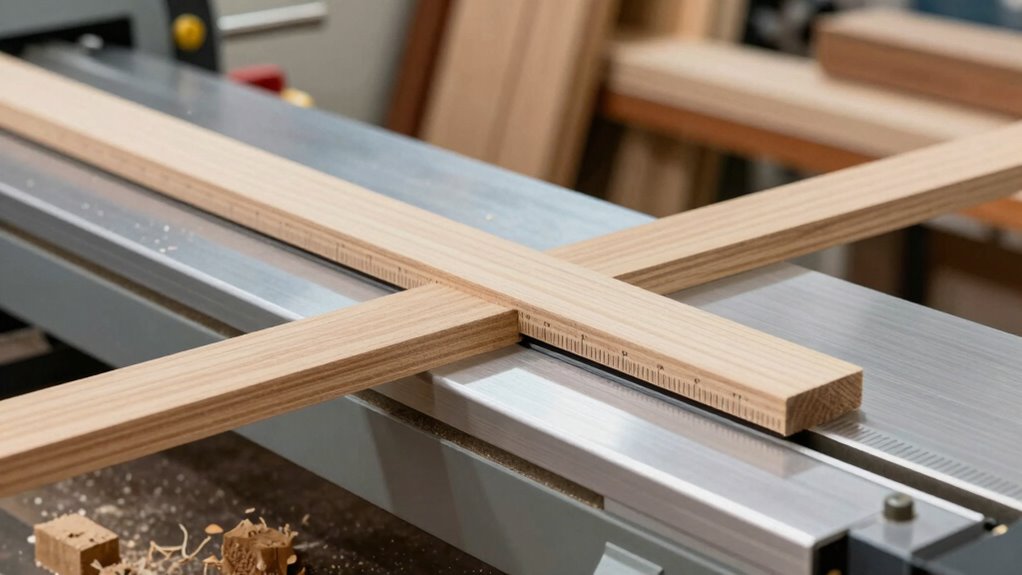
Have you ever wondered how wide your jointer should be for different woodworking projects? Knowing the right width isn’t just about the size of your tools; it’s about understanding how to work efficiently and safely. When you’re planning to flatten or straighten boards, the jointer’s width plays a fundamental role in how smoothly your project progresses. Generally, the rule of thumb is that your jointer should be at least as wide as the board you’re working on. This ensures you can joint the entire face or edge in one pass, maintaining consistency and reducing the need for multiple passes that could introduce errors.
One of the most critical considerations when using a jointer is paying attention to the grain direction. Always feed the wood so that the grain runs in the same direction as the cutter head rotation—this is called “with the grain.” Working against the grain can cause tear-out, damaging your board and creating rough surfaces that are hard to finish. To prevent this, start with the widest board you plan to work on and choose a jointer width that can handle its largest dimension comfortably. If your boards are wider than your jointer, you’ll need to work in sections or use other tools like a planer or hand tools to finish the job.
Safety precautions are equally essential when selecting and operating your jointer. A wider jointer offers more control and stability, but no matter the size, always follow safety guidelines. Keep your hands well away from the cutter head, and never attempt to joint warped or twisted boards that could pinch or cause kickback. Make sure to use push blocks or push sticks when working with narrower or thinner boards to keep your fingers safe and maintain a steady feed rate. Also, ensure your jointer’s guards and safety features are in place and functioning correctly before use. Properly securing your workpiece and adjusting the fence for accurate cuts are key safety steps that protect you from accidents. Additionally, understanding cutting technology can help you choose a jointer that provides cleaner cuts with less tear-out, especially when working with hardwoods or figured woods.
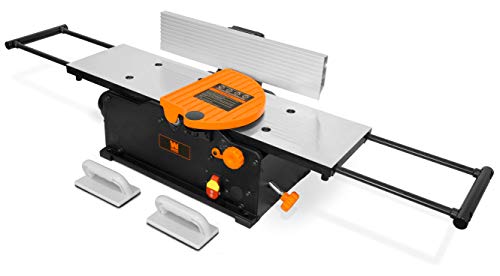
WEN JT833H 10-Amp 8-Inch Spiral Benchtop Jointer with Extendable Table
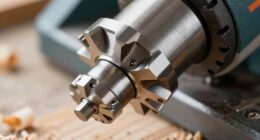
Spiral cutterhead system utilizes 16 staggered HSS blades for an ultra fine finish
As an affiliate, we earn on qualifying purchases.
As an affiliate, we earn on qualifying purchases.
Frequently Asked Questions
Can I Joint Boards Wider Than My Jointer?
Yes, you can joint boards wider than your jointer’s capacity by jointing in sections, but you need to guarantee proper board alignment. Clamp the board securely, keep it supported, and feed it slowly to prevent snipe or misalignment. Use push blocks for control, and check your jointer’s capacity to avoid overloading. This method helps you achieve a flat, even surface on wider boards effectively.
What Are Alternative Tools for Wider Boards?
To handle wider boards, you can use a planing sled or a hand plane, which offers greater board flexibility and precision. These options are usually more affordable than purchasing a wider jointer, reducing overall tool cost. Using a sled allows you to safely joint large or thick boards by securing them firmly, ensuring smooth, even edges without risking damage to your equipment or compromising the quality of your work.
How Does Jointer Width Affect Cut Quality?
A wider jointer dramatically boosts your cut quality, making it feel like slicing through butter! When you match the jointer width to your board, it guarantees the grain direction lines up perfectly, preventing tear-out. Keep your feed rate steady—too fast or slow ruins the cut, no matter the width. So, choose a jointer that balances width and precision, giving you cleaner, smoother edges every time.
Is a Wider Jointer Safer to Operate?
A wider jointer can be safer if you follow proper safety precautions and receive operator training. It offers more stability and control, reducing the risk of kickback or binding. However, a larger machine may be more challenging to handle without experience. Always wear safety gear, keep your hands clear, and learn proper techniques. Investing in operator training ensures you understand how to operate a wider jointer securely.
What Maintenance Is Needed for Wider Jointers?
Imagine your wider jointer as a beast needing a spa day. Regularly check blade sharpness—dull blades turn smooth cuts into a lumberyard massacre. Keep dust collection systems in top shape to prevent a sawdust tsunami. Lubricate moving parts, inspect belts, and tighten bolts to avoid catastrophic rumbles. Proper maintenance guarantees your beast stays sharp, safe, and efficient—because nothing kills productivity like a poorly maintained, dust-choked monster.
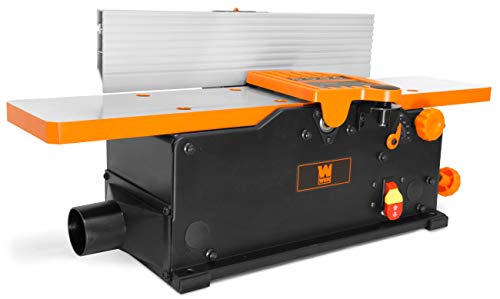
WEN JT630H 10-Amp 6-Inch Spiral Benchtop Jointer
Spiral cutterhead system utilizes 12 staggered HSS blades for an ultra fine finish
As an affiliate, we earn on qualifying purchases.
As an affiliate, we earn on qualifying purchases.
Conclusion
Ultimately, choosing the right jointer width boils down to understanding your projects, matching your needs, and considering your workspace. Think about the widest boards you’ll work with, plan for future projects, and balance size with budget. Remember, a wider jointer handles larger stock better, but a narrower one offers more versatility and ease. By aligning your jointer width with your woodworking goals, you’ll ensure smoother cuts, better results, and a more enjoyable crafting experience.

Porter Cable OEM N030463 Jointer Guard Assembly CMEW020 CMEW020 PC160JT PC160JT
Genuine, OEM Porter Cable Replacement Part
As an affiliate, we earn on qualifying purchases.
As an affiliate, we earn on qualifying purchases.

Hoteche 10-Inch Benchtop Planer and Jointer Combo with Stand 13-Amp Heavy Duty Thickness Planer for Woodworking, Adjustable Depth 0-3mm
【Powerful 13A Motor for Efficient Performance】Featuring a robust 13A motor and a voltage frequency of 120V 60Hz, the…
As an affiliate, we earn on qualifying purchases.
As an affiliate, we earn on qualifying purchases.