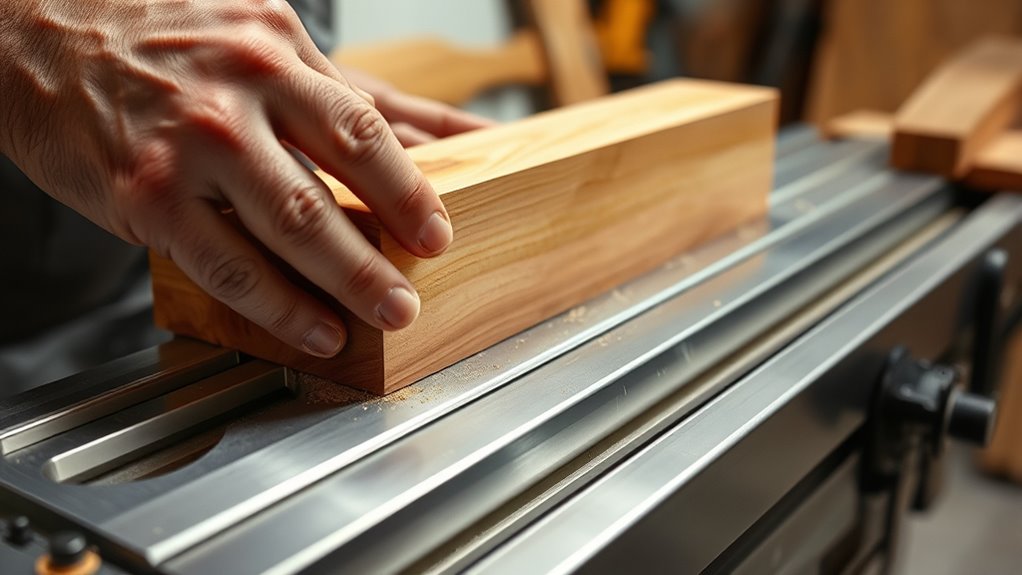

To achieve flat, smooth surfaces with a jointer and planer, focus on proper grain orientation by feeding wood against the cutter head’s rotation, and keep blades sharp for clean cuts. Set up your machines accurately, ensuring consistent blade height and feed rate, and maintain cleanliness. Use steady, controlled pressure when feeding wood, following the grain to prevent tear-out. Master these techniques to improve your results—exploring each step will reveal even more tips for perfect thicknessing and flattening.
Key Takeaways
- Feed wood against cutter rotation to achieve smooth, tear-out-free surfaces during flattening and thicknessing.
- Ensure blades are sharp and properly aligned to cut cleanly and reduce surface imperfections.
- Set machine tables and cutting depths accurately to prevent snipe and uneven thickness.
- Maintain a steady, consistent feed rate aligned with the grain to minimize tear-out and surface defects.
- Regularly troubleshoot and maintain equipment, sharpening blades and adjusting settings for optimal flattening and thicknessing results.
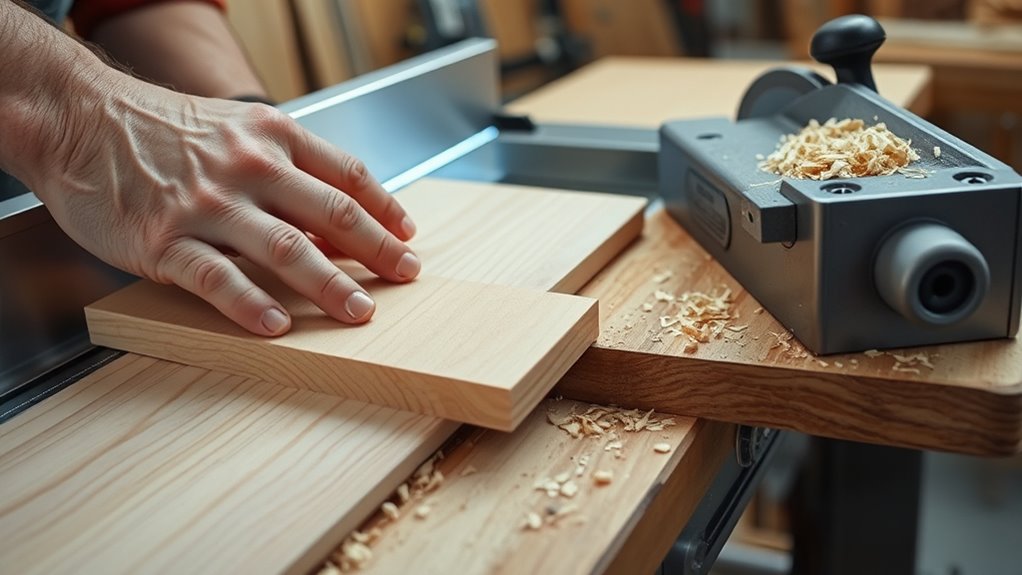
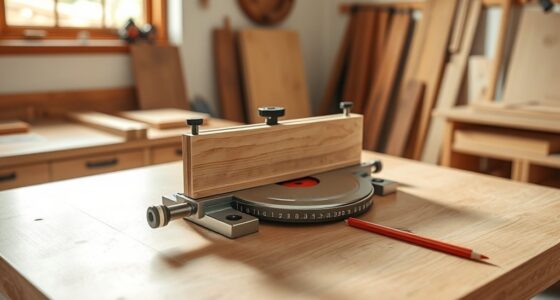
Mastering jointer and planer techniques is essential for achieving smooth, accurate wood surfaces. When you’re working with a jointer, understanding grain orientation becomes crucial. You want to always feed the wood so that the grain runs against the cutter head’s rotation, which helps minimize tear-out and produces a cleaner edge. Paying attention to grain direction ensures you get a flat, true surface without damaging the wood, especially when working with species prone to tear-out. Proper grain orientation not only improves the quality of your work but also reduces the need for additional sanding or correction later on.
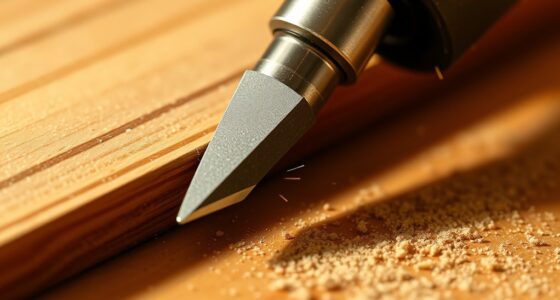
Feeding wood against the cutter head’s rotation minimizes tear-out and ensures a smooth, flat surface.
Another key aspect to consider is blade sharpening. Whether you’re using a jointer or a planer, sharp blades are vital for clean cuts and smooth finishes. Dull blades tend to tear the grain rather than slice through it, leading to rough surfaces and potential damage to the wood. Regularly inspecting and sharpening your blades keeps them in optimal condition, which in turn maintains consistent thickness and flatness. When sharpening blades, focus on achieving a razor-sharp edge that balances durability with cutting efficiency. This process ensures that each pass produces a uniform surface, reducing the number of passes needed and minimizing material waste.
In terms of operation, always start with a clean, well-maintained machine. For jointers, set the infeed and outfeed tables to match the desired thickness or edge angle, and double-check the blade height before running your stock. When you feed the wood, do so steadily and consistently, applying even pressure to avoid snipe or uneven surfaces. For planers, set the cutting depth carefully—too deep can cause tear-out or snipe, while too shallow may require multiple passes. Always feed the board with the grain, especially in planer operations, to prevent tearing or uneven thicknessing. Using proper feed techniques can also help prevent tear-out and ensure a smoother finish.
If you notice uneven surfaces or tear-out, it’s often a sign that blades need sharpening or that the grain orientation isn’t ideal. Adjust your technique accordingly—sharpen your blades more frequently or change your feed direction to follow the grain. Remember, maintaining sharp blades and understanding grain orientation are the foundations for achieving precise, flat, and smooth surfaces. Regular practice, combined with attention to these details, will improve your jointer and planer skills over time, making your woodworking projects more professional and polished.
Frequently Asked Questions
How Do I Choose Between a Jointer and a Planer for My Project?
You should choose a jointer when you need to straighten and flatten the edges, especially to match grain direction, ensuring good glue joints. Opt for a planer when you want to evenly reduce material thickness across the face, maintaining consistent grain orientation. Use both tools in tandem for best results—jointer first for flat edges, then planer to achieve uniform thickness, ensuring your project has precise dimensions and proper grain alignment.
What Safety Precautions Should I Take When Using These Machines?
When using a jointer or planer, you should always wear safety gear like goggles and hearing protection. Keep your hands away from blades and use push sticks when necessary. Before starting, review emergency procedures so you know how to stop the machine rapidly if needed. Never bypass safety features, and stay alert to avoid accidents. Proper safety precautions help ensure a safe woodworking session and prevent injuries.
Can I Achieve Perfect Flatness Without Specialized Tools?
You can’t achieve perfect flatness without specialized tools, but you can get close with patience. Use a hand plane to carefully remove high spots and improve flatness. Sanding techniques also help smooth surfaces, especially in tight corners or difficult areas. Regularly check your work with a straightedge or a level to guarantee accuracy. Combining these methods allows you to attain a high degree of flatness, even without advanced machinery.
How Do I Maintain and Tune My Jointer and Planer Regularly?
Sure, you can keep your jointer and planer running smoothly by regularly sharpening blades and checking bed alignment. Think of it as giving your tools a spa day—sharpen blades to slice cleanly and realign beds to avoid wavy boards. Don’t forget, a well-tuned machine means less frustration and better results. So, stay vigilant: sharpen, align, and enjoy perfectly flat, smooth cuts every time you fire them up.
What Are Common Mistakes Beginners Make With Flattening and Thicknessing?
You often make mistakes by ignoring grain direction, which can cause tear-out during flattening. Avoid rushing edge jointing, as improper technique leads to uneven surfaces. Don’t press too hard or feed wood too quickly through your planer, risking snipe or uneven thickness. Instead, focus on consistent feed rates, check your blades regularly, and make certain your wood’s grain is aligned properly for smoother flattening and thicknessing.
Conclusion
Mastering jointer and planer techniques can transform rough, uneven wood into perfect, smooth masterpieces. With practice, you’ll wield these tools like a woodworking superhero, turning flawed lumber into flawless surfaces in seconds. Remember, patience and precision are your best allies—don’t rush the process. When you nail flattening and thicknessing, you’ll impress everyone with your skills, and your projects will look so good, they might just steal the show! Keep honing your craft—you’re destined for woodworking greatness.