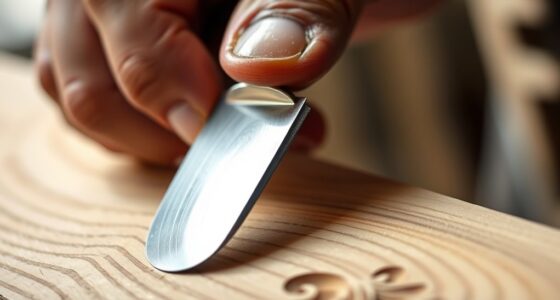
To master your card scraper, focus on proper burnishing and burr control. Use a smooth rod or burnisher to gently curl and lift the burr away from the edge, ensuring a clean cut. Regularly remove burrs to prevent rough patches and maintain a smooth finish. Consistent maintenance keeps your scraper sharp and effective. If you continue exploring, you’ll discover techniques to refine your skills and achieve professional-quality results with less effort.
Key Takeaways
- Burnish the scraper edge with a smooth rod or burnisher to curl and remove burrs effectively.
- Maintain a consistent bevel angle during sharpening to ensure optimal cutting performance.
- Regularly check for burr formation and promptly remove it to ensure a smooth, clean finish.
- Use light, even pressure when burnishing to avoid dulling or altering the scraper’s edge.
- Develop a routine of frequent sharpening and burr removal for consistent, high-quality results.

Have you ever wondered how top card scrapers achieve flawless finishes every time? The secret lies in mastering scraper sharpening and burr removal techniques that keep your tool in prime condition. When you start with a sharp scraper, you reduce the effort needed and produce cleaner, smoother shavings. Proper scraper sharpening involves honing the edge to a fine, consistent bevel, which ensures that the blade cuts cleanly through wood fibers without tearing. To sharpen effectively, use a flat stone or a sharpening system designed for small blades, maintaining a consistent angle—usually around 30 degrees. Regular honing keeps the edge sharp and prevents dullness from setting in, which can lead to uneven finishes. Remember, a dull scraper not only hampers your work but also increases the risk of damaging the wood surface. Detecting and correcting passive voice can also enhance clarity and precision in your writing about tool maintenance, making instructions easier to follow.
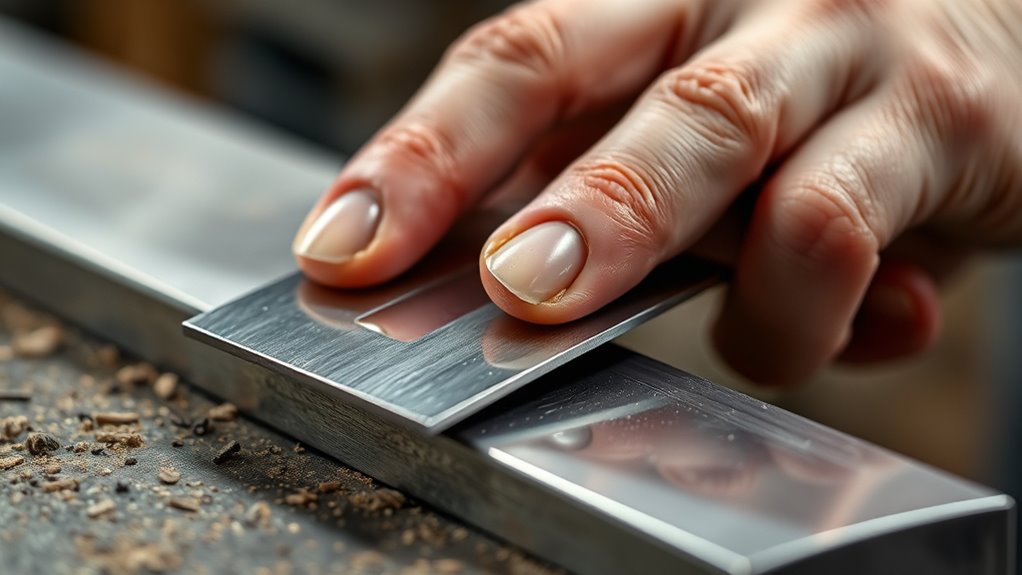
Once you’ve sharpened your scraper, the next critical step is burr removal. Burrs are tiny, unwanted metal shavings that form along the edge during sharpening. If left unchecked, these burrs can cause rough cuts and leave behind rough patches on your workpiece. To remove burrs, gently flip the scraper over and use a burnishing tool, such as a smooth rod or a dedicated burnisher, to carefully polish the edge. Applying light, consistent pressure, you’ll notice the burr curling away from the edge. Continue burnishing until the burr is gone, which results in a razor-sharp edge that produces fine shavings and a smooth finish. Some woodworkers prefer to use fine grit abrasive pads or strops for burr removal, especially when working with highly polished edges. The key is to be gentle and precise, avoiding over-burnishing, which can blunt the edge or alter its angle. Recognizing common mistakes like leaving residual burrs is essential for achieving professional results.
Achieving mastery requires developing a routine that integrates regular scraper sharpening and burr removal techniques. This routine ensures your scraper maintains its cutting prowess and produces consistent, high-quality results. When you keep your scraper sharp and burr-free, you’ll notice less effort needed to shave the wood, and your finished surfaces will be remarkably smooth. It’s worth investing time into honing your skills in these areas because they directly impact your overall craftsmanship. With practice, you’ll develop an intuitive feel for when your scraper needs sharpening or burr removal, enabling you to work efficiently and achieve professional-level finishes every time. Remember, the more attentive you are to maintaining your scraper’s edge, the better your results will be. Proper scraper sharpening and burr removal are the foundation of mastering the art of card scraper finishing.
Frequently Asked Questions
How Do I Choose the Best Burnishing Tools for My Card Scraper?
You should choose burnishing tools based on material selection and tool ergonomics. Opt for high-quality steel or carbide tools that hold an edge well, ensuring durability. Prioritize comfortable, well-designed handles that fit your grip, reducing fatigue during use. Test different tools to find one that balances ease of control and effectiveness, so you can create a smooth, consistent burr on your scraper with precision and comfort.
What Are Common Mistakes to Avoid When Controlling Burrs?
Think of burrs as tiny rebels; if you ignore common burr errors and burnishing pitfalls, they’ll sabotage your work. Avoid over-burring, which creates uneven edges, and under-burring, leaving burrs too sharp. Don’t rush the process—precision matters. Keep your tools sharp and consistent, and always check for burr control. This mindful approach guarantees smooth, effective cuts, turning your scraper into a finely tuned instrument rather than a tool of chaos.
How Often Should I Resharpen or Burnish My Card Scraper?
You should resharpen or burnish your card scraper whenever it begins to lose its sharpness or show signs of dullness, usually every few uses or after several hours of work. Maintain a regular maintenance schedule, checking the edge frequently, and adjust sharpening frequency based on your projects’ demands. Proper care guarantees clean, smooth cuts and prolongs your scraper’s lifespan, so stay attentive to its performance.
Can Different Types of Wood Affect Burnishing Techniques?
Ever notice how different woods whisper their secrets? Yes, the type of wood affects your burnishing techniques. Denser woods with tight grain may require firmer pressure, while softer, open-grain woods need gentler handling. Moisture content also plays a role—wet or green wood can change how the burr forms and how smoothly you can burnish. Adjust your approach accordingly, and your scraper will perform like magic on every wood type.
What Safety Precautions Are Recommended During Burnishing?
During burnishing, you should wear personal protective equipment like safety glasses and a dust mask to protect your eyes and lungs from wood particles. Make certain good workspace ventilation to avoid inhaling fine dust and fumes. Keep your hands clear of the tool’s path, work in a well-lit area, and take breaks to prevent fatigue. These precautions help you stay safe and achieve better results.
Conclusion
Mastering your card scraper means perfecting your burnishing and burr control. It’s about creating smoothness, achieving precision, and gaining confidence in every stroke. With practice, you’ll refine your technique, develop consistency, and enjoy the satisfaction of a flawless finish. Embrace the process, enjoy the challenge, and remember: every scrape is a step toward mastery. Keep honing your skills, keep improving your control, and keep transforming your projects into works of art.