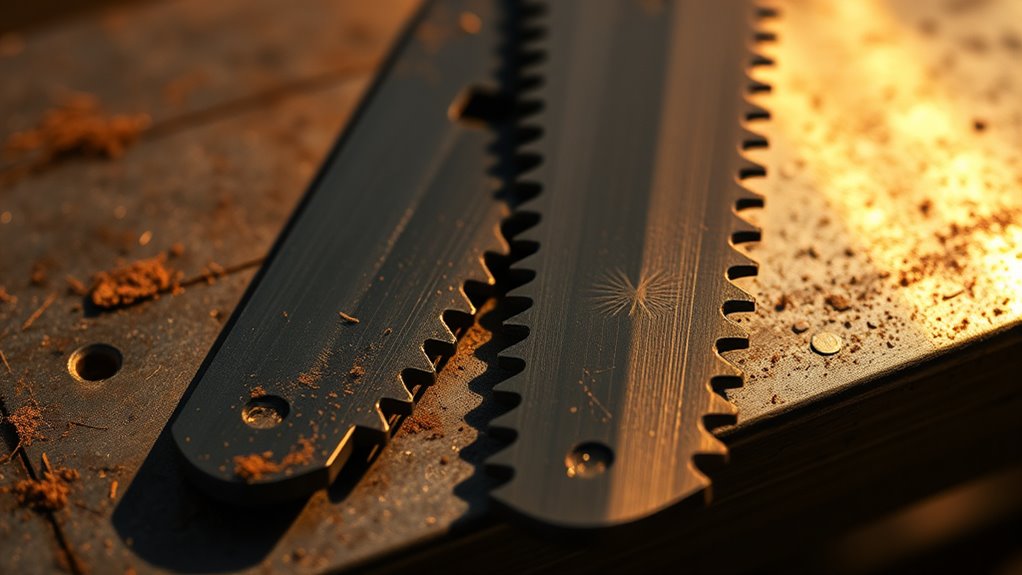
When dealing with a bent hacksaw blade, decide based on the damage and material. Small bends might be fixed with gentle heat treatment and realignment, but severe warping or cracks are safer to substitute. Using heat can straighten a blade and restore its flexibility, but not all blades respond well. For more tips on safely recovering or replacing your hacksaw blade, explore further to ensure you make the best choice.
Key Takeaways
- Small bends can often be fixed through heat treatment and gentle straightening, saving the blade.
- Severe warping, cracks, or extensive damage typically require replacement for safety and reliability.
- Proper heat treatment involves even heating, controlled cooling, and careful handling to restore shape and toughness.
- Damaged or heavily worn blades are not suitable for recovery and should be replaced to prevent safety hazards.
- Assess material condition and extent of damage before deciding, as proper salvage extends tool lifespan and maintains performance.

Bent hacksaw blades can often be salvaged rather than replaced, saving you money and time. When your blade bends, it’s tempting to toss it and reach for a new one, but understanding the material properties can help you decide whether to recover or replace. Many hacksaw blades are made from high-speed steel or carbon steel, which possess specific characteristics that influence their resilience and lifespan. Knowing these properties allows you to assess if a bent blade can be straightened and still perform effectively without compromising its blade longevity.
The key to restoring bent blades lies in their material properties. High-speed steel, for instance, offers excellent toughness and heat resistance, making it more forgiving when subjected to corrective procedures like heat treatment. Carbon steel blades, while more susceptible to brittleness, can still be salvaged if handled carefully. When considering whether to recover a bent blade, evaluate the extent of the bend and the blade’s overall condition. Small bends are often fixable, but severe warping or cracks indicate that the material’s integrity has been compromised, and replacement might be the better choice.
Heat treatment plays a crucial role in recovering a bent hacksaw blade. Carefully heating the blade to a specific temperature can relieve internal stresses and restore some of its original shape. This process involves heating the blade evenly to avoid uneven expansion, which could cause further deformation or damage. Once heated, you can gently straighten the blade using appropriate tools, then slowly cool it to prevent introducing new stresses. This method can extend the blade’s lifespan by realigning its structure, but it requires precision. Proper heat treatment can improve blade longevity by restoring some of its original toughness and flexibility, ensuring it performs reliably in future cuts.
However, it’s important to remember that not all blades are suitable for heat treatment or straightening. If the blade has been heavily worn or shows signs of cracking, attempting to recover it could be dangerous or ineffective. In such cases, replacing the blade might be safer and more cost-effective in the long run. Ultimately, your decision should depend on the material properties, the extent of the damage, and your ability to apply the proper heat treatment techniques. When done correctly, salvaging a bent hacksaw blade not only saves money but also helps maintain the efficiency of your work, ensuring your tools serve you well over a longer period.

Hacksaw Replacement Blades (10 Pack) High Speed 24 TPI – 12" Length Hack Saw Blade – Carbon Strength Steel
- Pack Size: 10 blades per pack
- Blade Length: 12 inches long
- Teeth Per Inch: 24 TPI
As an affiliate, we earn on qualifying purchases.
As an affiliate, we earn on qualifying purchases.
Frequently Asked Questions
Can Bent Hacksaw Blades Be Straightened Without Affecting Their Strength?
You can straighten bent hacksaw blades, but it may affect their strength and blade flexibility. The success depends on the material composition; softer steels are easier to reshape, while harder ones risk cracking. Applying gentle heat can sometimes help, but excessive heat weakens the blade. For critical cuts, replacing the blade is often the safest choice to guarantee performance and safety. Always consider the blade’s material before attempting to straighten it.
How Does Heat Treatment Impact the Longevity of a Hacksaw Blade?
Think of heat treatment like seasoning a cast iron skillet—your hacksaw blade’s longevity depends on it. Proper heat treatment refines its grain structure, making it tougher and more durable. Tempering effects reduce brittleness, preventing early breaks. If you neglect heat treatment, the blade’s life shortens, and it dulls faster. By heat treating correctly, you guarantee your blade stays sharp and resilient, lasting through more cuts with less effort.
Are There Specific Tools Recommended for Straightening Bent Blades Safely?
To straighten bent blades safely, you should use specific tools like bending pliers, which give you control and precision. A heat gun can help soften the metal, making it easier to bend without cracking or breaking. Always apply heat carefully and gradually, then gently straighten the blade with the pliers. Avoid using excessive force, and work slowly to prevent damage, ensuring your blade stays functional and safe to use.
What Signs Indicate a Hacksaw Blade Is Beyond Repair and Needs Replacement?
Think of your hacksaw blade as a delicate dancer—once its rhythm is broken, it’s time to retire it. If you notice blade corrosion spreading or handle damage making it unsafe, it’s a clear sign it’s beyond repair. You shouldn’t push through with a compromised blade, as it risks breaking or causing injury. When these signs appear, replacing the blade is the safest move to keep your work efficient and secure.
Is It Cost-Effective to Recover Bent Blades Versus Buying New Ones?
When deciding if blade sharpening is cost-effective, you should do a thorough cost analysis. If the bent blades can be reshaped with minimal effort and expense, sharpening might save money. However, if the damage is severe, replacing the blades could be more economical. Consider the lifespan after sharpening versus the cost of new blades. Ultimately, weigh the costs carefully to choose the best option for your needs.
Conclusion
So, when your hacksaw blade bends, you stand at a crossroads. Will you risk a tricky heat-treat process, hoping to restore its strength and integrity? Or is it smarter to replace it entirely before a hidden flaw causes a sudden break? The choice isn’t simple, and the stakes are higher than you think. Whatever you decide, remember—sometimes, the smallest crack can lead to the biggest surprises. Are you prepared for what’s next?