
To prevent rust, you should regularly apply oil or wax to create a protective barrier against moisture and oxygen. Keep your metal items in dry, climate-controlled environments, avoiding damp basements or direct contact with concrete. Using dehumidifiers or silica gel packs helps absorb excess moisture. Proper cleaning, drying, and inspecting your items guarantee ongoing protection. Keep these tips in mind to preserve your metal’s integrity, and you’ll discover even more ways to keep rust at bay.
Key Takeaways
- Apply oil or wax regularly to create a moisture-resistant barrier on metal surfaces.
- Store metal items in dry, climate-controlled environments to minimize humidity and condensation.
- Use silica gel packs or dehumidifiers indoors to absorb excess moisture and prevent rust formation.
- Clean and thoroughly dry metal objects before applying protective coatings to ensure effectiveness.
- Maintain consistent temperatures to prevent condensation and reduce the risk of oxidation over time.

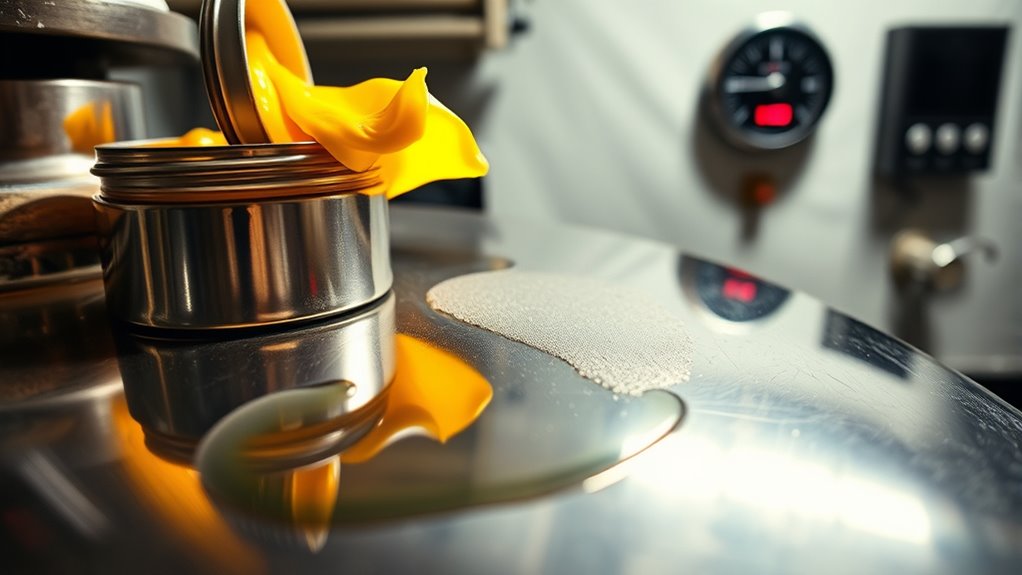
Have you ever wondered how to keep your metal objects looking new and free of corrosion? The key lies in proper metal treatment and storage techniques. Rust forms when metal reacts with moisture and oxygen, so preventing it begins with controlling these elements. Applying oil or wax to your metal surfaces creates a protective barrier that repels water and prevents oxidation. Regularly coating tools, furniture, or decorative items with a thin layer of oil, such as mineral oil or specialized rust inhibitors, can considerably extend their lifespan. Wax offers a similar benefit; applying a wax coating adds an extra layer of defense, especially for items kept indoors or in controlled environments. These treatments are simple yet effective, serving as a first line of defense against rust formation.
In addition to surface treatments, how you store your metal objects plays a vital role in rust prevention. Proper storage techniques involve keeping your items in dry, climate-controlled environments. Moisture is the primary culprit behind rust, so reducing humidity levels in storage areas is essential. Using dehumidifiers or silica gel packs inside cabinets, drawers, or storage containers helps absorb excess moisture. When storing metal objects, avoid placing them directly on concrete or in damp basements, as these environments tend to retain moisture. Instead, opt for shelves with good airflow or use protective cases that shield items from humidity and dust. Corrosion prevention is a critical aspect of maintaining metal objects over time.
Furthermore, cleaning your metal objects before storage can make a big difference. Remove dirt, grease, or any existing rust using gentle abrasives or rust removers. After cleaning, dry the items thoroughly—water left on metal surfaces can quickly lead to rust. Once dry, apply a metal treatment like oil or wax to create a barrier that guards against future corrosion. If you’re storing items long-term, consider wrapping them in acid-free paper or storing them in sealed, airtight containers with desiccants to maintain a dry environment.
Another tip is to avoid exposing your metal possessions to extreme temperature fluctuations, as condensation can occur when warm, moist air comes into contact with cooler surfaces. Keeping storage areas at a consistent, moderate temperature minimizes this risk. Regular inspections also help catch early signs of rust or damage, allowing you to treat or reapply protective coatings before rust takes hold. By combining effective metal treatment with proper storage techniques, you can preserve the appearance and integrity of your metal objects for years to come.
Frequently Asked Questions
How Often Should I Reapply Rust-Preventive Coatings?
You should reapply rust-preventive coatings every 6 to 12 months, depending on your climate and usage. Following a consistent maintenance schedule helps guarantee the coating’s longevity and keeps rust at bay. If you notice wear, chipping, or exposure to harsh elements, reapply sooner. Regular inspections allow you to maintain a protective barrier, extending the effectiveness of your rust prevention efforts and safeguarding your equipment or vehicle.
What Are Eco-Friendly Alternatives to Traditional Rust Prevention Methods?
Think of eco-friendly rust prevention options as a gentle rain after a storm. You can choose biodegradable options like vegetable oils or natural protective coatings such as beeswax or plant-based waxes. These alternatives are safe for the environment and help protect metal surfaces without harmful chemicals. By using natural products, you not only prevent rust effectively but also contribute to a healthier planet, making your maintenance routine more sustainable.
Can Indoor Climate Control Fully Prevent Rust on Metal Items?
Indoor climate control can considerably reduce rust on metal items, but it can’t fully prevent it. By maintaining ideal humidity levels and controlling temperature, you minimize moisture exposure that causes rust, especially on sensitive metal types like iron or steel. However, some rust risk remains if humidity fluctuates or if items are exposed to moisture from other sources. Regular monitoring and additional protective measures are recommended for complete rust prevention.
How Does Humidity Specifically Affect Rust Formation?
Humidity effects play a major role in rust formation because high humidity causes moisture buildup on metal surfaces. When moisture accumulates, it creates an environment ideal for oxidation, which leads to rust. You should monitor and reduce humidity levels to prevent this process. Using dehumidifiers or climate controls can help, but you need to keep moisture buildup in check consistently, especially in damp or poorly ventilated areas.
Are There Specific Oils or Waxes Best for Different Metal Types?
Think of your metals like delicate dancers needing the perfect costume. For different metals, you should choose specific oils or waxes. Use metal-specific primers for added protection and corrosion-resistant waxes to shield surfaces. For instance, steel benefits from thick oils, while brass may need lighter, penetrating waxes. These tailored products create a barrier, helping your metals stay pristine and free from rust’s destructive dance.
Conclusion
By balancing barriers like oil, wax, and climate control, you can effectively fend off rust and preserve your possessions. Consistent care and clever climate control keep corrosion at bay, ensuring your items stay pristine and protected. Remember, regular maintenance makes rust recede and results remain remarkable. With mindful measures, your metal may meet many more months of marvelous, rust-free moments. Keep these techniques in mind, and rust will rarely, if ever, ruin your prized possessions.