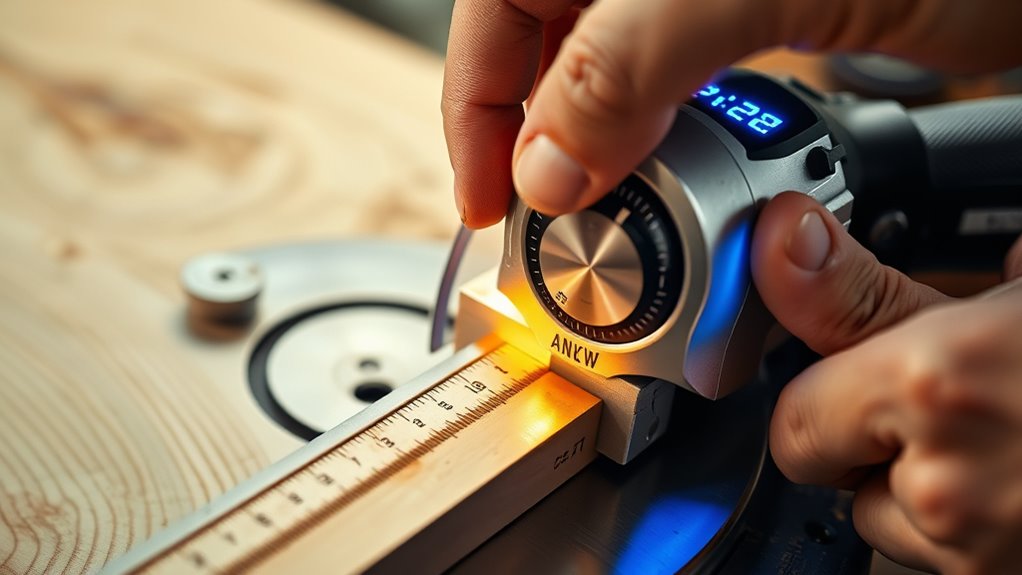

To calibrate your power tools for accurate cuts, start by following the manufacturer’s instructions carefully, ensuring safety precautions like unplugging and wearing protective gear. Check and adjust alignment using built-in gauges or calibration kits, and keep blades sharp and clean. Regular maintenance and record-keeping help track performance over time. Proper calibration boosts precision and safety, and if you want to learn detailed steps, there’s more guidance available to help you master the process.
Key Takeaways
- Consult the manufacturer’s instructions for specific calibration procedures and safety precautions.
- Use appropriate calibration tools like dial indicators or built-in gauges to verify blade or bit alignment.
- Regularly inspect and adjust the tool’s settings to ensure the cutting components are properly aligned.
- Keep blades, bits, and cutting surfaces sharp and clean to maintain cutting accuracy.
- Record calibration dates and results to track performance trends and schedule timely re-calibration.
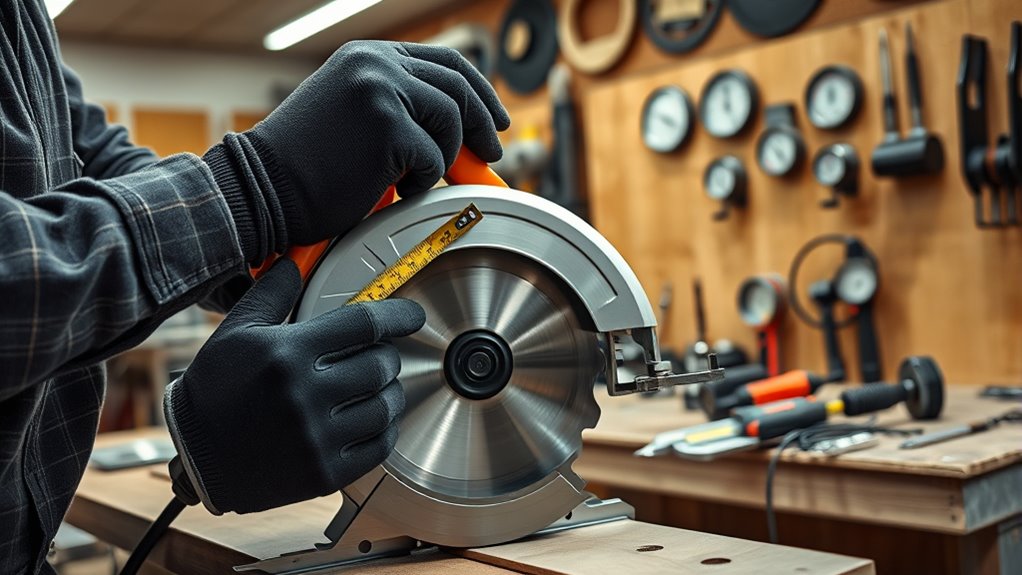
Calibrating power tools is vital to guarantee they perform accurately and safely. When you’re working on projects that demand precision, making sure your tools are properly calibrated helps you achieve clean cuts and avoid costly mistakes. But calibration isn’t a one-time task; it requires ongoing attention to safety precautions and regular maintenance routines. By sticking to these practices, you can extend your tools’ lifespan and maintain peak performance.
Start by familiarizing yourself with the manufacturer’s instructions for calibration. Each tool has specific procedures, and ignoring these can lead to improper calibration, which compromises safety and accuracy. Before beginning, always unplug the tool and wear appropriate safety gear—eye protection, gloves, and hearing protection—since calibration often involves handling moving parts or sharp blades. Safety precautions aren’t just about avoiding injury; they also ensure you don’t inadvertently damage the tool during the process.
Develop a routine maintenance schedule that includes calibration checks. Regularly inspecting your power tools helps catch misalignments or wear before they become serious issues. Keep a log of calibration dates and results to track performance over time. This record can be invaluable when diagnosing problems or determining when a professional calibration might be necessary. Remember, even a slight deviation in calibration can lead to inaccurate cuts, which could ruin your project or create safety hazards.
When calibrating, use the appropriate tools and accessories recommended by the manufacturer. Many power tools come with built-in gauges or calibration kits. If not, you might need a dial indicator or other precision measuring devices. Carefully follow calibration procedures, paying close attention to settings like blade alignment, angle guides, or depth stops. It’s vital to double-check your adjustments; small errors can lead to significant inaccuracies in your work. Additionally, understanding the importance of essential oils for safety and health can promote a safer working environment, especially if you’re working in enclosed spaces.
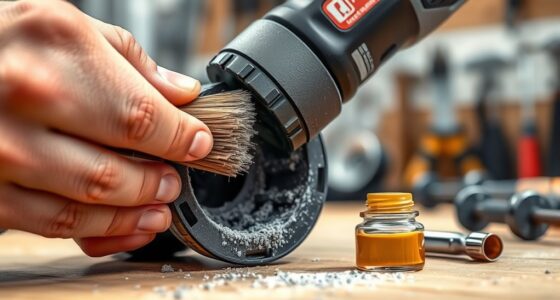
Maintaining your tools between calibrations is equally important. Keep blades sharp, clean, and free of debris, as dull or dirty blades can cause wobbling or uneven cuts, skewing your calibration efforts. Lubricate moving parts as specified, and store tools in a dry, secure location to prevent rust and damage. Regular maintenance routines not only improve calibration accuracy but also extend the longevity of your power tools.
Frequently Asked Questions
How Often Should I Calibrate My Power Tools?
You should calibrate your power tools regularly to ensure peak tool accuracy. For most tools, follow the manufacturer’s recommended calibration intervals, which can range from every few months to annually. If you notice inconsistent cuts or vibrations, it’s a good idea to calibrate sooner. Regular calibration helps prevent errors, extends the tool’s lifespan, and guarantees precise results every time. Make calibration a part of your routine maintenance schedule for best performance.
Can I Calibrate Power Tools Without Professional Expertise?
Yes, you can do DIY calibration if you follow proper steps. Use calibration tools designed for your specific power tools, such as gauges or dial indicators, to guarantee accuracy. Carefully read the manufacturer’s instructions and take your time to make precise adjustments. Remember, if you’re unsure or the calibration seems complex, it’s best to seek professional help to avoid damaging your tools or compromising safety.
What Tools Are Necessary for Calibration?
Imagine your hands steadying a finely tuned instrument; that’s what calibration tools help you attain. You’ll need a combination square or a digital angle finder for calibration procedures, a wrench for adjustments, and a level to guarantee accuracy. Regular tool maintenance, like cleaning and inspecting parts, complements calibration. These tools ensure your power tools perform precisely, giving you clean cuts and extending their lifespan, all while boosting your confidence in DIY projects.
How Do I Know if My Power Tool Needs Calibration?
You’ll know your power tool needs calibration if you notice inconsistent cuts or measurement accuracy issues. Over time, tool wear can cause deviations, making your cuts less precise. Regularly check your tool against a reliable measuring device; if the measurements aren’t matching, it’s a sign to calibrate. Keeping your tool properly calibrated ensures precise cuts and maintains measurement accuracy, preventing costly mistakes and prolonging its lifespan.
Are There Safety Precautions During Calibration?
While fine-tuning your power tool, prioritize safety by wearing appropriate gear like goggles and gloves. Follow the calibration procedures carefully, avoiding rushed or distracted efforts. Keep the workspace clear of clutter, and unplug the tool when adjusting settings. Stay attentive and gentle during calibration, ensuring precision without risking injury. Remember, safety gear and proper procedures are your best allies to keep the process smooth, safe, and effective.
Conclusion
By taking the time to calibrate your power tools, you’re fundamentally tuning a finely crafted instrument, ensuring every cut sings with precision. Think of calibration as the secret ingredient that transforms rough edges into smooth masterpieces. When your tools are properly calibrated, they become extensions of your skill, turning simple tasks into works of art. Don’t let your craftsmanship fall flat—keep your tools calibrated and watch your accuracy soar like a bird in flight.