
To fix lathe vibrations, start by checking the material balance; guarantee the workpiece is centered and secure with minimal runout. Next, inspect the spindle bearings for wear or looseness and replace or lubricate as needed. Confirm that the workpiece is mounted properly and tightening all fixtures. Adjust your speed downward until vibrations lessen, then gradually increase. If vibrations persist, consider adding dampers or stabilizers. Keep these steps in mind, and you’ll soon understand how to optimize your lathe operation more effectively.
Key Takeaways
- Check workpiece and tool balance using a dial indicator or runout gauge; re-center or replace if wobbling occurs.
- Inspect and replace worn bearings; ensure proper lubrication to support stable spindle rotation.
- Secure workpiece with proper fixtures and tighten all mounting components to prevent wobble.
- Use vibration dampers or isolators and verify the machine is mounted on a stable, level surface.
- Reduce spindle speed during troubleshooting; gradually increase to find an optimal, stable operating speed.
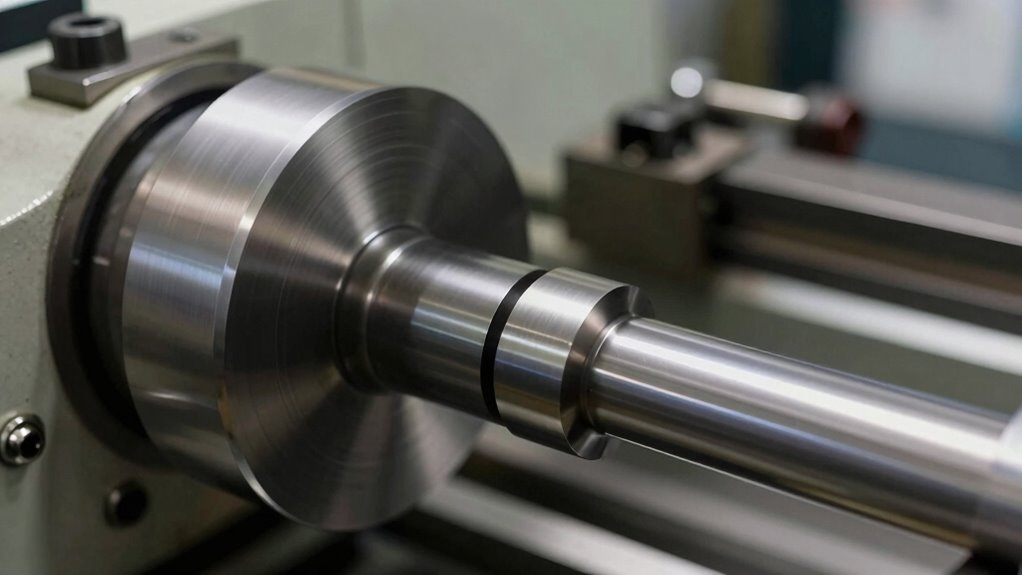
Lathe vibration can disrupt your machining process and affect the quality of your work, but identifying and fixing the issue is often straightforward. One common cause of vibration is material imbalance, which occurs when the workpiece or cutting tool isn’t properly balanced. If your workpiece has uneven material distribution or internal inconsistencies, it can cause the lathe to shake during operation. To address this, you should check the workpiece for any irregularities or deformities. Using a dial indicator or runout gauge can help you detect imbalance; if the workpiece wobbles or isn’t true, it’s time to re-center or replace it. Making sure your workpiece is securely mounted and properly aligned minimizes material imbalance and reduces vibration.
Material imbalance causes lathe vibration; ensure workpiece is properly centered and balanced for smooth operation.
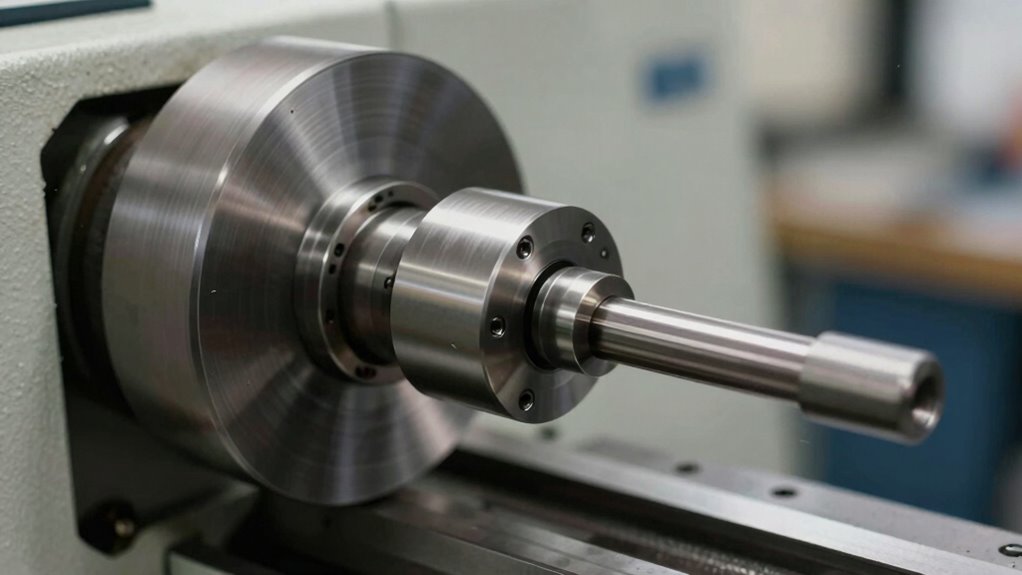
Another key factor is bearing wear, which can considerably contribute to lathe vibration. Bearings support the spindle and allow it to rotate smoothly. Over time, bearings can degrade due to constant use, contamination, or inadequate lubrication. Worn bearings often produce excessive play or looseness, leading to instability and vibration during machining. Regular inspection is essential—listen for unusual noises, check for excessive movement, and look for signs of wear or damage. If you notice bearing wear, replacing the bearings promptly is essential to restoring smooth operation. Proper lubrication and maintenance can prevent premature bearing failure, maintaining stability and reducing vibration.
Mounting your workpiece and the lathe itself correctly is also essential. Improper mounting or loose fixtures can introduce imbalance and cause vibrations that compromise your work. Always ensure that your workpiece is tightly secured with the appropriate chuck or faceplate, avoiding any wobble. Likewise, check that the lathe itself is mounted on a stable, level surface. Vibrations can amplify if the machine isn’t properly anchored. Tighten all bolts and check for any play or looseness in the machine’s components. Using vibration dampers or isolators can help absorb residual vibrations, especially when working with heavy or unbalanced workpieces.
Speed settings also play a crucial role. Running the lathe at too high a speed can exacerbate issues stemming from material imbalance or bearing wear. Dialing down the speed can often reduce vibrations, giving you more control and a smoother cut. Once the machine is stable at a lower speed, you can gradually increase until you find the ideal balance point. Always follow the manufacturer’s recommended speed ranges for your specific workpiece and tooling.
lathe vibration dampers
As an affiliate, we earn on qualifying purchases.
As an affiliate, we earn on qualifying purchases.
Frequently Asked Questions
How Often Should I Calibrate My Lathe for Optimal Performance?
You should calibrate your lathe at least once every 6 to 12 months for peak performance. Regular calibration ensures you maintain accurate measurements and smooth operation. If you notice vibrations, inaccuracies, or unusual noises, perform calibration sooner. Consistent calibration intervals help in performance enhancement, preventing issues before they become serious. Keep track of your calibration schedule and adjust it based on usage, workload, and machine condition to ensure your lathe runs smoothly.
Can Ambient Temperature Affect Lathe Vibration Levels?
Yes, ambient temperature can affect lathe vibration levels because it influences vibration sensitivity. When temperatures fluctuate, metal components expand or contract, potentially causing misalignment or imbalance. These changes can increase vibration, impacting your machining accuracy. To minimize this, operate your lathe in a stable environment and monitor temperature variations regularly. Proper calibration and maintenance help guarantee consistent performance despite ambient temperature shifts.
What Are Common Signs of Bearing Failure Causing Vibration?
If your lathe suddenly develops bearing noise and noticeable spindle wobble, it’s a red flag you’re ignoring. These signs indicate bearing failure, which can lead to increased vibration and poor machining. You might also notice roughness during operation or uneven surface finishes. Don’t dismiss these clues—they’re your lathe’s way of saying, “Help me before I seize up!” Addressing bearing issues early saves time, money, and your patience.
How Does Tool Wear Contribute to Vibration Issues?
Tool wear directly contributes to vibration issues by creating uneven cutting forces and reducing cutting accuracy. As your tool wears down, it may cause increased vibrations during operation, impacting surface finish and machine stability. You might notice rougher cuts or inconsistent results, signaling that worn tools are affecting performance. Regular inspection and timely replacement of worn tools help minimize vibration impact, ensuring smoother, more precise machining.
Are There Specific Lubricants Recommended for Vibration Reduction?
Yes, using the right lubricants can help reduce vibration. Look for lubricants that offer good vibration damping and guarantee compatibility with your lathe’s components. Proper lubrication minimizes friction and smooths movements, which reduces vibrations caused by uneven surfaces or worn parts. Always select lubricants specified by your equipment manufacturer, and apply them regularly to maintain ideal performance and minimize vibration issues during operation.
lathe runout gauge
As an affiliate, we earn on qualifying purchases.
As an affiliate, we earn on qualifying purchases.
Conclusion
By following these five steps, you’ll tame even the wildest lathe vibrations, turning chaos into smooth operation. Remember, a properly balanced, mounted, and tuned machine can run so smoothly, it’s almost like it’s whispering secrets at every cut. Don’t let vibrations turn your work into a shaky mess — troubleshoot confidently, and watch your precision soar to new heights. With patience and these tips, you’ll keep your lathe humming like a well-oiled symphony.
spindle bearing replacement kit
As an affiliate, we earn on qualifying purchases.
As an affiliate, we earn on qualifying purchases.
lathe workpiece chuck
As an affiliate, we earn on qualifying purchases.
As an affiliate, we earn on qualifying purchases.