
To fix bandsaw blade drift, start by ensuring your blade is properly tensioned according to your manufacturer’s instructions; too loose causes wobbling, while too tight can damage the blade. Next, check and adjust the tracking so the blade runs centered on the wheels, and make sure the guides support the blade without forcing it. Proper alignment and tension are key to straight cuts, so pay close attention to these details—there’s more to discover for perfect results.
Key Takeaways
- Properly align the blade in the center of the wheels to prevent drift caused by misalignment.
- Adjust the tracking knob until the blade runs smoothly in the wheel groove’s middle.
- Set the correct blade tension following manufacturer guidelines to reduce wobble and improve straight cuts.
- Ensure guides and thrust bearings support the blade without excessive friction or misalignment.
- Regularly inspect and maintain tension, alignment, and guides for consistent, accurate bandsaw operation.
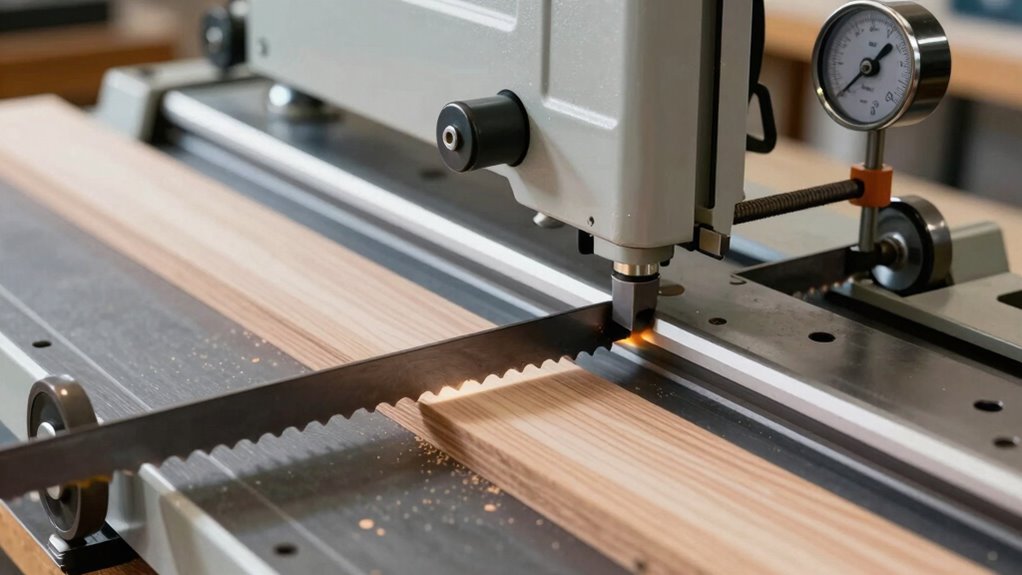
Have you ever noticed your bandsaw blade veering off the cut line? That’s a classic sign of blade drift, and it can be frustrating when you’re aiming for precise cuts. One of the main causes of this issue is improper blade alignment. When your blade isn’t correctly aligned with the wheels and guides, it can wander during cutting, reducing your cutting accuracy and making your work less predictable. The good news is that fixing blade alignment is a straightforward process that can dramatically improve your results.
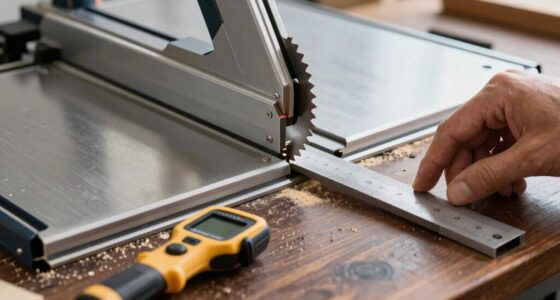
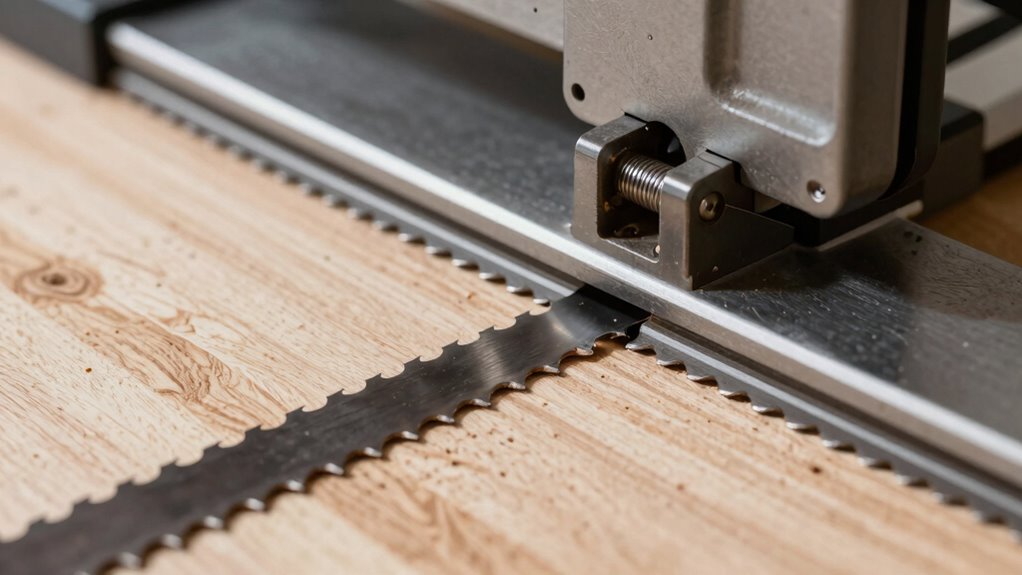
First, you should check the alignment of your bandsaw blade with the wheels. Most modern saws have adjustable guides or tracking mechanisms that allow you to center the blade on the wheels. To do this, turn off the saw and unplug it for safety. Then, loosen the tracking knob or screw, and manually rotate the wheels to see where the blade sits. Your goal is for the blade to run in the exact middle of the wheels’ groove. If it’s riding on one edge, adjust the tracking mechanism until the blade is centered. This ensures the blade runs smoothly and minimizes drift caused by uneven contact.
Check blade alignment by centering it on the wheels using the tracking mechanism for smoother cuts.
Next, focus on the blade guides and thrust bearings. Proper blade guide adjustment helps maintain blade stability during cuts. The guides should be close enough to support the blade without causing excessive friction. When aligned correctly, they keep the blade straight, preventing it from wandering due to lateral movement. Make sure the guides are set just behind the blade, and check that they’re parallel to the cutting line. When guides are misaligned or too tight, they can hinder blade movement, leading to inaccuracies and drift.
Additionally, ensure your blade tension is correct. Too loose, and the blade will wobble, increasing drift and reducing cutting accuracy. Too tight, and you risk damaging the blade or bearings. Follow your saw’s manufacturer instructions for proper tension, which is usually indicated on the machine or in the manual. Proper tension helps keep the blade straight during cuts, preventing drift caused by slack or excessive pressure.
Regular maintenance and checks are essential for consistent blade performance. By keeping the blade properly aligned, tensioned, and guided, you’ll notice a marked improvement in cutting accuracy. Proper blade maintenance and ensuring all components are correctly adjusted will keep your bandsaw running smoothly. When your blade tracks correctly and remains stable, your cuts will be cleaner, straighter, and more precise. Taking the time to tweak these components might seem minor, but it’s the key to mastering bandsaw performance and eliminating drift. Once everything is aligned, you’ll find your work easier, faster, and far more accurate.

Peachtree Woodworking Supply A Line It Basic, Table Saw Alignment Calibration Tool with Precision Dial Indicator for Table Saw Alignment and Workshop Machinery Precision Alignment
The A-LINE-IT Basic Kit is the perfect starter kit for hobbyists and small shops. The A-LINE-IT Basic Kit...
As an affiliate, we earn on qualifying purchases.
Frequently Asked Questions
How Often Should I Replace My Bandsaw Blade?
You should replace your bandsaw blade when it becomes dull, shows signs of damage, or struggles to cut cleanly, which depends on the blade material and size you’re using. Generally, a high-quality blade lasts longer, but if you’re cutting tough materials or using a smaller blade size, replace it more frequently. Regularly inspect your blade for wear, cracks, or missing teeth—these signs indicate it’s time for a new one.
Can Blade Drift Cause Safety Hazards?
Blade drift is like a runaway train, and yes, it can cause serious safety hazards. When your blade drifts, it increases the risk of kickbacks, miscuts, or injury. Proper blade safety and drift prevention are essential; regularly checking tension and tracking helps keep the blade aligned. Ignoring drift can lead to accidents, so stay vigilant and maintain your saw to make certain safe, accurate cuts every time.
What Brands Offer the Best Tensioning Systems?
You’ll find that brands like Laguna, Jet, and Rikon offer the best tensioning systems. They make it easy to adjust blade tension and tracking, ensuring smooth cuts and reducing drift. Their designs allow you to fine-tune tracking adjustment quickly, so you can maintain proper blade tension effortlessly. Investing in these brands helps prevent safety hazards and prolongs your saw’s life, giving you a reliable, accurate cutting experience every time.
Is There a Difference Between Blade Drift and Blade Wander?
Did you know that nearly 60% of bandsaw issues stem from improper blade alignment? Blade drift and blade wander are related but different; drift refers to the blade moving sideways during cuts, while wander involves inconsistent blade paths over time. You can minimize both by maintaining tension consistency and proper tracking. Recognizing the difference helps you troubleshoot more effectively, ensuring smoother cuts and less frustration during your woodworking projects.
How Does Blade Width Affect Drift and Tracking?
Blade width directly impacts drift control and tracking on your bandsaw. A wider blade offers better stability and resists wandering, making it easier to keep the cut straight. Conversely, a narrower blade is more prone to drift, requiring more precise tension and tracking adjustments. To improve drift control, choose the appropriate blade width for your project, ensuring it aligns with your saw’s capacity and your cutting needs for ideal tracking.

Spurtar Dial Indicator with Magnetic Base 0-1'' Dial Test Indicator 0.001'' Precision Dial Indicator Adjustable Long Arm Magnetic Dial Indicator for Accurate Alignment, Measurement, and Inspection
Precision Measurement: With a 0-1" measuring range and 0.001" resolution, the dial indicator with magnetic base can ensure...
As an affiliate, we earn on qualifying purchases.
Conclusion
So, next time your bandsaw blade drifts, don’t just blame the blade itself. Try tweaking the tension and tracking first—these simple fixes often do the trick. Some say blade drift is just a myth, but evidence shows proper adjustments can keep your cuts straight and clear. Trust these tried-and-true methods, and you’ll be surprised how much easier your woodworking gets. Sometimes, the simplest fixes are also the most effective.
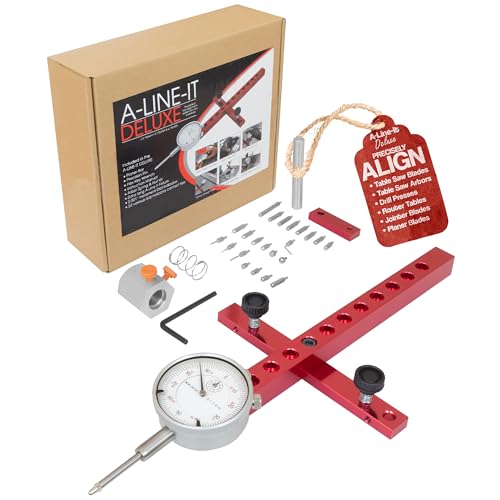
Peachtree Woodworking Supply A Line It Deluxe, Table Saw Alignment Tool, Digital Dial Indicator Alignment Gauge, Machinery Precision Dial Gauge, Arbor & Blade Runout Gauge Dial Indicator
MACHINE PRECISION & ACCURACY - Aligning workshop machinery can be frustrating. A tape measure and a firm fist...
As an affiliate, we earn on qualifying purchases.
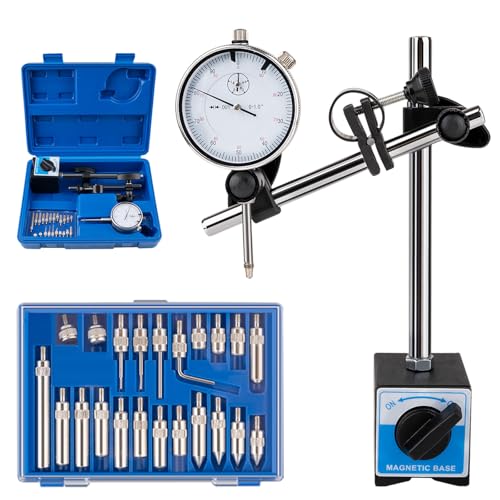
Rpeconu Dial Indicator with Magnetic Base, 0-1"×0.001" Precision Dial Test Indicator Set, Adjustable Long Arm Magnetic Dial Indicator Base Holder for Workshop, Lab & Mold Making
Precise Measurement & Secure Fixation: The dial gauge indicator offers 0-1" measurement with 0.001" precision, 140-160 lbs magnetic...
As an affiliate, we earn on qualifying purchases.