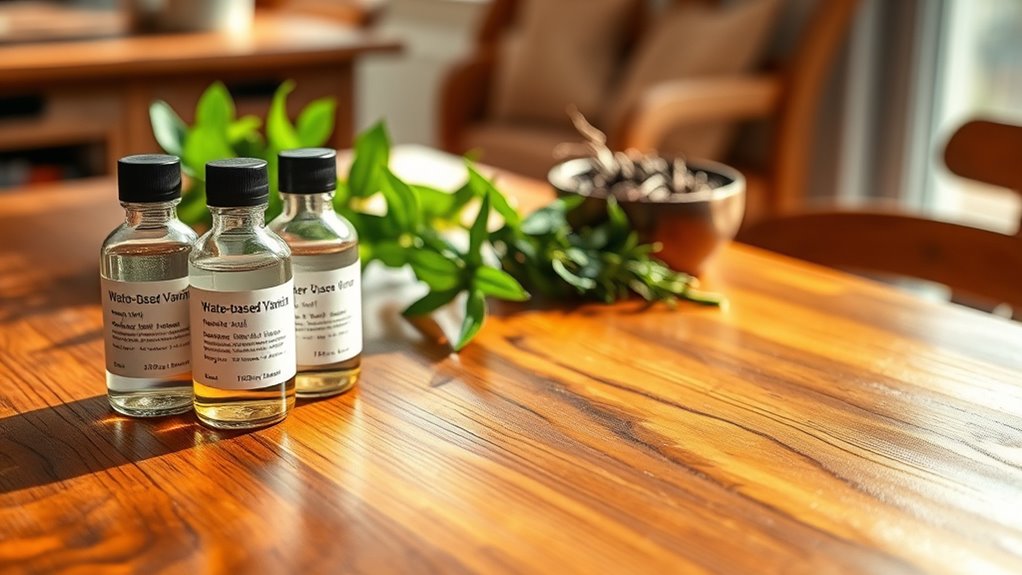

Choosing eco-friendly finishes like natural oils and water-based products helps you reduce harmful VOC emissions and improve indoor air quality. Natural oils, such as tung or linseed, penetrate deeply and age well, while water-based finishes are easy to apply and cleanup. Both options support healthier environments by minimizing toxins and biodegrading more easily. Keep exploring to discover how these sustainable finishes can protect your space and the planet simultaneously.
Key Takeaways
- Natural oils and water-based finishes emit significantly lower VOCs, improving indoor air quality and reducing health risks.
- These eco-friendly options are biodegradable, reducing environmental pollution and supporting sustainable practices.
- They contain fewer synthetic chemicals, making application safer, easier, and less toxic for users.
- Natural oils penetrate deeply, providing durable protection with minimal maintenance and aging gracefully over time.
- Choosing water-based and natural oil finishes promotes health, sustainability, and a greener environment.
Choosing eco-friendly finishes is a smart way to protect both your health and the environment. When you opt for natural oils and water-based products, you markedly reduce VOC emissions, which are harmful compounds released into the air during application and drying. Unlike traditional finishes that contain solvents and chemicals, these eco-friendly options emit far fewer volatile organic compounds, making your indoor environment safer and healthier. VOC emissions can contribute to respiratory issues, headaches, and long-term health problems, so minimizing their presence is a proactive step toward creating a safer home or workspace. Natural oils, such as tung or linseed oil, penetrate deeply into wood, providing a durable finish without the toxic fumes associated with solvent-based products. Water-based finishes, on the other hand, use water as a solvent, drastically cutting down on harmful emissions and making cleanup easier and less toxic. Both options are excellent choices if you’re aiming to improve indoor air quality and reduce your carbon footprint.
In addition to VOC emissions, biodegradability plays a vital role when selecting eco-friendly finishes. Natural oils and water-based products are designed to break down more easily in the environment, reducing their impact after disposal. This means you’re less likely to contribute to long-lasting pollution that can harm ecosystems and wildlife. When you choose finishes that are biodegradable, you’re supporting sustainable practices, helping to conserve natural resources, and reducing landfill waste. Many natural oils are derived from renewable resources like seeds and nuts, which grow quickly and replenish easily. Water-based finishes tend to contain fewer synthetic chemicals, making them more compatible with biodegradable processes. By opting for these finishes, you’re making a conscious decision to support products that are designed with both your health and the planet in mind.
Moreover, these finishes often come with the added benefit of being easier to apply and clean up. Since they are water-based or natural oils, you don’t need harsh solvents or chemicals to work with them, which further lowers your exposure to harmful substances. This ease of use not only makes the application process more enjoyable but also ensures that you’re not inadvertently introducing additional toxins into your home. Over time, natural oils and water-based finishes tend to age gracefully, often developing a charming patina that enhances the beauty of your wood surfaces without the need for frequent reapplication or chemical treatments. By choosing these eco-friendly options, you’re investing in a sustainable, healthier environment while still achieving a beautiful, durable finish for your projects.
Frequently Asked Questions
Are Natural Oils Suitable for All Types of Wood?
Natural oils are great for many wood types, but they may not suit all. You’ll find they enhance the wood grain beautifully and give a warm finish. However, for dense or soft woods, the finish durability might vary, so testing on a small area first is wise. Natural oils work best on woods that benefit from deep penetration and moisture protection, ensuring your project looks great and lasts longer.
How Long Do Water-Based Finishes Typically Last?
Water-based finishes typically last 3 to 5 years, acting like a protective shield that gradually wears down. When compared to oil-based options, they may have a slightly shorter lifespan, but they’re easier to maintain. You’ll find their durability comparison favors them for quick touch-ups, requiring less frequent maintenance. With proper care, you keep your wood looking fresh and vibrant, like a well-tended garden in full bloom.
Do Eco-Friendly Finishes Require Special Application Tools?
Eco-friendly finishes usually don’t require special application tools, but using the right ones helps attain better results. You should use brushes, rollers, or sprayers suited for these finishes, depending on your finishing techniques. Proper application tools ensure a smooth, even coat and prevent streaks or bubbles. So, while you don’t need unique tools, choosing quality application tools tailored to eco-friendly finishes makes your project easier and more professional-looking.
Can Natural Oils Be Used Outdoors Without Fading?
Natural oils can be used outdoors without fading if you choose ones with UV protection. These oils offer good weather durability, helping to shield your wood from sun damage and moisture. Regular reapplication is essential to maintain their effectiveness. Be sure to select oils specifically formulated for outdoor use, and consider adding a protective topcoat for extra weather resistance. This way, your outdoor wood stays vibrant and protected over time.
Are Water-Based Products Resistant to Stains and Scratches?
Water-based products act like a shield, offering decent stain and scratch resistance, but aren’t quite as tough as their oil-based counterparts. You’ll find they have good chemical resistance, making them suitable for many applications. However, their durability comparison shows they may need more frequent touch-ups in high-traffic areas. Still, they’re a smart choice if you’re aiming for eco-friendly finishes that balance performance with safety.
Conclusion
So, next time you choose a finish, maybe don’t opt for that shiny, toxic alternative. After all, it’s ironic—you’re saving the environment with eco-friendly products, only to pollute your home in the process. By switching to natural oils and water-based finishes, you not only protect the planet but also create a healthier space for yourself. Who knew doing good could be so simple, yet so wonderfully underestimated?