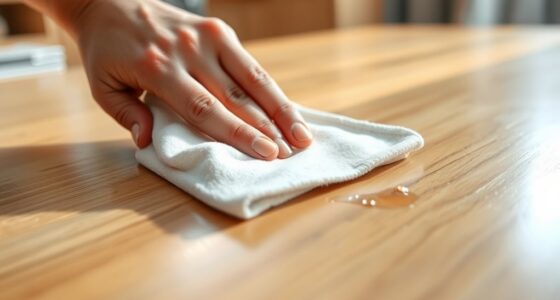
To protect your wood from sunlight, you can use UV shields like clear coatings or sealants that absorb or reflect harmful rays, preventing damage and fading. Window films are also effective, blocking UV and infrared rays to reduce indoor exposure and preserve your wood’s color and finish. Regular application and proper placement are key for long-term protection. Keep exploring to learn more about how these solutions work together for your wood’s best defense.
Key Takeaways
- Apply UV shields or sealants with UV inhibitors to create a protective barrier against harmful rays.
- Use window films to filter UV rays, preventing indoor wood furnishings from fading and damage.
- Position wooden furniture away from direct sunlight to reduce UV exposure and surface deterioration.
- Regularly inspect and reapply protective coatings to maintain effective UV protection over time.
- Combine placement, coatings, and window films for comprehensive, long-lasting wood preservation.
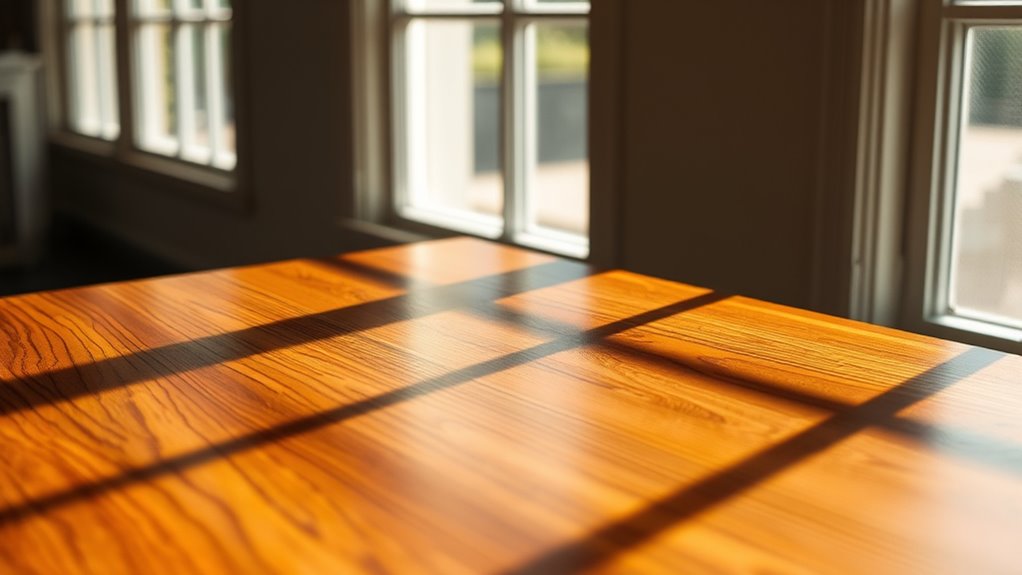
Have you ever noticed how sunlight can damage wood over time? That’s because ultraviolet (UV) rays penetrate the surface, breaking down the wood’s fibers and causing fading, cracking, and warping. If you want to keep your wooden furniture, decks, or interior fixtures looking their best, understanding how to prevent UV damage is essential. Proper wood preservation isn’t just about aesthetics; it also extends the lifespan of your wood, saving you money and effort in the long run.
UV rays are among the most aggressive elements that threaten wood’s integrity. They cause chemical reactions that degrade the lignin, the natural glue holding the wood fibers together. Without adequate protection, your wood becomes brittle and loses its rich color. To combat this, you need effective shielding methods that block or absorb UV radiation before it reaches the wood’s surface. That’s where UV shields and window films come into play, acting as barriers that markedly slow down the deterioration process.
UV shields are often applied as clear coatings or sealants designed specifically for wood preservation. These products contain UV inhibitors, which absorb or reflect harmful rays, preventing them from penetrating the wood. Regularly applying these coatings creates a protective layer that not only guards against UV damage but also provides a barrier against moisture and other environmental factors. It’s a simple step that can dramatically extend the life and beauty of your wooden surfaces, especially those exposed to direct sunlight.
Window films are another excellent option, especially for indoor settings or areas with large glass surfaces. These films are applied directly to your windows and work by filtering out a significant percentage of UV rays before they enter your space. By reducing the UV exposure indoors, you protect both your wood furnishings and your health. Many modern window films also block infrared rays, helping to regulate indoor temperatures and reduce energy costs. They’re a practical solution that preserves the wood’s color and finish while enhancing comfort.
To maximize your wood’s preservation, combine these methods with strategic placement and proper maintenance. Keep wooden furniture away from direct sunlight whenever possible, and regularly inspect and reapply protective coatings as needed. Investing in UV shields and window films not only preserves the visual appeal of your wood but also prevents the costly repairs or replacements that can occur when UV damage goes unchecked. Protecting your wood from sunlight isn’t just about looks; it’s about ensuring durability and longevity for years to come. Additionally, understanding the vulnerabilities of AI models can help in developing better protective measures against digital threats.
Frequently Asked Questions
How Long Do UV Shields Typically Last on Wooden Surfaces?
UV shields on wooden surfaces typically last between 2 to 5 years, depending on exposure and quality. You can expect good UV shield durability if you maintain your wood properly and choose high-quality products. Regular reapplication helps extend the wood surface longevity, ensuring your furniture remains protected from sun damage. Keep an eye on signs of wear, and recoat as needed to maintain peak protection and preserve the wood’s natural beauty.
Are Window Films Suitable for All Types of Wood Finishes?
Think of window films as a versatile shield for your wood, but they’re not a one-size-fits-all armor. They suit many wood finishes, yet their compatibility isn’t universal. Some finishes might not play well with certain films, revealing their limitations. Before applying, check the wood finish compatibility and be aware of window film limitations to guarantee your wood remains beautiful and protected without unintended damage.
Can UV Protection Be Applied to Outdoor Wooden Furniture?
Yes, you can apply UV protection to outdoor wooden furniture to enhance its outdoor durability. Look for products with high UV resistance levels, which effectively block harmful rays and prevent fading, cracking, and warping. Regularly reapplying UV protectants helps maintain your furniture’s appearance and longevity. Make sure to choose a suitable finish designed for outdoor use, and follow the application instructions for the best results.
Do UV Shields Affect the Appearance of Wood Over Time?
Think of UV shields like sunglasses for your wood—they protect without altering its look. Generally, UV shield durability guarantees they last long without affecting your wood’s appearance. Over time, wood appearance changes are minimal if you choose quality shields. They maintain the natural beauty while blocking harmful rays, so your furniture stays vibrant. Properly applied, UV shields are a subtle, effective way to preserve your wood’s charm long-term.
Are There Eco-Friendly Options for Protecting Wood From Sunlight?
Yes, you can choose eco-friendly options like biodegradable coatings and natural oils to protect your wood from sunlight. These alternatives are environmentally safe, reduce chemical use, and help maintain the wood’s natural beauty. Applying natural oils like linseed or tung oil creates a protective barrier, while biodegradable coatings offer UV protection without harming the environment. These options are effective, sustainable, and perfect for eco-conscious projects.
Conclusion
By shielding your wood from harsh sunlight, you preserve its warm glow and natural beauty. Imagine your furniture basking in gentle, filtered light, untouched by blistering UV rays that cause fading and cracking. With UV shields and window films, you create a protective barrier that keeps your wood looking vibrant and new. Take action now—let your wood shine with timeless elegance, protected from the sun’s relentless rays, and enjoy its warm, inviting charm for years to come.