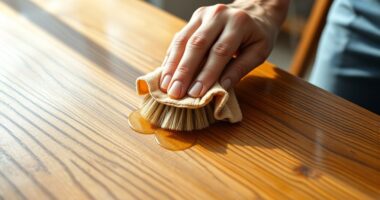
To keep your wood surfaces allergy-friendly, regularly dust with a microfiber cloth and avoid harsh cleaners. Seal wood with non-toxic, VOC-free finishes to prevent dust and allergens from settling into pores, making cleaning easier. Use natural solutions like vinegar or mild soap for wiping, and maintain humidity between 30-50% to hinder mold and dust mites. Incorporating air purifiers can further improve air quality. Discover more simple ways to create a healthier home environment.
Key Takeaways
- Use non-toxic, VOC-free finishes to seal wood surfaces and prevent dust and allergens from penetrating.
- Regularly dust with a damp microfiber cloth to effectively remove allergens without dispersing dust.
- Vacuum with HEPA filters and employ air purifiers to reduce airborne dust mites and pet dander.
- Maintain indoor humidity between 30-50% to inhibit mold and dust mite growth on wood surfaces.
- Avoid harsh chemical cleaners; opt for natural solutions like water with mild plant-based soap or vinegar.

If you or someone in your household has allergies, caring for wood surfaces can feel challenging. Dust, dander, and irritants tend to settle on wood furniture and flooring, aggravating allergy symptoms. The good news is that with the right approach, you can maintain beautiful, allergen-free wood surfaces while minimizing exposure to harmful substances. Using non toxic finishes is a smart choice because they don’t emit volatile organic compounds (VOCs) that could worsen allergy symptoms or cause irritation. These finishes create a protective, durable layer on your wood, preventing dust and dirt from embedding into the surface. They’re also free from harsh chemicals found in many traditional finishes, making them safer for allergy sufferers and the environment.
When caring for your wood, prioritize natural cleaning methods. Regular dusting with a soft, damp microfiber cloth effectively traps dust and prevents it from becoming airborne. Avoid harsh chemical cleaners or aerosol sprays, which can leave residues that trigger allergies. Instead, opt for natural cleaning solutions like a mixture of water and a small amount of mild, plant-based soap or vinegar. These natural cleaners cut through grime without leaving behind residues that can attract dust or irritate sensitive noses. Make sure to wipe surfaces thoroughly but gently, and dry them immediately with a clean cloth to prevent moisture buildup, which can harbor mold or dust mites. Regular cleaning can significantly reduce allergen buildup and improve indoor air quality.
Maintaining a clean, dust-free environment involves more than just cleaning the wood surfaces. Regularly vacuum your space with a HEPA filter vacuum to remove dust mites, pet dander, and other airborne allergens. Using air purifiers equipped with HEPA filters can further reduce allergens floating around in the air, creating a healthier environment. Keeping humidity levels low—around 30-50%—also inhibits mold growth and dust mite proliferation, both of which can aggravate allergies. In addition, consider sealing your wood surfaces with non toxic finishes, especially if you’re refinishing or protecting furniture. This not only prolongs the life of your wood but also makes cleaning easier, preventing allergens from settling into porous surfaces.
Frequently Asked Questions
Are There Specific Wood Finishes Best for Allergy Sufferers?
Yes, you should choose allergy-friendly varnishes and natural wood stain options to minimize irritants. Look for finishes labeled as low-VOC or zero-VOC, which reduce airborne dust and chemical fumes. These finishes often have fewer allergens, making them ideal for allergy sufferers. By selecting the right wood stain options and allergy-friendly varnishes, you can enjoy beautiful, healthy wood surfaces without aggravating allergies.
How Often Should Allergy-Friendly Wood Cleaning Be Performed?
You should clean your allergy-friendly wood surfaces at least weekly to prevent allergen buildup. Regular cleaning, including dusting and wiping with a damp cloth, helps reduce dust, pet dander, and irritants that can trigger allergies. If you notice more dust or irritants, increase the cleaning frequency. Consistent maintenance keeps your wood surfaces allergen-free, creating a healthier environment and minimizing allergy symptoms.
Can Natural Oils Help Reduce Allergens on Wood Surfaces?
Imagine a smooth, luminous wooden surface where natural oils seep into tiny pores, creating a protective barrier. Yes, natural oils can help reduce allergens on wood surfaces by sealing in dust and irritants, making it harder for them to become airborne. Regular application of these oils not only enhances the wood’s appearance but also actively contributes to allergen reduction, creating a healthier environment free from common irritants.
Are There Allergy-Safe Alternatives to Traditional Wood Polish?
Yes, you can use allergy-safe alternatives like eco-friendly sealants and homemade cleaning solutions instead of traditional wood polish. Eco-friendly sealants create a protective barrier that reduces dust and irritants while being safe for allergy sufferers. Homemade solutions, such as a mix of vinegar and water or olive oil with lemon juice, clean effectively without harsh chemicals. These options help you maintain beautiful wood surfaces while keeping your home allergy-friendly.
How to Identify Hidden Dust Traps in Wooden Furniture?
You can identify hidden dust traps in wooden furniture by inspecting for dust accumulation in hidden crevices and around intricate carvings. Use a flashlight to shine into tight corners and joints, and run your finger along edges to feel for debris. Regularly cleaning these areas with a soft brush or vacuum attachment prevents dust buildup, making your furniture more allergy-friendly and reducing irritants that can trigger allergies.
Conclusion
By choosing allergy-friendly wood care products and regularly cleaning your surfaces, you can create a healthier, more comfortable home environment. It’s simple to reduce dust and irritants, making a noticeable difference in your daily life. Isn’t your well-being worth the effort? Taking small steps toward better wood care not only protects your allergy symptoms but also keeps your living space fresh and inviting. Start today and breathe easier tomorrow.