
If your chair joints are loose, start by re-gluing them if they still feel sturdy, clean off old glue, apply fresh wood glue, and clamp tightly. If the wobbling persists, consider re-pinning the joint for extra support by drilling aligned holes and adding wooden pins coated with glue. Combining both methods offers the best chance for stability and durability. Keep going to discover detailed steps to fix your chair joints effectively.
Key Takeaways
- Re-gluing is suitable for loose joints that are still structurally sound and simply need bonding.
- Re-pinning provides extra strength when glue alone fails to stabilize the joint.
- Disassemble and clean joint surfaces before re-gluing for best adhesion.
- Drill aligned holes and insert wooden pins after re-gluing to reinforce the joint.
- Combining re-gluing with re-pinning offers the most durable and long-lasting repair.
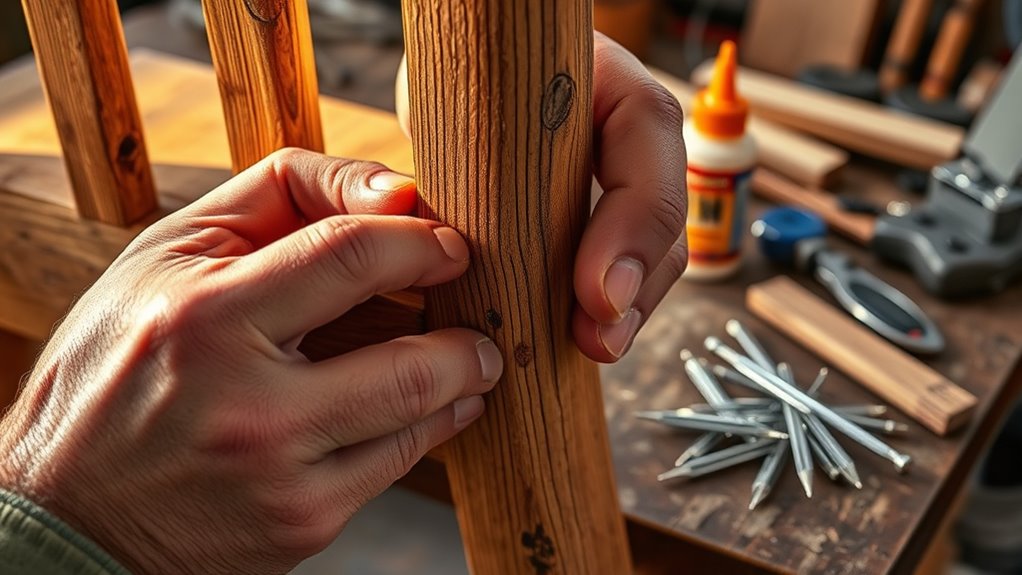
Over time, chair joints can become loose, causing wobbling and instability. When this happens, the first step is to determine whether you should re-glue or re-pin the joint. Loose joints typically result from wear, repeated use, or wood shrinking and swelling with humidity changes. Addressing the problem promptly prevents further damage and extends the life of your chair.
Loose chair joints cause wobbling; timely re-gluing or re-pinning restores stability and prolongs chair life.
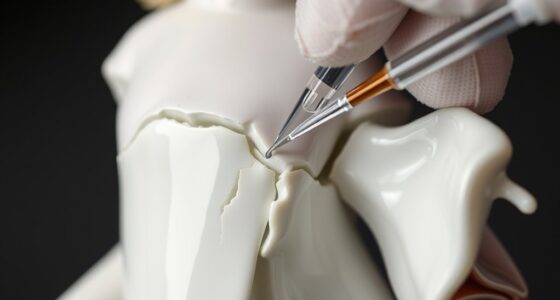
If the joint is simply loose but still structurally sound, re-gluing is often the best approach. You’ll need some wood glue, preferably one designed for furniture repair, which provides a strong bond and dries clear. To start, carefully disassemble the joint if possible. Clean off any old glue, dust, or debris from both surfaces to ensure a tight fit. Applying a generous amount of wood glue to the joint, you then press the pieces together firmly, making sure they align correctly. Clamp the joint and leave it to cure for the time specified on the glue’s instructions—usually at least a few hours, but overnight is better for maximum strength. Once dried, wipe away any excess glue with a damp cloth, and your joint should be as good as new.
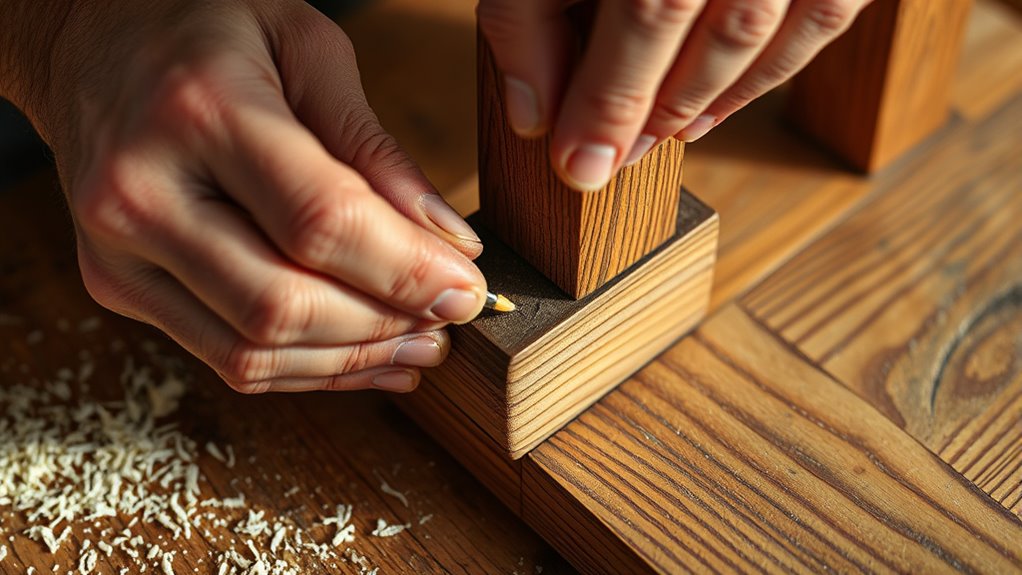
However, in some cases, the joint may have become too worn or damaged for glue alone to hold effectively. If the wood has become splintered or the joint has widened considerably, you might need to reinforce it with wooden pins. Wooden pins, or dowels, provide added stability by anchoring the joint internally. To do this, drill holes through the joint at strategic points, making sure they are aligned and centered. You’ll then insert the wooden pins coated with a bit of wood glue, pressing them into the holes. The pins expand the contact surface and give the joint more strength. After inserting the pins, wipe off any excess glue. Let everything cure fully before putting the chair back into regular use. This method is especially useful for older or heavily used chairs where glue alone might not suffice.
In many cases, a combination of re-gluing and pinning offers the best results. Re-glue the joint first to restore the bond, then reinforce with wooden pins for added security. This dual approach ensures the joint remains tight and stable for years to come. Remember, the key is to work carefully, ensuring proper alignment and curing time, so your chair regains its strength without any wobbling. With patience and the right materials, you can restore your chair’s stability and enjoy a sturdy seat once again. Proper maintenance can also prevent future loosening and extend the lifespan of your furniture.

Gorilla Ultimate Waterproof Wood Glue, Natural Wood Color, 8 Ounce (Pack of 1) – Waterproof for Indoor or Outdoor Projects and Repairs
Use indoors or outdoors: Give your indoor or outdoor projects a Gorilla Tough bond with waterproof Ultimate Gorilla…
As an affiliate, we earn on qualifying purchases.
As an affiliate, we earn on qualifying purchases.
Frequently Asked Questions
How Can I Tell if a Chair Joint Is Loose?
You can tell if a chair joint is loose by checking its stability; if it wobbles or shifts when you apply gentle pressure, it’s likely loose. Look for gaps or separation at the joint, which can result from wood expansion or contraction over time. Also, tap around the joint—any rattling sound indicates looseness, and addressing these issues promptly helps maintain the chair’s strength and prevent further damage.
What Tools Are Best for Re-Pinning Chair Joints?
You should use a pin punch and a hammer to insert new pins into the chair joint, ensuring they’re properly aligned. First, drill out the old pins if needed, then apply wood glue for added stability. Use the pin punch to drive the new pins through the joint, tapping gently with the hammer. This method helps secure loose joints effectively, restoring your chair’s strength.
Are There Safety Concerns When Re-Gluing Furniture?
When re-gluing furniture, safety is a key concern, especially during DIY repairs. You should work in a well-ventilated area, wear gloves and eye protection, and use adhesives as directed to avoid skin or eye irritation. Make sure the furniture is stable and secure before working on it to prevent accidents. Proper safety precautions help protect you and ensure your repairs are effective and long-lasting.
How Long Should Glue Dry Before Using the Chair?
You should let the glue dry for at least 24 hours before using the chair. During the drying time, the glue undergoes the curing process, which is essential for maximum strength. Rushing this step can compromise the joint’s stability. Make sure you follow the manufacturer’s instructions for drying time, as some glues may require longer. Patience ensures your repaired chair remains safe and sturdy for everyday use.
Can Loose Joints Be Fixed Without Professional Help?
Ever wondered if you can fix loose chair joints yourself? Yes, you can handle DIY repairs if the joints aren’t too damaged. Re-gluing or re-pinning can often do the trick with basic tools and patience. However, if the joints are severely damaged or you’re unsure, seeking professional assistance guarantees safety and a lasting fix. Don’t risk further damage—sometimes, calling in a pro is the best choice.

smseace Wooden Dowel Pins with Tapered End with Bevel Angle Groove Wood Pegs – 9 Sizes 6/25inch 5/16inch 3/8inch(6mm, 8mm, 10mm) Used for Crafts, Furniture, Door, DIY
Material: Our wooden dowel pins are made of lotus wood with flutes which eliminate trapped air for superior…
As an affiliate, we earn on qualifying purchases.
As an affiliate, we earn on qualifying purchases.
Conclusion
Next time you notice your chair wobbling, imagine finding that tiny wooden pin inside a box of old tools—suddenly, everything clicks into place. Whether you choose to re-glue or re-pin, both methods can restore your chair’s stability, just like fitting the final puzzle piece. With a little patience, you’ll see your favorite seat become solid again, ready for many more cozy evenings. Sometimes, fixing what’s loose feels like reconnecting a lost piece of your home’s story.

HORUSDY 8-Pack Bar Clamps for Woodworking, 12" and 6" Bar Clamps, Wood Working Clamp Sets, Quick Clamps F Clamp with 150 LBS Load Limit (8-Pack Wood Clamps)
1. The complete set includes 4pcs 6" bar clamps,2pcs 12" bar clamps and 2pcs 6" spring clamps, which…
As an affiliate, we earn on qualifying purchases.
As an affiliate, we earn on qualifying purchases.

22-Pack Stainless Steel L Bracket with 120 Pieces Self-Tapping Screws, Universal Triangular Support Corner Bracket for Wood Furniture, L Brackets for Shelves, Drawers, Cabinets, Tables, and Chairs
SUPERIOR STRENGTH AND DURABILITY: Our corner bracket is made of heavy-duty stainless steel in one piece and has…
As an affiliate, we earn on qualifying purchases.
As an affiliate, we earn on qualifying purchases.