
When choosing between rolling and spraying for woodwork, consider your project size and finish quality. Rolling is faster, requires less equipment, and gives thicker coverage, but it may leave streaks if not done carefully. Spraying offers a smooth, professional look and is great for detailed work, but it takes more setup and can cause overspray. To get the best results, understanding each method’s techniques will help you decide what’s right—continue and learn more.
Key Takeaways
- Rolling provides thicker coverage and is faster for large surfaces, while spraying offers a smooth, detailed finish.
- Spraying requires more equipment setup and skill but results in a more even, professional-looking coat.
- Rolling is easier for DIY projects and touch-ups, but may leave brush marks if not applied carefully.
- Spraying can create overspray and drips, demanding proper technique and protective gear.
- Both methods depend on surface prep and technique for durability and a flawless appearance.
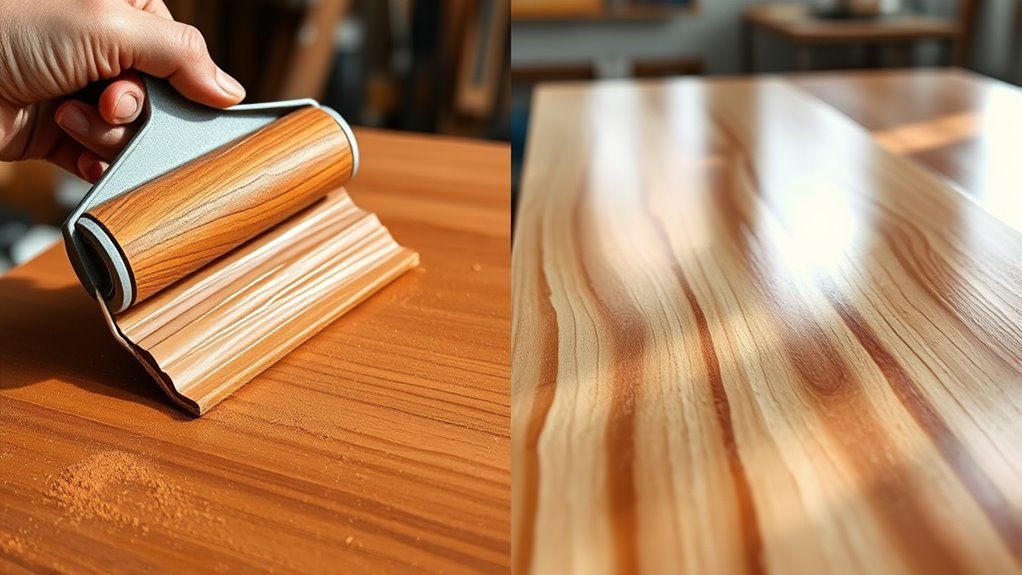
Are you unsure whether to roll or spray your woodwork? Making the right choice depends on several factors, including your project’s scope, desired finish, and your comfort level with each method. Before diving into either approach, focus on surface preparation. Proper surface prep is essential whether you decide to brush, roll, or spray. It ensures smooth, even coverage and helps the finish last longer. Start by thoroughly cleaning the wood surface to remove dust, grease, or old paint. Sand the surface to create a smooth, slightly textured base that helps paint or stain adhere better. Filling any holes or cracks and sanding again ensures a uniform surface, reducing imperfections that could show through the finish. When surface preparation is done correctly, your chosen application method will produce a more professional look. Research shows that meticulous surface prep significantly improves the final appearance and durability of wood finishes.
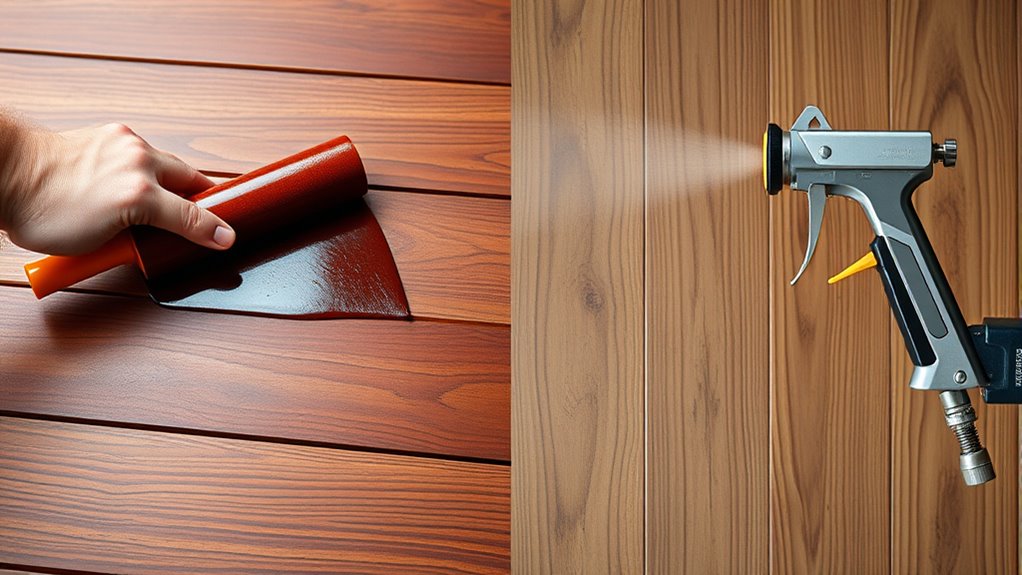
If you lean toward rolling, it’s important to master your brush techniques first. Use a high-quality roller with the appropriate nap length for your project—shorter naps for smooth surfaces and longer ones for textured or rough wood. As you roll, work in small sections, maintaining a wet edge to avoid lap marks. Apply the paint or stain with consistent pressure, and don’t press too hard, which can cause uneven texture. Use a brush to cut in around edges and corners, ensuring clean lines. When rolling, keep a steady hand and work quickly to prevent the coating from drying unevenly, which can lead to streaks or lap marks. Rolling is generally faster for large surfaces, but it requires skill to avoid roller marks and achieve an even finish. It’s especially effective for applying primer or a base coat and can be a good choice if you prefer a thicker, more uniform coat.
Spraying, on the other hand, involves different brush techniques—more about controlling the spray pattern and maintaining a consistent distance from the surface. Proper surface preparation becomes even more critical here, as overspray and drips can be problematic. Always wear protective gear and work in a well-ventilated area. Practice your technique on scrap wood before spraying your project to get a feel for distance, speed, and spray pattern. Keep the spray gun moving steadily to avoid uneven coats and runs. Spraying can deliver a smooth, flawless finish quickly and is ideal for intricate or detailed woodwork. However, it requires more equipment and setup time, and controlling overspray can be challenging if you’re new to it. Additionally, understanding airflow and pressure settings can greatly influence the quality of your spray finish.
Ultimately, whether you choose to roll or spray, mastering your surface preparation and brush techniques will make all the difference. Each method has its advantages, but the key to a professional-looking finish lies in your preparation, technique, and attention to detail.
Frequently Asked Questions
Which Method Offers Better Durability for Outdoor Woodwork?
Spraying typically offers better durability for outdoor woodwork because it creates a smooth, even coat that penetrates better. You should focus on proper primer application before spraying to enhance adhesion and weather resistance. When using brush techniques, guarantee thorough coverage, especially in corners and details, but spraying generally results in a longer-lasting finish because it minimizes brush marks and provides a more uniform layer.
Can Rolling or Spraying Be Used on Delicate or Intricate Wood Designs?
You can use rolling or spraying on delicate or intricate wood designs, but brush techniques are often better for precision. To protect detailed areas, apply masking strategies to cover sections you want to keep clean. Spraying can reach tight spots with proper masking, but rolling may be too rough. For the best results, combine careful masking with gentle brushing or controlled spraying, ensuring your intricate designs stay crisp and beautifully finished.
How Do Paint Fumes Compare Between Rolling and Spraying Techniques?
When comparing paint fumes, spraying generally produces more fumes than rolling, requiring better ventilation to reduce chemical exposure. You should guarantee proper ventilation requirements are met, especially during spraying, to avoid inhaling harmful vapors. Rolling creates fewer fumes, making it safer for indoor use. Always wear a mask and work in well-ventilated areas, regardless of your chosen method, to protect yourself from chemical exposure.
Is There a Significant Difference in Cleanup Time Between the Two Methods?
Cleaning up after painting is like untangling a knot; spraying often takes longer due to overspray and masking, while rolling usually speeds up cleanup. With good surface preparation and proper paint adhesion, you’ll find rolling leaves less mess to deal with afterward. Spraying might require extra time for cleaning equipment and masking, but overall, rolling tends to save you time, making your project smoother and less stressful.
Are There Specific Paints or Stains Better Suited for Each Application?
You should choose paints or stains suited for your application method. For brushing, use high-quality brushes like angled or flat brushes for smooth coverage, guaranteeing good control over details. When spraying, opt for paints and stains compatible with spray equipment, often water-based or thinner formulas. Always check stain compatibility with your wood type to avoid uneven absorption or finishes. Selecting the right brush types and stain compatibility ensures a professional, durable finish.
Conclusion
Ultimately, choosing between rolling and spraying on woodwork is like selecting a brushstroke for your masterpiece. Rolling offers a steady hand, spreading color with gentle assurance, while spraying releases a vibrant burst of energy, covering vast surfaces swiftly. Think of it as dance versus painting—each has its rhythm and charm. Whichever method you pick, trust your instincts and let your craftsmanship shine through, turning your woodwork into a work of art that whispers your personal touch.