TL;DR

Get business pricing on tools and workshop supplies
- Business-only prices and quantity discounts
- Tax-exempt purchasing
- Multiple users, one account, clear invoices
A Hunker report describes cutting empty toilet paper tubes in half and folding the ends to make biodegradable seed-starting cups for bee-friendly flowers. The method is a reuse idea, not a guarantee of more bees; success depends on suitable plants, planting time and growing conditions.
Hunker’s gardening report describes how to turn empty toilet paper tubes into seed-starting cups for flowers that bees and other pollinators visit. The low-cost reuse project gives gardeners a way to start pollinator-friendly plants from seed while keeping the cardboard tubes out of the trash, though the report does not provide evidence that the method itself increases bee populations.
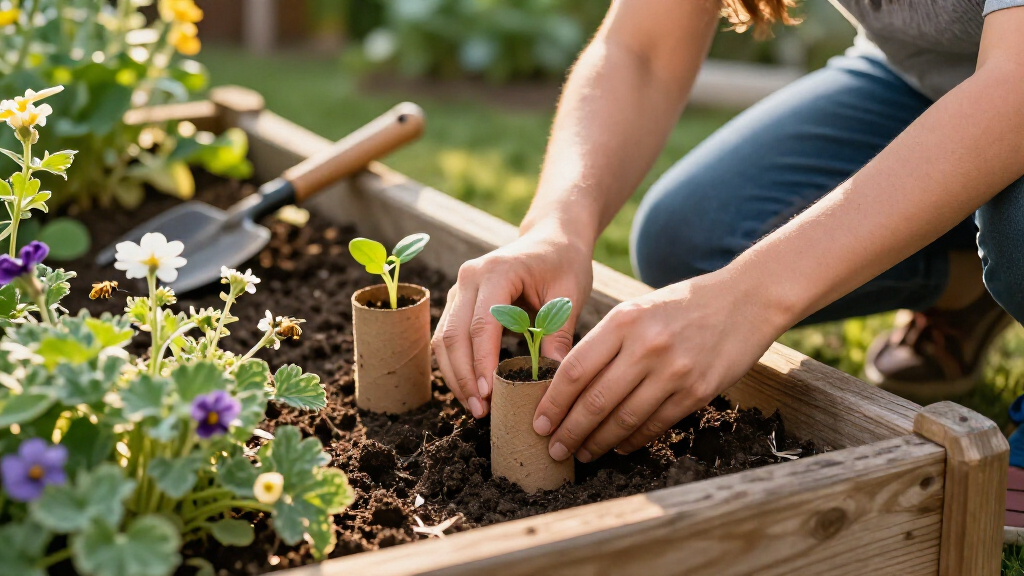
The steps are simple: cut a cardboard tube in half to make two short cups, then make half-inch vertical cuts around one end and fold the resulting flaps inward to form a base. Fill the cups with seed-starting mix, sow seeds according to the packet directions, and stand the cups in a shallow tray. An empty lettuce tray or shoebox lid can serve as the tray, according to the report.
Water the mix until moist and put the tray on a sunny windowsill or under a grow light. Hunker says seedlings can generally be moved outdoors once they are a few inches tall and have developed their first set of true leaves, but advises waiting until the last frost has passed. Gardeners should follow the seed packet for sowing depth and timing, since different flowers have different growing requirements.
The report names cosmos, calendula, daisies and hollyhocks as examples used by YouTube creator Charlotte in a video from LifesFood. It also lists zinnias, black-eyed Susans and garden phlox as other possible choices. The source says many bee-friendly flowers can be planted in spring after frost danger, while some are better sown in fall. It does not specify which varieties are best for every location.
A Low-Cost Start for Pollinator Flowers
For gardeners, the practical appeal is reusing a household item as a container for starting flowers from seed. The cardboard tubes are untreated, according to Hunker, and can be planted along with seedlings, where they break down in soil. That can avoid removing a young plant from a plastic pot, although the report does not compare the environmental effects of different seed-starting containers.
The larger purpose is to grow flowers that provide resources to pollinators. Hunker describes bees as important to pollination and the food system, but the article’s method is a gardening suggestion rather than a measured conservation intervention. Whether a planting helps local bees will depend on the flowers selected, bloom timing, local conditions and other factors; the report offers no data on bee visits or population changes.
Products Worth Considering

Philips Hue Bridge Pro Smart Lighting Hub

Philips Hue Festavia Globe Outdoor String Lights, 32 Bulbs, 91 ft

Dyson V8 Cordless Vacuum
As an affiliate, we earn on qualifying purchases.
From Cardboard Tube to Flower Bed
The gardening idea appears in a Hunker article titled “Don’t Toss Old Toilet Paper Rolls: Use Them To Create A Bee-Friendly Garden.” Its instructions are based in part on a video by Charlotte, the creator behind LifesFood, who demonstrates using halved tubes to raise seedlings. The report presents the approach as a way to grow flowers, not as a new scientific finding or a formal recommendation from a gardening or conservation agency.
Hunker suggests choosing plants that support pollinators and mentions flowers in yellow, blue, purple or white as options bees are said to favor. Its list spans several flowering plants, but it does not provide regional planting calendars or identify native species. Gardeners may need to check local guidance and the seed packet to match a plant to their climate and sowing season.
“Toilet paper tubes make ideal seed starters, as they are the perfect width and height, especially after being cut in two.”
— Hunker, reporting on toilet paper tube seed starters
What the Gardening Guide Does Not Establish
The report does not say how many bees a garden grown this way might attract, or whether using cardboard tubes produces better seedling growth than other containers. Its description of the cups as suitable seed starters is practical guidance, not a result from a controlled trial.
It also gives no location-specific advice on plant suitability, frost dates or seasonal timing. Flower varieties and sowing schedules can differ by climate, so the general spring-after-frost guidance may not fit every plant or region. The source does not explain whether tubes with inks, adhesives or other treatments should be avoided; it specifically describes the recommended tubes as untreated cardboard.
Check Seed and Local Planting Guidance
Anyone trying the project can begin by checking seed packets for sowing depth, light needs and planting dates, then use local frost information to decide when seedlings can go outside. When plants are ready, Hunker advises making a hole about twice as wide as the tube and roughly as deep, placing the seedling in the ground or a container with the cardboard cup, backfilling and watering.
Hunker also mentions a separate reuse option: turning leftover toilet paper tubes into a bee hotel. The report does not provide instructions for building one or discuss which designs suit local bee species, so readers would need additional, species-specific guidance before treating that as a habitat project.
Key Questions
How do you make a seed starter from a toilet paper roll?
Cut the tube in half, make half-inch cuts around one end, and fold the flaps inward to create a base. Add seed-starting mix and sow seeds following the packet instructions.
When should seedlings be planted outdoors?
Hunker says to wait until seedlings are a few inches tall and have their first true leaves, and to plant them outdoors after the last frost. Check local conditions and the seed packet, as timing varies by plant and region.
Which flowers does the report suggest?
Examples include cosmos, calendula, daisies and hollyhocks. The report also names zinnias, black-eyed Susans and garden phlox as possible pollinator-friendly choices.
Can the cardboard tube be planted with the seedling?
Yes. The report says the seedling can be planted with its tube in the soil, where untreated cardboard will break down. It does not give comparative evidence about this method versus other containers.
Source: rss