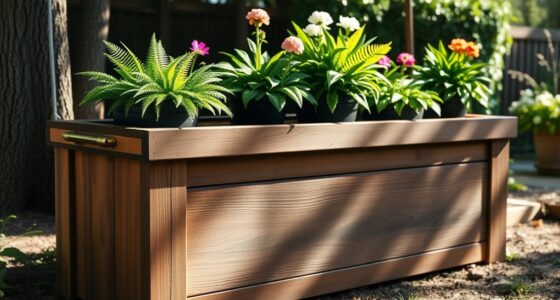
To construct a cedar raised garden bed for vegetables, start by selecting durable, rot-resistant cedar wood. Plan your layout considering sunlight, water access, and accessibility, then cut and assemble the boards using galvanized screws. Fill the bed with quality soil enriched with compost, manure, and organic matter. To keep your garden thriving, regularly replenish the soil and control pests with organic methods. Continue exploring steps to ensure your garden’s success from the ground up.
Key Takeaways
- Select durable cedar wood and plan the layout considering sunlight, water access, and accessibility.
- Cut cedar boards smoothly and assemble the frame securely with galvanized screws or nails.
- Fill the bed with high-quality soil mixed with compost, organic matter, and organic amendments for fertility.
- Incorporate organic pest control methods and beneficial plants to protect vegetables naturally.
- Maintain soil health and monitor plants regularly for pests and diseases to ensure a healthy vegetable garden.

Creating a cedar raised garden bed is a straightforward way to improve your gardening space and guarantee healthy plant growth. When you choose cedar, you’re selecting a durable, naturally rot-resistant wood that will stand up to the elements for years. Before building, plan your layout carefully—consider sunlight exposure, accessibility, and proximity to water sources. Once you have your dimensions, cut your cedar boards accordingly, ensuring all edges are smooth to prevent splinters. As you assemble the frame, use galvanized screws or nails to secure the corners firmly, creating a sturdy structure that can withstand weather changes. Incorporating appropriate soil selection methods can further enhance plant health and yield. After constructing the box, it’s important to fill it with high-quality soil, but don’t forget to enhance it with composting tips. Incorporate organic matter like compost, aged manure, and peat moss to boost soil fertility. This not only provides essential nutrients for your vegetables but also improves soil structure and water retention. Mix the compost thoroughly into your soil before planting, and consider adding a layer of compost on top as a mulch to suppress weeds and retain moisture. Regularly replenishing compost during the growing season will help maintain nutrient levels and promote vigorous plant growth. Pest control methods are equally crucial in maintaining a healthy garden bed. Start by inspecting your plants frequently for signs of pests or disease. Use physical barriers like row covers or floating row nets to prevent pests from reaching your vegetables. Planting companion plants, such as marigolds or basil, can naturally repel common pests. If you encounter infestations, opt for organic solutions like neem oil or insecticidal soap to minimize chemical use. Keep your garden tidy by removing weeds and debris that can harbor pests. Good airflow and proper spacing between plants also help reduce the risk of fungal diseases and pest problems. In addition to pest control, maintaining a healthy ecosystem around your cedar bed can help keep pests at bay naturally. Encourage beneficial insects like ladybugs and predatory beetles, which feed on harmful pests. Mulching around your plants not only conserves moisture but also creates a barrier that makes it harder for pests to reach your vegetables. Remember, consistent monitoring and early intervention are key to managing pests effectively. With these strategies—smart composting tips and effective pest control methods—you’ll create a thriving, productive vegetable garden that’s resilient and sustainable.
cedar raised garden bed kit
As an affiliate, we earn on qualifying purchases.
As an affiliate, we earn on qualifying purchases.
Frequently Asked Questions
How Do I Choose the Best Cedar Wood for My Garden Bed?
You should choose cedar wood that’s naturally rot-resistant and sustainably harvested for your garden bed. Look for cedar with tight grain and minimal knots to enhance garden bed aesthetics. Consider cedar wood treatment options—untreated cedar offers a natural look, but pressure-treated cedar might last longer. confirm the cedar is free from chemical treatments that could harm your vegetables. This way, your garden bed stays durable and beautiful for years.
What Tools Are Essential for Constructing a Cedar Garden Bed?
As you lay out your plan, grab your power drill and measuring tape—these are your essential tools. The drill powers through cedar planks like a hot knife through butter, making assembly smooth and quick. The measuring tape guarantees precise cuts and perfect alignment, giving your garden bed a sturdy, professional look. With these tools in hand, you’re ready to bring your garden vision to life, step by step.
How Deep Should My Cedar Raised Bed Be for Vegetables?
You should make your cedar raised bed at least 12 to 18 inches deep for vegetables. This depth allows for proper soil preparation, giving your plants enough room for roots to grow and access nutrients. Additionally, it helps with pest control by reducing ground contact and preventing pests from burrowing in. Confirm the bed is deep enough to accommodate your chosen vegetables’ root systems for a healthy, productive garden.
Can I Build a Cedar Garden Bed on Uneven Ground?
Imagine your garden as a canvas waiting for vibrant growth; yes, you can build a cedar garden bed on uneven ground. To guarantee success, focus on soil preparation and drainage solutions. Level the foundation by adding soil or gravel underneath, then adjust your bed’s position. This approach creates a stable, nurturing environment, turning uneven terrain into a thriving, colorful masterpiece that supports healthy vegetable growth.
How Do I Maintain and Prolong the Life of My Cedar Garden Bed?
To extend your cedar garden bed’s lifespan, establish a consistent watering schedule to prevent wood rot and keep your plants healthy. Regularly inspect for pests and apply natural pest prevention methods to avoid damage. Treat the wood with a non-toxic sealant if needed, and ensure proper drainage. By maintaining these practices, you’ll safeguard your cedar bed from decay and pests, helping it last for many seasons.
galvanized screws for outdoor wood
As an affiliate, we earn on qualifying purchases.
As an affiliate, we earn on qualifying purchases.
Conclusion
As you stand beside your new cedar garden bed, its rich scent and sturdy walls contrast sharply with the wild, untamed weeds nearby. The neat, defined space you’ve created promises a bountiful harvest, a proof to your effort. Just as the vibrant vegetables will flourish within, your hard work has transformed chaos into order. This garden isn’t just a bed for plants; it’s a peaceful retreat, a small oasis of growth amid the surrounding wilderness.
organic vegetable garden soil mix
As an affiliate, we earn on qualifying purchases.
As an affiliate, we earn on qualifying purchases.
garden pest control organic
As an affiliate, we earn on qualifying purchases.
As an affiliate, we earn on qualifying purchases.