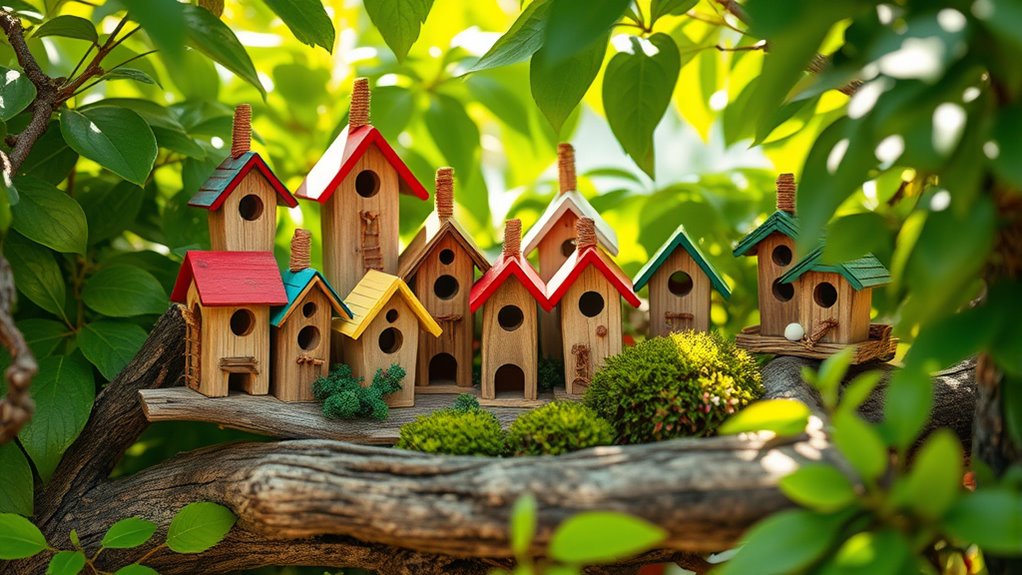

To build a birdhouse village for local species, choose durable, weather-resistant materials like cedar and avoid plastics. Place the houses 5 to 10 feet high on poles with predator guards, away from dense shrubs, and in shaded, sheltered spots. Regularly inspect and clean the houses, and reinforce predator deterrents if needed. Ensuring proper placement and maintenance helps your feathered neighbors thrive — discover more tips to create a safe, thriving bird community.
Key Takeaways
- Use durable, weather-resistant materials like cedar or composite wood for long-lasting birdhouses.
- Mount houses at 5-10 feet with predator guards to protect nesting birds from predators.
- Place birdhouses in shaded areas near natural cover, avoiding dense shrubbery and direct sunlight.
- Ensure entry holes are species-appropriate to attract target birds and prevent predator access.
- Regularly inspect, clean, and maintain houses and predator deterrents to promote healthy nesting environments.

Creating a birdhouse village is a rewarding project that brings beauty and life to your outdoor space. When you set out to build this charming habitat, you’ll want to consider the birdhouse materials carefully. Using durable, weather-resistant materials like cedar, hardwood, or composite woods ensures your birdhouses last through seasons and provide a safe environment for your feathered visitors. Avoid pressure-treated wood or plastics that can contain harmful chemicals, which may pose risks to the birds. Smooth edges and appropriate ventilation are also key features that promote healthy nesting habits.
Choose durable, weather-resistant materials like cedar and hardwood for safe, long-lasting birdhouses.
As you place your birdhouses, predator prevention becomes a top priority. You’ll want to position them thoughtfully—placing houses at the right height, typically 5 to 10 feet off the ground, helps keep predators like cats and raccoons at bay. Mounting houses on poles with baffles or using predator guards around the entry hole can further deter unwanted visitors. Make certain the entrances are just the right size for the targeted species; too large, and predators might squeeze in, too small, and the birds won’t fit comfortably.
When selecting locations for your birdhouse village, think about the environment and natural cover. Position the houses away from dense shrubbery that predators can hide in, but close enough to trees or tall grasses that birds feel protected. Avoid placing houses in direct sunlight or in exposed areas where weather could threaten the nests. Instead, choose shaded spots that provide some shelter from wind and rain, helping to keep the nests dry and safe.
Regular maintenance is essential for predator prevention. Check your birdhouses periodically to make sure they’re secure and in good condition. Clean out old nests after each breeding season to reduce disease and discourage pests. If you notice signs of predator activity, consider reinforcing the house with additional predator guards or relocating it to a safer spot. Keeping the surrounding area tidy, free of clutter and accessible food sources for predators, also helps protect your birds.
cedar birdhouse for nesting
As an affiliate, we earn on qualifying purchases.
As an affiliate, we earn on qualifying purchases.
Frequently Asked Questions
Which Native Bird Species Will Benefit Most From This Village?
You’ll notice that native species like chickadees, bluebirds, and wrens benefit most from this village. By providing safe nesting sites, you support native bird conservation and promote local species diversity. These birds often struggle with habitat loss, so your efforts help maintain healthy populations. With your active involvement, you create a crucial refuge, ensuring these native species thrive and continue enriching your local ecosystem.
How Do I Prevent Predators From Accessing the Birdhouses?
To prevent predators from accessing your birdhouses, implement predator deterrent strategies like installing baffles or metal guards around the entry holes. Use predator-proof design features such as sturdy, enclosed nesting boxes and smooth, climb-proof surfaces. Position the birdhouses away from branches or tall plants that predators could use for cover. Regularly check for signs of tampering or damage, and keep the area clean to discourage predators from lurking nearby.
What Materials Are Safest for the Birds and Environment?
Did you know that using eco-friendly paints can reduce harmful chemical exposure for birds? You should choose natural, non-toxic sealants and untreated wood for your birdhouses. These materials are safe for the environment and the birds, preventing health issues. Avoid paints with VOCs or chemicals, and opt for sustainable, biodegradable options. This way, you create a healthy habitat that supports local species and protects our ecosystems.
How Often Should I Clean and Maintain the Birdhouses?
You should follow a maintenance schedule of cleaning birdhouses at least once a year, ideally in late winter or early spring. Use gentle cleaning techniques, like removing old nesting materials and scrubbing with a solution of water and mild soap. Check for damage and make repairs promptly. Regular maintenance keeps the birdhouses safe and inviting for local species, ensuring they stay healthy and comfortable throughout the nesting season.
Can This Village Support Year-Round Nesting for Local Birds?
Think of your birdhouse village as the Garden of Eden for local birds. It can support year-round nesting if you design it for seasonal nesting and climate adaptability. By providing varied nesting sites and considering local weather patterns, you create a safe haven for birds throughout the year. Keep the houses well-maintained, and you’ll encourage local species to thrive and return each season, just like nature intended.
predator guard for birdhouses
As an affiliate, we earn on qualifying purchases.
As an affiliate, we earn on qualifying purchases.
Conclusion
So, after all your effort creating this birdhouse village, you might find it amusing that the real residents could be more interested in your garden than your charming structures. Ironically, your tiny village might end up attracting more human visitors than the birds themselves. But hey, even if the birds ignore your hard work, at least you’ll have a lovely little spot to enjoy nature’s comedy—because sometimes, the best plans are the ones that don’t quite go as expected.
weather-resistant birdhouse materials
As an affiliate, we earn on qualifying purchases.
As an affiliate, we earn on qualifying purchases.
birdhouse mounting pole with baffle
As an affiliate, we earn on qualifying purchases.
As an affiliate, we earn on qualifying purchases.