
Understanding wood movement charts helps you predict how wood responds to changes in humidity and temperature. By knowing how different species and grain orientations expand or contract, you can plan joints, gaps, and finishes to prevent seasonal gaps. Monitoring moisture content guarantees stable conditions, reducing warping or cracking. Using these charts allows you to make smarter material choices and adapt your project for long-lasting results. Keep exploring to get detailed tips on applying this knowledge effectively.

Get tools and workshop supplies delivered free — and shop member deals
- Fast, free delivery on millions of items
- Access to Prime Big Deal Days deals on October 6–7
- Prime Video, Amazon Music and more included
Key Takeaways
- Study species-specific movement patterns to anticipate how different woods expand or contract with humidity changes.
- Use grain orientation to plan joint placement and avoid gaps caused by seasonal expansion.
- Monitor moisture content regularly with a moisture meter to manage wood movement proactively.
- Incorporate expansion gaps in wide boards or panels to accommodate seasonal swelling and shrinking.
- Consult wood movement charts during design to select appropriate species and plan for environmental effects.
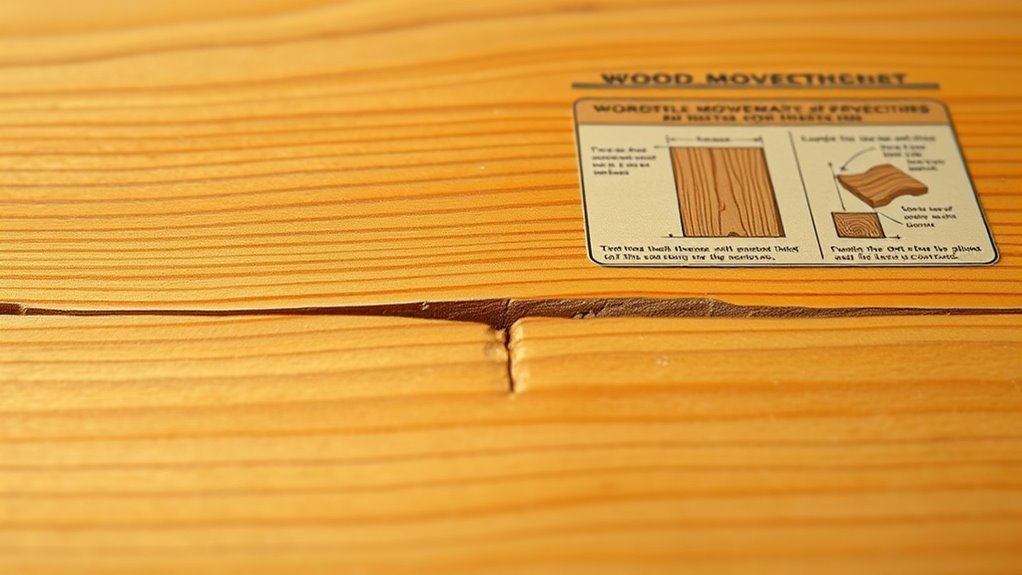
Understanding wood movement charts is essential for anyone working with wood, as they provide critical information about how different types of wood expand and contract with changes in humidity and temperature. When you’re designing or building with wood, you need to account for grain expansion caused by fluctuating moisture content. Wood naturally reacts to its environment; as humidity rises, the moisture content within the wood increases, causing it to swell. Conversely, when humidity drops, the moisture content decreases, and the wood shrinks. These shifts can lead to gaps, warping, or cracking if not properly anticipated. Wood movement charts serve as indispensable tools to predict these behaviors, allowing you to plan joints, gaps, and finishes accurately.
Understanding wood movement charts helps predict expansion and contraction caused by humidity changes.
By understanding these charts, you gain insight into how specific species respond to environmental changes. For example, hardwoods like oak tend to have relatively moderate grain expansion, whereas softer woods like pine often experience more significant moisture-related movement. Recognizing these differences helps you select the appropriate wood for your project, especially in environments with fluctuating humidity levels. If you’re working on furniture or flooring, knowing the typical moisture content ranges at which a particular wood expands or contracts can help you set tolerances that prevent seasonal gaps or buckling.
It’s also important to understand that grain orientation influences how much a piece of wood will expand or contract. Grain expansion is more pronounced perpendicular to the grain than along its length. This means that when you’re measuring or planning joints, you should consider the grain direction to minimize movement-related issues. For example, with wide boards, you might leave expansion gaps along the width to accommodate grain expansion during humid months, then close those gaps when the environment dries out.
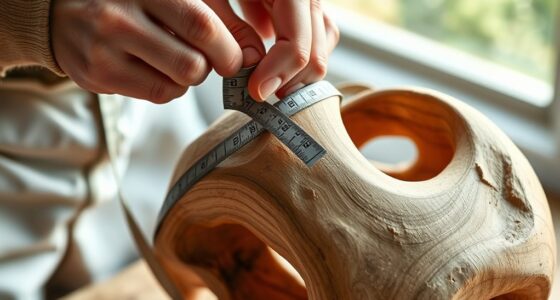
Monitoring moisture content is key to managing wood movement effectively. You should regularly check the moisture levels in your wood, especially when storing or working on projects over different seasons. Using a moisture meter can help you keep track of real-time moisture content, so you can adjust your finishing or assembly processes accordingly. The goal is to keep the moisture content within a stable range that minimizes movement, especially if your project will be exposed to varying environmental conditions.
Ultimately, understanding wood movement charts empowers you to make smarter choices about wood selection, grain orientation, and environmental controls. This knowledge helps prevent seasonal gaps, ensuring your projects stay durable, functional, and aesthetically pleasing over time. Anticipating how grain expansion and moisture content influence wood behavior will save you time, money, and frustration, making your woodworking endeavors more successful.
As an affiliate, we earn on qualifying purchases.
Frequently Asked Questions
How Accurate Are Wood Movement Charts Across Different Wood Species?
You might wonder about the accuracy of wood movement charts across different species variations. These charts are generally reliable, but measurement accuracy can vary due to factors like moisture content and grain direction. While they provide valuable estimates, keep in mind that individual pieces may behave differently. To minimize surprises, always consider these variations and use charts as a guideline rather than an absolute prediction for seasonal gaps.
Can Environmental Changes Alter Wood Movement Predictions?
Did you know that climate variability can cause humidity fluctuations of up to 20%, impacting wood movement predictions? Yes, environmental changes like shifts in temperature and humidity can alter how wood behaves, making charts less precise. You should consider these factors when planning projects, as unpredictable climate patterns may lead to seasonal gaps despite accurate charts. Staying aware of these influences helps you better anticipate and manage wood’s natural expansion and contraction.
Are There Specific Tools to Measure Wood Movement in Real-Time?
You can measure wood movement in real-time using tools like moisture meters and digital hygrometers. Moisture meters help you assess the moisture content in wood, while digital hygrometers monitor ambient humidity levels that influence wood expansion or contraction. By regularly using these tools, you stay informed about environmental changes, allowing you to adjust conditions and prevent gaps or warping in your woodworking projects.
How Do Seasonal Gaps Affect Furniture Longevity?
Seasonal gaps can reduce your furniture’s longevity because humidity fluctuations cause wood expansion and contraction. When humidity drops, the wood shrinks, creating gaps that can weaken joints and cause cracks over time. You can prevent this by maintaining stable humidity levels, which minimizes wood movement. Proper care, like using humidifiers or dehumidifiers, helps your furniture resist seasonal gaps and stay in good condition longer.
What Are Common Mistakes When Interpreting Wood Movement Charts?
When interpreting wood movement charts, you might make calibration errors or misinterpret data, leading to incorrect conclusions. You should carefully verify that the chart’s scale and measurements match your specific wood type and conditions. Avoid rushing through the analysis, as misreading seasonal variations can cause you to overlook potential gaps. By double-checking data and ensuring accurate calibration, you reduce the risk of misinterpretation and improve your understanding of how wood responds to environmental changes.
Conclusion
By mastering wood movement charts, you hold the compass to navigate seasonal shifts, turning potential gaps into seamless harmony. Think of these charts as your map through a forest of fluctuating moisture, guiding your hands to craft with confidence. When you understand the dance of wood’s expansion and contraction, you’re no longer at its mercy but in tune with nature’s rhythm. Embrace this knowledge, and your projects will stand resilient through every seasonal song.
Halloween Picks
halloween
As an affiliate, we earn on qualifying purchases.