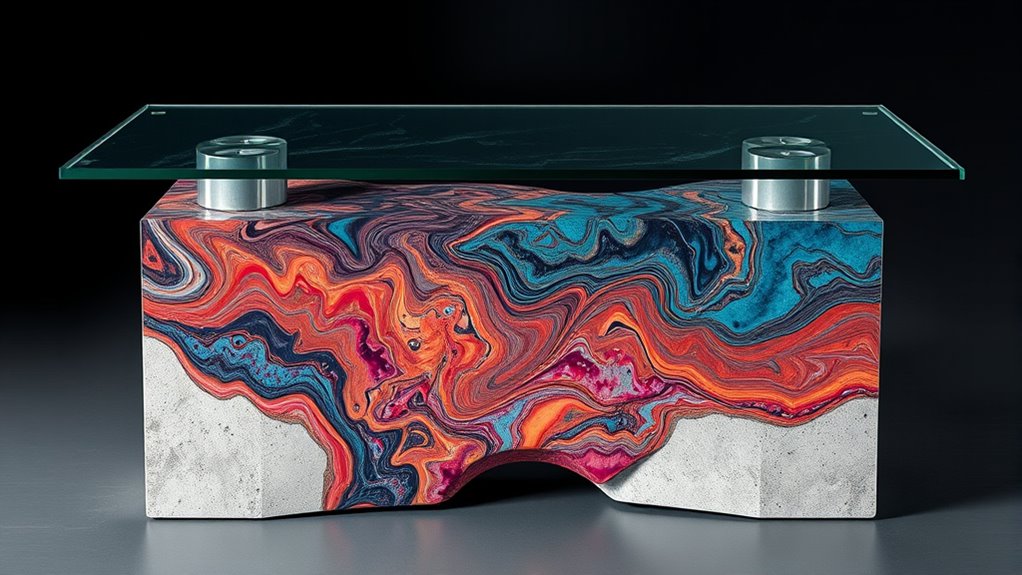

Using glass, resin, and concrete in mixed-material furniture allows you to create pieces that are both stylish and highly durable. Glass adds transparency and lightness, resin offers vibrant colors and ergonomic shapes, while concrete provides strength and modern appeal. Combining these materials not only enhances aesthetics but also supports sustainability by incorporating recycled content. If you keep exploring, you’ll discover how these materials can be seamlessly integrated for innovative, eco-friendly, and functional furniture designs.
Key Takeaways
- Combining glass, resin, and concrete enhances aesthetic appeal through transparency, color, and industrial texture.
- These materials support eco-friendly design by incorporating recycled content and sustainable sourcing.
- The mix offers durability and longevity, reducing the need for frequent replacements.
- Each material allows for ergonomic and functional shaping, improving comfort and usability.
- Blending materials creates versatile, visually balanced furniture that is both stylish and practical.
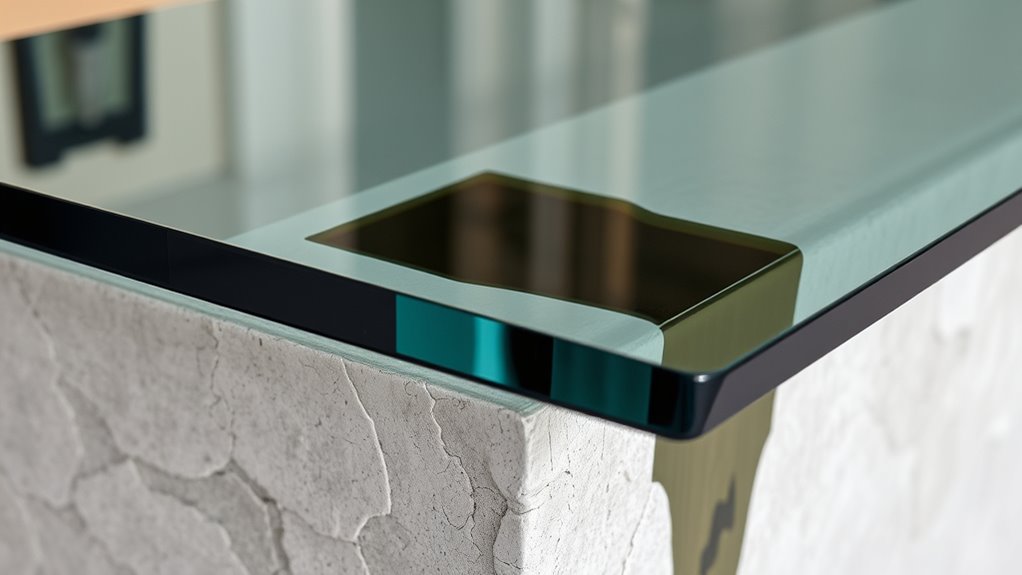
Have you ever wondered how combining different materials can enhance your furniture’s style and durability? When you incorporate glass, resin, and concrete into your pieces, you’re not just creating visually striking furniture—you’re also making a conscious choice that aligns with sustainability practices. These materials often have a longer lifespan and can be sourced or recycled in ways that reduce environmental impact. For example, recycled glass can be used in resin or embedded into concrete, giving new life to materials that might otherwise end up as waste. This approach supports eco-friendly design and helps you build a more sustainable living space.
Using these materials also opens the door to ergonomic design, ensuring that your furniture isn’t just beautiful but also functional and comfortable. Glass surfaces, when integrated thoughtfully, create sleek, smooth tables or shelving units that are easy to clean and maintain. Resin, with its versatility, allows for the creation of ergonomic contours and supportive shapes that conform to the human body, making chairs or lounge furniture more comfortable. Concrete, often considered heavy and rigid, can be molded into ergonomic forms that provide both support and aesthetic appeal. When combined properly, these materials can be shaped to optimize comfort, reducing strain and promoting better posture. Additionally, understanding the properties of materials through material science can help in designing more durable and sustainable furniture pieces.
Blending glass, resin, and concrete creates ergonomic, stylish furniture that enhances comfort and supports better posture.
The aesthetic appeal of mixed-material furniture largely depends on how well you balance these elements. Glass adds transparency and lightness, making a space feel more open. Resin introduces vibrant colors or unique textures, giving each piece a personalized touch. Concrete lends a sense of solidity and modernity, grounding the design with its raw, industrial charm. By carefully blending these materials, you can create furniture that stands out visually while also serving practical purposes.
Moreover, the durability of glass, resin, and concrete means your furniture can withstand daily wear and tear, extending its lifespan considerably. This longevity is a key aspect of sustainability practices, reducing the need for frequent replacements and minimizing waste. When choosing mixed-material furniture, you’re making a statement about quality and environmental consciousness. Plus, these materials are adaptable; they can be molded or finished in various ways to fit your specific style and ergonomic needs.
In the end, blending glass, resin, and concrete is about more than just aesthetics. It’s a thoughtful approach that combines sustainability practices with ergonomic design principles, ensuring your furniture is both beautiful and functional for years to come.
Frequently Asked Questions
How Do Glass, Resin, and Concrete Impact Furniture Weight?
You’ll find that glass, resin, and concrete substantially impact furniture weight due to their material durability. Glass adds a sleek, aesthetic appeal but can be quite heavy, making furniture sturdier yet less portable. Resin is lighter but still durable, offering a balance of weight and strength. Concrete is the heaviest, providing exceptional durability and a modern look, but it can make furniture cumbersome to move while enhancing its aesthetic appeal.
Are Mixed-Material Furniture Pieces Environmentally Sustainable?
You might be surprised to learn that about 90% of mixed-material furniture can be recycled, making it quite sustainable. While these pieces often use eco-friendly materials, recyclability concerns and material sourcing ethics still matter. By choosing responsibly sourced components and considering end-of-life options, you can reduce environmental impact. Overall, mixed-material furniture can be a sustainable choice if you stay mindful of these factors and prioritize eco-conscious brands.
How Do These Materials Affect Furniture Maintenance and Cleaning?
You’ll find that cleaning mixed-material furniture requires specific tips to maintain its appearance. Use gentle cleaners to protect material durability, especially on glass and resin surfaces. For concrete, avoid harsh chemicals that can cause staining or damage. Regular dusting and wiping with a soft cloth keep the furniture looking fresh. Following these cleaning tips helps preserve the durability of each material, ensuring your piece remains stylish and functional for years.
What Are the Latest Design Trends Involving These Materials?
You’ll love the latest design trends showcasing innovative surface finishes that highlight material durability. Expect sleek, minimalist styles blending glass, resin, and concrete for a modern aesthetic. Designers are experimenting with textured finishes and vibrant colors to add personality while maintaining practicality. These trends not only elevate your furniture’s visual appeal but also enhance its longevity. Embrace these fresh ideas to create striking, durable pieces that stay stylish over time.
Can These Materials Be Customized for Specific Interior Styles?
Yes, you can customize these materials for specific interior styles by choosing from various material color options and surface finishing techniques. For a modern look, opt for sleek, polished finishes and neutral colors. If you prefer a rustic vibe, go for textured surfaces and earthy tones. Combining different surface finishes, like matte or glossy, allows you to tailor each piece to perfectly match your interior style.
Conclusion
By combining glass, resin, and concrete, you create furniture that’s both functional and striking. These mixed materials bring unique textures and durability to any space, showing that beauty often lies in contrast. Remember, “A house is built with walls, but a home is built with love,” and your choices in materials reflect that love for creativity and innovation. Embrace these combinations to craft pieces that tell your story and stand the test of time.