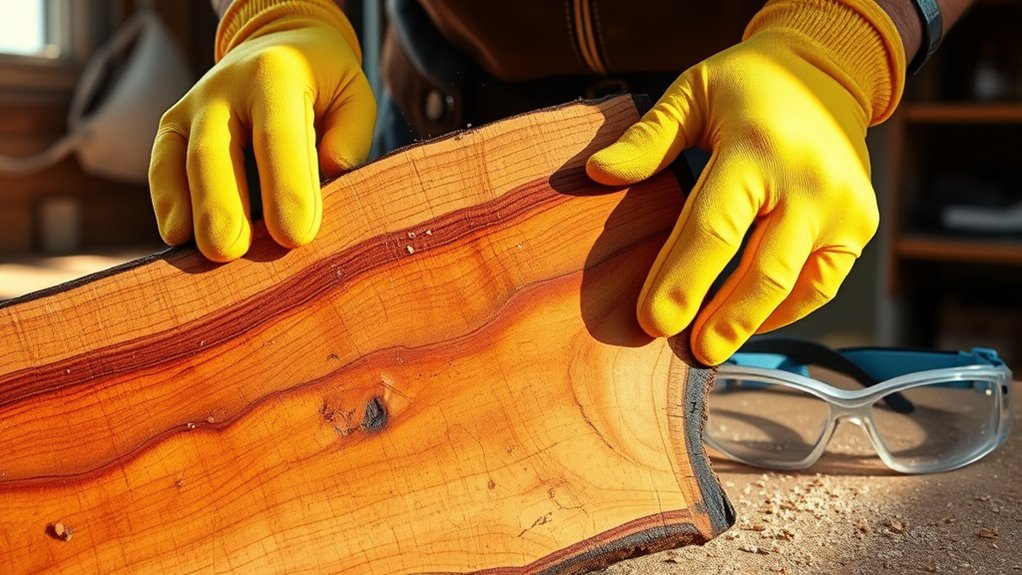

When handling exotic woods, protect yourself by always wearing PPE like respirators, gloves, and eye protection to guard against airborne toxins and allergens. Work in well-ventilated spaces and use dust extraction tools to minimize airborne dust. Wash your hands thoroughly after handling and dispose of dust properly to avoid skin contact or inhalation. Keep your workspace clean and monitor for any allergic reactions. To learn more about how to stay safe, continue exploring practical safety tips for working with these materials.
Key Takeaways
- Always wear appropriate PPE, including respirators, gloves, and eye protection, when handling exotic woods.
- Work in well-ventilated areas and use dust extraction systems to minimize airborne dust exposure.
- Regularly replace filters in masks and ensure PPE fits properly for effective protection.
- Wash hands thoroughly after handling exotic woods and dispose of dust and scraps safely.
- Be aware of specific allergens and toxins in each wood type, and stop work if you experience symptoms.

When working with exotic woods, safety should always be your top priority because these materials often contain natural toxins or allergens that can cause health issues. One of the most immediate hazards is wood dust, which becomes airborne during cutting, sanding, or shaping. Inhalation of this dust can lead to respiratory problems, allergic reactions, or even long-term conditions like occupational asthma. To prevent these risks, you need to prioritize respiratory protection. Wearing a high-quality dust mask or respirator designed for fine particles is essential whenever you’re working with exotic woods. Make sure the respirator fits well and filters out small particles effectively, as poorly fitting masks can allow dust to bypass the filter and be inhaled.
Beyond respiratory protection, you should also be mindful of how you handle the wood itself. Always work in a well-ventilated area to disperse airborne dust and reduce inhalation risks. Using dust extraction systems or shop vacuums equipped with HEPA filters can markedly lower the amount of dust in your workspace. When sanding or cutting, take frequent breaks to step outside or into a clean environment to minimize airborne dust exposure. Wearing safety goggles and a dust mask together provides a more extensive defense against airborne particles and potential irritants.
Work in a well-ventilated space and use HEPA-equipped dust extraction systems for safety.
Handling exotic woods with care also means paying attention to the material’s specific hazards. Some woods contain natural toxins that can cause skin irritation, allergic reactions, or respiratory issues upon prolonged exposure. Always wear gloves when handling these woods to prevent skin contact, and wash your hands thoroughly afterward. Keep the workspace clean and free of dust buildup by regularly sweeping or vacuuming. Proper disposal of dust and scraps prevents accidental inhalation or contact later on. Additionally, understanding the toxins and allergens present in certain woods can help you take more targeted safety measures.
You should be aware of the potential allergenic properties of certain woods. Even if you’ve worked with them before, repeated exposure can increase sensitivity. If you notice any symptoms like sneezing, coughing, or skin irritation, stop working immediately and consult a healthcare professional. Wearing appropriate PPE—personal protective equipment—such as respirators, gloves, and eye protection, becomes a critical part of your routine safety measures.
N95 respirator mask for woodworking
As an affiliate, we earn on qualifying purchases.
As an affiliate, we earn on qualifying purchases.
Frequently Asked Questions
Are There Any Long-Term Health Effects From Exposure to Exotic Woods?
You might wonder if long-term effects from exposure to exotic woods exist. Chronic exposure can lead to respiratory issues, skin irritation, or allergic reactions that worsen over time. Some woods contain toxins or allergens that build up with repeated contact, increasing health risks. To protect yourself, use proper PPE and handle woods carefully. Ignoring these precautions could result in lasting health problems from ongoing exposure.
How Can I Identify if I Have a Wood Allergy?
If you’re wondering how to identify a wood allergy, pay attention to allergy symptoms like skin irritation, redness, or itching after exposure. You should see a healthcare professional for skin testing, which can confirm if you have an allergy. Keep track of when symptoms occur, especially after working with certain woods, and mention these details during your visit to help diagnose your condition accurately.
What Are the Best Disposal Methods for Contaminated Wood Scraps?
When it comes to wood scrap disposal, you should prioritize contaminated wood management by safely sealing scraps in heavy-duty plastic bags. Avoid burning or dumping them improperly. Label the bags clearly, and follow local hazardous waste disposal regulations. Proper wood scrap disposal minimizes health risks and environmental impact. Always handle contaminated wood with gloves and protective gear, and consult your local waste authority for specific disposal guidelines.
Do All Exotic Woods Require the Same PPE Precautions?
Not all exotic woods require the same PPE precautions, as wood dust and toxins vary. You should assess each type for potential allergens or toxins, adjusting your PPE accordingly. For some woods, a simple mask and gloves suffice, but others may demand respirators or protective clothing. Always research specific wood properties and follow recommended safety guidelines to guarantee proper protection while working with different exotic woods.
Can I Use Natural Remedies to Treat Skin Reactions From Exotic Woods?
Imagine your skin as a delicate canvas, vulnerable to the subtle strokes of exotic woods. When skin reactions appear, you might consider natural remedies like aloe vera or chamomile to soothe irritation. While these can provide relief, they may not fully address allergic responses. Always monitor your skin’s reaction, and consult a healthcare professional if symptoms persist, ensuring safe and effective treatment for your skin’s health.
Conclusion
As you handle exotic woods, remember that safety isn’t just a precaution—it’s a shield you carry with you. Like finding a hidden gem among the grains, proper PPE and awareness turn potential hazards into mere shadows that fade in the sunlight of your care. When you respect these precautions, you’re not just working—you’re creating a safe haven where your craftsmanship and well-being naturally intertwine, just like the wood’s grains seamlessly blending in your masterpiece.