In woodworking, choosing the right adhesive depends on your project needs. PVA glue is easy to use for indoor furniture and offers a flexible bond. Epoxy creates super-strong, gap-filling joints ideal for structural work, while CA glue cures quickly for small repairs and delicate tasks. Each has unique properties suited for specific applications. If you want to understand more about how each adhesive fits into your projects, keep exploring the details.
Key Takeaways
- PVA glue is ideal for indoor woodworking projects, offering ease of use and clear drying with moderate strength.
- Epoxy adhesives provide high strength and gap-filling capabilities, suitable for structural joints and repairs.
- CA glue sets quickly, perfect for small, precise repairs but less suitable for large surfaces or load-bearing applications.
- Proper application involves uniform spreading and adequate clamping time, especially for epoxy and PVA.
- Selection depends on project needs, environmental factors, and material compatibility, with epoxy and CA offering faster bonding than PVA.
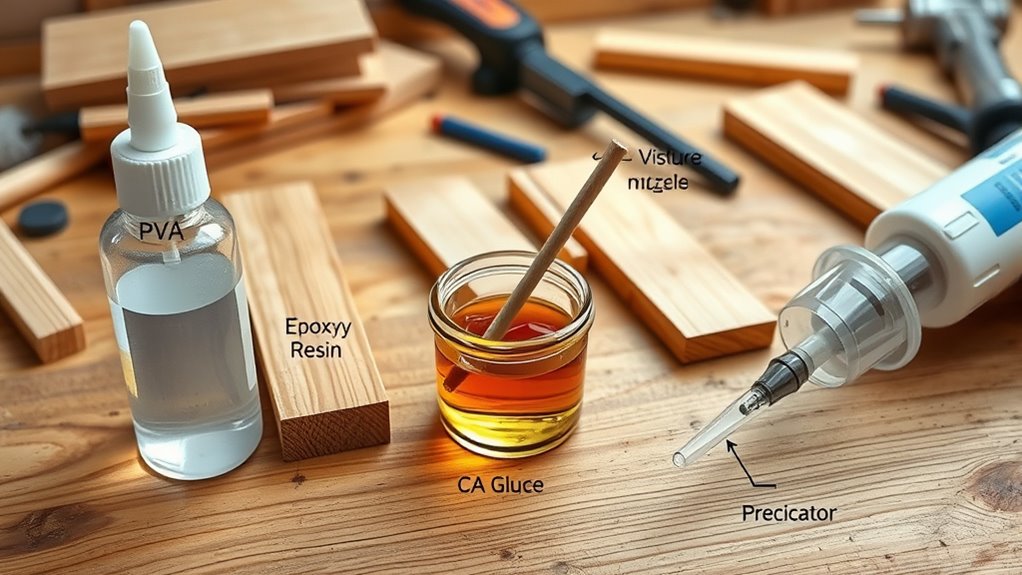
When it comes to woodworking, choosing the right adhesive is indispensable for ensuring your projects are strong and durable. Your choice impacts not just the strength of the final piece but also the overall wood joint durability over time. Different adhesives have unique properties, so understanding how they work and how to apply them correctly can make a significant difference. Adhesive application techniques are crucial—they determine how well the glue bonds, how much is used, and how cleanly the joint comes together.
PVA glue, or polyvinyl acetate, is the most common woodworking adhesive. It’s easy to use, dries clear, and offers good initial tack, making it ideal for many projects. When applying PVA, make sure to spread it evenly across both surfaces you’re joining. Using a brush or a glue roller helps achieve uniform coverage, which is essential for creating strong, durable joints. Clamping is indispensable; you want to keep the pieces pressed together for at least 30 minutes to ensure proper bonding. Excess glue can be wiped off with a damp cloth before it dries, preventing mess and ensuring a clean finish. PVA is best suited for indoor projects where moisture resistance isn’t critical. Its flexibility and ease of use make it perfect for furniture, cabinetry, and general woodworking.
Epoxy adhesives, on the other hand, are two-part systems consisting of resin and hardener. They create extremely strong bonds and fill gaps effectively—ideal for structural joints or repairs where maximum strength is needed. When working with epoxy, you need to mix the components thoroughly according to the manufacturer’s instructions. This step is essential for maximum curing and bond strength. Once mixed, apply the epoxy quickly, as it sets rapidly. Use a small brush or a spatula to spread the adhesive evenly, ensuring it penetrates the joint thoroughly. Clamping is indispensable; keep the pieces pressed tightly until the epoxy fully cures, which can take several hours. Epoxy is especially useful for bonding different materials, filling voids, or making repairs where wood glue might fall short. Its high strength and durability make it a reliable choice for joints that must withstand stress and environmental factors.
Cyanoacrylate glue, or CA glue, is a fast-setting adhesive perfect for quick repairs and small projects. It bonds almost instantly, so precision and speed are key during application. To get the best results, apply a thin layer of CA glue to one surface and press the pieces together immediately. Be careful—it’s easy to use too much or get excess squeeze-out, which can be cleaned with acetone or a damp cloth before it hardens. CA glue is excellent for small joints, inlays, or delicate repairs, but it’s not suitable for large surfaces or structural applications due to its brittle nature. Use it sparingly and only when speed is essential, and always clamp briefly to guarantee a tight bond.

Titebond Original Wood Glue 5063, Industry Standard for Woodworking, Furniture Repair/Assembly, Construction, Home Repair or Modeling, 8 oz
This item is a Franklin International 5063 Titebond Original Wood Glue, 8-Ounce
As an affiliate, we earn on qualifying purchases.
As an affiliate, we earn on qualifying purchases.
Frequently Asked Questions
How Long Do Different Wood Glues Take to Fully Cure?
The drying time and curing period vary depending on the glue type. PVA glue typically dries within 30 minutes to an hour, but it fully cures in about 24 hours for maximum strength. Epoxy usually takes 5 to 6 hours to dry, with a complete curing period of 24 to 72 hours. CA glue dries almost instantly, but for full strength, you should wait at least 24 hours.
Are There Environmental Considerations When Choosing an Adhesive?
Think of choosing an adhesive like selecting a trusty sidekick for your woodworking adventure. You should consider biodegradability concerns and VOC emission issues, as some glues release harmful fumes or aren’t eco-friendly. Opt for environmentally conscious options to reduce your carbon footprint. By doing so, you’re not only protecting your workspace but also helping preserve the planet, making your project both sustainable and safe for everyone involved.
Can Adhesives Be Used on Non-Wood Materials?
Yes, adhesives work on non-wood materials, enabling you to bond alternative materials like metal, plastic, or glass effectively. When doing multi-material bonding, choose the right adhesive for each surface to guarantee strong, durable bonds. For example, epoxy suits metal and ceramics, while CA glue works well on plastics and small parts. Always check the adhesive’s compatibility with your materials to attain the best results.
How Do Temperature and Humidity Affect Adhesive Performance?
Temperature and humidity greatly influence adhesive performance. Climate impact can cause adhesives to weaken or cure improperly if stored in unsuitable storage conditions. High humidity may cause some glues to become too runny or fail to bond, while low temperatures slow curing. To guarantee ideal results, store your adhesives in a cool, dry place and use them within their recommended temperature ranges, especially in fluctuating climate conditions.
What Safety Precautions Should Be Taken When Handling These Glues?
Safety first, so don’t cut corners when handling glues. Always wear safety gear like gloves and goggles to protect your skin and eyes. Verify proper ventilation requirements are met to avoid inhaling fumes, especially with epoxy and CA glue. Work in a well-ventilated area, and keep containers sealed when not in use. Taking these precautions keeps your workspace safe and your projects successful—no shortcuts here!

Gorilla 2 Part Epoxy, Clear Epoxy, 0.85 Ounce Syringe (Pack of 1) – 5 Minute Set, Incredibly Strong Bonding
Dries clear: Our Gorilla Tough epoxy resin dries clear for a clean finish and incredibly durable hold; perfect…
As an affiliate, we earn on qualifying purchases.
As an affiliate, we earn on qualifying purchases.
Conclusion
Choosing the right adhesive can seem intimidating, but with PVA, epoxy, and CA glue, you’re well-equipped for any project. Don’t worry if one type doesn’t work perfectly—practice and experimentation will boost your confidence. Remember, each adhesive has its strengths, so select based on your specific needs. With a little patience, you’ll master their use and create durable, professional-looking woodworking pieces. Trust in these options, and enjoy your woodworking journey!

Starbond Medium Super Glue Pro Kit (2 oz) – Strong, Fast, All-Purpose CA Glue (Cyanoacrylate Adhesive) – with Anti-Clog Cap, Precision Tips & Extra Nozzles for Woodworking, Quick Fixes & Hobby Models
✅ PREMIUM SUPER GLUE, SINCE 1988: For over 35 years, Starbond CA glues have been produced in smaller…
As an affiliate, we earn on qualifying purchases.
As an affiliate, we earn on qualifying purchases.
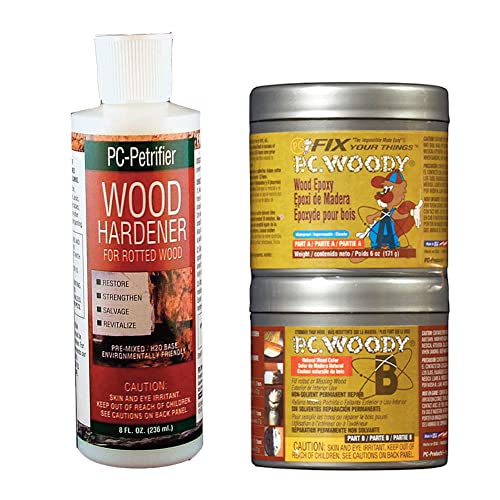
PC-Products Wood Repair Epoxy Paste and Wood Hardener Kit, PC-Woody 6 oz and PC-Petrifier 8 oz
8 oz PC-Petrifier water-based wood hardener with 6 oz PC-Woody wood repair in a convenient bundle for all…
As an affiliate, we earn on qualifying purchases.
As an affiliate, we earn on qualifying purchases.