
When comparing carbide inserts to straight knives, you’ll find that carbide offers better long-term value because it lasts longer, reducing replacement and maintenance costs. While the initial investment is higher, their durability and resistance to dulling mean fewer disruptions and sharper cuts over time. Straight knives may seem cheaper upfront, but their frequent replacements and sharpening add up. Want to uncover how technology keeps improving these tools and saving you money? Keep exploring.
Key Takeaways
- Carbide inserts have a higher initial cost but offer longer lifespan and reduce replacement frequency, lowering long-term expenses.
- Straight knives are cheaper upfront but require frequent replacements and maintenance, increasing overall costs over time.
- Carbide inserts are easier to sharpen and maintain, saving time and operational costs compared to straight knives.
- Better cut quality from carbide inserts reduces downstream processing and defect-related costs.
- Technological advancements improve durability and performance of carbide tools, further decreasing long-term maintenance and replacement costs.
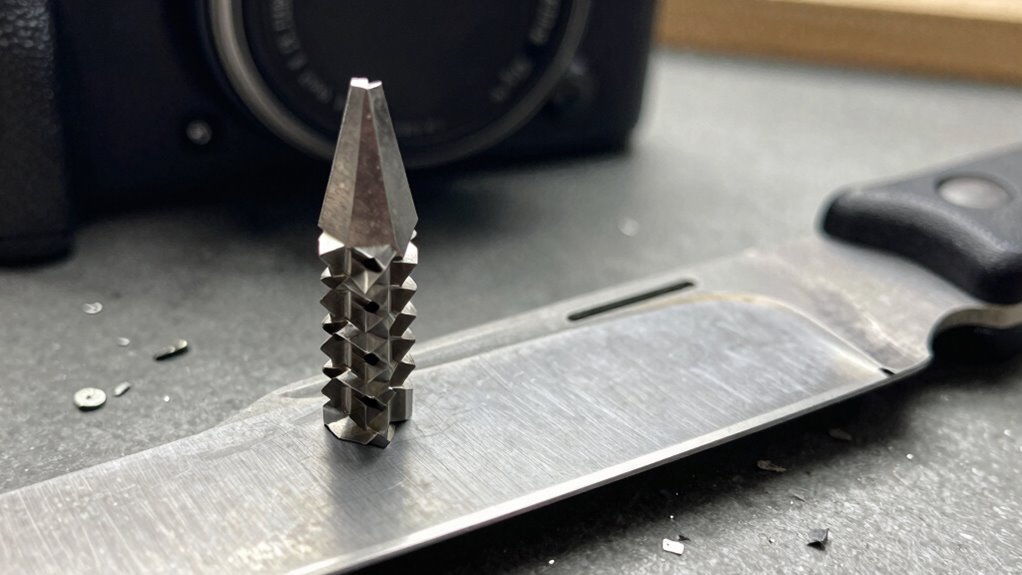
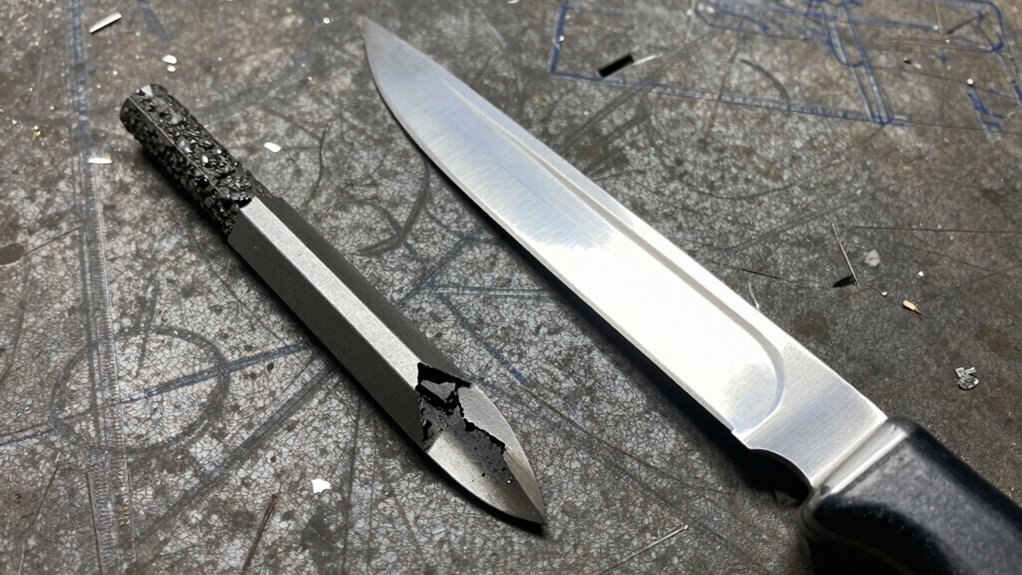
Are carbide inserts or straight knives better suited for your cutting needs? When making this decision, considering the long-term costs is essential. One of the most significant factors is tool lifespan. Carbide inserts generally last longer because they’re made from a harder material that resists wear and deformation. This means you won’t need to replace them as often as straight knives, which tend to dull faster and require more frequent sharpening or replacement. Although the initial cost of carbide inserts might be higher, their durability can lead to savings over time by reducing the frequency of replacements. On the other hand, straight knives, being less expensive upfront, might seem more economical initially, but their shorter tool lifespan can drive up maintenance costs as you need to replace or sharpen them more frequently. Additionally, advancements in European cloud innovation are driving the development of more durable manufacturing tools, which can influence your long-term cost considerations. Maintenance costs also play a vital role in your decision. Carbide inserts are easier to maintain since they retain their sharpness longer, requiring less frequent sharpening. When sharpening is necessary, it’s typically quicker and less costly because the material is more resistant to damage. Additionally, carbide inserts usually produce cleaner cuts, which can reduce downstream processing and improve overall product quality. Conversely, straight knives often demand more attention to keep them in optimal condition. They may require more frequent sharpening and, over time, may need more extensive maintenance or even replacement if they become chipped or deformed. This ongoing upkeep can add up, especially if your operation involves high-volume cutting.

Zouzmin CCMT21.51 CCMT060204 DCMT21.51 DCMT070204 Carbide Turning Inserts,CCMT Insert DCMT Insert Mutilayer Coated Lathe Replacement Inserts for Lathe Turning Tool Holder Boring Bar,20 Pieces
Material: made of solid carbide with mutilayer coated, offer long life and faster cutting speed, low friction coefficient,…
As an affiliate, we earn on qualifying purchases.
As an affiliate, we earn on qualifying purchases.
Frequently Asked Questions
How Do Maintenance Costs Compare Between Carbide Inserts and Straight Knives?
Maintenance costs for carbide inserts tend to be lower because of their superior blade durability, meaning you replace them less often. Straight knives usually require more frequent replacements due to quicker wear and tear, increasing your overall maintenance expenses. Over time, carbide inserts save you money by reducing replacement frequency, while straight knives demand more frequent upkeep, leading to higher ongoing costs.
Which Option Offers Better Performance in High-Volume Production?
You’ll find that carbide inserts generally offer better performance in high-volume production, thanks to their superior blade durability and cutting precision. They withstand continuous use longer without dulling, maintaining sharpness and efficiency. While straight knives may work initially, they tend to wear faster, leading to frequent replacements. For sustained, high-volume operations, carbide inserts provide consistent quality and reduce downtime, making them the smarter choice for long-term performance.
Are There Specific Materials Better Suited for Carbide Inserts?
You’ll find that carbide inserts work best with materials like steels, cast iron, and certain alloys because of their high material compatibility. They enhance cutting efficiency by maintaining sharpness longer, reducing tool changes and downtime. For softer materials like plastics or woods, straight knives may be more suitable. Always consider your material’s hardness and machining requirements to select the most effective cutting tool for your production needs.
How Does Operator Skill Impact Long-Term Costs?
Did you know that operator training can reduce long-term costs by up to 30%? Your skill variability directly impacts cutting efficiency and tool longevity. When you invest in proper training, you minimize mistakes and optimize tool performance. Skilled operators can spot issues early, prevent unnecessary replacements, and maintain consistent quality. So, enhancing your skills isn’t just about safety—it’s a smart way to save money over time.
What Environmental Considerations Affect the Choice Between the Two?
You should consider the recycling impact and energy consumption when choosing between carbide inserts and straight knives. Carbide inserts tend to last longer, reducing waste and energy used in manufacturing replacement parts, which benefits the environment. Straight knives may require frequent replacements, increasing waste and energy consumption. Opting for the more durable option can lower your environmental footprint by minimizing waste and conserving energy over time.

ckpsms Brand – #10E-Strong H-3A fit for Eastman Straight Cutting Machine 10" Knife Blades – 12 Pack
Pack of 12 Eastman Straight Cutting Machine Knives.
As an affiliate, we earn on qualifying purchases.
As an affiliate, we earn on qualifying purchases.
Conclusion
Ultimately, choosing between carbide inserts and straight knives is like picking between a fleeting spark and a steady flame—you’ll want the one that burns brightest over time. While carbide offers durability and long-term savings, straight knives might seem cheaper upfront but could cost more in the long run. Remember, the true cost isn’t just dollars—it’s how your choice shapes your efficiency and quality. So, which will you fuel for the journey ahead?

Rockler Carbide Cutter Honing System – Diamond Sharpening Tool with Magnetic Grip for Carbide Insert Cutters, Precision Sharpener for Turning Tools, Chisel Honing & Edge Touch-Ups
Restore Carbide Edges: The Rockler Carbide Cutter Honing System lets you refresh dull carbide insert cutters quickly and…
As an affiliate, we earn on qualifying purchases.
As an affiliate, we earn on qualifying purchases.
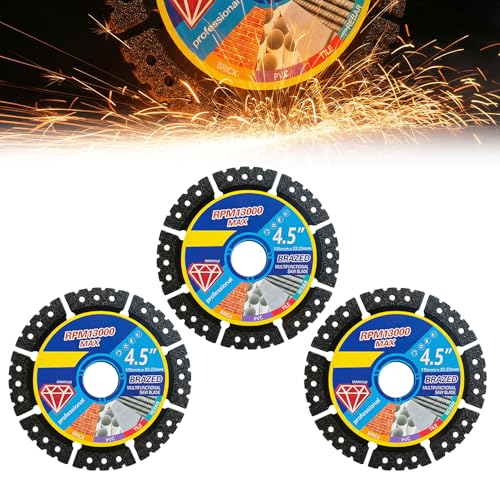
4.5" Multi-Purpose Saw Blades, 2026 Upgrade Stainless Steel Welded Outer Diamond Sand High Durability, 4.5" Diamond Blade, Angle Grinder Discs (3)
Metal-Focused Cutting Performance: The blade features a steel inner ring and diamond sand outer ring. It works well…
As an affiliate, we earn on qualifying purchases.
As an affiliate, we earn on qualifying purchases.