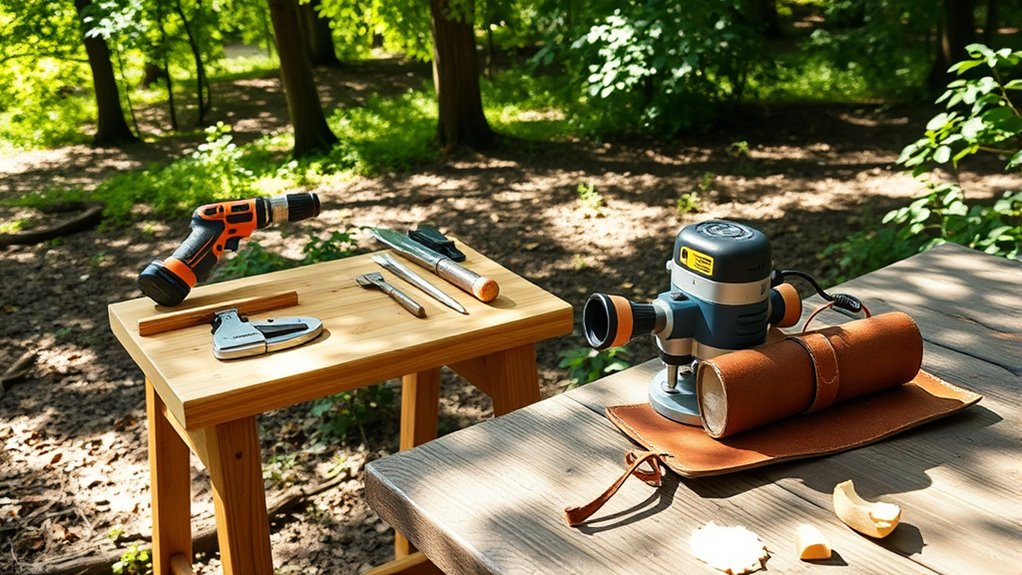

When woodworking on the road, focus on portable tools like rechargeable cordless drills, saws, and sanders that don’t need outlets and are lightweight for easy transport. Use compact storage solutions such as multi-tool kits and stackable containers to stay organized and save space. Foldable workbenches or portable sawhorses create stable work surfaces wherever you go. With the right gear and techniques, you can keep projects moving smoothly no matter where your journey takes you. Keep exploring to discover more tips for stress-free, on-the-go woodworking.
Key Takeaways
- Use rechargeable cordless tools like drills, saws, and sanders for mobility without power cords.
- Opt for compact, multi-tool kits and stackable storage to organize and transport efficiently.
- Incorporate portable work surfaces such as folding workbenches and sawhorses for versatile setups.
- Select lightweight, durable materials for gear to ensure protection and ease during travel.
- Plan projects around portable power and storage solutions to work effectively in various locations.
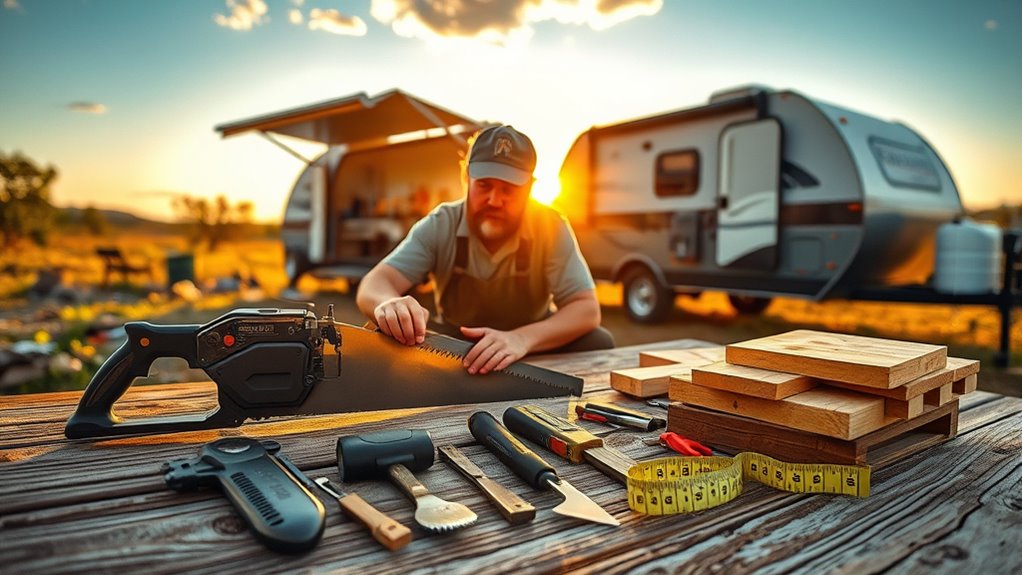
Ever wondered how you can enjoy woodworking without being tied to a dedicated workshop? The secret lies in embracing travel-friendly tools that prioritize portability and efficiency. With the right gear, you can craft, carve, and assemble on the go, making your projects possible no matter where life takes you. The key is selecting tools that offer portable power and compact storage, so you’re never burdened with bulky equipment or limited by space constraints.
First, focus on tools powered by rechargeable batteries. Cordless drills, saws, and sanders are game-changers for traveling woodworkers. They eliminate the hassle of cords and outlets, giving you freedom to work anywhere. Many brands now offer lightweight, compact models that deliver ample power for most projects, ensuring you don’t compromise on performance. These tools often come with convenient carrying cases that fit easily into your luggage or backpack, making setup and packing straightforward. With portable power, you can work confidently outdoors or in tight spaces without worrying about access to electricity.
Rechargeable cordless tools offer powerful, portable woodworking solutions anywhere.
Next, think about storage options that maximize space efficiency. A well-organized toolkit with compact storage solutions keeps everything accessible yet minimizes bulk. Look for multi-tools or combo kits that combine several functions—like a drill, screwdriver, and oscillating tool—into one lightweight device. This reduces the number of separate tools you need to carry, saving space and weight. Additionally, investing in small, stackable containers or padded cases ensures your tools stay protected and organized during transit. These compact storage options also help you quickly find what you need, avoiding time-consuming searches and keeping your workflow smooth.
Another aspect to consider is portability in your work surface. Folding workbenches or portable sawhorses provide stable platforms without taking up too much space when packed away. They’re designed to set up quickly and fold flat for easy storage, making them ideal for workshops on the move. Pair these with your lightweight tools, and suddenly you have a versatile workspace anywhere—at a campsite, in a garage, or even on a balcony. Incorporating lightweight, durable materials into your gear can further enhance portability and resilience during travel.
Ultimately, traveling with woodworking tools requires a strategic approach focused on portable power and compact storage. This way, you’re not weighed down by heavy equipment or limited by space, but instead empowered to pursue your craft wherever inspiration strikes. With the right selection, woodworking on the road becomes an exciting, attainable adventure rather than a logistical challenge. Whether you’re fixing, creating, or exploring new techniques, these travel-friendly tools keep your passion alive, no matter where you are.
Frequently Asked Questions
How Do I Ensure Safety When Woodworking in Unfamiliar Environments?
You can guarantee safety by always wearing personal protective equipment like goggles, ear protection, and masks, especially in unfamiliar environments. Before starting, check the workspace for hazards and keep tools organized to prevent accidents. Stay emergency prepared by knowing the location of first aid supplies and exits. Maintain focus, avoid distractions, and follow safety guidelines diligently to protect yourself while woodworking on the road.
What Are the Best Ways to Transport Delicate Tools Safely?
Did you know that properly transporting tools reduces damage by up to 60%? To keep delicate tools safe, use protective cases with padded compartments, which absorb shocks and prevent scratches. Secure tools firmly, avoid loose fits, and consider custom foam inserts for extra protection. Always double-check closures and handles before travel, ensuring your tools stay intact and ready for use, no matter where your woodworking journey takes you.
How Can I Manage Waste and Dust on the Go?
You can manage waste and dust on the go by using portable waste disposal solutions like compact trash bins or sealed containers. To contain dust, employ dust containment methods such as portable dust collectors, vacuum systems, or plastic barriers around your workspace. Regularly empty waste and clean dust collection areas to keep your workspace safe and tidy, ensuring minimal mess and health risks during your travels.
Are There Specific Wood Types Recommended for Travel Projects?
Did you know that lightweight woods make up 60% of portable projects? For travel projects, choose woods like pine, cedar, or birch because they’re lightweight yet durable. Your wood selection directly impacts project durability and ease of transport. These options are easy to work with, resist warping, and won’t add unnecessary weight. Opting for these woods guarantees your project stays sturdy while remaining manageable on the road.
How Do I Maintain Tool Accuracy With Limited Setup Space?
To maintain tool accuracy with limited setup space, focus on compact calibration methods and portable jigs. Use small, precise calibration tools that fit easily in your workspace, ensuring your tools stay accurate. Portable jigs help you set up quick, consistent cuts without the need for large setups. Regularly check your tools’ calibration, and keep your workspace organized to make fine adjustments swiftly, maintaining precision on the go.
Conclusion
With the right tools and techniques, your woodworking journey becomes a portable adventure, turning any space into a creative haven. Think of your toolkit as a trusty compass, guiding you through endless possibilities wherever you go. As you carve and craft on the road, each project blooms like a wildflower in a vast field, reminding you that innovation and craftsmanship can flourish anywhere under the open sky. Let your passion for woodworking be your guiding star on this traveling voyage.