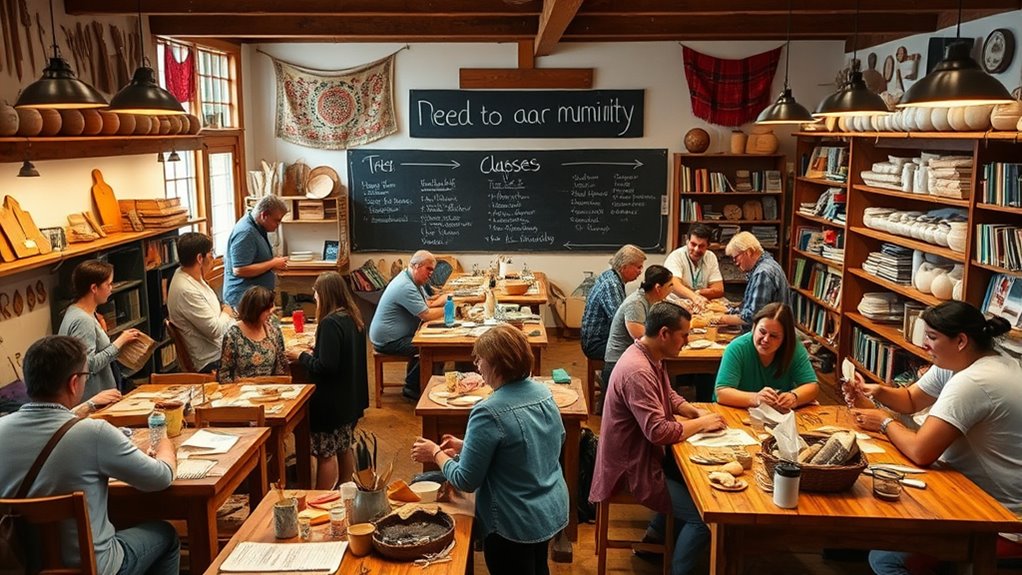

Building a community starts with engaging in local guilds, classes, and meetups where you can connect with others who share your interests. These gatherings create opportunities to learn, share skills, and develop meaningful relationships—both in person and online. Active participation strengthens bonds, fosters trust, and encourages collective growth. By getting involved regularly, you’ll help build a resilient and vibrant community that supports everyone. Keep exploring how these connections can transform your experience further.
Key Takeaways
- Local guilds, classes, and meetups serve as vital hubs for fostering connections and shared experiences within communities.
- In-person and virtual gatherings enhance relationship-building, promoting active involvement and community cohesion.
- Skill sharing through these groups strengthens individual abilities and encourages collective growth.
- Participating in shared interests builds friendships and networks that extend beyond scheduled events.
- Active engagement creates inclusive, resilient communities that thrive through ongoing collaboration and mutual support.
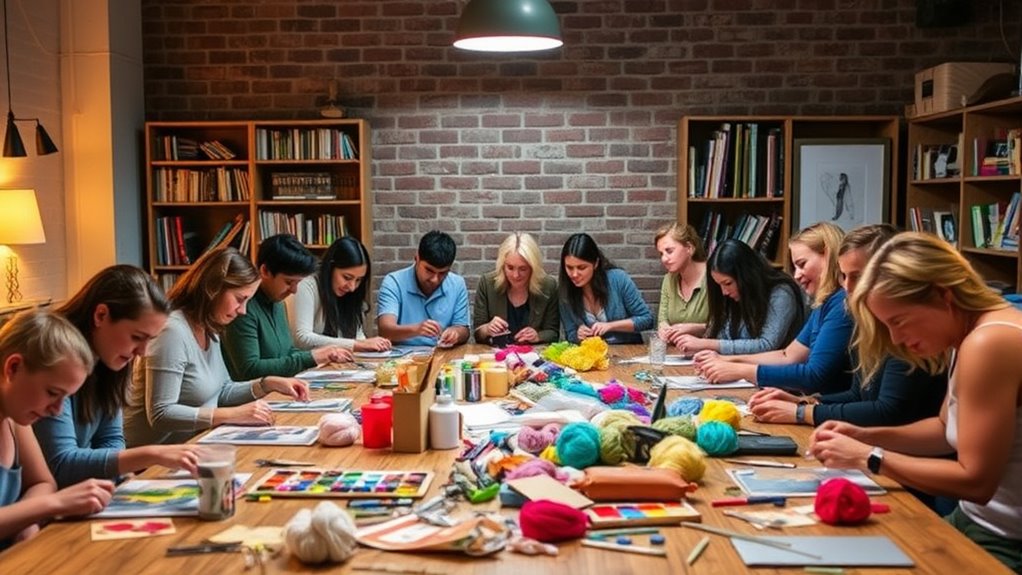
Have you ever wondered what truly strengthens a community? It’s often the connections we build and the shared experiences that create a sense of belonging. One powerful way to foster this sense of unity is through local guilds, classes, and meetups. These gatherings serve as hubs where people come together to learn, share, and grow collectively. Whether you’re participating in a traditional in-person event or engaging virtually, the core idea remains the same: building relationships through active involvement.
Community strength grows through shared experiences, connections, and active participation in local groups and events.
Virtual collaboration has revolutionized how communities connect, especially when in-person meetings aren’t always possible. Online platforms enable you to join groups across distances, breaking down geographical barriers that once limited participation. Through video calls, chat forums, and collaborative tools, you can contribute your skills and learn from others in real time. This continual exchange of knowledge, or skill sharing, becomes a catalyst for community growth. When you share your expertise or pick up new ones from others, you’re not just gaining individual skills—you’re weaving yourself into a larger fabric of shared purpose.
Skill sharing within these groups doesn’t just benefit individuals; it strengthens the entire community. When you teach others what you know, you reinforce your own understanding, and in turn, you help elevate the group’s collective ability. Similarly, when you receive advice or guidance, you’re gaining confidence and competence, which encourages further participation. This cycle of giving and receiving fosters trust and camaraderie that can last well beyond the meetings. It’s an empowering process that transforms casual participants into active contributors, fueling a vibrant, collaborative environment. Additionally, utilizing privacy policies ensures that members’ personal information remains protected as they engage online.
Local guilds and classes often serve as more than just educational spaces—they’re social communities where friendships blossom through shared interests. As you attend regular meetups, you’ll find that the bonds formed are rooted in mutual support and common goals. These relationships often extend beyond the scheduled events, creating networks of encouragement and collaboration. Whether you’re learning a craft, exploring new hobbies, or developing professional skills, the community becomes a source of motivation and inspiration.
Building community through these avenues isn’t just about acquiring skills; it’s about creating a space where everyone feels valued and included. By engaging in both virtual and physical gatherings, you help foster an environment of openness and collective growth. Your participation helps to sustain the cycle of skill sharing, collaboration, and connection that makes communities resilient and vibrant. In the end, it’s your active involvement that truly strengthens the communal bonds and transforms a group into a thriving, supportive network.

Someone Still Loves You Boris Yeltsin
As an affiliate, we earn on qualifying purchases.
As an affiliate, we earn on qualifying purchases.
Frequently Asked Questions
How Do I Start a New Guild or Meetup in My Area?
To start a new guild or meetup, first choose a local venue that fits your group’s size and vibe. Reach out to nearby businesses or community centers for partnership opportunities, which can provide space or resources. Promote your event through social media, local forums, and flyers. Be clear about your group’s purpose, and encourage members to invite friends. Consistent meetings will help grow your community and strengthen connections.
What Are Effective Ways to Retain Members Long-Term?
You can retain members long-term by actively seeking member feedback to understand their needs and preferences. Use engagement strategies like diverse activities, recognition, and creating a welcoming environment to keep members involved. Regularly update your offerings based on feedback, and foster a sense of community and belonging. Consistent communication and showing appreciation also help members feel valued, encouraging their continued participation and loyalty over time.
How Can I Promote My Community Events Locally?
Think of your community events as magnets—powerful enough to draw in locals. Use social media promotion to share eye-catching updates and event details. Partner with local businesses, schools, or organizations to expand your reach—these collaborations act like bridges connecting you to new audiences. By combining vibrant online promotion with strong local partnerships, you make your events impossible to ignore, increasing attendance and fostering lasting community bonds.
What Tools Are Best for Managing Member Communications?
You should use email newsletters and messaging apps to manage member communications effectively. Email newsletters keep everyone informed about upcoming events and updates, while messaging apps like WhatsApp or Slack enable real-time conversations and quick queries. Combining these tools helps you maintain engagement, share important information promptly, and foster a sense of community. Choose user-friendly platforms that your members already use to maximize participation and streamline communication.
How Do I Handle Conflicts Within Community Groups?
When conflicts arise, don’t panic—you hold the key to resolution. Use effective communication to listen actively and understand each side’s perspective. Address issues early before they escalate, and stay neutral to foster trust. Implement conflict resolution strategies like finding common ground and encouraging respectful dialogue. By staying calm and focused, you can turn disagreements into opportunities for growth, strengthening your community’s bonds and creating a more harmonious environment.

From Mopping Floors to Making Millions on Instagram: 5 Steps to Building an Online Brand
As an affiliate, we earn on qualifying purchases.
As an affiliate, we earn on qualifying purchases.
Conclusion
As you weave yourself into local guilds, classes, and meetups, you create a vibrant tapestry of connection and shared passion. Each interaction is a thread, strengthening the fabric of your community. Like a garden blooming with diverse flowers, your efforts cultivate growth and friendship. Keep nurturing these relationships, and you’ll find yourself surrounded by a thriving, colorful mosaic of support and inspiration—proving that when you build community, you’re truly planting seeds for a brighter tomorrow.
local guilds meetup organizer
As an affiliate, we earn on qualifying purchases.
As an affiliate, we earn on qualifying purchases.

Life in Reterra Strategy Board Game | A Community (Re) Building Game | Ages 10+ | 2 to 4 Players | 35 Mins. Avg. | Games for Adults & Families
A COMMUNITY (RE)BUILDING GAME: Step into the not-so-distant future, where our world has been reclaimed by nature. In…
As an affiliate, we earn on qualifying purchases.
As an affiliate, we earn on qualifying purchases.