
To sanitize wood surfaces without ruining them, use gentle, eco-friendly solutions like a mix of white vinegar and water or a few drops of tea tree oil in water. Always apply with a soft cloth, wiping along the grain, and avoid harsh chemicals and abrasive scrubbers. Dry the surface thoroughly afterward to prevent moisture damage. For more tips on keeping your wood pristine and safe, explore further options that preserve its natural beauty.
Key Takeaways
- Use gentle, eco-friendly disinfectants like diluted vinegar or tea tree oil solutions to sanitize without damaging the wood finish.
- Avoid harsh chemicals and abrasive scrubbers that can strip varnish or cause discoloration.
- Wipe surfaces with soft microfiber cloths in the direction of the wood grain to prevent scratches.
- Ensure the surface is thoroughly dried after cleaning to prevent moisture damage or warping.
- Regular maintenance with natural cleaners preserves wood’s appearance and extends its lifespan.

Wood surfaces often serve as the foundation of your home’s aesthetic and functionality, making proper sanitation essential. When it comes to cleaning, you want to eliminate germs without damaging the delicate finish or grain of the wood. That’s why choosing the right approach matters. Eco-friendly disinfectants and DIY cleaning solutions are popular options that let you sanitize safely while minimizing environmental impact. These solutions are effective at killing bacteria and viruses, but they’re also gentle enough to preserve the beauty of your wood surfaces.
You might be surprised to learn that many commercial disinfectants can be too harsh for wood, stripping away varnish or causing discoloration. That’s where eco-friendly disinfectants come into play—they’re formulated with natural ingredients like vinegar, tea tree oil, or citric acid, which are effective at disinfecting but gentle on surfaces. Using these products regularly helps keep your wood surfaces sanitized without risking damage. For an even more budget-friendly approach, DIY cleaning solutions are simple to prepare and often just as effective. A mixture of equal parts white vinegar and water, for example, creates a natural disinfectant that’s safe for most wood surfaces. Just be sure to wring out your cloth well so it’s damp but not soaked, as excess moisture can harm wood over time.
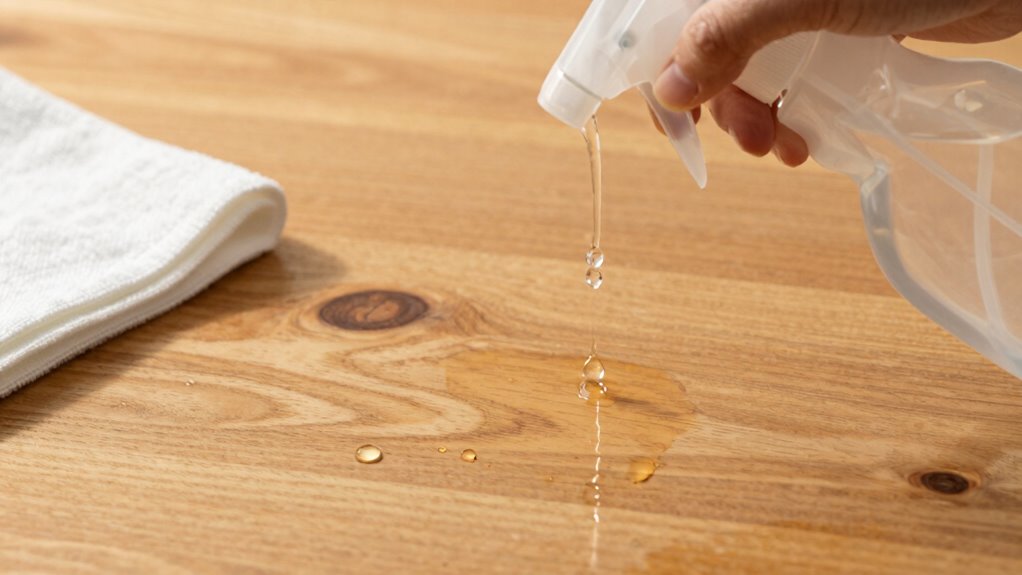
Additionally, understanding the importance of surface sanitation can help you choose the most appropriate cleaning method for your wood. When cleaning, avoid using abrasive scrubbers or harsh chemicals that can scratch or wear down your wood finish. Instead, opt for soft microfiber cloths or gentle sponges. Lightly dampen the cloth with your chosen solution and wipe in the direction of the wood grain. After cleaning, dry the surface thoroughly with a clean cloth to prevent moisture from seeping in. Regular maintenance using these natural methods not only keeps your wood looking its best but also extends its lifespan.
eco-friendly wood surface disinfectant
As an affiliate, we earn on qualifying purchases.
As an affiliate, we earn on qualifying purchases.
Frequently Asked Questions
Can I Use Vinegar to Sanitize All Types of Wood?
You can use vinegar to sanitize some wood surfaces, but it’s not ideal for all types. Vinegar risks damaging softer woods or finishes, so it’s better to opt for natural alternatives like hydrogen peroxide or diluted alcohol. Always test a small, hidden area first. Using vinegar carefully helps you keep your wood safe while effectively sanitizing, but knowing the risks guarantees you select the best method without ruining your board.
How Often Should I Sanitize Wood Surfaces?
Ever wonder how often you should sanitize your wood surfaces? You should do it regularly, about once a week or after spills, to keep germs at bay. Pay attention to the wood grain and cleaning frequency—more frequent cleaning is needed in high-use areas or if you notice visible dirt. This routine helps maintain your wood’s beauty and hygiene without risking damage, keeping your space safe and inviting.
Will Alcohol-Based Cleaners Damage Wood Finishes?
Alcohol-based cleaners can damage wood finishes if used excessively, leading to finish degradation. They may leave alcohol residue that dulls or strips protective coatings. To avoid this, use them sparingly and guarantee proper drying. Always test a small, hidden area first. Properly diluted alcohol solutions reduce the risk of damage, helping you sanitize effectively without compromising the wood’s beauty or durability.
Are There Natural Sanitizing Alternatives for Wood?
You can absolutely use natural disinfectants for wood treatment without damaging your surface. Many choose solutions like diluted vinegar, eco-friendly essential oils, or hydrogen peroxide, which effectively sanitize while being gentle on finishes. Some worry about effectiveness, but when used properly, these natural alternatives are safe and reliable. Just guarantee proper dilution and test a small area first, preserving your wood’s beauty while keeping it hygienic.
Is It Safe to Use Bleach on Wooden Furniture?
You should avoid using bleach on wooden furniture, as it can damage the wood stain durability and ruin your piece. Instead, opt for gentle cleaning methods and furniture restoration techniques like a mild soap solution or vinegar diluted with water. These options sanitize effectively without harming the wood’s finish. Always test a small area first to ensure your cleaning method preserves the wood’s appearance and maintains its durability.
natural wood cleaning spray
As an affiliate, we earn on qualifying purchases.
As an affiliate, we earn on qualifying purchases.
Conclusion
Sanitizing your wood surfaces doesn’t mean you have to sacrifice their look or integrity. By choosing gentle, approved cleaning methods, you can keep your wood beautiful and safe without worry. Some might think harsh chemicals are necessary, but they can do more harm than good. With the right approach, you can effectively sanitize without damaging the wood’s finish or grain. Enjoy your clean, fresh surfaces confidently—your wood deserves gentle care that works.
microfiber cloth for wood cleaning
As an affiliate, we earn on qualifying purchases.
As an affiliate, we earn on qualifying purchases.
vinegar and water wood cleaner
As an affiliate, we earn on qualifying purchases.
As an affiliate, we earn on qualifying purchases.