If your wooden utensils smell weird, start by washing them thoroughly with warm water and mild dish soap, then dry completely in a well-ventilated area. For stubborn odors, sprinkle baking soda or soak them in a baking soda solution for about 30 minutes, then rinse well. White vinegar diluted with water can also help break down residues. Regular cleaning and proper storage prevent future issues—keep exploring for more tips to keep your utensils fresh and odor-free.
Key Takeaways
- Wash utensils thoroughly with warm water and mild soap, then dry completely to remove surface residues.
- Soak or sprinkle baking soda on the utensils for 30 minutes to absorb and neutralize odors.
- Rinse with diluted white vinegar, wipe down, and dry to break down lingering smells.
- Perform seasonal deep cleaning and apply food-grade mineral oil for added protection.
- Store in a dry, well-ventilated area and regularly maintain to prevent future odors.
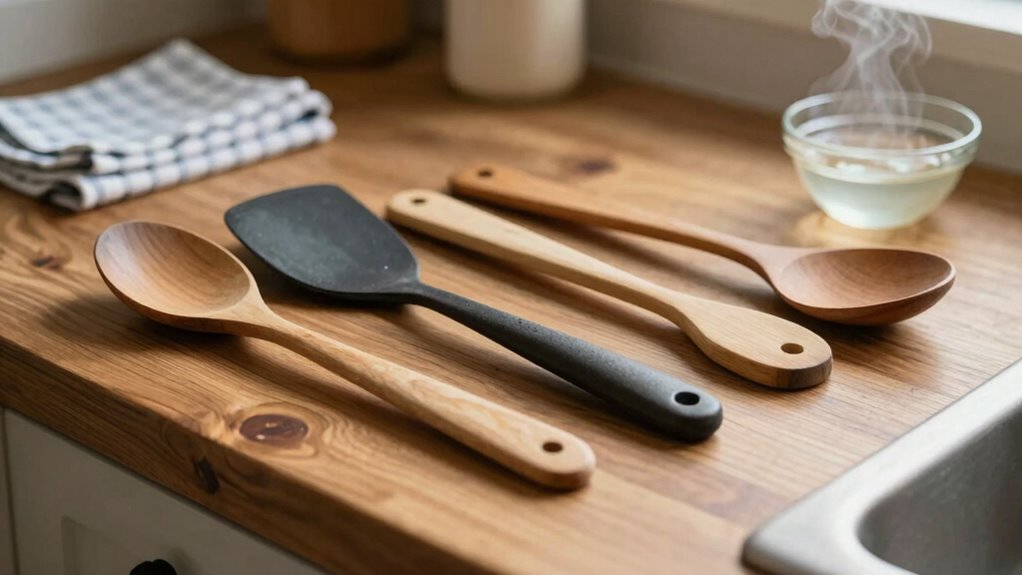
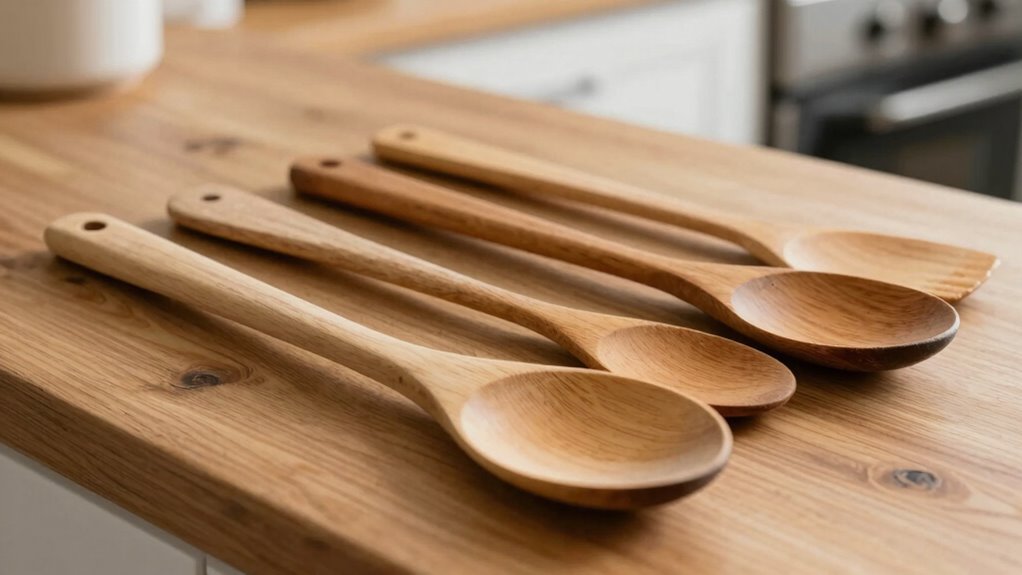
Have you ever noticed a strange smell coming from your wooden utensils? It’s a common problem that can make even your favorite kitchen tools seem less appealing. Often, the cause isn’t just dirt or grime but odor absorption, which happens when wood soaks up moisture, food residues, and lingering scents. Luckily, addressing this issue is straightforward if you follow a simple reset routine, especially when you incorporate seasonal cleaning into your routine. Seasonal cleaning isn’t just for deep cleaning your home; it’s a perfect opportunity to give your wooden utensils a fresh start, removing built-up odors and restoring their natural scent.
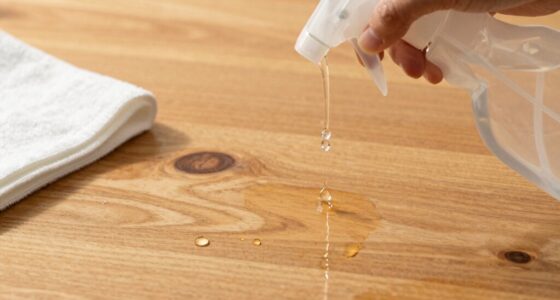
Start by giving your utensils a thorough wash with warm water and mild dish soap. Avoid harsh chemicals that can damage the wood or leave behind residues that contribute to bad smells. Once clean, it’s essential to let them dry completely—air drying in a well-ventilated area is best. Moisture trapped in the wood accelerates odor absorption, so ensuring they’re dry is key to stopping the cycle. After drying, you can perform a simple odor reset by using natural absorbents like baking soda or white vinegar. Baking soda is fantastic at neutralizing odors; sprinkle it generously over your utensils or soak them in a solution of baking soda and water for about 30 minutes. White vinegar, with its natural acidic properties, also works wonders—dilute it with water and wipe down the surfaces, then rinse thoroughly. Additionally, choosing energy-efficient cleaning methods can help minimize environmental impact during your routine.
To prevent future odors, adopt a seasonal cleaning schedule. Every few months, repeat the cleaning process to remove any accumulated smells and residues. During colder months, you might also want to avoid leaving your utensils in humid areas, as excess moisture promotes odor absorption. When not in use, store your wooden utensils in a dry, well-ventilated spot, and consider applying a food-grade mineral oil after cleaning to create a protective barrier that helps repel moisture and odors.

Kate Naturals Mineral Oil for Wood Cutting Board, Butcher Block, and Knife. Food Grade Mineral Oil for Wooden Cutting Board & Utensils (8oz, Food Safe)
FOOD-GRADE MINERAL OIL FOR CUTTING BOARDS: Helps restore and protect dry cutting boards, butcher blocks, and wooden kitchen…
As an affiliate, we earn on qualifying purchases.
As an affiliate, we earn on qualifying purchases.
Frequently Asked Questions
Can Wooden Utensils Be Reused After Smelling Bad?
Yes, you can reuse wooden utensils after smelling bad by resetting them. To do this, apply a light wooden seasoning of mineral oil or beeswax to help restore the wood and prevent further odor absorption. Then, scrub the utensils with a mixture of salt and lemon to eliminate lingering smells. Rinse thoroughly and let them air dry. This routine restores freshness and extends their usability effectively.
How Often Should I Reset My Wooden Utensils?
They say “an ounce of prevention is worth a pound of cure,” so you should reset your wooden utensils every few months. Regularly using baking tips and cleaning hacks, like hand washing with mild soap and occasionally sanitizing with vinegar, keeps odors at bay. This routine prevents buildup and maintains their freshness, ensuring your utensils stay odor-free and ready for cooking whenever you need them.
Is It Safe to Use Vinegar on Wooden Utensils?
Yes, using vinegar cleaning is safe on wooden utensils. Vinegar effectively removes odors and works as a natural odor removal technique. Simply mix equal parts white vinegar and water, then wipe or soak your utensils briefly. Rinse thoroughly afterward to prevent lingering vinegar smell. This method not only sanitizes your utensils but also helps eliminate any weird odors, keeping them fresh and odor-free for your next use.
What Are the Signs My Utensils Need Replacing?
You should replace your wooden utensils if they develop deep cracks, excessive staining, or persistent odors despite thorough cleaning. Signs like lingering odors after odor removal attempts, mold growth, or a sticky surface indicate it’s time for new ones. Regular wooden cleaning can help prolong their life, but if they show these signs, substituting them ensures safe, hygienic use and prevents bacteria buildup.
Can I Prevent Wooden Utensils From Developing Odors?
To prevent wood odor from developing on your utensils, you should regularly clean and dry them thoroughly after each use. Avoid soaking them for long periods, as moisture can cause odors. You can also periodically scrub with vinegar or lemon juice to neutralize any lingering smells. Applying food-safe mineral oil helps maintain the wood and reduces the risk of odor buildup. Consistent odor prevention keeps your wooden utensils fresh and odor-free.

Aunt Fannie's All Purpose Wood Spray Cleaner, No-Wax Formula, Perfect for Wood Tables, Walls, Counters & Shelves, 16.9 Ounces, Lemon Scent (Pack of 1)
Aunt Fannie's All Purpose Wood Cleaning Spray: Contains 16.9 ounces of lemon-scented natural plant-based cleaner that breaks down…
As an affiliate, we earn on qualifying purchases.
As an affiliate, we earn on qualifying purchases.
Conclusion
Now that you know how to reset your wooden utensils, you can breathe new life into them and keep your kitchen smelling fresh. Just remember, a little maintenance goes a long way—don’t let the problem fester. With this simple routine, you’ll prevent odors from sticking around and ensure your utensils stay in tip-top shape. Keep up with these easy steps, and you’ll be able to tackle any smell head-on, because where there’s a will, there’s a way.
Kate Naturals Mineral Oil for Wood Cutting Board, Butcher Block, and Knife. Food Grade Mineral Oil for Wooden Cutting Board & Utensils (8oz, Food Safe)
FOOD-GRADE MINERAL OIL FOR CUTTING BOARDS: Helps restore and protect dry cutting boards, butcher blocks, and wooden kitchen…
As an affiliate, we earn on qualifying purchases.
As an affiliate, we earn on qualifying purchases.

Coffee Spoons, ablespoon Scoop, Coffee Ground Spoon, Measuring for Ground Beans or tea, Soup Cooking Mixing Stirrer Kitchen Tools Utensils, 1 Wooden Tea Scoop (Walnut Wooden 3.86 in)
Food grade, healthy and eco-friendly. The scoops are made of nature wood which can keep the food fresh….
As an affiliate, we earn on qualifying purchases.
As an affiliate, we earn on qualifying purchases.