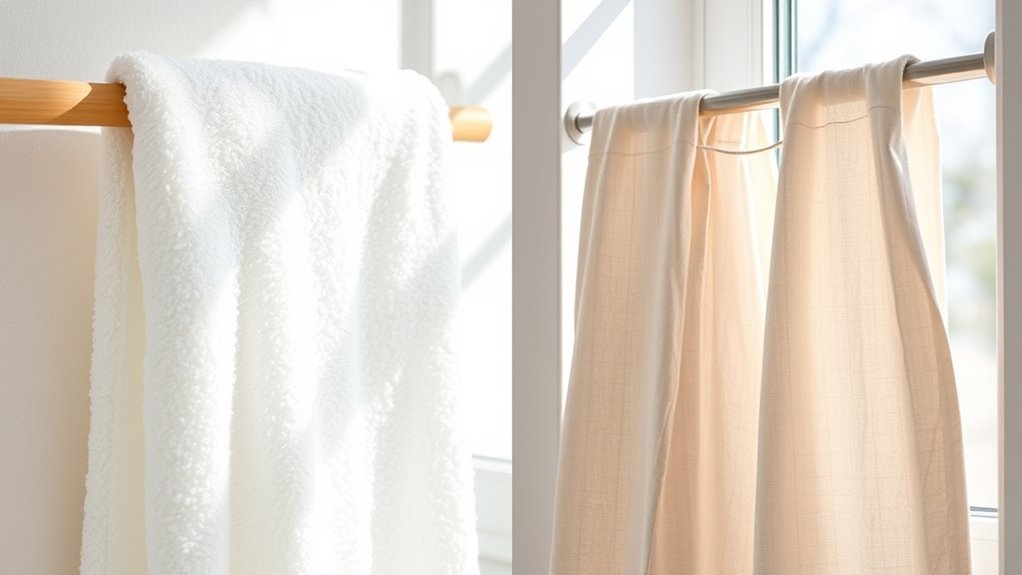

To prevent mold and warping, towel dry your clothes or hair gently, removing excess moisture quickly, then finish with air drying in a well-ventilated space. Avoid harsh rubbing to protect fabrics and hair from damage. Proper sequencing reduces mold risk and keeps fabrics’shape intact. Using a combination of both methods helps preserve material quality while ensuring thorough drying. Keep these tips in mind to maintain your items’ condition, and you’ll discover more ways to optimize drying techniques.
Key Takeaways
- Properly towel dry to remove excess moisture, reducing prolonged dampness that promotes mold growth.
- Use gentle, blotting motions to prevent fabric damage and maintain material shape, minimizing warping risks.
- Ensure thorough air circulation around items to facilitate complete drying and inhibit mold development.
- Avoid over-wetting fabrics before air drying to reduce prolonged moisture exposure that encourages mold.
- Store clothes and fabrics in dry, well-ventilated areas after drying to prevent mold and fabric deformation.
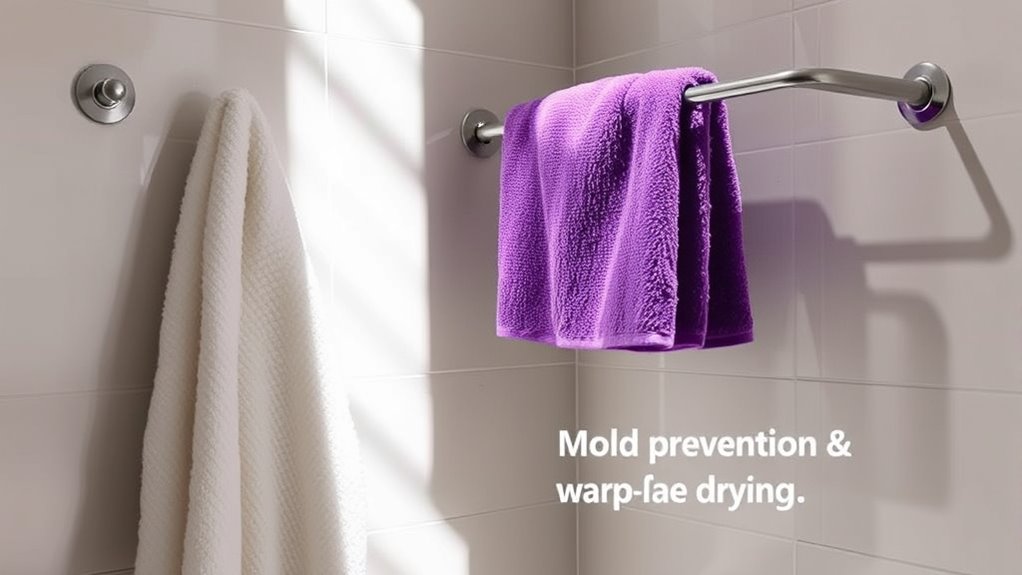
When it comes to drying your hair or clothes, you have two main options: towel drying and air drying. Each method offers unique benefits and challenges, especially when it comes to maintaining fabric softness and drying speed. Towel drying is often quicker, allowing you to remove excess moisture rapidly and reduce the overall drying time. This method can be especially useful when you’re in a hurry or need to get dressed quickly. However, pressing too hard or using a rough towel can compromise fabric softness, leaving your clothes or hair feeling rough or stiff. To avoid this, you should opt for a soft, absorbent towel and gently pat, rather than rub, to prevent damage and maintain the fabric’s natural softness.
Air drying, on the other hand, is gentler and helps preserve the integrity of delicate fabrics. It takes longer but minimizes the risk of warping or shrinking, especially with items like wool or fine textiles. While it doesn’t match towel drying in drying speed, air drying helps keep fabrics in their original shape and texture, preventing deformation caused by high heat or vigorous rubbing. To maximize efficiency without sacrificing fabric quality, you can air dry items in a well-ventilated space, ideally with good airflow to speed up the process. Hanging clothes properly can also prevent stretching or stretching out of shape, which is common with improper hanging techniques.
When considering drying your hair, towel drying can be the first step to absorb most of the moisture, considerably reducing drying time with a blow dryer afterward. For clothes, towel drying is great for quick moisture removal, but for delicate fabrics or when you want to maintain fabric softness, air drying is a better option. It helps prevent the buildup of mold and mildew, which thrive in damp, enclosed environments, and minimizes warping caused by heat exposure. If you’re drying your clothes indoors, make sure to space them out adequately to promote air circulation and reduce drying time naturally.
Both methods can be effective if done correctly, but knowing when to switch from towel drying to air drying can make a difference. While towel drying speeds up the process, it can sometimes lead to rougher fabric if not done carefully. Conversely, air drying preserves fabric softness and shape but requires patience. Combining the two—towel drying initially for quick moisture removal, then air drying to finish—can give you the best of both worlds. This approach helps prevent mold and warping, keeps your fabrics in great condition, and ensures your clothes and hair dry efficiently.
Frequently Asked Questions
Can Towel Drying Cause Fabric Colors to Fade Over Time?
Towel drying can contribute to fabric dye fading over time if the towels are rough or frequently rubbed against delicate fabrics. To preserve towel color and prevent fabric dye fading, use soft towels and avoid aggressive drying. Proper towel color preservation involves gentle handling and washing in cold water. This way, you help maintain vibrant colors, reduce fading, and extend the lifespan of both your towels and other fabrics.
How Often Should I Replace My Drying Towels?
You should replace your drying towels every 1 to 2 years, depending on their towel lifespan and how often you use them. Regularly inspect for fraying, thinning, or lingering odors, which indicate it’s time for a replacement. Maintaining good towel hygiene can extend their lifespan, but don’t hesitate to swap them out to guarantee maximum absorbency and hygiene. Proper care helps you get the most from your towels.
Is It Better to Air Dry in Direct Sunlight or Shade?
It’s better to air dry your towels in the shade rather than direct sunlight. Sunlight exposure can cause fibers to weaken and colors to fade over time, while shade drying helps prevent mold and warping without damaging the fabric. If you prefer faster drying, find a well-ventilated shaded area to hang your towels. This way, you reduce the risk of mold growth and keep your towels in good condition longer.
What Are Signs of Mold Growth on Dried Towels?
You’ll notice mold growth on dried towels if you see dark, fuzzy spots or a musty odor. To prevent mold, regularly check for these signs and make certain your towels are thoroughly dry before storing. Proper fabric maintenance includes spreading towels out to air completely and avoiding damp areas. If you spot mold, wash the towels with hot water and vinegar to eliminate spores and keep your towels fresh and mold-free.
Can Air Drying Damage Delicate or Specialty Fabrics?
It’s a fine line, but yes, air drying can damage delicate fibers if you’re not careful. The drying process might cause delicate or specialty fabrics to stretch, warp, or lose their shape, especially if they’re left in direct sunlight or breeze. To keep them in tip-top shape, hang these fabrics on a padded hanger or lay them flat in a well-ventilated area. This way, you preserve their integrity without risking damage.
Conclusion
By choosing to towel dry or air dry carefully, you gently steer clear of potential pitfalls like mold and warping. Think of your drying routine as a tender dance—when done with care, it keeps your items in graceful shape and ready for their next use. A little attention now guarantees your belongings stay beautifully preserved, quietly rewarding you with longer-lasting freshness and function. After all, a gentle touch can make all the difference.