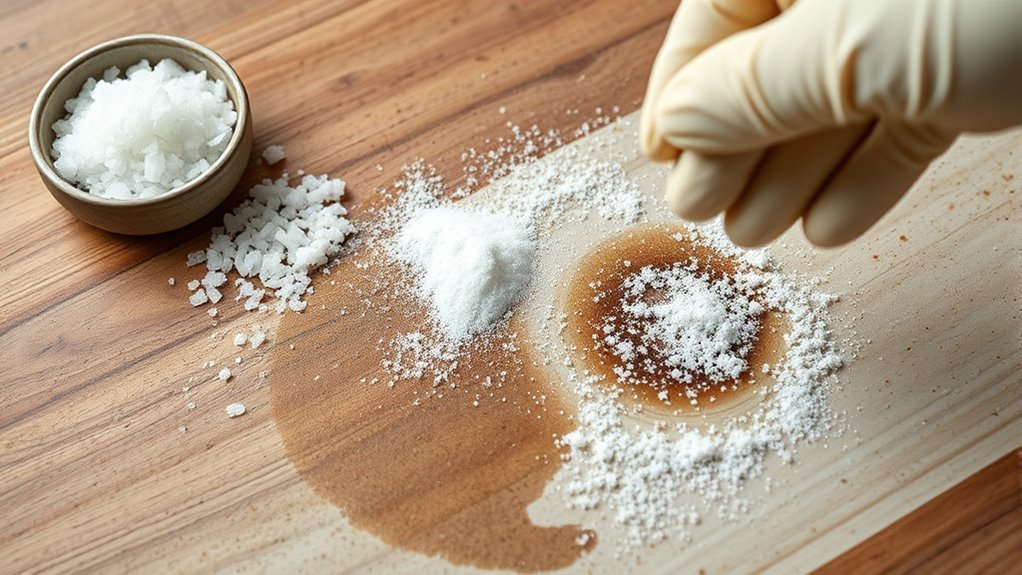

To remove deep stains with salt and baking soda, make a paste by mixing three parts baking soda with one part water, and add salt for extra abrasiveness. Apply this mixture to the stain, gently scrub, and let it sit for 15-20 minutes to absorb oils and dirt. Rinse thoroughly afterward. You can combine salt with lemon juice or vinegar for tougher stains—keep going to discover more helpful tips.
Key Takeaways
- Create a baking soda paste (3:1 ratio of baking soda to water) and apply it to stained areas for effective stain breaking.
- Sprinkle salt directly on stubborn stains to physically lift and absorb discoloration.
- Combine salt with lemon juice or vinegar to form a stronger cleaning paste for deep stains.
- Use a salt and baking soda mixture to target tough fabric, upholstery, or kitchen stains, then scrub gently.
- Rinse thoroughly after treatment to remove residue and protect surface integrity while achieving deep stain removal.
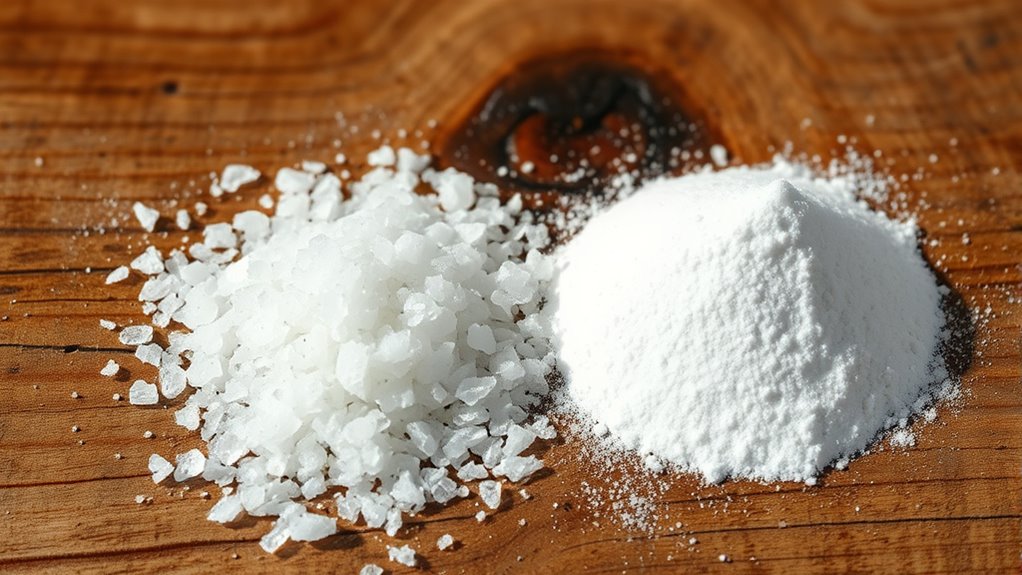
Deep stains can be stubborn and frustrating to remove, but you don’t always need harsh chemicals to tackle them. Often, natural cleaning remedies are surprisingly effective, and DIY stain removal methods can save you money and avoid the risks associated with strong cleaners. Salt and baking soda are two versatile ingredients that can help you conquer deep stains without resorting to commercial products. These common household items have natural abrasive and absorbent properties that make them excellent for lifting stains from various surfaces.
Natural salt and baking soda effectively lift deep stains without harsh chemicals.
When dealing with deep stains, start by creating a paste with baking soda and water. Baking soda’s mild abrasiveness helps break down stain particles, while its alkaline nature neutralizes acids that cause discoloration. Mix about three parts baking soda with one part water until you get a thick paste. Apply this directly onto the stained area, making sure to cover it thoroughly. Gently scrub with a soft brush or cloth, working the paste into the fibers or surface. Let it sit for 15 to 20 minutes to allow the baking soda to absorb oils, dirt, or other residues. Then, rinse or wipe away the paste with clean water or a damp cloth. This DIY stain removal method is especially effective on fabric stains, tile grout, and even sink or bathtub stains.
Salt works as an excellent natural abrasive and stain absorber. For particularly stubborn stains, you can combine salt with baking soda to boost cleaning power. Sprinkle a generous layer of salt directly onto the stain, then add a baking soda paste over it. The salt helps to physically lift the stain while the baking soda works chemically to break it down. You can also make a cleaning paste by mixing salt with lemon juice or vinegar for extra stain-fighting strength. Apply the paste to the stain, let it sit for a few minutes, then scrub gently. Rinse thoroughly afterward to remove any residue. This DIY stain removal technique is especially useful on fabric, upholstery, or even stubborn kitchen stains. Additionally, understanding how to manage household cleaning supplies can help optimize your stain removal efforts.
Using salt and baking soda as natural cleaning remedies provides a safe, effective alternative to harsh chemicals. They’re inexpensive, readily available, and gentle enough to use regularly without damaging delicate surfaces. Plus, these DIY stain removal methods are environmentally friendly, reducing your chemical footprint. With a little patience and some simple household ingredients, you can tackle deep stains confidently, restoring your surfaces and fabrics without risking damage or exposure to toxic substances. Overall, incorporating salt and baking soda into your cleaning routine offers a practical, eco-conscious way to handle stubborn stains while keeping your home safe and sparkling.
Frequently Asked Questions
Can Salt and Baking Soda Remove All Types of Deep Stains?
Salt and baking soda can tackle many deep stains, but they aren’t universal solutions. You might need alternative cleaning agents for stubborn or specific stains like ink or wine. To prevent future stains, follow stain prevention tips such as acting quickly and testing cleaning methods first. While salt and baking soda are effective for some cases, always consider the stain type and fabric to choose the best removal method.
Are There Any Surfaces or Fabrics Unsafe for This Method?
Did you know that over 60% of household stains are tough to eliminate from delicate surfaces? When using salt and baking soda, you should check surface compatibility first. These abrasives aren’t safe for all fabrics or surfaces; for instance, delicate fabrics like silk or painted surfaces may get damaged. Always test a small, hidden area first to ensure fabric safety and avoid unintended harm.
How Long Should the Mixture Sit on Stubborn Stains?
For stubborn stains, you should let the salt and baking soda mixture sit on the fabric for about 15 to 30 minutes. Be patient and monitor the stain, especially if you’re dealing with different stain types. This timing allows the mixture to break down the stain effectively without damaging the fabric. Adjust the duration based on the stain’s severity, but avoid leaving it too long to prevent potential discoloration.
Is This Method Suitable for Organic or Chemical Stains?
This method works better for organic stains like food or sweat, but it might not be effective for chemical stains such as ink or dye. You should be cautious because chemical stains often require specialized cleaners. For organic stains, applying salt and baking soda can help lift the stain, but for chemical stains, consider using specific stain removers to avoid damaging your fabric. Always test a small area first.
Can This Cleaning Process Damage Delicate or Vintage Items?
This cleaning process can potentially damage delicate or vintage items if you’re not careful. Use gentle cleaning techniques and test on a small, hidden area first to prevent damage. Salt and baking soda help with stain prevention, but their abrasiveness might harm fragile fabrics or materials. Always proceed cautiously, avoid over-aggressive scrubbing, and consider consulting a professional for valuable or sensitive items to guarantee their safety.
Conclusion
So, next time those stubborn stains seem impossible, remember you’ve got salt and baking soda—your unlikely heroes. Ironically, these simple kitchen staples might just save your favorite shirt or carpet, proving that sometimes, the biggest solutions are the smallest. Don’t underestimate the power of everyday items; they might be the only thing standing between you and a lifelong stain. Who knew that salt and baking soda could be your stain-fighting saviors?