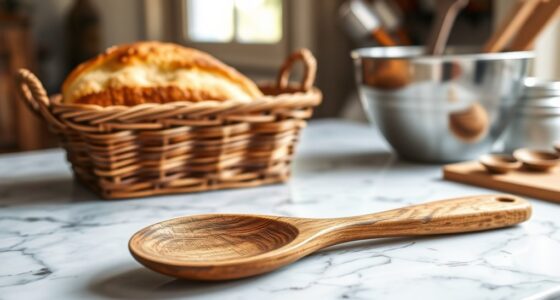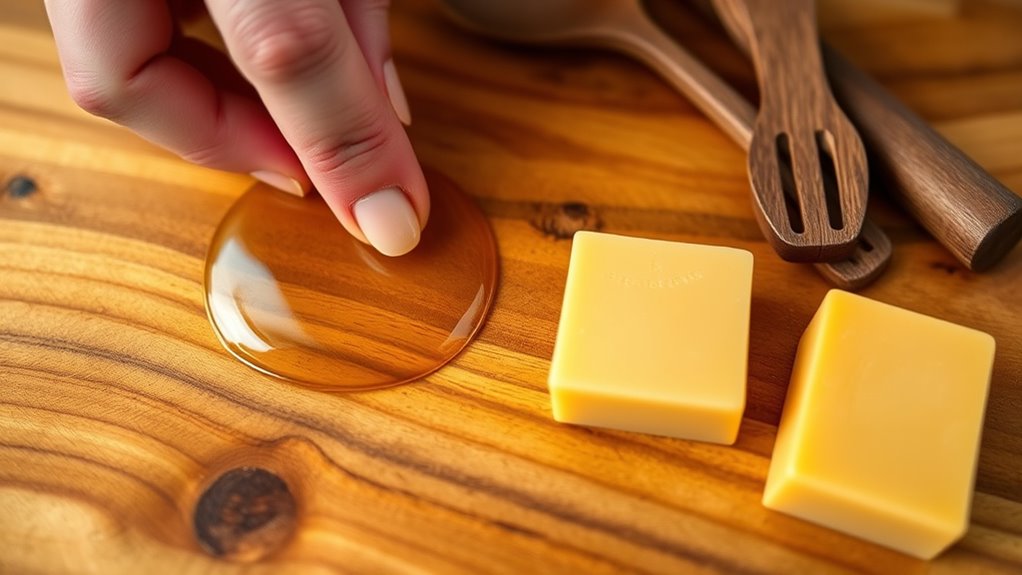

When choosing between food-grade mineral oil and beeswax for your wooden kitchenware, consider your needs. Mineral oil is easy to apply, odorless, and offers deep moisture protection, making it great for daily maintenance. Beeswax creates a natural, water-resistant surface with a soft sheen, ideal for tools exposed to moisture. Combining both can give you a durable, attractive finish. To learn how to properly care for your wood, keep exploring the options that suit your kitchen tools best.
Key Takeaways
- Food-grade mineral oil is odorless, easy to reapply, and penetrates deeply for moisture resistance.
- Beeswax offers a natural, water-resistant finish with a slight sheen, enhancing the wood’s appearance.
- Mineral oil is ideal for daily maintenance due to its simplicity and quick absorption.
- Beeswax provides a durable, polished surface that protects against moisture and wear.
- Combining mineral oil and beeswax can deliver both deep hydration and a protective, attractive finish.
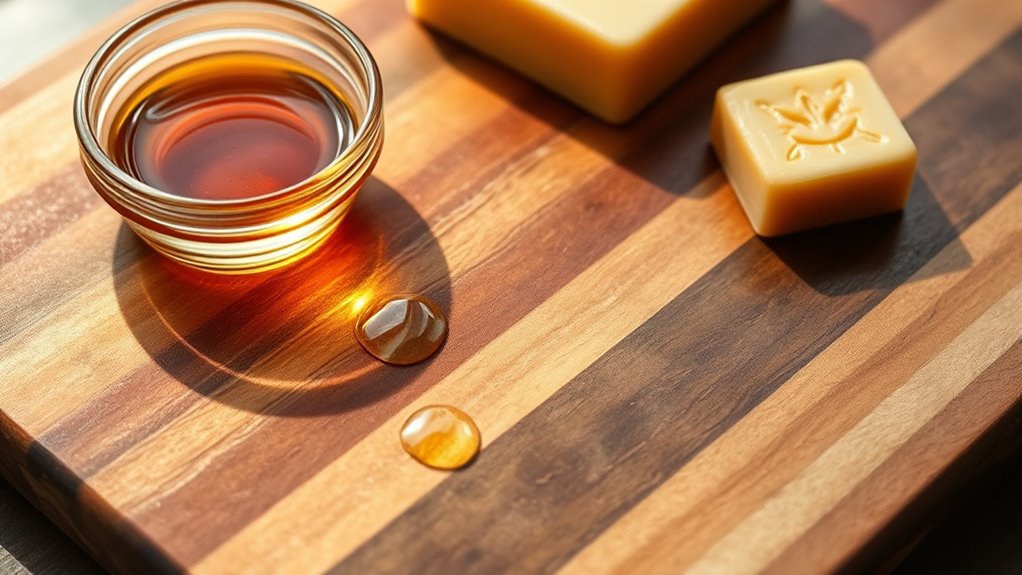
Have you ever wondered why some wooden kitchenware looks weathered and dull over time? The answer often lies in how well you care for it and the type of finish you choose. Natural finishes are popular because they highlight the wood’s beauty and are safer for food contact. When it comes to maintaining your wooden utensils, understanding the right maintenance tips and choosing the appropriate oil or wax can make all the difference. Properly oiled wood resists drying out, cracking, and absorbing unwanted odors or bacteria, keeping your tools looking good and functioning well for years.
Proper care with natural finishes keeps your wooden kitchenware looking beautiful and lasting longer.
Oiling is essential for preserving the natural beauty of your wooden kitchenware. Food-grade mineral oil is a widely recommended choice because it’s safe, odorless, and easy to apply. It penetrates deep into the wood fibers, creating a protective barrier that prevents moisture absorption. This barrier helps avoid warping and splitting, especially in a humid kitchen environment. Beeswax, on the other hand, offers a different kind of protection. It forms a natural, food-safe finish that adds a slight sheen and water resistance, making it ideal for items like cutting boards or serving bowls. Beeswax is often used in combination with mineral oil to achieve a smooth, durable surface, enhancing the wood’s natural look while providing ongoing protection.
To properly maintain your wooden kitchenware, start with clean, dry surfaces. After each use, wash with warm water and mild soap, then dry thoroughly. Once dry, apply your chosen natural finish—be it mineral oil or beeswax—using a soft cloth or a brush. Be generous but even in your application, ensuring the oil seeps into the grain. Let it sit for a few hours or overnight, then wipe off any excess. Regular maintenance tips suggest reapplying oil or wax every few months, especially if you notice the wood starting to look dry or dull. This routine helps keep your kitchenware nourished and prevents the formation of cracks or splinters. Additionally, understanding the benefits of natural finishes can guide you in selecting the best option for your needs.
Choosing between natural finishes like mineral oil or beeswax ultimately depends on your preference and use. Mineral oil is straightforward, easy to reapply, and excellent for daily maintenance. Beeswax offers a more polished look and a water-resistant surface, making it perfect for items exposed to more frequent moisture. Regardless of your choice, consistent maintenance using proper natural finishes will keep your wooden kitchenware in top shape. By following these simple tips, you’ll ensure your utensils not only look beautiful but also stay functional and safe for food preparation over time.

Kate Naturals Mineral Oil for Wood Cutting Board, Butcher Block, and Knife. Food Grade Mineral Oil for Wooden Cutting Board & Utensils (8oz, Food Safe)
FOOD SAFE MINERAL OIL FOR CUTTING BOARD: Our Food Grade Cutting Board White Mineral Oil is a smooth,…
As an affiliate, we earn on qualifying purchases.
As an affiliate, we earn on qualifying purchases.
Frequently Asked Questions
How Often Should I Reapply Oil to My Wooden Kitchenware?
You should reapply oil to your wooden kitchenware every few weeks or when you notice it’s absorbing oil quickly. During seasonal maintenance, check the oil absorption rate—if the surface looks dull or dry, it’s time to re-oil. Regular reapplication helps keep the wood sealed, prevents cracking, and maintains its appearance. Adjust the frequency based on usage and environmental conditions to make certain your wooden pieces stay in top shape.
Can I Use Regular Mineral Oil Instead of Food-Grade?
Using regular mineral oil isn’t recommended over food-grade mineral oil because of food safety concerns. Think of it like choosing a cleaner labeled “food-safe” versus one that isn’t; the difference is essential. Food-grade mineral oil is specially refined for kitchen use, ensuring no harmful chemicals transfer to your food. Always opt for high-quality, food-safe mineral oil to protect your health and keep your wooden kitchenware safe.
Are Beeswax Finishes Safe for All Types of Wooden Utensils?
Beeswax finishes are generally safe for all types of wooden utensils, but you should consider beeswax durability and food safety concerns. Beeswax creates a natural, protective coating that’s safe for food contact, and it’s resistant to moisture. However, it may require frequent reapplication to maintain durability. As long as you use food-grade beeswax and reapply it regularly, your utensils will stay safe, protected, and functional.
Will Oiling Prevent Cracking and Warping of Wood?
Oiling your wooden utensils can help prevent cracking and warping by maintaining proper wood moisture levels. When you regularly oil, you create a barrier that minimizes wood expansion and contraction caused by moisture fluctuations. This keeps the wood stable and less prone to damage. So, yes, oiling is an effective way to protect your wooden kitchenware from cracks and warping over time, ensuring longevity and durability.
How Do I Clean Wooden Utensils Before Oiling?
To clean wooden utensils before oiling, start with gentle cleaning techniques like washing with warm water and mild soap. Rinse thoroughly and dry completely to prevent moisture retention. For surface preparation, sand lightly with fine-grit sandpaper to remove any rough spots or residues. verify the wood is clean, smooth, and dry before applying oil, which helps the oil penetrate better and protects your utensils.

Wood Butter Cutting Board Wax – 8 fl oz – Conditioner for Butcher Block and Wooden Kitchen Tools. Macy;s Place Food Grade Mineral Oil and Beeswax for Wooden Tools. Support Animal Rescue
Protects Wood from Drying and Cracking – Wood wax, butter, cream, and conditioner is ideally formulated to protect…
As an affiliate, we earn on qualifying purchases.
As an affiliate, we earn on qualifying purchases.
Conclusion
Now that you know the differences between food-grade mineral oil and beeswax, you might think your choice is simple. But the real question is, which will stand the test of time and truly protect your wooden kitchenware? Will one outperform the other as you use and wash your items? The answer isn’t just about what’s better—it’s about discovering what truly keeps your kitchenware looking pristine, and that secret might just be closer than you think.
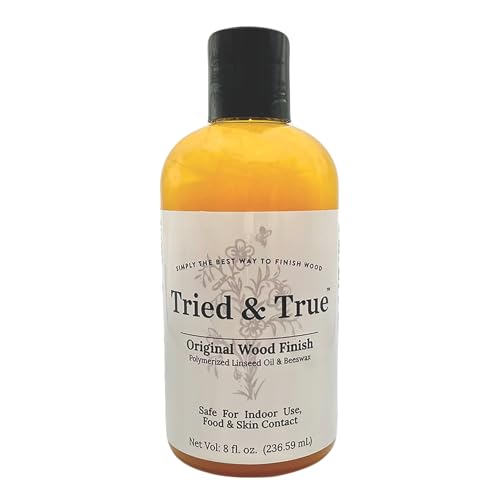
Tried & True Original Wood Finish, 8 oz. – Linseed Oil & Beeswax Blend, Ideal for All Woodwork, Long-Lasting Durability, Food Safe Sealer, Non-Toxic Wood Finish
SUPERIOR BLEND OF LINSEED OIL & BEESWAX: Tried and True wood finish is a superior blend of linseed…
As an affiliate, we earn on qualifying purchases.
As an affiliate, we earn on qualifying purchases.

Howard Products Butcher Block Conditioner and Food Grade Mineral Oil for Wood Cutting Boards, 12 Fl Oz – Enhanced Wood Care
Revitalizing blend prevents drying and cracking of hardwoods and bamboo
As an affiliate, we earn on qualifying purchases.
As an affiliate, we earn on qualifying purchases.