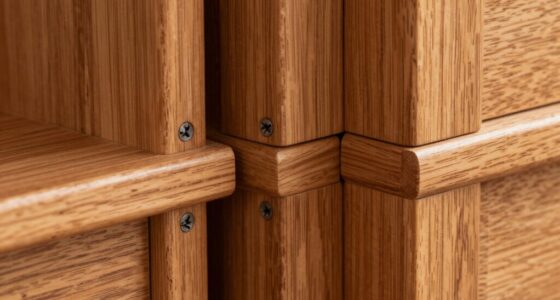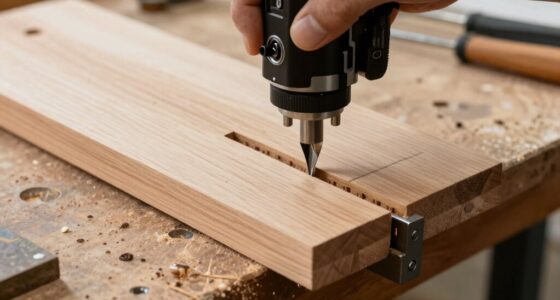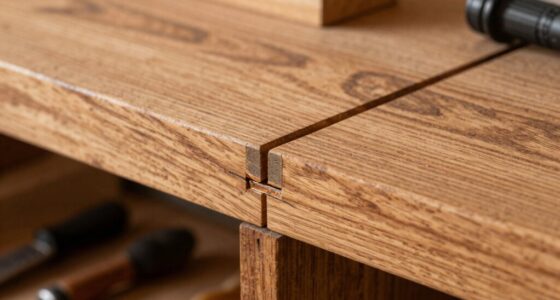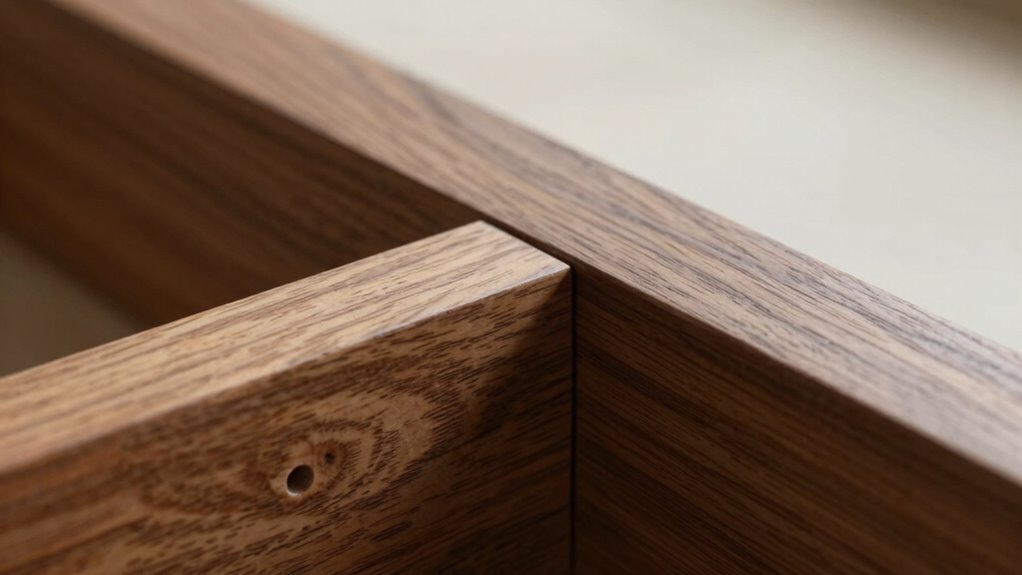

The key ratio to prevent cracking in mortise and tenon joints is that the tenon should be about one-third to one-half the thickness of the material, while the mortise width should be 1.5 to 2 times the tenon thickness. This balance guarantees a snug fit without stressing the wood, promoting strength and durability. Keep this ratio in mind, and you’ll craft joints that last. For more detailed tips, continue exploring how proper sizing supports long-lasting frames.
Key Takeaways
- The tenon should be approximately one-third to one-half the thickness of the material for optimal fit.
- The mortise width should be 1.5 to 2 times the tenon thickness to ensure proper strength and glue surface.
- Proper sizing aligns grain orientation, reducing the risk of splitting and cracking over time.
- Testing fit before final assembly allows adjustments to maintain snugness without stressing the wood.
- Adhering to these ratios ensures even force distribution, enhancing joint stability and longevity.
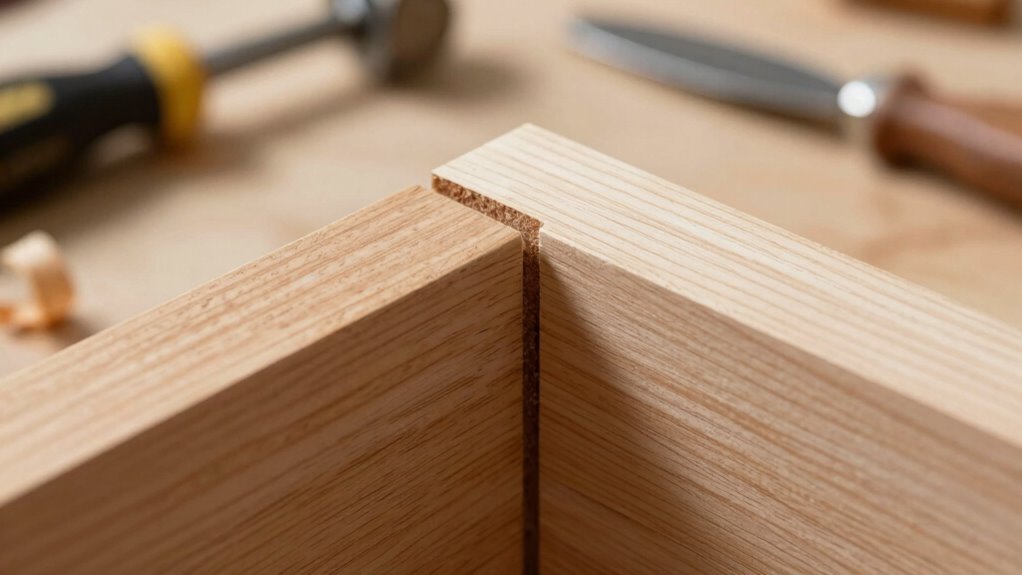
Understanding how to size mortises and tenons correctly is vital for creating strong, durable joints in woodworking. Proper sizing ensures that your joints fit snugly without putting undue stress on the wood, which can lead to cracking over time. One essential aspect to contemplate is grain orientation, which affects how the wood responds to the stresses placed on the joint. You want to align the grain of the tenon with the grain direction of the surrounding material, especially when working with different wood joint types. This alignment helps distribute forces evenly and minimizes the risk of splitting or warping.
When sizing your mortise and tenon, it’s important to consider how the grain runs through the wood. For example, if you’re working with a mortise that’s perpendicular to the grain, it’s more prone to splitting if it’s too tight or too loose. In contrast, aligning the tenon’s grain with the grain of the workpiece increases its strength and stability. Different wood joint types, such as through tenons, haunched tenons, or wedged tenons, each have specific sizing considerations but all benefit from understanding grain orientation. A properly sized tenon should be about one-third to one-half the thickness of the material, allowing for a tight fit without causing stress.
Getting the ratio right is essential for preventing cracking, especially in hardwoods that are more prone to splitting. A common guideline is to size the mortise to be slightly wider than the tenon, around 1.5 to 2 times the thickness of the tenon, providing enough room for glue and adjustments. This ratio ensures the joint is tight enough to be strong but not so tight that it forces the wood apart as it dries or responds to humidity changes. When you contemplate different wood joint types, this ratio remains a helpful rule of thumb, but you should always tailor it to the specific wood species and grain orientation. Additionally, understanding wood movement is crucial for long-term joint stability, especially in environments with fluctuating humidity.
In addition, always test fit your mortise and tenon before final assembly. Check that the fit is snug but not overly tight, and make adjustments as needed. Remember, a joint that’s too loose can weaken the frame, while one that’s too tight might cause cracks. By understanding the importance of grain orientation and applying the correct sizing ratios for various wood joint types, you’ll improve the longevity and strength of your woodworking projects. This careful approach helps prevent cracking and ensures your frames stay solid and durable for years to come.
mortise and tenon joint sizing tools
As an affiliate, we earn on qualifying purchases.
As an affiliate, we earn on qualifying purchases.
Frequently Asked Questions
How Does Wood Type Affect Mortise and Tenon Sizing?
You should consider wood type because its density and moisture content directly influence mortise and tenon sizing. Denser woods need tighter joints, while lighter woods allow for a looser fit. If the moisture content is high, wood swells, so you might need to adjust your measurements accordingly. By understanding these factors, you guarantee your joints fit perfectly, preventing cracks and ensuring durability over time.
What Tools Are Best for Precise Mortise and Tenon Measurements?
For precise mortise and tenon measurements, you should select a high-quality caliper, like a digital or dial caliper, to guarantee accuracy. Use measurement techniques such as zeroing your caliper before measuring and taking multiple readings for consistency. This helps you avoid errors and achieve perfect fits. Proper caliper selection and careful measurement techniques are essential to maintaining the correct size ratio and preventing frame cracking.
How Can I Adjust Sizing for Custom or Irregular Frames?
To adjust sizing for custom frame fitting and irregular joint adjustments, start by measuring the exact dimensions of each joint. Use a chisel or rasp to carefully carve or sand the mortise and tenon, ensuring a snug fit. Test and refine the fit frequently, maintaining the proper ratio to prevent cracking. Remember, patience and precise adjustments are key to achieving a sturdy, well-fitting joint in irregular or custom frames.
Is There a Recommended Margin of Error in Sizing?
Sure, there’s a recommended measurement tolerance to keep your frames from cracking — usually about 1/16 inch. But don’t get too comfortable; manufacturing variability can sneak in, making perfect measurements a myth. So, while you aim for that ideal fit, remember that a little wiggle room helps avoid unnecessary stress and cracking. After all, even the best craftsmen know that perfection is just a lovely, distant illusion.
How Often Should Mortise and Tenon Joints Be Inspected for Cracks?
You should inspect mortise and tenon joints regularly, ideally every 6 to 12 months, to catch early signs of cracking caused by wood movement. Frequent inspections help maintain joint longevity by addressing issues before they worsen. Pay attention to any gaps or cracks, especially after seasonal changes, as wood movement can impact the integrity of the joint. Consistent checks guarantee your frame stays strong and durable over time.
woodworking mortise and tenon jig
As an affiliate, we earn on qualifying purchases.
As an affiliate, we earn on qualifying purchases.
Conclusion
By following the right mortise and tenon ratio, you’ll create joints that fit like pieces of a well-crafted puzzle, preventing cracks and ensuring durability. Think of this ratio as the secret handshake that keeps your frames strong and true. When you respect these proportions, your craftsmanship becomes a sturdy bridge, standing tall against the test of time. Keep this one ratio in mind, and your woodworking projects will stand resilient like a fortress.
wood joint measuring calipers
As an affiliate, we earn on qualifying purchases.
As an affiliate, we earn on qualifying purchases.
woodworking clamps for mortise and tenon
As an affiliate, we earn on qualifying purchases.
As an affiliate, we earn on qualifying purchases.