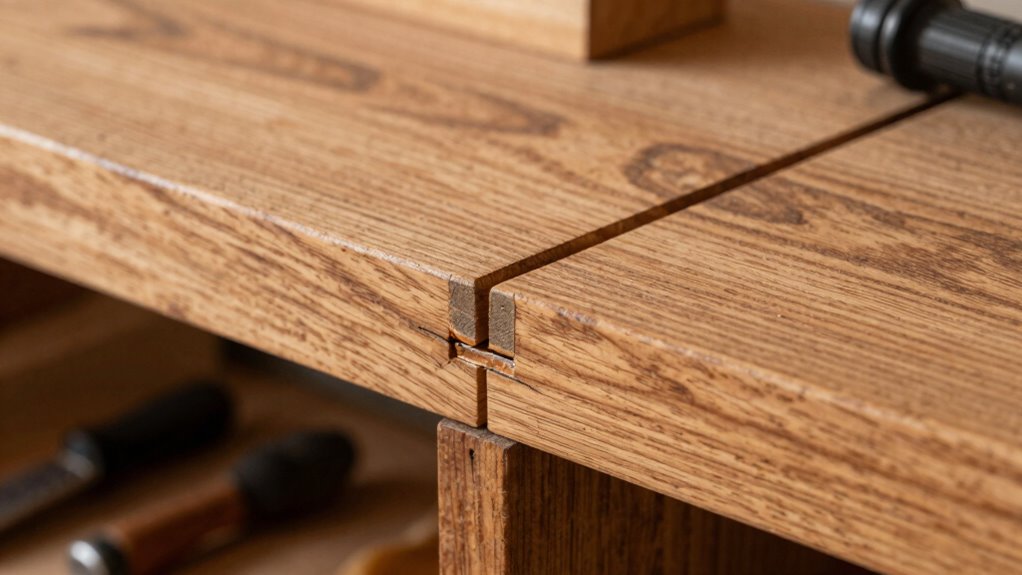

If your shelf grooves fail, it’s often due to improper sizing, cuts, or wood movement. Ensuring precise, snug fits, using sharp tools, and making allowances for wood expansion can prevent future issues. Also, avoid over-tight dado cuts and clamping during gluing to improve joint strength. Choosing better materials like plywood or adding reinforcement can help. Understanding these tips can markedly improve your shelf durability—continue exploring to learn how to fix and prevent groove failures effectively.
Key Takeaways
- Incorrect dado dimensions or depth can cause loose or insecure shelf fits, weakening the joint.
- Failing to accommodate wood movement leads to cracking and joint failure over time.
- Rough cuts or improper tool use create gaps, reducing joint strength and stability.
- Poor joint design or inadequate clamping and gluing compromises load resistance and durability.
- Neglecting proper preparation and sealing allows environmental factors to weaken the shelf grooves.
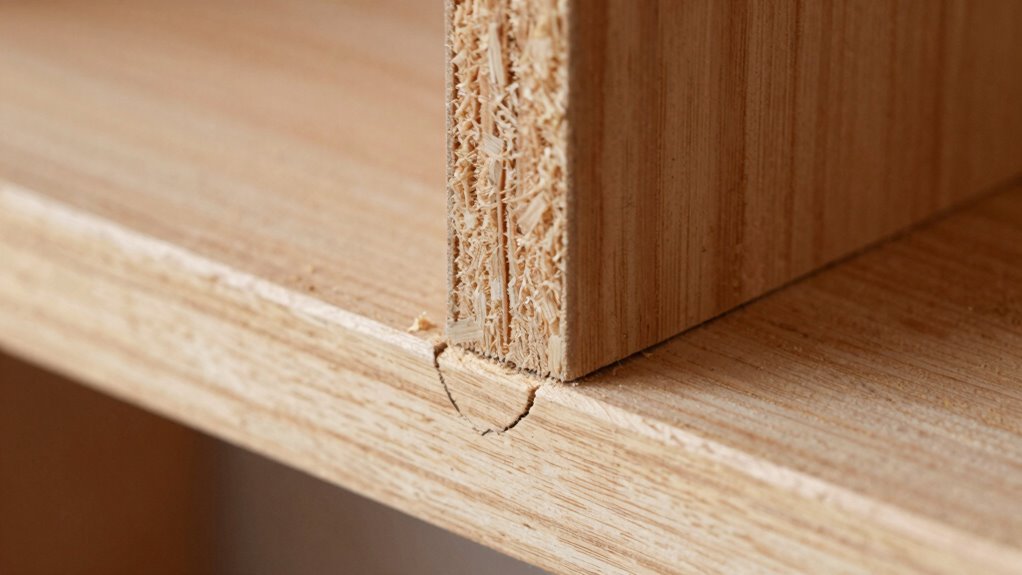
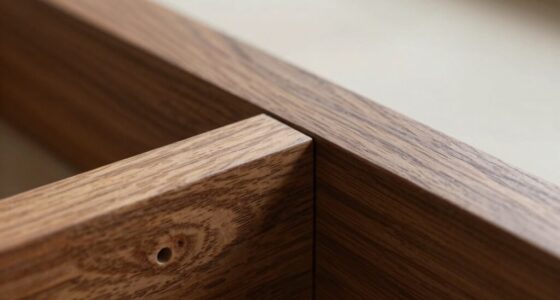
Dado joinery is a popular woodworking technique prized for its strength and stability. When you cut a groove into one piece of wood to fit another, you create a joint that can support weight and resist pulling apart. However, despite its reputation, dado joinery isn’t foolproof. You need to be aware of common dado joinery pitfalls that can compromise the shelf groove durability over time. If these pitfalls aren’t addressed, your shelves might sag, loosen, or even fail completely.
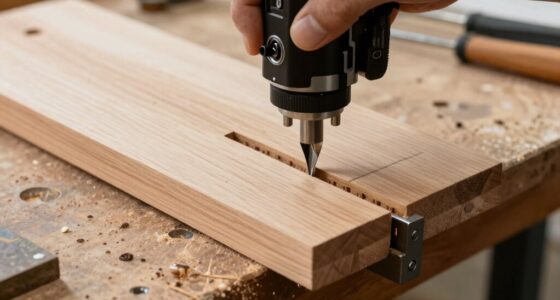
One major issue is using the wrong size or depth for your dado cut. If the groove is too shallow or narrow, the shelf won’t sit securely, risking wobbling or slipping out. Conversely, if it’s too deep or wide, the joint becomes loose and less able to bear weight. Precision matters here. You should measure carefully and cut the dado with a proper saw, ensuring the fit is snug but not overly tight. A tight fit increases shelf stability, but too tight can cause splitting or stress on the wood fibers during assembly or over time.
Ensure proper dado size and depth for secure, durable shelves.
Another common dado joinery pitfall is ignoring wood movement. Wood naturally expands and contracts with changes in humidity and temperature. If you cut a tight dado without accounting for this, you risk cracking or weakening the shelf groove. To improve shelf groove durability, consider leaving a slight allowance for wood movement or using engineered wood products like plywood, which resist warping better than solid wood.
The quality of your cuts also impacts the long-term strength of the joint. Rough or uneven cuts can create gaps or weak spots that compromise the shelf’s stability. Always use sharp tools and a guided saw or dado blade to ensure clean, precise cuts. Properly prepared joints will fit together tightly, distribute loads evenly, and resist stresses that could cause failure.
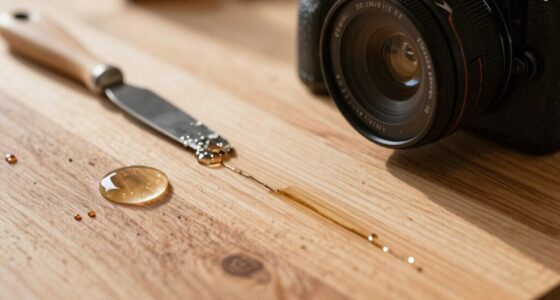
Additionally, understanding the importance of proper joint design can help enhance the longevity of dado joints by ensuring they are constructed to withstand typical loads and environmental changes. Clamping and gluing techniques play a role too. While dado joints are often glued, relying solely on glue without proper clamping can lead to weak bonds. Clamping during drying ensures the joint remains tight and aligned, which is essential for durability. Using the right adhesive for your wood type and applying it evenly prevents gaps that might weaken the joint.
dado blade for table saw
As an affiliate, we earn on qualifying purchases.
As an affiliate, we earn on qualifying purchases.
Frequently Asked Questions
Can Different Wood Types Affect Dado Joint Strength?
Yes, different wood types can affect dado joint strength. You need to take into account the wood grain because it influences how well the joint holds, especially when using joinery glue. Hardwoods generally create stronger joints than softwoods, but mismatched woods can weaken the bond. Always select compatible woods and make sure the glue penetrates the grain properly for a sturdy, lasting dado joint.
How Does Moisture Content Impact Dado Joint Durability?
Moisture content greatly impacts dado joint durability because moisture variability causes wood swelling and shrinking. When humidity levels change, the wood in your joint can expand, loosening the fit, or contract, causing gaps. To guarantee longevity, control moisture levels in your workspace and choose properly dried wood. This prevents excessive swelling or shrinking, maintaining a tight, strong dado joint over time.
Are There Alternative Joinery Methods Stronger Than Dado Grooves?
Yes, there are stronger alternatives to dado joints, like dovetail and box joints, which offer superior strength and durability. When you compare joinery options, these alternatives resist pulling apart better than dado grooves. Dado alternatives often involve interlocking parts, providing more stability for shelves and furniture. By considering joinery comparisons, you can choose methods that improve your project’s longevity and withstand more stress over time.
What Tools Are Best for Creating Precise Dado Cuts?
Precision matters more than tools when creating dado cuts, but the right equipment makes a difference. Use high-quality router bits for clean, accurate grooves, and saw blades designed for precise cuts. A dado blade set on a table saw guarantees consistent width and depth, while a router with sharp bits offers flexibility in detail. Combining these tools lets you achieve perfect dados, balancing strength and finesse in your woodworking projects.
How Does the Load Weight Influence Dado Joint Failure?
The load weight directly impacts dado joint failure because excessive weight stresses the joint, especially if the wood grain isn’t aligned properly. When the load exceeds the joint’s capacity, it can cause the groove to crack or loosen. To prevent this, make certain proper joint alignment and use wood with suitable grain direction. Distributing weight evenly also reduces stress, helping your dado joint hold up under heavier loads.
woodworking clamps for glue joints
As an affiliate, we earn on qualifying purchases.
As an affiliate, we earn on qualifying purchases.
Conclusion
Understanding why shelf grooves fail helps you build stronger, more durable projects. Did you know that improperly cut grooves can reduce joint strength by up to 50%? By ensuring precise measurements, proper cutting techniques, and using the right wood, you can markedly improve your dado joints’ durability. With a little attention to detail, you’ll prevent future failures and enjoy sturdy shelves that last. Keep these tips in mind, and your woodworking projects will stand the test of time.
plywood sheets for shelves
As an affiliate, we earn on qualifying purchases.
As an affiliate, we earn on qualifying purchases.
precision saw for dado cuts
As an affiliate, we earn on qualifying purchases.
As an affiliate, we earn on qualifying purchases.