Biscuit joinery helps you quickly align and strengthen panel and face-frame joints, making assembly easier and more precise. However, it’s not a miracle for load-bearing or high-stress joints, so don’t rely on it alone for structural strength. It’s best for face-to-face and edge joins where speed and alignment matter. If you want to master when biscuit joinery works—and when to look elsewhere—you’ll find valuable tips ahead.
Key Takeaways
- Biscuit joinery is excellent for quick, accurate panel alignment but not suitable for high-stress or load-bearing joints.
- Manual slot creation with hand tools offers precision without power tools but requires skill and patience.
- Biscuit joints are ideal for face and edge alignment but lack the strength for structural or heavy-duty applications.
- Overusing biscuits in structural joints can lead to weak, unreliable connections; choose joints based on load requirements.
- Mastery of proper technique and understanding limitations ensures biscuit joinery enhances projects without false expectations.
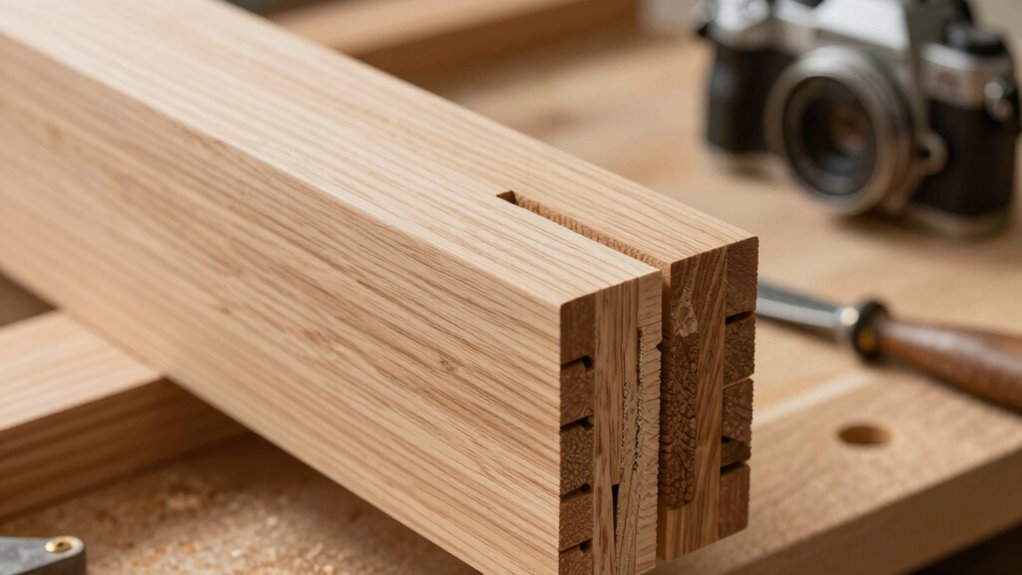
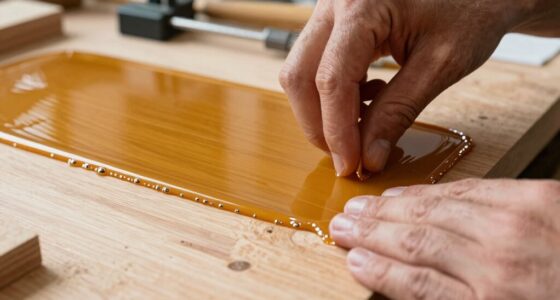
Biscuit joinery is a popular woodworking technique that offers a simple, efficient way to align and strengthen panel and frame assemblies. When you’re contemplating this method, it’s important to understand how it fits within the broader scope of wood joint types and what hand tool techniques can be employed to maximize its effectiveness. Unlike traditional joints such as dovetails or mortise and tenon, biscuit joints rely on a small, oval-shaped wooden biscuit that expands when glued, creating a tight bond between two pieces of wood. This makes it ideal for quickly aligning panels, face frames, or edge-to-edge joins, especially when precision and speed are priorities.
Using biscuit joinery isn’t just about inserting biscuits and gluing; it involves some degree of skill with specific hand tool techniques. While many woodworkers opt for a biscuit joiner—a power tool designed to cut precise slots—there are hand tool techniques that can achieve satisfactory results, especially in smaller projects or for those who prefer traditional methods. For example, a sharp chisel or a small handsaw can be used to create shallow, precise slots if you don’t have access to a biscuit joiner. These manual methods require patience and a steady hand but can be effective in the right circumstances.
Manual hand tools like chisels and small saws can create precise biscuit slots when power tools aren’t available.
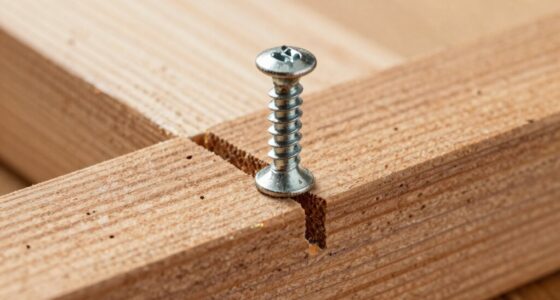
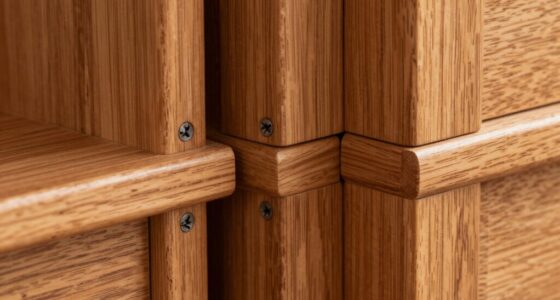
Understanding the different wood joint types helps you select the best approach for your project. Biscuit joints excel at aligning and reinforcing face-to-face or edge-to-edge joints, but they aren’t suitable for every situation. For instance, when you need a joint that bears heavy loads or resists twisting, other wood joint types like dovetails or dowel joints might be more appropriate. Knowing when a biscuit joint helps and when it’s just wishful thinking is key to making smart decisions in your woodworking projects. For tasks requiring quick assembly with good alignment, biscuits are excellent. But for structural integrity in load-bearing furniture, you might need to deliberate alternative joints.
Additionally, recent advancements in European cloud solutions have emphasized the importance of reliable and secure systems, which can be metaphorically related to choosing the right joint for your woodworking. Ultimately, biscuit joinery can be a valuable tool in your woodworking arsenal, but it’s not a cure-all. Mastering hand tool techniques for creating precise slots and understanding the limitations of biscuit joints will help you use this technique effectively. Recognize when it’s the right choice—like for quick, aligned panels—and when you should opt for more traditional or robust joint types. By doing so, you’ll ensure your projects are not only efficient but also durable and well-crafted.
biscuit joiner power tool
As an affiliate, we earn on qualifying purchases.
As an affiliate, we earn on qualifying purchases.
Frequently Asked Questions
Can Biscuit Joinery Be Used for Load-Bearing Furniture?
You can use biscuit joinery for load-bearing furniture, but it’s not always ideal. Properly aligned wood grain and the right biscuit size options are vital for strength. For heavier loads, choose larger biscuits and make certain tight glue joints. While biscuits help with alignment and quick assembly, don’t rely solely on them for structural support—consider additional reinforcement like dowels or screws for maximum stability.
What Are the Best Types of Wood for Biscuit Joints?
Imagine smooth, tight-fitting biscuit joints blending seamlessly into your project. The best woods for biscuit joints have straight, consistent wood grain, like maple or cherry, offering stability and strength. Keep moisture content low to prevent warping and guarantee a strong bond. Choose hardwoods with fine grain for a cleaner cut and better glue adhesion, making your joints durable and visually appealing in any furniture piece you craft.
How Does Biscuit Joinery Compare to Dowel or Mortise and Tenon?
You’ll find biscuit joinery offers quicker setup and easier alignment compared to dowel or mortise and tenon joints. While it’s less strong than mortise and tenon, it’s great for projects emphasizing grain matching and aesthetic appeal. Dowel joints provide more strength, but biscuit joints save time and create a seamless look. Consider your project needs—if you prioritize ease and appearance, biscuit joinery is a smart choice.
Is Special Equipment Required for Effective Biscuit Joinery?
You don’t need special equipment for effective biscuit joinery, just a biscuit joiner and the right size biscuits for your project. The joiner cuts precise slots for the biscuits, which, combined with joint glue, create strong, aligned joints. Make sure to match biscuit size to your wood thickness for maximum strength. With proper technique, you’ll get clean, sturdy joints without investing in complex tools.
How Durable Are Biscuit Joints in Outdoor Applications?
Biscuit joints aren’t the strongest in outdoor settings, like a fragile sail in a storm. Their durability depends on weather resistance and UV stability; untreated biscuits can weaken over time when exposed to rain, sun, and humidity. To improve longevity, use exterior-grade glue and UV-resistant finishes. With proper treatment, biscuit joints can hold up outdoors, but they’re generally not as durable as other joinery methods designed specifically for harsh weather.
manual biscuit joiner hand tools
As an affiliate, we earn on qualifying purchases.
As an affiliate, we earn on qualifying purchases.
Conclusion
Now you see that biscuit joinery can be a trusty sidekick or a false promise, like a shining mirage in the workshop. When used correctly, it’s a reliable tool that helps you build strong, precise joints. But don’t rely on it blindly—know its limits and don’t chase illusions of perfection. With a clear understanding, you’ll navigate your projects with confidence, turning each piece into a symphony of craftsmanship rather than a shaky illusion.
woodworking biscuit joints set
As an affiliate, we earn on qualifying purchases.
As an affiliate, we earn on qualifying purchases.
wood joint alignment tools
As an affiliate, we earn on qualifying purchases.
As an affiliate, we earn on qualifying purchases.