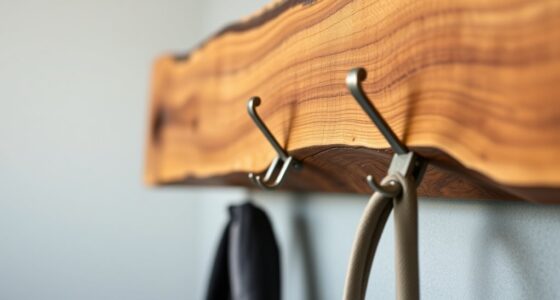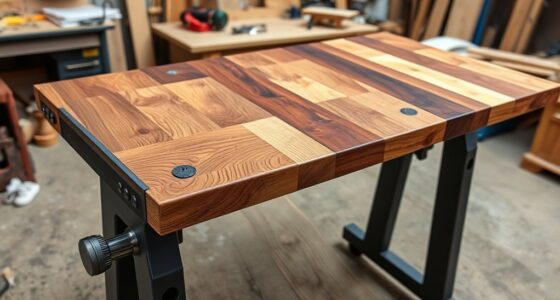
To make floating shelves with hidden brackets, start by choosing internal mounting hardware or a cleat system that hides behind the shelf surface. Attach the bracket or cleat securely to wall studs for support, ensuring everything is perfectly level. Slide your shelf onto the hardware for a clean, floating look. Proper measurement and hardware selection are essential for stability and durability. Keep going to discover detailed tips to perfect your installation.
Key Takeaways
- Attach a concealed mounting cleat or bracket to the wall, ensuring it is perfectly level and anchored into wall studs for stability.
- Slide the shelf onto the hidden hardware to create a floating appearance, hiding brackets behind the shelf surface.
- Use appropriate wall anchors and hardware rated for the shelf’s weight to ensure safety and durability.
- Select shelf materials like solid wood or glass with sufficient thickness to support intended loads securely.
- Double-check measurements and test stability after installation before placing items on the shelf.
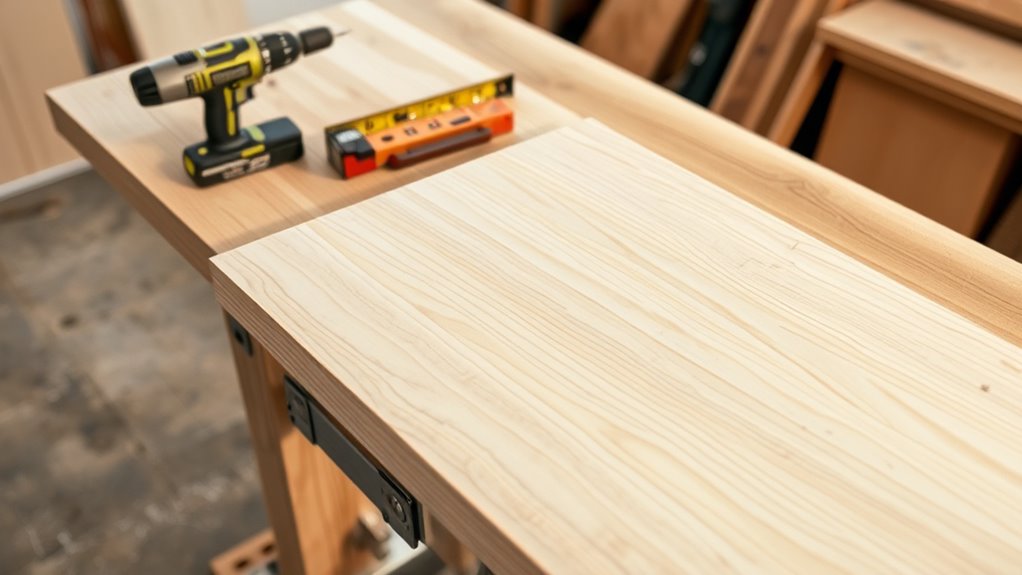
Have you ever wanted to add stylish storage to your space without visible brackets? Making floating shelves is a perfect way to achieve that sleek, modern look. The key lies in smart wall mounting techniques and selecting the right shelf materials. When you focus on these elements, you can create a clean, minimalist aesthetic that seamlessly blends into your decor.
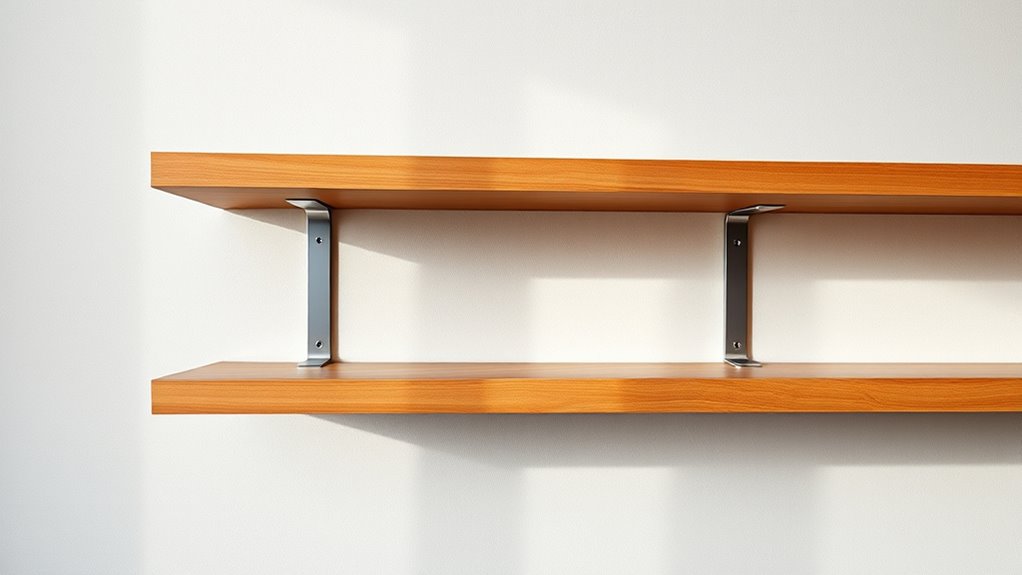
First, consider how wall mounting plays a vital role in making your shelves appear to float. The goal is to hide the brackets entirely, which requires using internal mounting hardware. You’ll typically attach a mounting bracket or cleat to the wall, then slide the shelf onto it, so only the shelf surface is visible. This method not only provides sturdy support but also keeps the hardware concealed, giving the illusion of a floating shelf. Proper wall mounting guarantees stability, especially if you plan to store heavier items. Use a level to make sure your mounting hardware is perfectly aligned, and anchor the brackets into wall studs whenever possible. This step guarantees your shelves won’t wobble or fall over over time.
Next, think about shelf materials. The choice of shelf materials impacts both the appearance and durability of your floating shelves. Common options include solid wood, plywood, MDF, or even glass. Solid wood offers a natural, warm look and is highly durable, making it ideal for both decorative and functional purposes. Plywood and MDF are more budget-friendly and easy to work with, but they may require a finish or paint to match your aesthetic. Glass shelves can add a touch of elegance and work well in modern spaces, but they need sturdy wall mounting and careful handling. Whichever material you choose, make sure it’s thick enough to support the weight you intend to place on it. A thicker shelf not only looks more substantial but also provides better support when mounted correctly.
When installing, drill precise holes for your wall anchors and mounting hardware, and double-check measurements before fixing anything in place. If you want a seamless look, you can conceal the mounting hardware further by painting or staining the shelf and hardware to match. Always test the stability after installation before placing any items on the shelves. This guarantees your floating shelves will stay secure and look flawless for years to come. Additionally, choosing the right wall mounting hardware is essential for ensuring the stability and safety of your floating shelves.
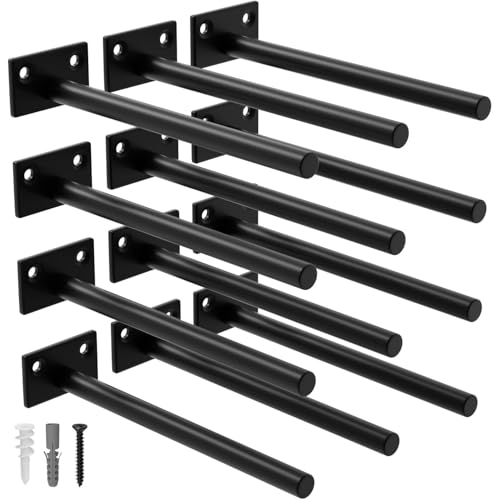
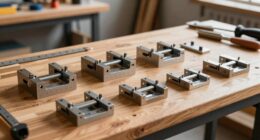
LEOPO 12-Pack 8 inch Floating Shelf Brackets, Hidden Shelf Bracket for Wood, Concealed Blind Shelving Support,Invisible Coated Brackets for DIY Decorative,Fit for Kitchen, Bathroom,Study Room
Superior Quality: Our floating shelf bracket is expertly crafted from premium steel, ensuring exceptional durability and an impressive…
As an affiliate, we earn on qualifying purchases.
As an affiliate, we earn on qualifying purchases.
Frequently Asked Questions
What Tools Are Needed for Installing Floating Shelves?
To install floating shelves, you’ll need a drill with appropriate drill bits for your wall type. Use it for drilling precise holes and practicing drill techniques. Wall anchors are essential for added support, especially on drywall. Make sure to have a level to ensure your shelves are straight, and a screwdriver for securing brackets. These tools help you accomplish a sturdy, professional-looking installation with minimal effort.
How Much Weight Can Floating Shelves Support?
Your floating shelves’ weight capacity depends on the shelf materials and mounting method. Typically, sturdy wood or MDF shelves can support 15-50 pounds when properly installed, while metal or thicker materials might hold even more. Always make certain you use appropriate hidden brackets and mounting hardware for your wall type. Distribute weight evenly, and avoid overloading to prevent sagging or damage. Proper installation is key to maximizing your shelf’s weight support.
Can I Install Floating Shelves on Uneven Walls?
Just like a knight would never fight without armor, you shouldn’t install floating shelves on uneven walls without proper prep. You can, but it’s best to create a level surface first by using shims or wall fillers. Proper wall preparation guarantees your shelves stay sturdy and look professional. Measure carefully, mark your mounting points, and make adjustments as needed to keep your shelves perfectly level and secure.
How Do I Hide Visible Brackets or Hardware?
To hide visible brackets or hardware, you can use concealed brackets designed specifically for floating shelves. Install these brackets carefully so they remain hidden behind the shelf, giving a clean, seamless look. Additionally, you can conceal hardware by applying a wood filler or caulk over screw holes and sanding it smooth before painting or staining. This hardware concealment technique makes your shelves appear to float effortlessly, enhancing your room’s aesthetic.
What Is the Best Way to Clean Floating Shelves?
To clean your floating shelves effectively, start by dust removal with a soft, dry microfiber cloth to prevent scratches. For stubborn spots, use a damp cloth with mild soap, then wipe dry immediately. Avoid harsh chemicals that could damage the surface. Regular cleaning keeps dust from accumulating and maintains the shelves’ appearance. Remember, gentle cleaning techniques are best to preserve the finish and prevent any damage.

Hovr Solutions Classic 47" (4-Foot) Aluminum Floating Shelves Wall Bracket System, 300LB Load Capacity, Hidden Support Bracket Up to 63” Shelf, 1-Pack
Heavy-Duty Shelf Brackets: Engineered with 6063 T6 aircraft-grade aluminum, the Hovr Classic supports 300lbs, making it 13x stronger…
As an affiliate, we earn on qualifying purchases.
As an affiliate, we earn on qualifying purchases.
Conclusion
Now that you know how to make floating shelves with hidden brackets and proper mounting tips, your space will look sleek and stylish. Imagine walking into a room where shelves appear to float effortlessly, showcasing your favorite decor without distraction. Ready to transform your walls into a seamless display? With these simple steps, you’re all set to create a polished, professional look that truly elevates your home. So, why not start building your floating masterpiece today?

No-Drill Drywall Anchors Kit, Heavy Duty – 90 Pcs (0.47×1.18in) Zinc Plated Steel, 45 Anchors + 45 Self-Tapping Screws | 2025 Upgraded for Easy Wall Mounting (Shelves, Decor, TVs)
1. 45 Sets All-in-One Kit for Instant Use Includes 45 self-drilling drywall anchors (0.47” diameter × 1.18” length)…
As an affiliate, we earn on qualifying purchases.
As an affiliate, we earn on qualifying purchases.
LEOPO 12-Pack 8 inch Floating Shelf Brackets, Hidden Shelf Bracket for Wood, Concealed Blind Shelving Support,Invisible Coated Brackets for DIY Decorative,Fit for Kitchen, Bathroom,Study Room
Superior Quality: Our floating shelf bracket is expertly crafted from premium steel, ensuring exceptional durability and an impressive…
As an affiliate, we earn on qualifying purchases.
As an affiliate, we earn on qualifying purchases.