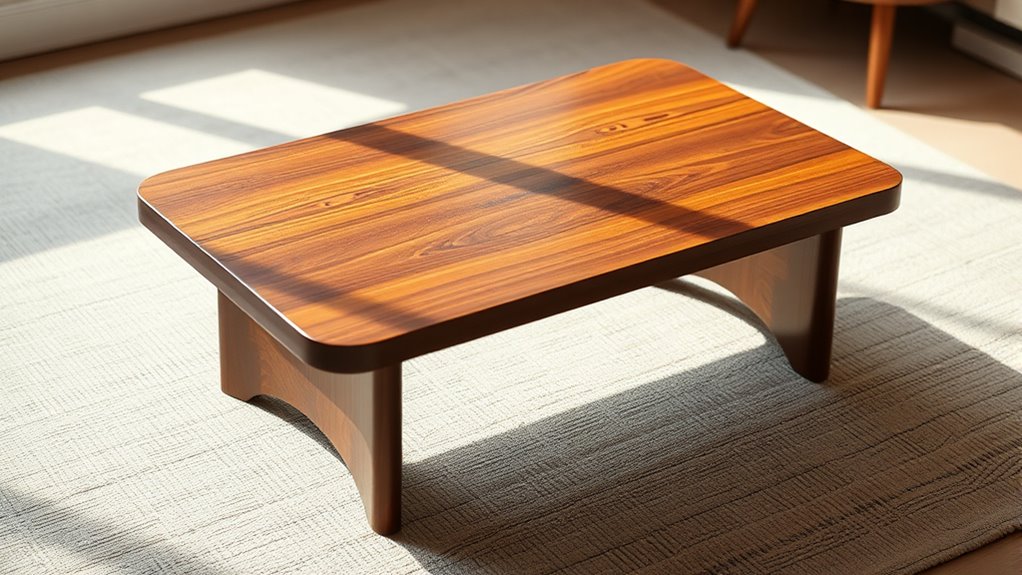

When designing a mid-century modern coffee table, focus on using sustainable materials like reclaimed wood or bamboo with smooth, clean lines and tapered legs. Keep the height around 16-18 inches for comfort and include rounded edges for safety. Opt for a spacious tabletop with storage options like shelves or drawers for practicality. Prioritize durability with resistant finishes and guarantee the design promotes natural flow and accessibility. If you continue, you’ll discover how to bring these elements together for a perfect piece.
Key Takeaways
- Select reclaimed wood, bamboo, or sustainably sourced plywood for eco-friendly, warm, and durable materials.
- Incorporate clean lines, tapered legs, and rounded edges to achieve authentic mid-century style.
- Ensure the tabletop is spacious, stable, and at a height of 16-18 inches for accessibility and functionality.
- Choose finishes that resist scratches and stains for easy maintenance and long-term durability.
- Include practical storage options and prioritize ergonomic design for ease of use and inviting comfort.
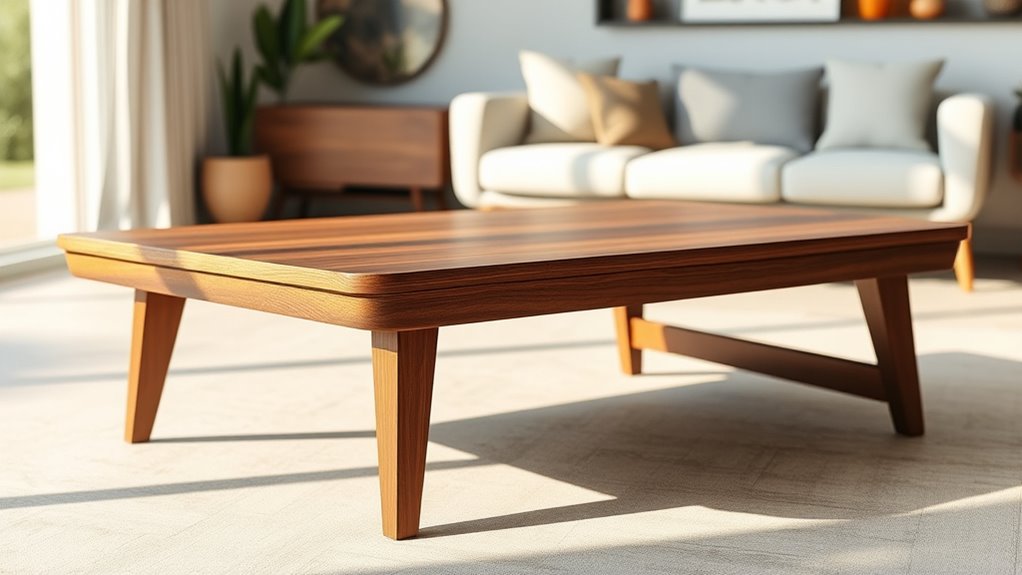
Ever wondered how to create a coffee table that perfectly captures the sleek simplicity of mid-century modern design? It all starts with choosing the right materials and paying attention to form and function. When designing your piece, prioritize sustainable materials to stay true to modern values and environmental consciousness. Opt for reclaimed wood, bamboo, or sustainably sourced plywood—these options provide a warm, natural aesthetic that aligns with mid-century minimalism. Not only do they reduce environmental impact, but they also add character and durability to your table. Incorporate clean lines and smooth, tapered legs to embody the iconic mid-century style, but don’t forget to think about ergonomic considerations. A well-designed coffee table isn’t just about looks; it should also be practical and comfortable for everyday use.
Start by considering the height and dimensions of your table. The ideal mid-century modern coffee table is low enough to complement your seating arrangement without obstructing views or movement. Keep the height around 16 to 18 inches, ensuring it’s accessible for all users. The tabletop should be spacious enough to hold your essentials—magazines, drinks, decor—without feeling cluttered. Rounded edges can increase safety and comfort, especially in homes with children or frequent foot traffic. When selecting materials, choose those with smooth finishes that resist scratches and stains, making maintenance easier and prolonging the table’s lifespan. Incorporating market research can help identify trending styles and popular materials to inform your design choices.
In terms of ergonomic considerations, think about how your table interacts with your seating. It should be within easy reach, so you don’t have to stretch or strain to grab your coffee or book. The surface should be stable and sturdy, preventing wobbling or tipping, which enhances safety and usability. If your table has storage, like a lower shelf or drawers, ensure they’re easy to access without awkward bending or stretching. The overall shape should promote good flow within your space, allowing for natural movement around the table. When designing, prioritize simplicity and functionality—these are core to mid-century modern aesthetics—while ensuring that your table feels comfortable and inviting to use every day.

Furniway Mid Century Modern Coffee Table, Wood Coffee Table with Storage, Farmhouse Table for Living Room, Apartment, Walnut
MID-CENTURY COFFEE TABLE: The sophisticated and elegant exterior design of this coffee table will definitely refresh your space….
As an affiliate, we earn on qualifying purchases.
As an affiliate, we earn on qualifying purchases.
Frequently Asked Questions
What Are the Best Woods for Mid-Century Modern Coffee Tables?
You should choose woods like teak, walnut, or oak for your mid-century modern coffee table. These woods feature beautiful wood grain patterns that add character and style. They also offer excellent wood durability, ensuring your table stays sturdy over time. Teak, with its natural oils, resists moisture, while walnut and oak provide strength and a rich appearance. These choices make your coffee table both stylish and long-lasting.
How Do I Maintain and Clean a Wooden Coffee Table?
A stitch in time saves nine, so start with regular cleaning routines. Use a soft, damp cloth to wipe down your wooden coffee table, avoiding harsh chemicals. For maintenance tips, polish with a high-quality furniture wax occasionally to keep the wood nourished. Protect the surface from water rings and heat marks, and dust regularly to prevent buildup. With consistent care, your table stays beautiful and lasts for years.
Can I Customize the Color or Finish of a Mid-Century Table?
Yes, you can customize the color or finish of a mid-century table. You might explore table veneer options to add unique textures or patterns, or use customization techniques like staining, painting, or applying a new finish. These methods allow you to match your style perfectly. Just make certain you prep the surface well and choose the right products for a smooth, durable result that enhances your table’s aesthetic.
What Are the Typical Dimensions for a Mid-Century Modern Coffee Table?
You’ll find mid-century modern coffee tables typically measure around 48 inches long, 20 inches wide, and 16 inches high, striking a balanced scale proportion. Keep in mind, material variability can affect these dimensions slightly, so you might see some variation. This classic style emphasizes clean lines and functional design, making it easy to choose a table that fits your space perfectly while maintaining the authentic mid-century look.
How Do I Choose the Right Height for My Coffee Table?
Choosing the right height for your coffee table is like finding the perfect dance partner—it needs to match your rhythm. Aim for an ergonomic height around 16-18 inches, aligning with your sofa’s seat height for comfort and functionality. Consider aesthetic factors, ensuring the table complements your space’s style. When these elements harmonize, your coffee table will feel both natural and visually appealing, creating a balanced focal point.

OKCMTR 31.5" Japanese Folding Coffee Table for Apartment – No Assembly Rectangular Sturdy Bamboo Low Table, Portable Laptop Floor Desk for Eating, Meditating, Laptop – Sustainable Furniture (Wood)
[TOP SPACE-SAVING PICK FOR SMALL APARTMENTS] Looking for a foldable coffee table that doesn't clutter your home? Our…
As an affiliate, we earn on qualifying purchases.
As an affiliate, we earn on qualifying purchases.
Conclusion
Now that you’ve explored the key elements of designing a mid-century modern coffee table, remember that authenticity often shines through simplicity. Some say the style’s timeless appeal proves that form follows function, but others believe it’s the nostalgic charm that keeps it alive. Whichever you prefer, trust your instincts and embrace clean lines and warm wood tones. After all, a well-crafted piece isn’t just furniture; it’s a reflection of your unique taste and story.

Itaar 39.4'' Lift Top Coffee Table with Storage, Farmhouse Coffee Tables for Living Room, Square Coffee Table with Large Hidden Compartment & 2 Drawers & Adjustable Shelves, White
【Practical Lift-Top Design】This coffee table comes with a high-quality lift mechanism with gas struts, ensuring a smooth and…
As an affiliate, we earn on qualifying purchases.
As an affiliate, we earn on qualifying purchases.

Sopicoz Table Legs 16 inch Wood Furniture Legs for Coffee Table End Table Mid-Century Modern DIY Furniture Tapered Natural Threaded M8 Hanger Bolts Pack of 4
High quality- The furniture legs are made of solid rubber wood and coated with varnish.
As an affiliate, we earn on qualifying purchases.
As an affiliate, we earn on qualifying purchases.