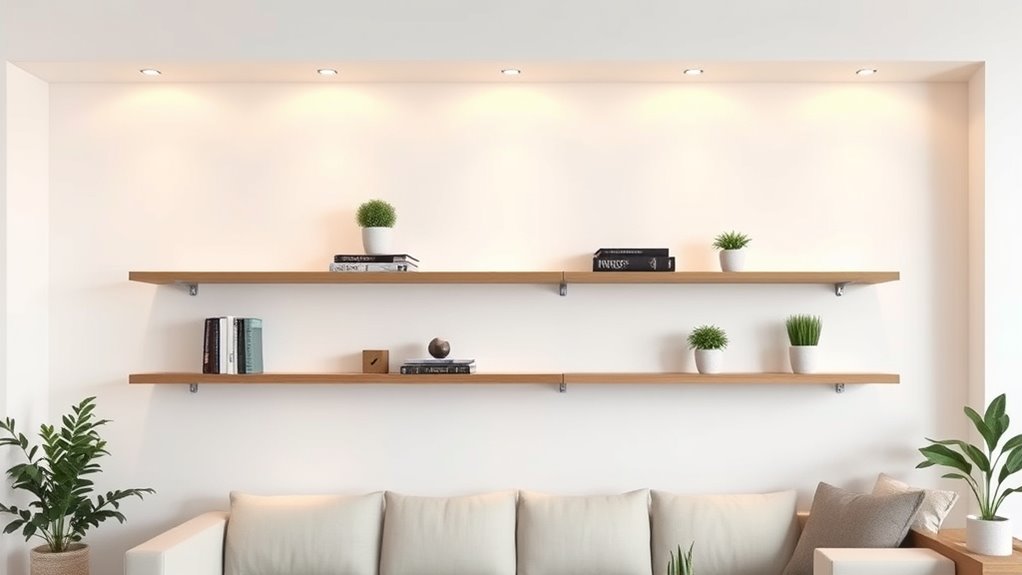

To design and build floating shelves with hidden brackets, start by measuring and marking the wall accurately, guaranteeing the brackets are evenly spaced for support. Use appropriate anchors based on your wall type to securely attach the brackets, then slide the shelf onto the brackets to achieve a clean, minimalist look. Proper planning and execution will ensure the shelves are both stylish and durable. Keep going to discover detailed steps that will help you create a sleek, modern addition to your space.
Key Takeaways
- Measure and mark the desired shelf height and length accurately, ensuring proper placement before installation.
- Choose appropriate hidden brackets and anchors based on wall type, preferring toggle or molly bolts for drywall.
- Pre-drill holes and securely attach brackets, maintaining even spacing for balanced weight distribution.
- Mount the shelf onto the brackets, ensuring it is flush and level for a sleek, floating appearance.
- Tighten all fasteners and double-check alignment for stability, durability, and a clean, modern look.
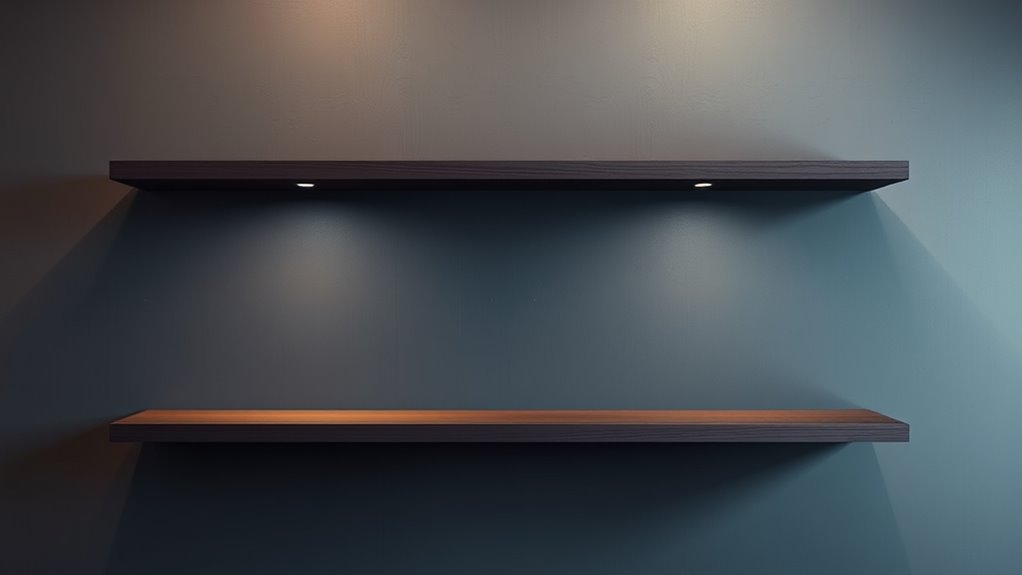
Floating shelves are a stylish and practical way to maximize your space while adding a modern touch to any room. When you choose to build shelves with hidden brackets, you create a sleek, minimalist look that makes your walls appear clean and uncluttered. To achieve this, careful planning and execution are key. Starting with installation tips, you want to ensure your brackets are perfectly aligned and securely anchored. Measure accurately and mark the placement of your shelves before drilling. Use a level to keep everything straight, and double-check your measurements. When installing, consider the wall type—whether drywall, plaster, or brick—and select appropriate anchors and screws. For drywall, toggle bolts or molly bolts provide strong support, while masonry anchors are necessary for brick or concrete walls. Pre-drilling holes slightly smaller than your screws prevents wall damage and makes assembly smoother. Also, ensure your brackets are evenly spaced to distribute weight evenly across the shelf, preventing sagging or tilting over time. It’s helpful to temporarily hold the shelf in place with clamps or tape during the marking process. Once installed, the magic of hidden brackets becomes apparent, giving your shelves a floating appearance that’s both functional and aesthetically pleasing. Proper material selection also plays a vital role in ensuring your shelves are durable and stylish over time.
Frequently Asked Questions
What Tools Are Needed for Installing Hidden Brackets?
To install hidden brackets, you’ll need a drill, screwdriver, level, measuring tape, and a pencil for marking. Start by using measurement techniques to mark where the brackets will go, ensuring proper alignment. Then, drill holes for the mounting hardware, insert anchors if necessary, and secure the brackets firmly to the wall. A level helps keep everything straight, giving your floating shelves a clean, professional look.
Can Floating Shelves Support Heavy Objects?
Yes, floating shelves can support heavy objects if you consider weight capacity and material strength. You should choose shelves made from sturdy materials like solid wood or metal, which can handle more weight. Proper installation with strong, hidden brackets ensures stability and safety. Always check the manufacturer’s weight capacity guidelines and secure the brackets into wall studs for maximum support, so your heavy items stay safely in place.
How Do I Hide Brackets for a Seamless Look?
To hide brackets for a seamless look, use concealed mounting systems that attach the shelves directly to the wall, hiding any hardware. You can also opt for floating shelf brackets that are recessed into the wall, creating an aesthetic enhancement by making the shelves appear to float. Carefully conceal any exposed hardware with paint or filler, ensuring your shelves look clean and minimalist, perfect for a sleek, modern design.
Are There Different Types of Hidden Brackets?
Ever wondered if hidden brackets come in different types? Yes, they do! When you consider bracket installation for your floating shelf design, you’ll find options like cleats, concealed L-brackets, and floating shelf hardware systems. Each offers a sleek, seamless look, hiding the support behind the shelf. Choosing the right type depends on your weight needs and aesthetic preferences, ensuring your shelves look modern and sturdy without visible brackets.
What’s the Best Paint or Finish for Floating Shelves?
You should choose a high-quality, durable finish like semi-gloss or satin for your floating shelves. These paint options provide a smooth, attractive appearance and stand up well to everyday wear and tear. For a more natural look, consider a clear polyurethane or sealant that enhances the wood’s beauty while offering excellent finish durability. Always prep your shelves properly to guarantee the best adhesion and longevity of your chosen finish.
Conclusion
Now that you’ve mastered the art of designing and building floating shelves, you’ve crafted a seamless, invisible bridge between your space and your style. Think of these shelves as quiet anchors, holding your favorite items with grace and strength—hidden brackets like secret passages that make your décor shine. With your new skills, you’re now ready to turn any wall into a smooth, floating canvas. Your home’s unique story just got a little more elevated.