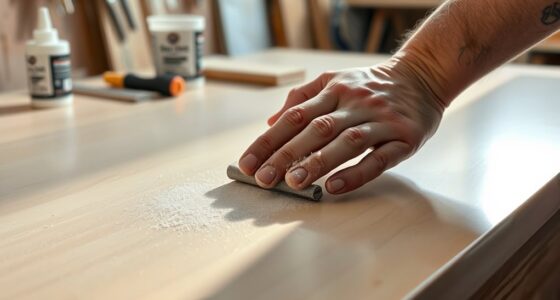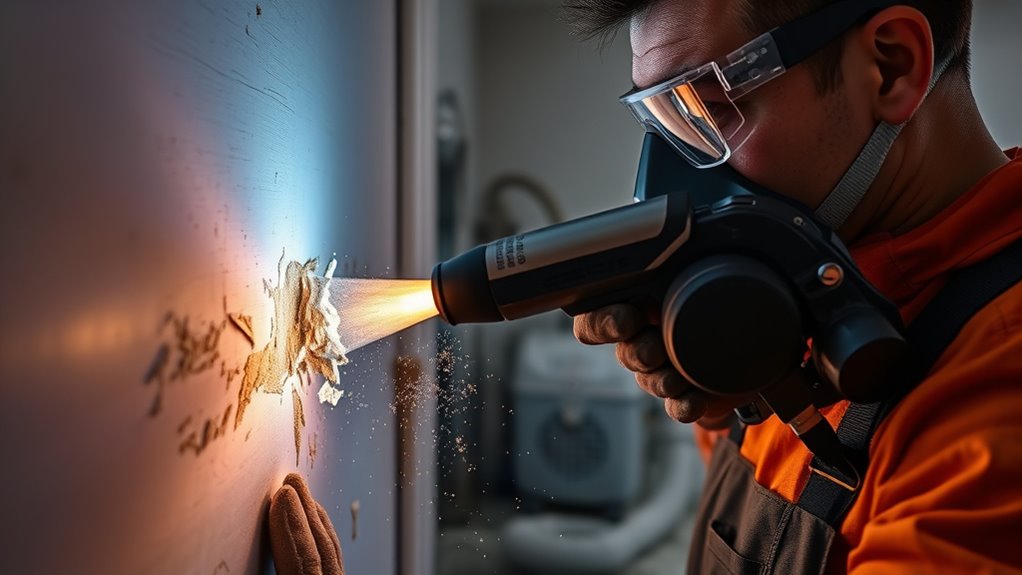

To safely remove old paint, start by choosing the right method for your surface—using heat guns carefully to avoid fires, chemical paint removers with proper ventilation, or dust control measures like plastic sheeting and HEPA vacuums. Always wear safety gear, test small areas first, and follow disposal rules. By following these steps, you can protect your health and the environment. Keep going to learn detailed tips for effective, safe paint removal.

Get tools and workshop supplies delivered free — and shop member deals
- Fast, free delivery on millions of items
- Access to Prime Big Deal Days deals on October 6–7
- Prime Video, Amazon Music and more included
Key Takeaways
- Use heat guns carefully at a safe distance to prevent fires and avoid damaging surfaces.
- Apply chemical paint removers following manufacturer instructions while wearing protective gear.
- Contain dust with plastic sheeting, use HEPA vacuums, and implement dust barriers to minimize inhalation risks.
- Test small areas first to assess paint and surface reactions before full removal.
- Dispose of debris according to local regulations, prioritizing environmental safety and personal health.
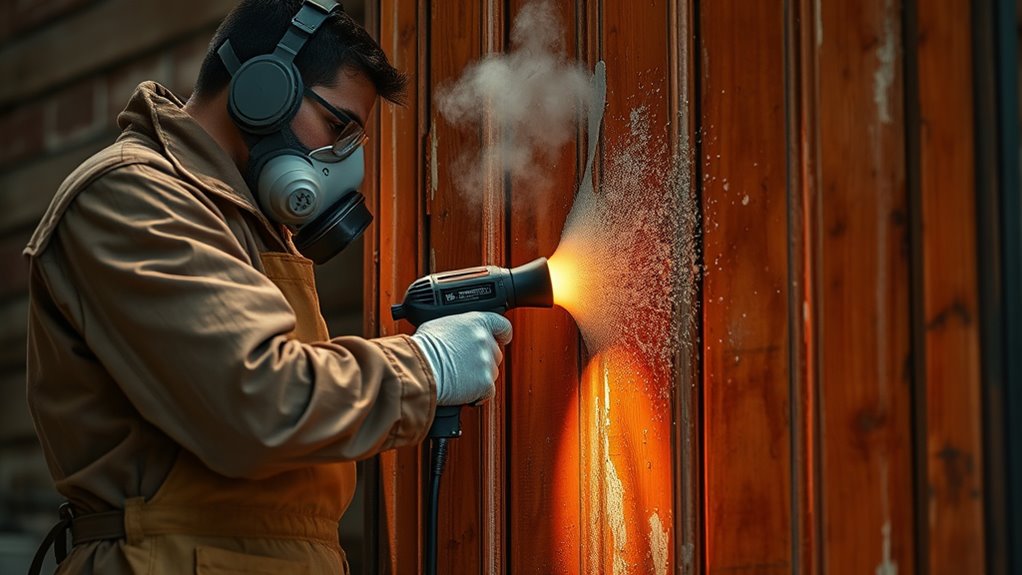
Removing old paint can be a challenging task that requires careful consideration of methods to ensure safety and effectiveness. Heat stripping, chemical paint removers, and dust control are common approaches, each with their own advantages and precautions. When using heat, such as heat guns, it’s essential to maintain a safe distance to prevent fire hazards and avoid damaging the underlying surface. Chemical paint removers can be effective but often contain volatile organic compounds (VOCs) that require proper ventilation and protective gear like gloves and masks. Dust control measures, including using plastic sheeting and HEPA vacuums, help minimize inhalation of paint particles, which is crucial for health safety. Additionally, understanding the type of paint and surface involved can guide the selection of the most appropriate removal method. Proper disposal of paint debris and chemicals in accordance with local regulations is also vital to protect the environment. Before starting, always test a small area to determine the best approach and ensure that the method chosen does not compromise the integrity of the surface beneath the paint. Using appropriate safety equipment and following manufacturer instructions can significantly reduce health risks and improve results.
As an affiliate, we earn on qualifying purchases.
Frequently Asked Questions
What Personal Protective Equipment Is Essential During Paint Removal?
You need to wear a respirator mask to protect your lungs from harmful fumes and dust during paint removal. Protective gloves are essential to shield your skin from chemicals and abrasive materials. Additionally, consider safety goggles to guard your eyes and a long-sleeved shirt to minimize skin exposure. Always guarantee your PPE fits properly and follow manufacturer instructions for maximum protection.
How Long Does the Paint Removal Process Typically Take?
The paint removal process typically takes anywhere from a few hours to several days, depending on the size and type of surface, as well as the removal method used. You should factor in the drying time after applying heat or chemicals, which can add to the overall process duration. Be patient and allow sufficient drying time to make certain all paint and residue are fully removed before moving on to the next steps.
Are There Environmentally Friendly Alternatives to Chemical Strippers?
Think of nature as your partner in cleaning. Yes, there are environmentally friendly alternatives to chemical strippers. You can use biodegradable solvents and natural paint removers that break down safely without harming the environment. These options are effective for removing old paint while keeping your space safe and eco-conscious. Embracing these natural solutions helps protect the planet, proving that even old paint can give way to greener, safer methods.
Can Old Paint Contain Hazardous Materials Like Lead or Asbestos?
Old paint can indeed contain hazardous materials like lead and asbestos. Lead hazards are common in paint made before 1978, posing serious health risks if disturbed. Asbestos risks arise in older paints or coatings, especially if the material is deteriorating. You should always test for these hazards before removal and consult professionals for safe handling. Avoid sanding or scraping without proper precautions to prevent inhaling dust or fibers.
How Should Disposal of Old Paint and Debris Be Handled Safely?
You should handle paint disposal and debris handling carefully to prevent environmental contamination. Always follow local regulations for disposing of old paint, especially if it contains hazardous materials like lead or asbestos. Use designated disposal sites or collection programs, and avoid pouring paint down drains or onto the ground. Seal paint debris in heavy-duty containers, label them clearly, and store them out of reach until proper disposal is arranged.
Conclusion
By following these safe removal methods, you’re like a skilled navigator steering clear of hidden dangers. Remember, heat, chemicals, and dust are like treacherous waters lurking beneath the surface—treat them with respect. When you handle old paint carefully, you’re not just removing a layer of color; you’re peeling back the past to reveal a safer, healthier space. Stay vigilant, and your efforts will clear the way for a fresh start—like dawn breaking after a storm.
Fall Picks
fall essentials
As an affiliate, we earn on qualifying purchases.