To choose a finish that keeps your turned pieces feeling natural, go for oil-based finishes like tung or linseed oil, which penetrate deeply and highlight the grain’s warmth. Adding beeswax or a light coat of satin polyurethane can protect against wear without creating glare. Opt for low-VOC, eco-friendly options to maintain sustainability. Focus on finishes that breathe and preserve the smooth, tactile feel. For more tips, you’ll discover how to balance protection and authenticity effectively.

Get business pricing on tools and workshop supplies
- Business-only prices and quantity discounts
- Tax-exempt purchasing
- Multiple users, one account, clear invoices
Key Takeaways
- Select oil-based finishes like tung or linseed oil for deep grain enhancement and a natural feel.
- Use matte or satin protective coatings to maintain an authentic, non-glossy appearance.
- Incorporate eco-friendly, low-VOC finishes that breathe and preserve the wood’s natural texture.
- Test finishes on hidden areas to ensure they enhance the natural character without altering the feel.
- Balance durability and protection with finishes that enhance, not mask, the wood’s inherent beauty.

Choosing a finish for turned pieces can considerably enhance their appearance and durability. When you’re aiming for a natural look, your goal is to highlight the wood’s inherent beauty while protecting it from everyday wear. To do this effectively, you need to select a finish that enhances the wood grain and offers reliable protective coating options without making the piece look overly glossy or artificial. Your focus should be on finishes that bring out the natural character of the wood, giving it a warm, authentic feel.
Start by considering finishes that emphasize wood grain enhancement. Oil-based finishes, such as tung oil or linseed oil, penetrate deeply into the wood, enriching the grain without creating a shiny surface. These options tend to deepen the natural hues and bring out subtle details, making your turned piece more visually appealing while maintaining a soft, matte or satin finish. Waxes are another excellent choice; they add a gentle sheen and allow the wood to breathe, preserving its tactile quality. When applied properly, wax finishes enhance the grain’s texture and keep the natural feel intact, which is essential if you want your piece to feel genuine and unspoiled. Additionally, choosing finishes with low VOC content can help reduce environmental impact and improve indoor air quality.
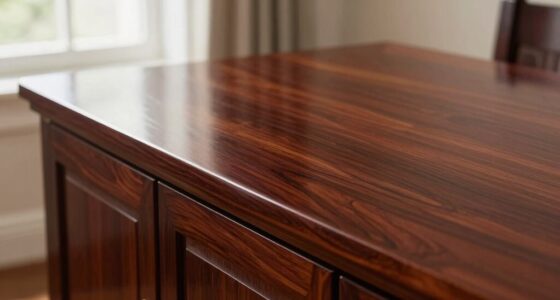
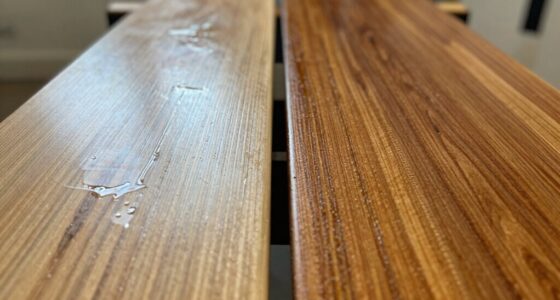
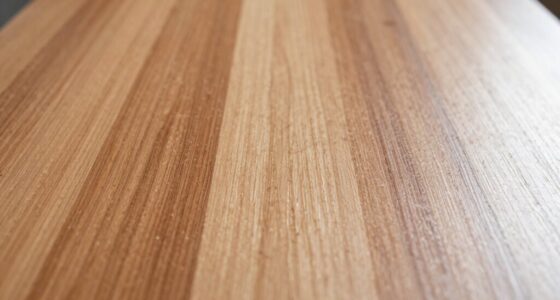
Oil finishes and waxes highlight wood grain and preserve a natural, matte or satin finish.
Protective coating options are essential to guarantee your turned piece withstands handling, moisture, and aging. Clear polyurethane, especially in satin or matte versions, offers a durable protective layer without sacrificing the natural look. It’s resistant to scratches and moisture, making it ideal for functional objects. If you prefer a more eco-friendly or food-safe finish, consider combining mineral oil or beeswax. These finishes offer a protective barrier while keeping the wood’s natural texture and appearance prominent. They’re easy to reapply and maintain, so your piece continues to feel natural over time. Additionally, understanding the properties of finishes can help you select the most suitable option for your project. Exploring environmentally friendly options can further align your project with sustainable practices.
When choosing a finish, think about how much sheen you want and how much protection your piece requires. For a truly natural feel, avoid high-gloss finishes that can make the wood look artificial and detract from its organic beauty. Instead, opt for matte or satin finishes that provide protection while preserving the wood’s tactile and visual authenticity. Testing your chosen finish on a small, hidden area first can help you see how it affects the wood grain and feel before applying it broadly. Ultimately, striking the right balance between enhancing wood grain and choosing protective coating options will guarantee your turned piece remains both beautiful and true to its natural origins. Moreover, selecting eco-friendly finishes can contribute to more sustainable woodworking practices.
Products Worth Considering

Philips Hue Play HDMI Sync Box

Google Nest Learning Thermostat (4th Gen) with Nest Temperature Sensor (2nd Gen), Obsidian

Sonos One Two-Room Set Smart Speakers with Built-In Alexa, Black
As an affiliate, we earn on qualifying purchases.
Frequently Asked Questions
How Do I Prevent Finishes From Altering the Wood’s Natural Color?
To prevent finishes from altering your wood’s natural color, choose clear, water-based or oil finishes that enhance the wood grain without adding tint. Apply thin coats evenly, and avoid over-saturating the surface. Use a matte or satin sheen to maintain a natural look, and always test on a hidden area first. This approach preserves the wood’s authentic appearance while protecting it, keeping the grain visible and the surface’s sheen subtle.
What Finishes Are Safest for Food-Contact Turned Items?
Like a gentle breeze, food-safe finishes are your best choice for turned items that contact food. Look for finishes labeled as food safe, such as mineral oil, beeswax, or certain natural oils. These options help preserve the natural beauty of the wood while ensuring safety. Using food-safe finishes maintains natural wood preservation, so your turned pieces stay beautiful and safe for everyday use without harmful chemicals.
Can I Apply Multiple Finishes Without Affecting the Natural Feel?
Yes, you can apply multiple finishes while maintaining a natural feel by using layering techniques carefully. Start with finish compatibility in mind—select finishes that bond well without creating a thick, unnatural coating. Lightly sanding between layers helps keep the surface smooth and authentic. Use thin, even coats, and avoid overly glossy or heavy finishes. This approach preserves the piece’s tactile quality while enhancing durability and appearance.
How Do Different Finishes Impact the Durability of Turned Wood?
Did you know that properly applied finishes can increase wood’s lifespan by over 50%? Different finishes directly impact durability, with oil-based options penetrating deeply and sealing wood grain preservation better than some varnishes. To maximize protection, use finish application techniques like even coats and proper drying. This approach guarantees your turned wood remains resilient against moisture, scratches, and wear, preserving its natural look and extending its life.
Are There Eco-Friendly Finish Options for Natural-Feeling Turned Pieces?
Yes, there are eco-friendly alternatives for finishing turned wood pieces. You can opt for sustainable materials like plant-based oils, beeswax, or natural shellacs that enhance the wood’s feel without harsh chemicals. These finishes are safe, biodegradable, and maintain a natural appearance. By choosing eco-friendly options, you protect the environment while preserving the authentic, natural feel of your turned pieces, making them beautiful and sustainable.
Conclusion
Ultimately, selecting a finish that enhances the natural beauty of your turned pieces requires careful consideration. Don’t shy away from testing different finishes on scrap wood first—this guarantees you’ll achieve the desired look and feel. While some might worry about the added complexity, a well-chosen finish can protect your work while maintaining its organic charm. With patience and a keen eye, you’ll craft pieces that feel authentic and resonate with natural elegance.