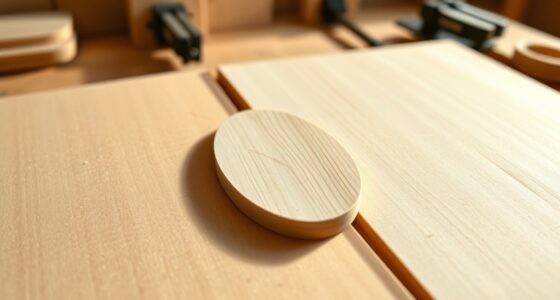
When using knock-down hardware like cross-dowels and cam connectors, you should carefully align holes before inserting the components. Tighten screws and bolts just enough to secure everything without over-tightening, which can damage parts. Make sure to use the correct tools, such as screwdrivers or drills, to guarantee proper fit and locking success. Proper installation is key for a sturdy, professional-looking piece—keep going, and you’ll master the details behind secure assembly.
Key Takeaways
- Ensure precise drilling of holes with correct depth and diameter for accurate fit of cross-dowels and cam connectors.
- Insert cross-dowels into sockets with slight twisting or pressing to secure panels firmly.
- Insert cams into pre-drilled holes and turn with a screwdriver until they lock securely.
- Use compatible tools like Phillips screwdrivers or drills to tighten hardware without over-tightening.
- Maintain proper panel alignment during assembly to ensure stability and ease of disassembly.
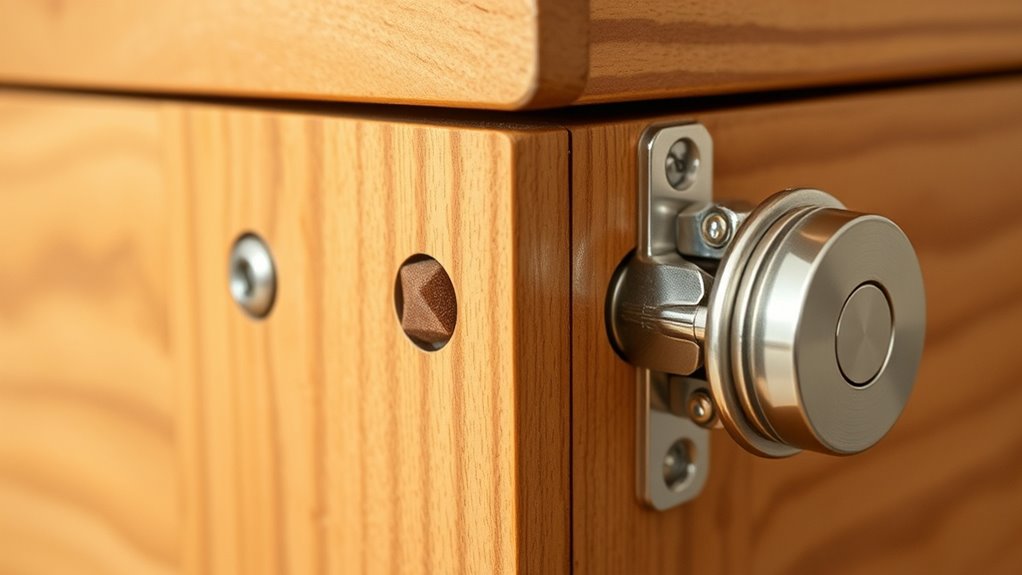
Knock-down hardware offers a practical solution for assembling and disassembling furniture quickly and securely. When you’re working with cross-dowel and cam connectors, understanding assembly techniques is essential to guarantee your furniture stays solid and looks professional. These connectors are designed to join panels and components efficiently, but knowing the right methods to use can make all the difference. One key aspect is tool compatibility; choosing the right tools for installation not only speeds up the process but also prevents damage to the hardware and panels. Typically, a Phillips screwdriver or a drill with the correct bit is all you need, but some designs might require specific tools like an Allen wrench or a spanner. Proper hardware installation ensures long-term stability and durability of the assembled furniture. Starting with cross-dowels, you’ll want to align the holes precisely and insert the dowel into the designated socket. The assembly technique involves slightly twisting or pressing the dowel into place so it fits snugly. When connecting panels using these dowels, it’s vital to ensure the holes are drilled to the correct depth and diameter. This guarantees a tight fit that provides stability without risking splitting the material. Once the dowel is in place, you’ll align the corresponding panel and gently press or screw the components together. Using a drill or screwdriver, you tighten the bolts or screws just enough to secure the joint, avoiding over-tightening which could damage the furniture. Cam connectors simplify the process further. They work by inserting the cam into a pre-drilled hole in one panel and then locking it into a corresponding connector on the adjoining piece. To install, you insert the cam into its socket and turn it with a screwdriver until it clicks into position. This locking mechanism ensures high stability while allowing for disassembly later. The assembly technique involves precise drilling, so the holes are perfectly aligned and compatible with the connectors. You should check tool compatibility beforehand—most cam connectors are designed for standard screwdrivers or drills, but some may require specific bits, especially if they have unique shapes or sizes.

Woodpeckers Universal Cross Dowel Jig, Deluxe Kit, Includes 7 Drill Guide Bushings, USA Made, Accomodates All Cross-Dowel Sizes – UCDJ
SPECS – UCDJ | Universal Cross Dowel Jig | Inch & Metric Scales | Includes Drill Bushings #10,…
As an affiliate, we earn on qualifying purchases.
As an affiliate, we earn on qualifying purchases.
Frequently Asked Questions
What Tools Are Needed to Install Cross-Dowel and Cam Connectors?
To install cross-dowel and cam connectors, you’ll need a drill with the correct drill bit size for your connectors to guarantee proper fit and stability. Make sure to select a drill bit compatible with the connector’s specifications. You’ll also need a screwdriver or drill driver to tighten the connectors securely. Having these tools on hand guarantees proper installation, prevents damage, and ensures your furniture pieces are firmly assembled.
How Do I Troubleshoot Loose or Weak Connections?
To troubleshoot loose or weak connections, first check connection stability by inspecting the cross-dowel or cam connectors for signs of wear or damage. Use proper tightening techniques—ensure screws are fully tightened but not over-tightened, which can weaken the connection. If connections remain loose, consider replacing worn parts or adjusting the connectors slightly for a firmer fit. Regularly maintaining and tightening connections keeps furniture sturdy and safe.
Can Knock-Down Hardware Be Reused Multiple Times?
Yes, knock-down hardware can be reused multiple times, but you should consider reusability concerns and connector longevity. Over time, repeated assembly and disassembly may weaken the connectors or cause wear, reducing their effectiveness. To guarantee they stay secure, inspect the hardware for damage or wear before reuse. Proper maintenance and gentle handling help extend their lifespan, allowing you to reuse your connectors without compromising the stability of your furniture.
What Safety Precautions Should I Follow During Installation?
Like a modern-day builder, you should always wear safety gear like goggles and gloves during installation. Make certain your workspace is secure, free of clutter, and well-lit to prevent accidents. Double-check that all knock-down hardware components are properly aligned before tightening to avoid damage or injury. Keep tools within reach, and follow manufacturer instructions carefully. Staying attentive and cautious keeps you safe, helping you assemble furniture confidently and efficiently.
Are There Weight Limits for Furniture Assembled With These Connectors?
Yes, there are weight limits for furniture assembled with these connectors. You should always verify the manufacturer’s specified weight capacity and load limits for each type of connector. Exceeding these limits can compromise stability and safety. To ensure your furniture stays secure, follow the recommended weight capacity guidelines carefully and distribute loads evenly across the assembled pieces. This helps prevent accidents and prolongs the life of your furniture.

Sunxeke 120PCS Cam Locks for Furniture,3-in-1 Eccentric Hardware Wheels,Furniture Fasteners & Connectors with Multi-Size Nuts,Bolts and Wood Dowel Pins-Assortment Kit for Furniture Assembly/Repair
Cam locks for furniture are crafted from durable alloy steel with nickel plating, ensuring rust and corrosion resistance…
As an affiliate, we earn on qualifying purchases.
As an affiliate, we earn on qualifying purchases.
Conclusion
By choosing cross-dowel and cam connectors, you make assembly simple and sturdy. Don’t worry about feeling overwhelmed—imagine effortlessly snapping pieces into place, like puzzle pieces fitting perfectly. With these reliable hardware options, you’ll save time and avoid frustration. Think of your finished piece, strong and sleek, standing proudly in your space. Knock-down hardware isn’t just practical; it’s your secret to creating furniture that’s both beautiful and easy to put together, every single time.

20-PCS Allen Key/Allen Wrench Drill Bit Set, Impact Hex Bits (Metric & SAE) 2 Inch Long, Premium S2 Steel, 1/4'' Hex – Shank, Magnetic Head, for DIY Furniture Assembly & Car Repairs, by DCWecher
[UPGRADED INDUSTRIAL STRENGTH MATERIAL] Allen wrench drill bits is made of S2 steel alloy with a hardness grade…
As an affiliate, we earn on qualifying purchases.
As an affiliate, we earn on qualifying purchases.

Antrader 10-Pack Furniture Side Knock Down Furniture Cam Lock Connecting Fitting Pre-Inserted Nut Dowels Connector Assembly (812 Fitting+28mm Screw)
Package Content: 10pcs x Cam Fitting, 10pcs x Dowel
As an affiliate, we earn on qualifying purchases.
As an affiliate, we earn on qualifying purchases.