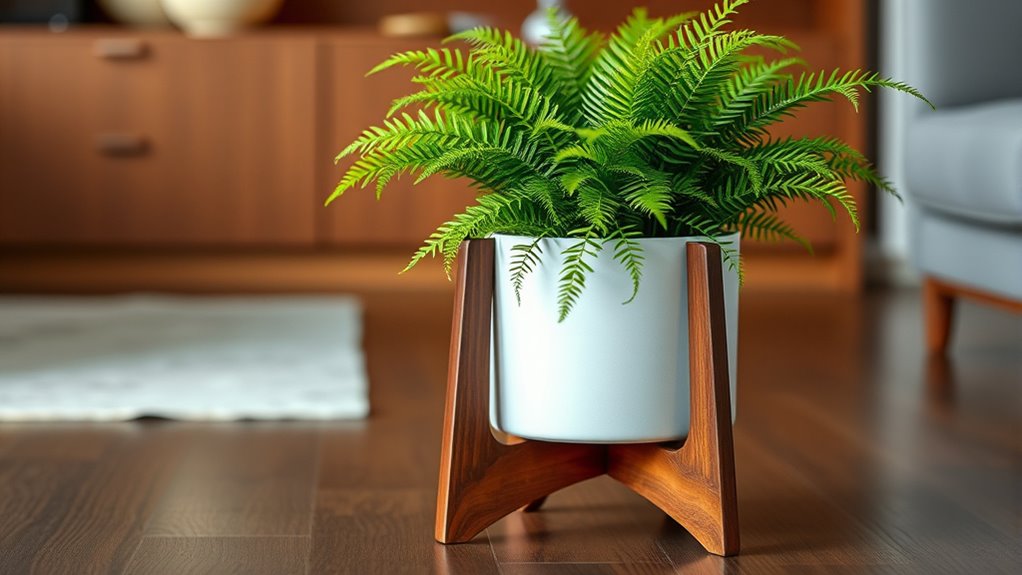

To design a plant stand with tapered legs, start by selecting your materials—metal, painted wood, reclaimed wood, or bamboo—to match your environment and style. Decide on the taper shape and angle to create an elegant, balanced silhouette that complements your plant size. Focus on proportions for stability and visual harmony, and consider finishes like stain or paint to enhance appearance. Experiment with sketches to refine the size and taper details—if you explore these steps further, you’ll craft a stunning, functional stand.
Key Takeaways
- Select durable, aesthetically suitable materials like metal, painted wood, reclaimed wood, or bamboo based on placement and decor.
- Decide on the style and shape of tapered legs, considering gentle slopes or dramatic narrowing to enhance visual interest.
- Ensure proportions balance the plant size and stand height, using sketches to visualize different taper options.
- Choose finishes that complement the material and integrate seamlessly with existing furniture and decor themes.
- Prioritize stability and secure attachment of the tapered legs to support plants while adding elegance and style.
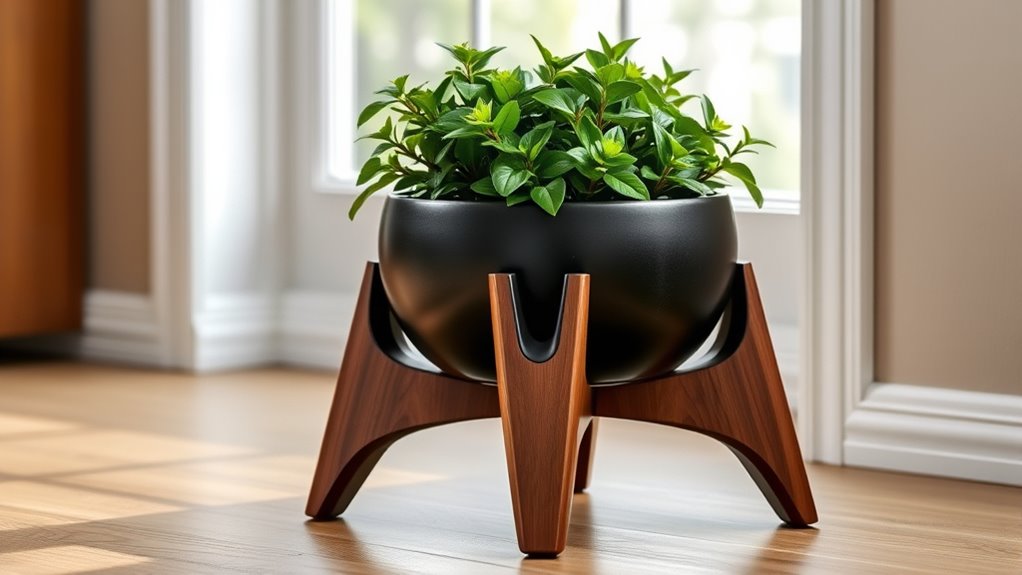
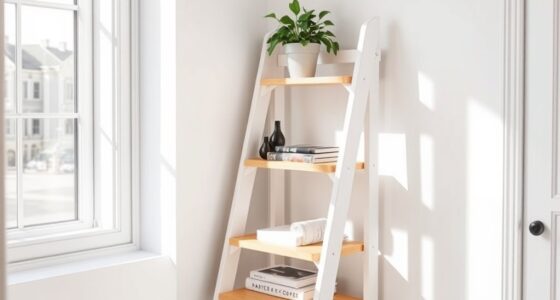
Have you ever wondered how to create a plant stand that complements your space and showcases your favorite greenery? Designing a plant stand with tapered legs is an excellent way to add elegance and style to your home or garden. To start, you need to consider material selection carefully. The materials you choose will influence both the durability and the overall look of your stand. For a sleek, modern appeal, metal or painted wood can work beautifully, offering clean lines and a smooth finish. If you prefer a more natural, rustic vibe, reclaimed wood or bamboo might be perfect choices. Think about where you plan to place the stand—indoors or outdoors—and select materials that can withstand environmental conditions or match your existing decor. For instance, if your space features a lot of natural textures, a wooden stand with tapered legs can seamlessly blend in, while metal might add a contemporary touch.
Aesthetic considerations are equally important in this process. Tapered legs inherently introduce a sense of elegance and visual interest, so your design should emphasize these features. Decide on the shape and angle of the taper—whether it’s a gentle slope or a more dramatic narrowing—since this impacts the stand’s overall style. You might want a minimalist look with slender, subtly tapered legs, or a more pronounced taper for a statement piece. Consider the balance and proportion; the taper should complement the size of your plant and the stand’s top surface. For example, if you’re displaying a small, delicate plant, a stand with thin, tapered legs will keep the focus on the greenery, while a larger plant calls for sturdier, more substantial legs that taper gently to maintain visual harmony.
When selecting the material and designing the aesthetic, think about how the stand will fit with your existing furnishings. Do you want it to stand out as a focal point or blend seamlessly into the background? The finish of your material also plays a role—paint, stain, or natural wood finishes can dramatically change the look. Keep in mind that tapered legs can be both functional and decorative; they add an element of sophistication while also providing stability. As you plan your design, sketch out different options, considering how the taper will affect the stand’s height and overall silhouette. Additionally, researching material durability can help ensure your plant stand remains attractive and sturdy over time. Remember, the goal is to create a piece that not only holds your plants securely but also elevates your decor with elegance and style.
metal plant stand with tapered legs
As an affiliate, we earn on qualifying purchases.
As an affiliate, we earn on qualifying purchases.
Frequently Asked Questions
What Materials Are Best for Tapered Legs?
You should choose hardwoods like oak, maple, or walnut for tapered legs because they offer excellent material durability and can withstand weight and wear. If you prefer aesthetic options, consider softwoods like pine or cedar, which provide a lighter look and can be stained or painted easily. Both choices give you a balance of strength and style, ensuring your plant stand remains sturdy and visually appealing over time.
How Do I Ensure Stability With Tapered Legs?
You’ll want to set a leg angle between 70-80 degrees to maximize stability, as studies show this range offers ideal support. Focus on proper weight distribution by making sure the tapered legs are evenly aligned and firmly attached at the correct angle. This prevents wobbling or tipping, especially when supporting heavier plants. Regularly check the joints and tighten screws to maintain balance and guarantee your plant stand remains sturdy over time.
Can Tapered Legs Be Customized for Different Heights?
Yes, you can customize tapered legs for different heights to suit your aesthetic options. When designing your plant stand, you can cut the legs to your desired length or add extensions to achieve height customization. Just guarantee the tapering remains consistent for a sleek look and stability. This flexibility allows you to match your stand perfectly with your space, enhancing both function and style.
What Tools Are Needed to Cut Tapered Legs?
Think of cutting tapered legs like sculpting a delicate masterpiece. You’ll need a saw—preferably a tapering or jigsaw—and a miter saw speeds up the process. Use sanding techniques to smooth out the cuts, ensuring a clean finish. For leg attachment methods, drill holes carefully for secure joints. With the right tools and patience, you’ll craft perfect tapered legs that give your plant stand a sleek, professional look.
How Do I Finish and Seal Tapered Wood Legs?
To finish and seal tapered wood legs, start by sanding them smoothly, then choose a finishing technique like staining, painting, or applying a clear coat. Once you’ve achieved your desired look, seal the wood with options like polyurethane, lacquer, or a water-based sealer for durability. Apply these sealing options evenly, allowing proper drying time between coats, to protect your plant stand and enhance its appearance.
wooden plant stand with tapered legs
As an affiliate, we earn on qualifying purchases.
As an affiliate, we earn on qualifying purchases.
Conclusion
Once you’ve crafted your plant stand with tapered legs, you’ll find it’s more than just furniture—it’s a subtle embrace for your greenery. Its elegant design adds a gentle touch of style without overwhelming your space, quietly elevating your décor. As you place your plants atop it, consider how this understated piece gracefully supports your indoor oasis. Sometimes, the simplest designs whisper the loudest charm—letting your plants shine softly while your stand quietly enhances the room’s harmony.
outdoor plant stand reclaimed wood
As an affiliate, we earn on qualifying purchases.
As an affiliate, we earn on qualifying purchases.
modern tapered leg plant stand
As an affiliate, we earn on qualifying purchases.
As an affiliate, we earn on qualifying purchases.