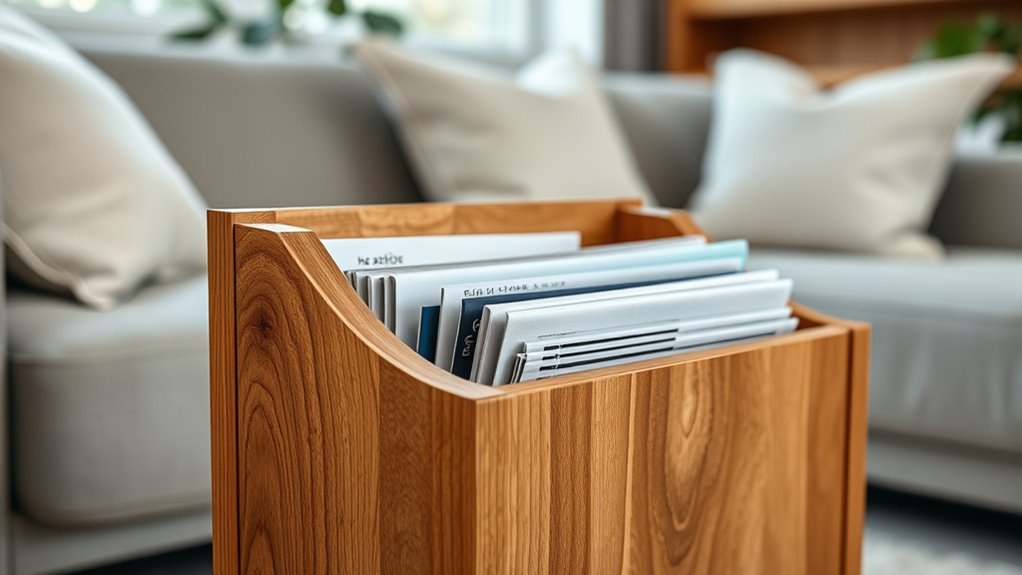
Building a wooden magazine holder is a rewarding DIY project that lets you create a stylish, personalized storage solution for your living room. Choose sustainable wood options like reclaimed or certified timber, and use precise measurements for assembly. Finish your piece with sanding, staining, or sealing to match your decor and guarantee durability. If you keep exploring, you’ll discover tips to make your project both eco-friendly and beautifully crafted.
Key Takeaways
- Select sustainable or reclaimed wood for an eco-friendly and unique magazine holder design.
- Measure and cut wood precisely to ensure a sturdy, well-fitting structure.
- Incorporate decorative features like grooves or beveled edges for aesthetic appeal.
- Finish the holder with sanding, staining or painting, and sealing to enhance durability and style.
- Assemble carefully, then apply protective coatings for a long-lasting, attractive living room accessory.
Have you ever wanted a stylish and functional way to organize your magazines? Building a wooden magazine holder is a great project that combines practicality with a touch of craftsmanship. Not only does it help keep your living room tidy, but it also allows you to customize the design to match your decor. When starting out, consider using DIY finishing techniques to give your magazine holder a polished look. Sanding smoothly, applying stain or paint, and sealing the surface with a clear finish can transform simple wood into a piece that looks professionally made. These finishing techniques are easy to do at home and let you add personal flair, whether you prefer a rustic, modern, or vintage vibe. Plus, by choosing your finishes carefully, you can enhance the durability of your holder, ensuring it lasts for years.
Sustainable wood sourcing is another key element to keep in mind as you build your magazine holder. Opt for reclaimed wood or certified sustainably harvested timber to minimize your environmental impact. Not only does this choice support responsible forestry practices, but it also adds character and uniqueness to your project. Reclaimed wood often features interesting grain patterns and imperfections that can lend a charming, vintage feel to your finished piece. When sourcing your wood, visit local suppliers or salvage yards to find quality materials that fit your budget and sustainability goals. Using eco-friendly materials also means you’re making a conscious decision to reduce waste and promote environmental stewardship.
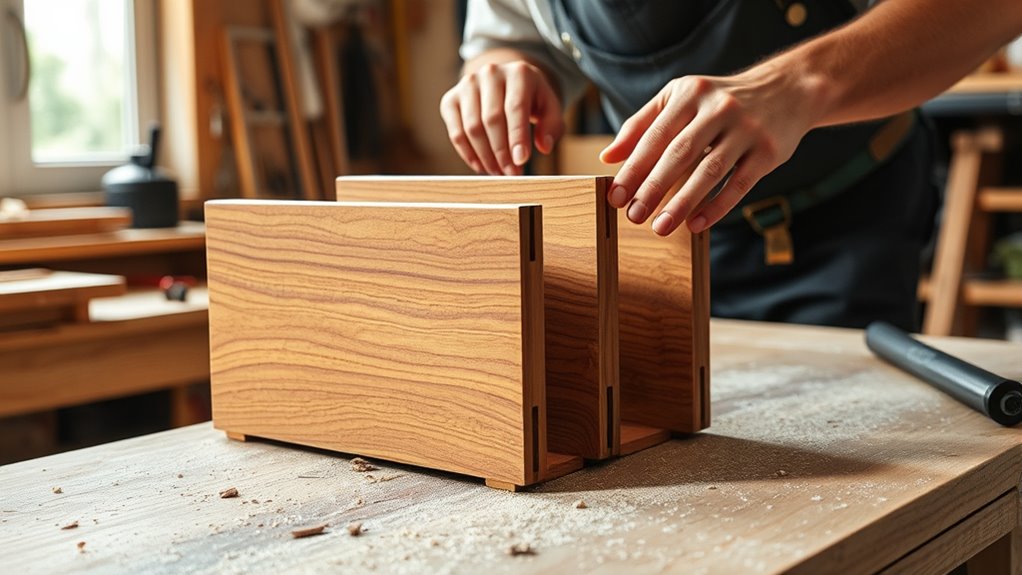
As you assemble your magazine holder, measure carefully and cut precisely to ensure a snug fit. You can decide on a simple open design or add compartments for different types of reading material. If you want a more decorative touch, consider incorporating features like beveled edges or decorative grooves. Once assembled, apply your chosen DIY finishing techniques—perhaps a light stain to highlight the wood’s natural beauty or a bold paint for a more vibrant look. Seal the surface with a protective coat to prevent scratches and moisture damage, making your creation both attractive and resilient.
Building your own wooden magazine holder not only gives you a practical storage solution but also a sense of accomplishment. By focusing on sustainable sourcing and mastering some DIY finishing techniques, you create a piece that’s both eco-friendly and uniquely yours. It’s a rewarding project that combines craftsmanship and environmental consciousness, leaving you with a beautiful, functional addition to your living room.
Frequently Asked Questions
What Types of Wood Are Best for Weather Resistance?
You should choose cedar, teak, or redwood for their natural weather resistance. To enhance durability, apply wood treatment and weatherproofing techniques like sealants or oils. These methods protect against moisture, decay, and UV damage, ensuring your magazine holder withstands outdoor conditions. Regular maintenance, including reapplying protective finishes, keeps the wood in good shape and prolongs its lifespan, making these choices ideal for weather-resistant projects.
How Can I Customize the Size to Fit My Space?
Think of your space as a tailor-made suit, and adjusting dimensions is your perfect fit. To customize the size, measure your space carefully, noting width, height, and depth. Use these measurements to cut your wood accurately or adjust pre-made plans. When measuring space, double-check to guarantee a snug fit, then tailor your magazine holder accordingly. This way, your creation will seamlessly blend into your living room.
What Tools Are Essential for This Project?
You’ll need essential tools like a saw, drill, and measuring tape. Don’t forget safety equipment such as goggles and a dust mask to protect yourself. A square helps you verify accurate cuts, and clamps keep pieces steady. For strong joints, use a doweling jig or wood glue along with nails or screws. These tools and safety gear make your project safer and help you create sturdy, well-constructed magazine holders.
How Do I Finish or Paint the Magazine Holder?
Why settle for a plain, boring magazine holder when you can turn it into a masterpiece? You simply choose from various wood stain options to match your decor, then use smooth paint application techniques for a flawless finish. Whether you prefer a rich stain or a pop of color, sand the wood first, apply your stain or paint evenly, and finish with a sealant. Voila, your magazine holder becomes a statement piece!
Can I Modify the Design for Wall Mounting?
Yes, you can modify the design for wall mounting by adding key features. Consider installing wall mounting options like brackets or cleats, which provide sturdy support. Alternatively, you can use strong adhesive strips or screws for secure attachment. When making these modifications, guarantee the holder’s weight capacity matches your chosen attachment method, and reinforce the back panel if needed for extra stability and safety.
Conclusion
As you finish your wooden magazine holder, you realize it’s more than just a practical piece; it’s a reminder that sometimes, the smallest projects can unexpectedly bring a touch of order and beauty to your home. Just like how a simple craft can turn chaos into calm, your effort reflects that even the tiniest creations hold unexpected significance. Sometimes, the act of building itself becomes a quiet reminder that good things often come from simple beginnings.